Sales Slump: The Numbers Move Before the Feeling Does
A slump is a lagging signal about an input that moved weeks earlier. The order to check the four causes in, and why it reverses how a slump feels.

A sales slump is a run of weeks in which a seller's or a team's replies, meetings and deals sit below their own normal level. It is a lagging signal: held meetings are accounts contacted times reply rate times the share of replies that become meetings, and two of those three terms sit outside the seat.
Key takeaways
- Cambridge Dictionary defines a slump as a fall in the price, value or sales of something; in a sales team it means weeks of replies, meetings and deals below the team's own normal level.
- Held meetings are accounts contacted multiplied by reply rate multiplied by the share of replies that become attended meetings, and only the first term sits inside the seat that feels the slump.
- Woodpecker's benchmarks page gives campaigns under a 2% bounce rate a 1.6% median reply rate against 1.0% for campaigns bouncing over 20%, so a decayed list costs meetings with no change in effort.
- Check contact coverage, then the premise, then deliverability, then the qualification bar, and activity last; more volume or follow-ups operate on the wrong term.
Reviewed and updated October 1, 2026
Three weeks into a quarter a seller notices that nothing has booked. The messages went out, the calls got made, the effort was there, and the calendar stayed empty. By week four the diagnosis has already been made inside their own head, and it is a diagnosis about them: confidence, focus, whether they still have it.
That is the meaning a sales slump takes on from inside the seat, and it is usually the wrong reading. The diagnosis arrives first because it is the only variable a seller can observe from the inside. The variables that actually produce a booked meeting sit outside the seller, they moved weeks before the calendar went quiet, and by the time the output is visibly down the cause is old news. A slump is a lagging signal about an input, and the useful question is which input, and when.
What is the meaning of a sales slump?
Cambridge Dictionary defines a slump as "a fall in the price, value, sales, etc. of something", and its Academic Content Dictionary adds "a period of time when something is in a bad state". In sales the meaning is narrower. A sales slump is a run of weeks in which a seller's or a team's replies, meetings and deals sit below their own normal level, with no single obvious cause.
Three phrases get used for the same thing. Slumping sales and a slump in sales describe the drop itself, and a sales shortfall is the same drop measured against a target instead of against the team's own history. None of the three says anything about why. The definition names a symptom, and the symptom is the last link in a chain that started weeks earlier, which is what the rest of this page takes apart.
The arithmetic a slump is made of
Held meetings are three numbers multiplied. Accounts contacted, the share of those that reply, and the share of replies that turn into a meeting somebody attends. Nothing else is in the chain.
Only the first of those three is inside the seller's direct control, and it is the one every slump playbook tells them to increase. The second is set by list quality, message relevance and whether the mail is landing anywhere a person will see it. The third is set by what the message promised and who it was promised to.
So a seller who responds to a flat month by sending more is operating on the one term that was probably already fine, and doing it through the same list and the same message that produced the flat month. The volume goes up, the output does not, and the confidence problem the seller diagnosed in week four becomes real in week six because now the effort has visibly failed.
The middle term is where the size of the effect shows. Woodpecker's cold email benchmarks page, which describes its figures as actual platform data, not a survey, gives a median reply rate of 1.5% across 56,614 campaigns sent through its platform, and splits that by list hygiene: campaigns kept under a 2% bounce rate get a 1.6% median reply rate, while campaigns bouncing over 20% sit at 1.0%.
Run one month through the chain on those two figures, as an illustration. A team contacting 1,000 accounts gets 16 replies from the clean list and 10 from the decayed one. In this illustrative month, if half of the replies become meetings somebody attends, which is our assumption and not a benchmark, that is 8 held meetings against 5. The effort from the seat was identical, and three meetings disappeared inside a term the seat never touches.
Why the cause is always older than the symptom
Each term in that chain reaches the calendar at a different remove. A contact enters a list, gets contacted, replies or does not, and only then produces something on a calendar that may sit a fortnight out. The list decision is therefore the furthest upstream of anything a seller can look at, and the last to show up in the number they are being measured on.
That ordering is the whole diagnostic. Work backwards from the symptom and you check effort first, because effort is nearest. Work forwards from the causes and you check the list first, because a list decision made six weeks ago is already fully priced into a calendar that is empty today, while a change made to effort this morning cannot reach the calendar for weeks.
The practical rule is to inspect the longest-lagging input first and the shortest-lagging one last, which is the exact reverse of how a slump feels.
In detail, in the order to check them:
- Contact coverage. How many accounts on the current list have a verified contact for the right title. If coverage fell, everything below it fell with it, and no amount of activity recovers it.
- The premise. Whether the reason for writing still matches what the segment is dealing with. A premise that worked for two quarters can stop working without anyone changing a word of it.
- Deliverability. Whether the messages are arriving at all. This one degrades quietly and presents as a bad month instead of an error, which makes it easy for a seller to read as their own failure. Bounce and complaint signals, compared with the period before the decline, are where it shows.
- Qualification drift. Whether the bar for what counts as a meeting moved under pressure, in either direction. A tightened bar produces a slump that is really a definition change.
- Activity. Last. It is the fastest input to move and the least likely to be the cause, because it is the one the seller already increased.
Is it your slump or the team's
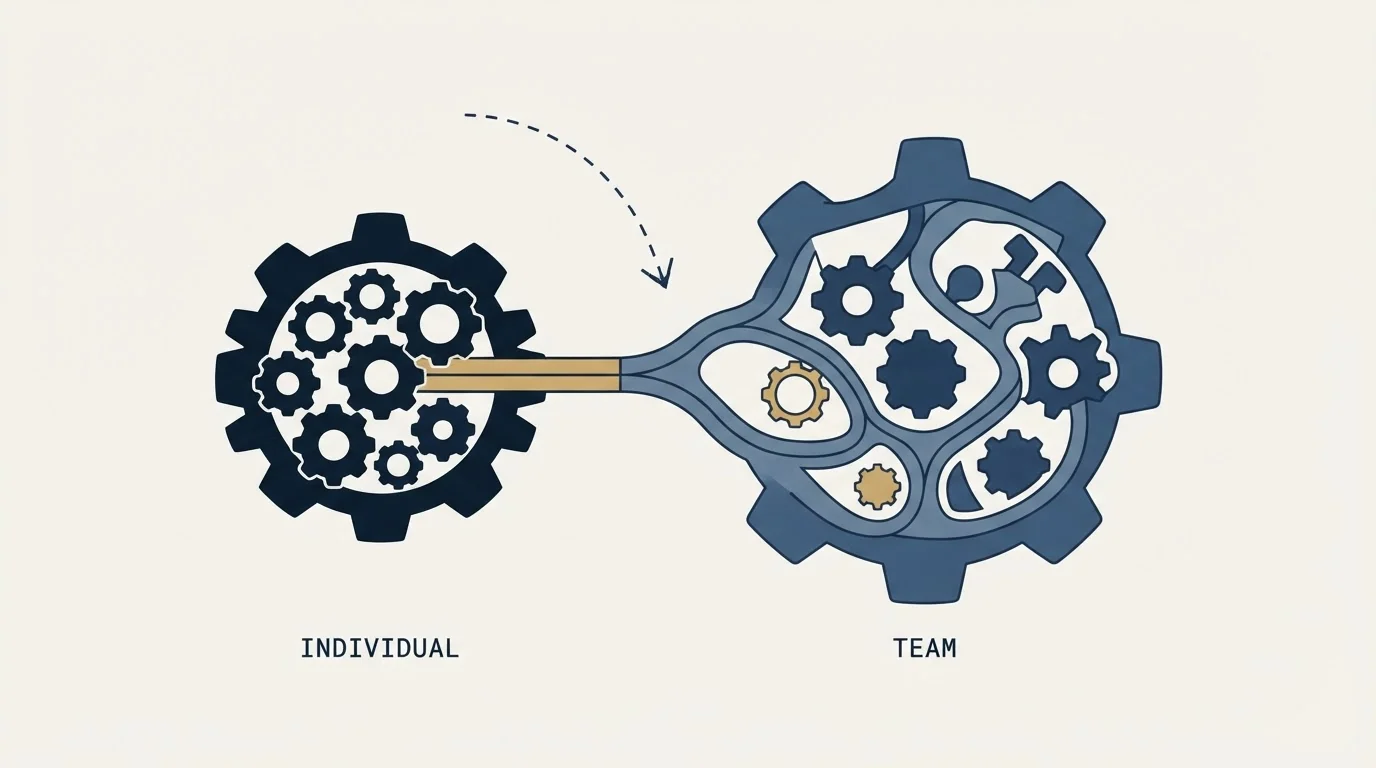
Before any of that, one comparison tells a manager whose slump this is, and it needs nothing beyond the team's own sending records. Pull reply rate by segment for the whole team over the last two months, not the team total and not your own number alone.
If every seat's reply rate fell in the same segment at roughly the same time, the cause is upstream of all of them and it is a list, a message or an infrastructure event. That is not a personal slump and treating it as one wastes the diagnosis and the person. If one seat fell while the others held, the cause is inside that seat, and it is worth finding out which of the three activities a personal slump can sit in is the one that moved.
Reading a team's own records that way has a hard limit, since why the sample is smaller than it looks shows how fast segment cells fall to single figures.
Blended numbers hide both of these. A team total that is flat can be one segment collapsing while another improves, and a personal number that is down can be a smaller sample rather than a worse one. Splitting by segment is what makes the reading available at all, which is why it belongs on the weekly view rather than in the post mortem. SDR metrics sets out which of these numbers a rep genuinely controls, and quota attainment covers why a distribution of attainment tells a manager more than an average of it.
The three activities a personal slump can sit in
When the read really is one seat, the work splits into parts that fail differently, and lumping them together is what turns a fixable problem into a character judgement.
The same character trap shows up in role design, where sorting sellers into hunter and farmer types replaces a coverage decision about which number each seat owns.
Choosing who to contact. Deciding, within a list, which accounts this week and which people inside them. This is the least visible part of the job to anyone watching activity counts, and the part where a slump most often begins, because it degrades silently. Nobody notices a seller quietly working easier accounts.
Establishing why now. Finding the specific reason this message arrives this week. When a seller is behind, this is the first thing that gets dropped, because it is slow and the alternative is to send something generic immediately. The output looks like more activity and produces fewer replies.
Running the conversation. What happens after a reply. This is the part sales coaching is usually about and the part least likely to be the cause of a slump, because a slump normally shows up as fewer replies rather than as worse calls.
Sorting a flat month into those three is the difference between a coaching conversation that changes something and one that raises morale for an afternoon. Sales rep coaching covers the loop that makes that separation routine rather than something a manager attempts once a quarter under pressure.
The two responses that make it worse
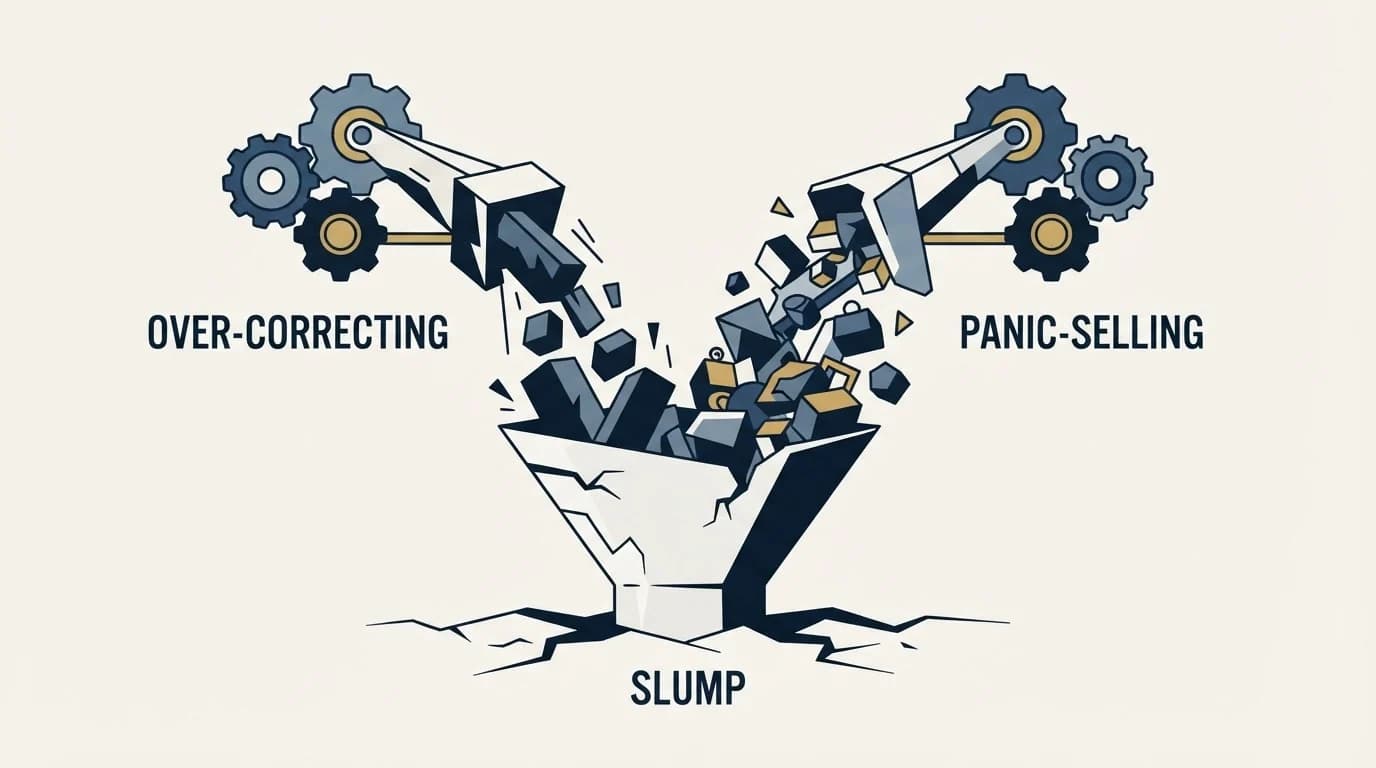
Volume onto an unexamined list. If contact coverage or premise is the cause, more sending puts more of the programme through the fault. On the email side it does something worse than waste time: sending more to a list that is not responding is exactly the pattern that degrades a sending domain, so a slump treated with volume can end as a deliverability problem the whole team pays for. Woodpecker's benchmark data runs in the same direction: mailboxes that average 1 to 20 emails a day have a 2.0% median reply rate, four times the 0.5% reply rate of mailboxes sending 101 to 200 a day. That is a comparison across mailboxes and not a controlled test, and it still points the opposite way from what a volume response assumes.
Starting to follow up. The temptation when replies are down is to send a second and third message to the people who ignored the first. Every one of those lands with somebody who has already seen a message from you and chosen not to answer, which is the population most likely to complain, and the reputation cost is paid across every campaign on the domain rather than by the campaign that earned it. We run one message per campaign for cold outbound, with no bumps and no thread replies, and a slump is precisely the moment that policy is under most pressure. The full argument is in email sequence software.
Where the motivation half is real, and where it is not
None of this says the psychological part is imaginary. A run of silence is genuinely harder to absorb than a run of rejections, because there is nothing to respond to and no information in it. That demand is real, and absorbing a run of silence is one of the hardest parts of an outbound seat.
What the motivation framing gets wrong is the order. Confidence follows evidence in this job rather than producing it, so the reliable route back is a piece of evidence rather than a state of mind, and the cheapest evidence available is a segment-level reply rate that says the problem is not you. A seller told to think positively about a list with collapsed contact coverage has been handed the one problem they cannot solve from inside the seat.
There is a version of the motivational literature worth keeping, and it is the version that is checkable. Our own read of the sales floor's most repeated lines is in sales motivation quotes, including how many of them turn out to have no traceable source.
What a manager owes a seller in a slump

Two things, and neither is encouragement.
The first is the segment-level read, produced by the manager rather than requested from the seller. A rep cannot see whether their own decline is a team decline, and asking them to prove it is asking them to defend themselves with data they do not have.
The second is a decision about the input. If coverage fell, the list gets rebuilt and the seller is told that is what happened. If the premise stopped working, a new one gets written and tested. If deliverability degraded, that is infrastructure work and it is not the seller's to fix. Outbound for SDR managers walks the same four constraints from the manager's seat, including why adding capacity to any of the first three buys a more expensive version of the same problem.
| What the read finds | What gets decided |
|---|---|
| Contact coverage fell | The list gets rebuilt, and the seller is told that is what happened |
| The premise stopped working | A new one gets written and tested |
| Deliverability degraded | Infrastructure work, and not the seller's to fix |
| One seat fell while the others held | A coaching conversation about which of the three activities moved |
| Any of the above | Never a higher activity target |
What a manager should not do is respond to a slump with a higher activity target. It is the one lever that reliably makes the person feel the failure is theirs, and it operates on the term that was least likely to be wrong.
The short version
A slump is a lagging signal. Held meetings are accounts contacted multiplied by reply rate multiplied by the share of replies that become attended meetings, and only the first of those three sits inside the seat that feels the slump. The cause moved weeks before the calendar went quiet.
Check in reverse order of how it feels. Contact coverage first, then the premise, then deliverability, then whether the qualification bar moved, and activity last. Before any of that, split reply rate by segment across the whole team, because a decline every seat shares is not a personal slump and cannot be coached.
Do not answer a flat run with more volume through an unexamined list, and do not answer it by starting to bump people who ignored the first message. Both operate on the wrong term and the second one spends a sending reputation the whole programme depends on.
If the constraint turns out to be the top of the funnel rather than the seat, we run the outbound half and hand back meetings that meet criteria agreed in writing before anything sends.
Frequently asked questions.
Frequently asked questions- What does sales slump mean?
- A sales slump is a stretch of weeks in which a seller's or a team's replies, meetings and deals run below their own normal level. Cambridge Dictionary defines a slump as a fall in the price, value or sales of something. In sales the drop is the last link in a chain, and the input that caused it usually moved weeks before the calendar went quiet.
- How do I know if the slump is mine or the whole team's?
- Pull reply rate split by segment for every seat over the last two months. If several seats declined in the same segment at about the same time, the cause sits upstream of all of them and is a list, message or infrastructure event. If one seat fell while the others held, the read is inside that seat, and it is worth sorting into which part of the job moved.
- Should I increase activity to break out of a slump?
- Not before checking the inputs above it. If contact coverage or the premise is the cause, more sending pushes more of the programme through the same fault. Woodpecker's benchmark data shows mailboxes averaging 1 to 20 emails a day at a 2.0% median reply rate against 0.5% for mailboxes sending 101 to 200 a day, so volume is a poor rescue.
- Are follow-up emails a good way to recover a flat month?
- They are the response most likely to make it worse. Every message after the first goes only to people who saw the previous one and chose not to answer, the population most likely to complain, and the reputation cost lands across every campaign on the domain.
About the author.

B2B cold email experts helping companies generate qualified leads through done-for-you outreach campaigns.
RevenueFlow Team
Explore more.
Ready to scale your outreach?
We build GTM engines that book real meetings. See the receipts.
Related articles.
Sales Cycle Length Benchmarks: What Each Figure Counts
The published B2B sales cycle benchmarks, sorted by what each page says it counted. The same number means two different things in two of them.
SDR Outsourcing for Business Brokers: The Fee Timing
Whether a success-fee brokerage should rent sales development at all: the fee timing, the texts that limit what an outside person may say about value, and who signs.
SDR Outsourcing for Logistics Companies: The Brokerage Line
What an outside sales development team may do in a freight company's name, the calling and email rules it inherits, and which arrangement survives a bid-shaped market.
Appointment Setting for Business Brokers: The Seller Meeting
What a bought meeting with a business owner has to be for a brokerage: the three-part qualification, the confidentiality rules, the licence line and the owner's reasons.
Win Rate Benchmarks: Which Figures State a Population
A catalogue of the published average sales win rates, sorted by whether the page names the population behind its own number. Most do not.
3x3 Research: Three Facts in Three Minutes Before Outreach
3x3 research as Funnel Clarity publishes it: three unique facts in three minutes that the prospect would be surprised you know, the variants, and where it fits.