Hunter and Farmer Sales Roles: What the Split Decides
Hunting and farming run on different clocks, so a seat owning both numbers funds the long-cycle one out of the short one. The arithmetic that decides the split.

Hunter and farmer name two jobs separated by what they start with: no relationship, or a contract. They combine badly because expansion revenue lands inside the quarter and new-logo revenue lands after it, so a seat carrying both funds the slower number out of the faster one whenever it is behind.
Key takeaways
- A combined seat starves new logos for a clock reason rather than a motivation reason, because expansion is the faster and more certain number.
- Three coverage models exist: one seat lands and keeps, the roles split at the signature, or everybody does everything.
- The trigger for a split is the point where the installed base per seat consumes the hours available, which most companies pass before they measure it.
- A split protects the new-logo number only if the hunting quota carries no expansion component and the hunting seat is not also the sourcing seat.
Reviewed and updated September 2, 2026
Hunter and Farmer Sales Roles: What the Split Decides
An account executive carries thirty named accounts and a target with a new-logo component in it. The quarter closes on plan. Every dollar of it came from expanding three accounts that were already customers, and the new-logo line finished at zero. Nobody was lazy and nobody was hiding. Expansion was faster, more certain and cheaper to work, and a seat that owns both numbers will choose the certain one every time it is behind, which is exactly when the choice gets made.
That is the whole argument for splitting the role, and it is an argument about incentives and coverage rather than about temperament. The hunter and farmer vocabulary has drifted into a personality frame, complete with tests that sort sellers into types, and the drift has made the decision harder rather than easier. The question a sales leader is actually facing is which number each seat owns, and how many accounts fit behind it.
What each label actually names
Strip the metaphor and two jobs are left, distinguished by what they start with.
The hunting job starts with no relationship. Its work is deciding which companies are worth a conversation, finding a reason the conversation is worth having this quarter, and earning a first meeting from someone who did not ask for one. The scarce resource is relevance, and the default state of the job is silence.
Deciding what a true fact about a company means for the reader is the harder half, and personalization against relevance separates two properties a message can hold independently.
The farming job starts with a contract. Its work is renewal, adoption, expansion into new teams or products, and being the person the customer calls before they call anyone else. The scarce resource is attention across a portfolio, and the default state of the job is a queue of things that all look urgent.
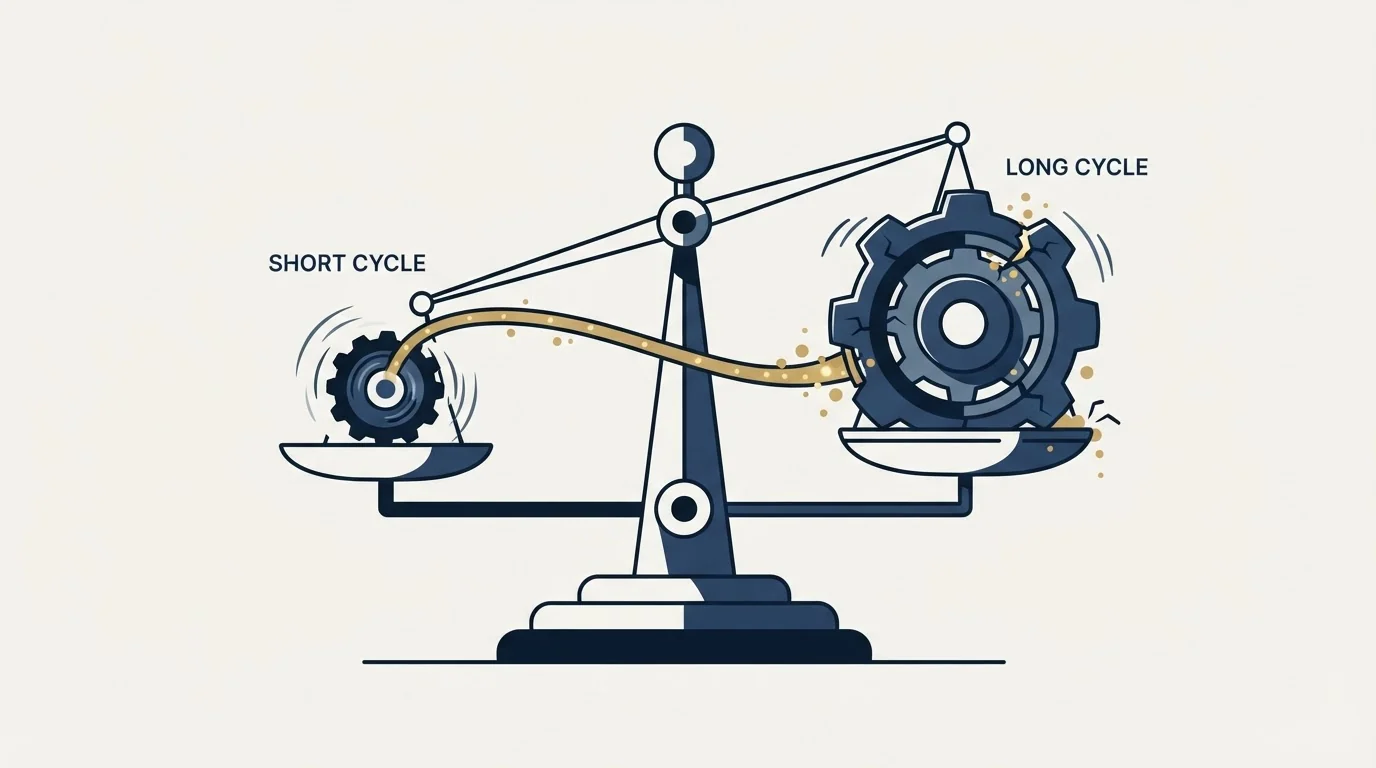
The reason those cannot be casually combined is not that different people enjoy them. It is that they are measured on different clocks. Expansion revenue lands inside a quarter with a short cycle and a known buyer. New-logo revenue lands after a cycle that is usually longer than the quarter it is worked in. A seat carrying both, judged quarterly, is being asked to fund a long-cycle number out of the same hours as a short-cycle one, and the arithmetic of the scorecard settles it before anyone's preference does.
- Decides which accounts are worth contacting
- Supplies its own reason and its own timing
- Rejection and silence are the normal condition
- Revenue lands after the quarter it was worked in
- Renewal, adoption, expansion, advocacy
- Timing is supplied by the customer's own calendar
- Most contact is welcome
- Revenue lands inside the quarter it was worked in
- Both jobs compete for the same hours
- The certain, faster number wins whenever the seat is behind
- New logo becomes the line that slips
- Looks like a motivation problem and is a clock problem
The three coverage models, and what each one decides
A coverage model is the answer to who is responsible for an account at each point in its life. Three shapes account for most of what companies actually run.
One seat lands and keeps. A single seller wins the account and owns it afterwards. Its advantage is continuity: the person who made the promises is the person who has to live with them, which disciplines what gets promised. Its failure mode is the opening scenario, and it arrives roughly when a seller's book of existing accounts becomes large enough to fill the week on its own.
Split at the signature. A hunter wins the logo and hands it to an account manager who owns expansion and renewal. Its advantage is that the new-logo number has an owner who cannot fund it out of expansion. Its failure mode is the handoff, which loses whatever the hunter learned about why the customer bought and what they were promised, and which the customer experiences as being passed to a stranger in month one.
Everyone does everything. The generalist model, which is what a company runs below a certain size whether or not it has named it. Its advantage is that it needs no handoff and no coordination. Its failure mode is that it is the combined seat, and it works only while the installed base is small enough not to compete for the week.
None of the three is correct in general. What decides it is arithmetic rather than philosophy.
The arithmetic that decides which one you need
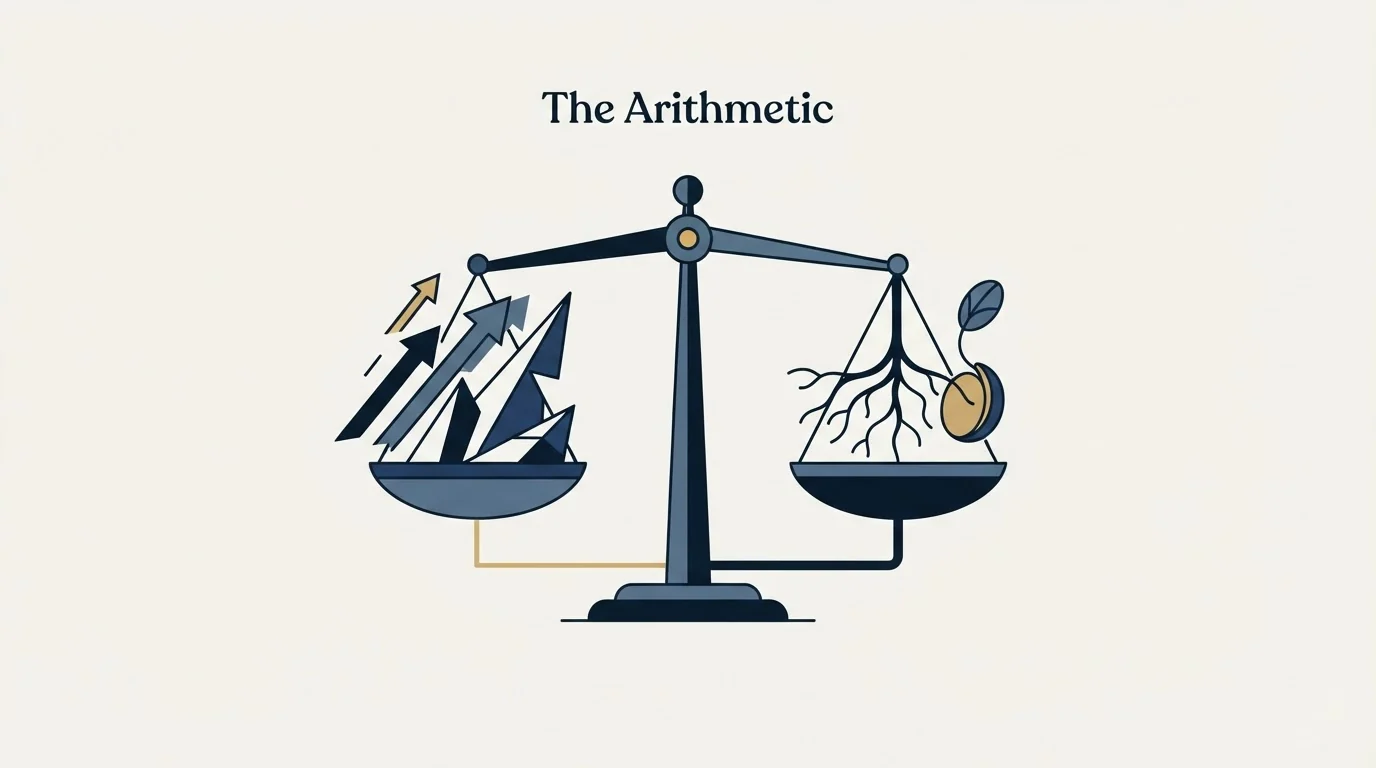
Four inputs settle it, and they are all numbers a company already has.
How many accounts are worth covering, how much time an existing account genuinely consumes per month, how long a new-logo cycle runs, and what share of next year's target is supposed to come from logos that do not exist yet. That last one is the input most often left implicit, and it is the one that makes the decision obvious once it is written down.
Every figure in the next paragraph is invented for the worked example. None of it is a benchmark and none of it is a RevenueFlow result.
Suppose a seller has capacity for roughly one hundred hours of account-facing work a quarter. Suppose an existing customer consumes two hours a month and a new-logo pursuit consumes fifteen hours across a cycle that runs two quarters. On those invented figures a seller holding twenty existing accounts has already committed one hundred and twenty hours a quarter before touching a new logo, and the new-logo number is not slipping because of effort. It is slipping because it was never in the budget. The moment the installed base per seat crosses the point where it consumes the available hours, the model has already changed whether or not anybody decided to change it.
That threshold, rather than headcount or company stage, is the trigger to watch. It is also why the split so often gets made a year late: nobody is measuring hours consumed by existing accounts, so the first visible symptom is a missed new-logo number, which reads as a performance problem in the seat.
Measuring that consumption is harder without a shared floor, and what replaces line of sight sets out which judgements have to move onto the activity record.
- Depends: The number of accounts worth covering is counted, not assumed
- Depends: Hours consumed by existing accounts per seat are measured rather than assumed
- Depends: The share of next year's target that must come from new logos is written down
- Depends: New-logo cycle length is known and is compared against the quota period
- Yes: If the roles are split, the hunter's quota contains no expansion component
- Yes: The handoff has a named owner, a written trigger and a context document
- No: The hunter is expected to build and enrich their own list as well
- No: Sellers were assigned to a side on the basis of a personality assessment
Where the split starves new logos anyway
Splitting the roles does not by itself protect the new-logo number. Two things undo it quietly.
A hunter quota with expansion in it. If any part of the hunting seat's target can be satisfied by growing an account it already touched, the same clock arithmetic reappears inside the seat that was created to escape it. The split only works if the hunter's number is unmixed.
A hunter who also has to source. A seat that spends half its week building and cleaning a list is not a hunting seat, it is a research seat with a quota attached. This is the most common way a split fails, because sourcing looks like part of hunting until you cost it. The four activities inside outbound work and the order in which they consume a week are set out in outbound SDR and inbound SDR, and the same reasoning applies a level up: the visible part of the job is the smallest part.
There is a third failure that belongs to the farming side. An account manager measured only on retention will not push an expansion conversation that risks the renewal, which is a rational response to the scoreboard and produces a book that never grows. A seam between two functions needs at least one number both sides carry, and the general case is worked through in GTM teams.
Why the personality version does the damage
A large part of what is published under this heading sorts sellers into types, sometimes with an assessment attached. Treat that as an answer to a different question.
Whether a person prefers new-relationship work or portfolio work is real and worth knowing at interview. What it cannot do is scope a seat. A company that assigns people to sides on the basis of a type test has still not decided how many accounts sit behind each seat, what the handoff trigger is, or whether the hunter's quota is clean, and those three decisions are what determine the outcome. The type test then explains the failure in terms of the people, which is the most expensive possible reading.
The practical order is the reverse. Design the seats from the coverage arithmetic, write down what each one owns, and only then ask which of the people you have would rather sit in which. Where the same reasoning shows up along a different axis, outside sales rep versus inside rep is the same argument about travel and coverage per account rather than about desk-versus-field temperament, and territory planning covers the carve itself, including why capacity rather than the map decides who is actually contacted.
What the split does not resolve
Neither model produces conversations. A hunter with a clean quota, protected hours and no sourcing obligation still needs a list of accounts worth contacting and a reason to contact them this quarter, and that is a supply problem sitting upstream of any coverage decision. Companies frequently reorganise the coverage model when the actual constraint was the top of the funnel, and the reorganisation then gets blamed for a result it was never going to change.
When that reason thins out the calendar goes quiet weeks later, and the cause being older than the symptom sets the order to check the inputs in.
The test is the same one that applies to a headcount request. If the accounts worth contacting outnumber the hours available, a coverage change helps. If the hours are there and the conversations are not, the constraint is the list, the message or the infrastructure, and moving people between seats moves the problem without touching it. SDR role definition covers what is left in a prospecting seat once the mechanical part of the work has been automated away, which is the other input into how many hunting hours a company actually has.
The short version
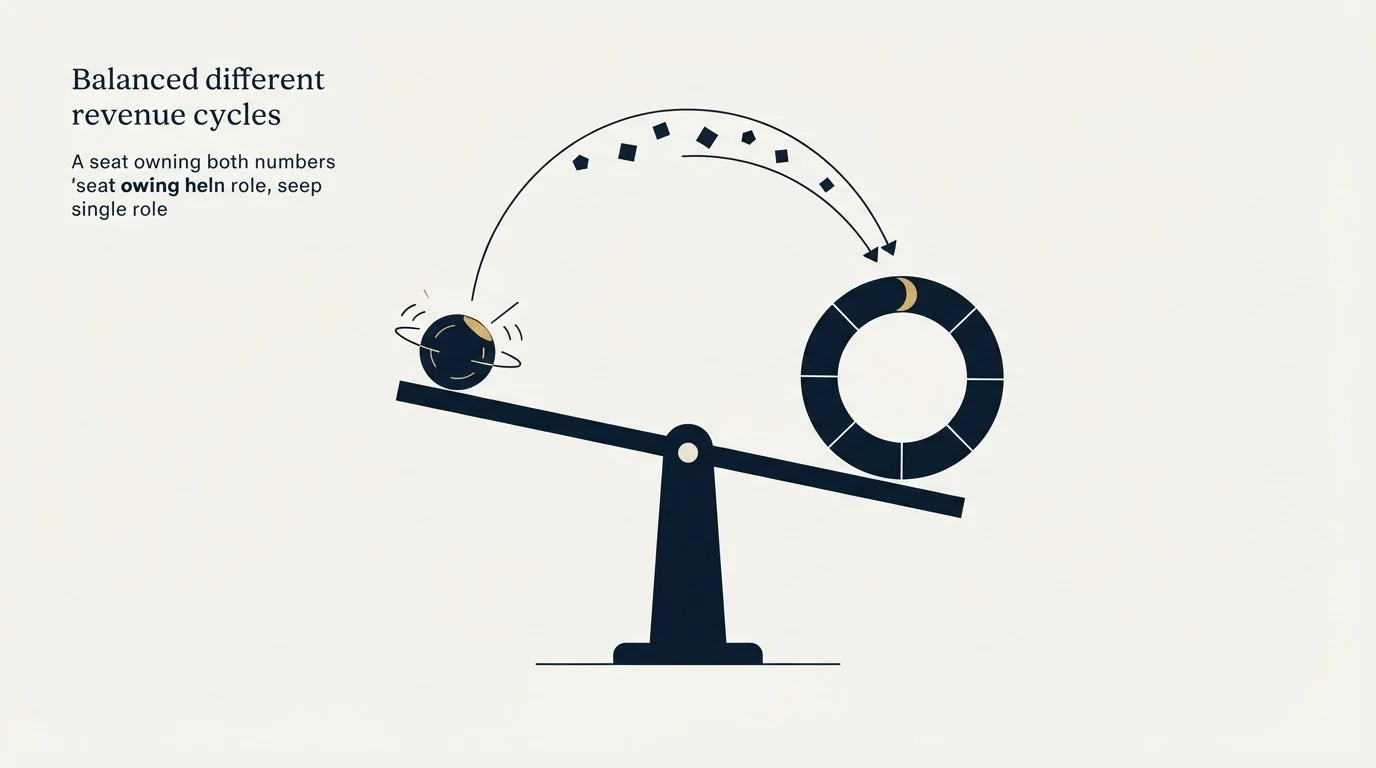
Hunter and farmer name two jobs separated by what they start with: no relationship, or a contract. They are hard to combine because they run on different clocks, and a seat that owns both numbers will fund the long-cycle one out of the short-cycle one whenever it is behind.
Three coverage models exist. One seat lands and keeps, the roles split at the signature, or everybody does everything. Which one fits is decided by four numbers you already have: accounts worth covering, hours an existing account consumes, new-logo cycle length, and the share of next year's target that has to come from logos that do not exist. The trigger for a split is the point where the installed base per seat consumes the available hours, and it is passed well before anyone notices because nobody is measuring it.
A split protects the new-logo number only if the hunting quota carries no expansion component and the hunting seat is not also the sourcing seat. Assign the seats from the arithmetic first and ask about temperament second, because a type test cannot tell you how many accounts fit behind a seat.
If the constraint turns out to be conversations rather than coverage, we run the outbound half and hand back meetings that meet criteria agreed in writing before anything sends.
Frequently asked questions.
Frequently asked questions- What is the difference between a hunter and a farmer in sales?
- A hunter starts with no relationship and has to decide which companies are worth a conversation, supply a reason it is worth having now, and earn a first meeting from someone who did not ask. A farmer starts with a signed contract and works renewal, adoption, expansion and advocacy. The distinction is what each job begins with, not what kind of person prefers it.
- Should we split our sales team into hunters and farmers?
- Read it off four numbers you already have: accounts worth covering, hours an existing customer consumes per month, new-logo cycle length, and the share of next year's target that has to come from logos that do not exist yet. When the installed base per seat consumes the available hours, the model has already changed whether or not anyone decided it. Below that point a generalist seat is cheaper and needs no handoff.
- Why does a hunter farmer split sometimes fail?
- Two things undo it. If any part of the hunting quota can be satisfied by expanding an account, the same clock arithmetic reappears inside the seat created to escape it. And if the hunter also has to build and enrich the list, it is a research seat with a quota attached rather than a hunting seat. A third failure sits on the farming side, where a manager measured only on retention avoids the expansion conversation.
- Is a hunter farmer test a good way to assign sellers?
- It answers a different question. Whether somebody prefers new-relationship work or portfolio work is worth knowing at interview, but it cannot scope a seat. A company that assigns by type has still not decided how many accounts sit behind each seat, what triggers the handoff, or whether the hunting quota is clean, and those three decide the outcome. Design the seats from the coverage arithmetic first.
About the author.

B2B cold email experts helping companies generate qualified leads through done-for-you outreach campaigns.
RevenueFlow Team
Explore more.
Ready to scale your outreach?
We build GTM engines that book real meetings. See the receipts.
Related articles.
Land and Expand: The Motion, Its Metrics and Where It Fails
Land and expand as three public companies describe it in their own filings and as the sales publishers teach it: the motion, its retention metrics, and where it fails.
SDR Outsourcing for Business Brokers: The Fee Timing
Whether a success-fee brokerage should rent sales development at all: the fee timing, the texts that limit what an outside person may say about value, and who signs.
SDR Outsourcing for Logistics Companies: The Brokerage Line
What an outside sales development team may do in a freight company's name, the calling and email rules it inherits, and which arrangement survives a bid-shaped market.
Appointment Setting for Business Brokers: The Seller Meeting
What a bought meeting with a business owner has to be for a brokerage: the three-part qualification, the confidentiality rules, the licence line and the owner's reasons.
3x3 Research: Three Facts in Three Minutes Before Outreach
3x3 research as Funnel Clarity publishes it: three unique facts in three minutes that the prospect would be surprised you know, the variants, and where it fits.
Sales Prospecting for Utilities: Read the Filings First
Prospecting utilities from the proceedings that announce their spend: rate cases, resource plans and procurement decisions, who owns each, and the supplier gate.