ZoomInfo Lite: What the Free Tier Costs You in Kind
ZoomInfo's data sources page describes Lite users as providing contact information in exchange for access. That sentence explains the free tier better than any review.
ZoomInfo Lite is a permanent free tier rather than an expiring trial, and it is contributory. The vendor's own data sources page describes Lite users as providing business contact information in exchange for free access, so the price is paid in data drawn from your mailbox rather than in money.
Key takeaways
- The free tier, the Community Edition and the time-limited trial are three different things the search results conflate, and they commit you to different arrangements.
- ZoomInfo's data sources page states that more than 200,000 professionals use Lite and provide business contact information in exchange for free access.
- The people in your address book never agreed to the trade, which makes connecting a work mailbox an organisational decision rather than an individual one.
- A capped free tier is an excellent coverage test on thirty accounts you already know, and a poor sourcing engine for any campaign with volume.
Reviewed and updated August 28, 2026
ZoomInfo's own data sources page contains one sentence that explains the free tier better than any review of it. The page states that "more than 200,000 business professionals use our ZoomInfo Lite platform, and provide accurate business contact information in exchange for free access to ZoomInfo."
That is the vendor describing the arrangement plainly on a page about where its database comes from. Lite is not a trial that expires and it is not a loss leader in the ordinary sense. It is a trade, and the thing being traded is your address book.
The mechanism has a name and a process on your endpoints: ZoomInfo Contact Contributor is the agent that performs the contribution, which is why it turns up in security tooling as a data-egress finding rather than in a procurement review.
What the free tier is, and what the SERP gets confused about
Search for this and you will find at least three different things wearing similar names, sometimes on the vendor's own domain. There is a free tier. There is a Community Edition. There is a time-limited free trial of the paid product. The pages describing them cross-reference each other, and it is entirely possible to sign up believing you have one and to have another.
Sort that out before you evaluate anything. A free tier persists and is governed by what you contribute. A trial expires and is governed by a clock. Those are different commitments and they fail differently: a trial that ends leaves you shopping, while a contributory free tier that ends leaves you having already contributed.
ZoomInfo's Lite offer page describes the product as free, aimed at small businesses finding contact and company information, with capabilities listed as individual and company search, contact information and email addresses, advanced search filters, list building, CRM integration, data enrichment and validation, and real-time data updates.
What that page does not carry is a credit allowance. Two of the vendor's FAQ pages that would carry the specifics, including the business Community Edition FAQ and the general pricing FAQ, returned HTTP 403 to a plain automated request on 13 August 2026, while other pages on the same host served normally. A 403 is a failed fetch rather than evidence that a number is unpublished, so no allowance figure appears in this article. Open the signup flow in a browser and read the current allowance there, because it is the only version that is definitely current and it takes fifteen seconds.
The price is real, it is just not denominated in money

The contributory model works by connecting your business email. Once connected, the platform reads signals from your mail that improve the underlying database. The vendor's data sources page groups this under contributory data alongside its other data sharing programs, giving the example that a connected email tool can help it understand email accuracy through deliverability data.
Think about what your mailbox contains if you work in a revenue role. Every person who has ever emailed you, their name as they sign it, their title as they claim it, their direct line if it sits in their signature, and the timestamp proving they held that job on that date. That is not incidental exhaust. Signature blocks and address books are among the highest-quality inputs a contact database can receive, because they are self-reported by the person and dated by the message.
- Step 1You sign up for free
No card, no contract, no expiry clock. The barrier is deliberately near zero.
- Step 2You connect a business mailbox
Connection is what activates the arrangement, and it is the step worth pausing on.
- Step 3Contact data flows the other way
The vendor describes Lite users as providing accurate business contact information in exchange for free access.
- Step 4The database improves
Contributed records raise coverage and freshness for every paying customer, which is the point of the programme.
- Step 5You spend your allowance
You draw a limited number of lookups against a database your own contacts helped build.
The consent problem nobody puts on the signup page
Here is the part that deserves a moment of thought before anyone at your company clicks connect.
The people in your address book did not agree to this. They emailed you. Your customers, your candidates, your suppliers, your friends who happen to write from a work account, and every prospect who ever replied to you are all sitting in that mailbox, and the arrangement passes their details into a commercial database on the strength of a decision made by you.
Whether that is lawful depends on jurisdiction, on the terms you accepted, and on the nature of the data, and this is not the place for a legal answer. Whether it is comfortable is a question you can answer immediately, and it is the one that tends to settle it. Most people, asked directly whether they would like their contact details forwarded to a data vendor because a colleague wanted free software, say no.
There is also a straightforward organisational risk. An individual employee can activate this for themselves in about a minute, using a company mailbox full of company relationships, without anyone in legal or security ever seeing it. If your company has a data protection posture at all, the free tier is a thing worth naming in policy rather than discovering later.
- You pay with a limit, a clock, or a feature wall
- The cost is visible and lands on you alone
- Walking away costs you nothing you have not already spent
- Nobody else is affected by your decision
- You pay with data drawn from your own relationships
- The cost is invisible and falls partly on third parties
- Walking away does not retrieve what was already contributed
- The people who paid most of it were never asked
What the arrangement tells a paying customer

There is a second reading of that data sources sentence, and it matters more to someone evaluating the paid product than to anyone considering the free one.
Contributory data is a provenance answer. If a meaningful share of a database's freshness comes from mailboxes volunteered by users of a free tier, then the coverage you are buying is strongest where those contributors work and weakest where they do not. That is a real and predictable shape rather than a flaw: densest in the roles and regions that adopt sales tooling most heavily, thinner in industries and countries where nobody is running a connected inbox.
It is also the mechanism behind a phenomenon buyers notice and rarely explain. Direct dials and titles for mid-market software companies in North America tend to be excellent. The same query against a family manufacturer in a market with lower tooling adoption tends to be thin. Knowing where the records come from lets you predict that before you sign, and it is a better use of a free account than any feature tour: test the segment you doubt rather than the segment you expect to work.
When Lite is genuinely the right call
None of the above makes it a bad product. It makes it a product with a price tag written somewhere other than the price field, and there are situations where the trade is clearly worth making.
Because published reviews rarely surface a data trade like this one, it helps to know how vendor review pages filter feedback before trusting star ratings alone.
Evaluating coverage before you buy is the strongest one. A free account lets you test the database against companies you know well, which is the only coverage test worth running. Take thirty accounts in your actual target market, ideally ones where you already know the right contact and their real title, and check what the database returns. Coverage claims quoted in millions of records tell you nothing about your segment, and the gap between a vendor's global numbers and its depth in one industry or one country is where most disappointment comes from.
That kind of coverage check matters even more with a vendor like Lusha, whose credit based pricing for records determines the true cost of each email or phone number revealed.
A second good use is a genuinely low-volume need. Somebody who looks up a handful of contacts a month is not going to buy an enterprise seat, and a capped free account is a reasonable answer to a small problem.
Monday CRM vs ZoomInfo: Cross-Category Comparison explains why the two are complementary rather than competing, with one sourcing contacts and the other managing the resulting pipeline.
The case where it falls down is the one people most often try. A free tier is not a sourcing engine for a campaign. The allowance is designed to be insufficient for volume, which is what makes the model work, and the practical experience of trying to build a list of any size on a capped tier is a lot of clicking followed by an upgrade conversation. If you need volume, price the paid product or price an alternative, and make that decision deliberately rather than arriving at it one credit at a time.
What to do before anyone at your company connects a mailbox
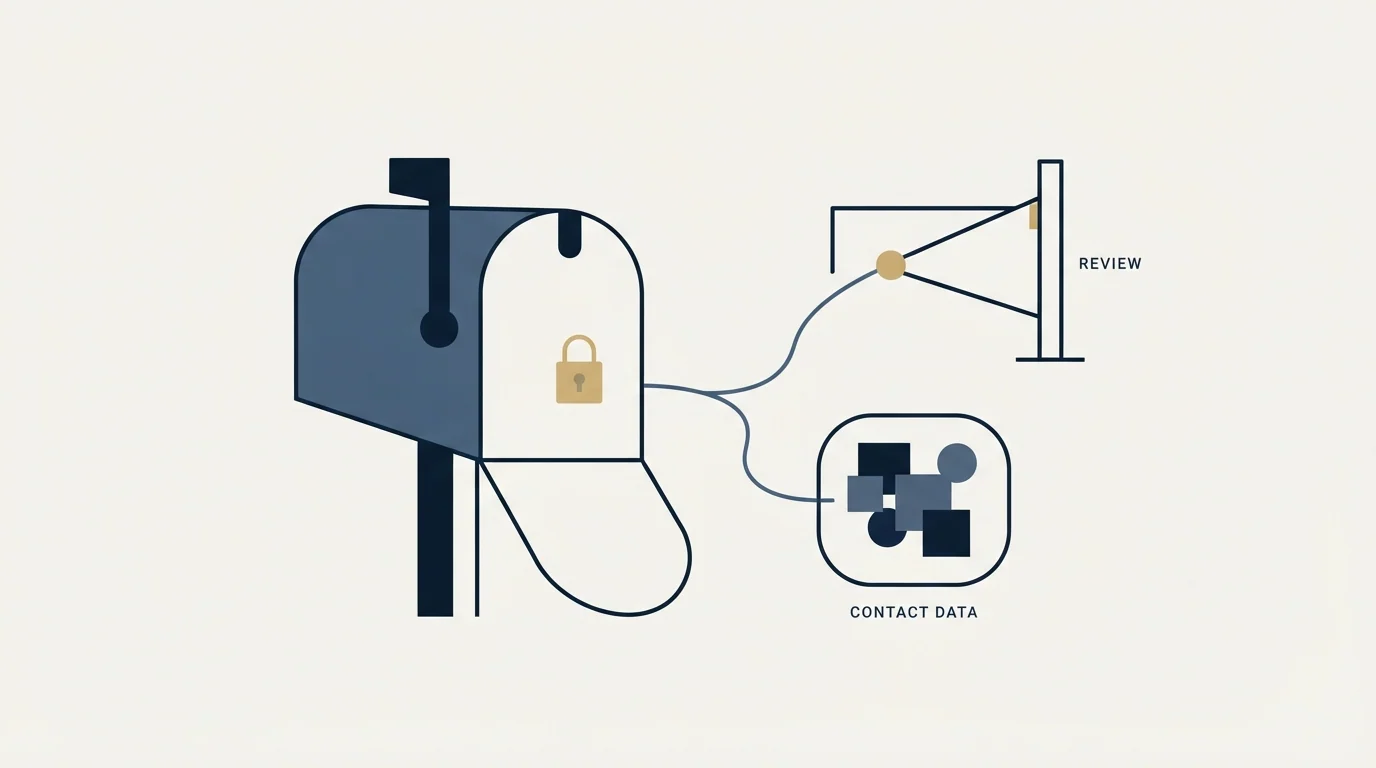
Run the coverage test first, on a personal or a dedicated account rather than a mailbox full of client relationships, and decide whether the database is even good enough on your market to be worth continuing with. If it is not, you have your answer and you have contributed nothing.
If it is, read the terms attached to the connection, decide whether your company is comfortable making that trade on behalf of everyone in the address book, and make the decision at the level where that authority actually sits. Where the answer is no, a paid account or a different supplier is the version of this product that does not spend other people's data, and the alternatives are worth comparing on coverage and cost rather than on the sticker.
Once a paid account looks like the right move, what ZoomInfo discloses about its pricing model explains why you still have to request a quote to learn an actual figure.
It is also worth knowing how the rest of the suite treats uploads, because the same question recurs. Verification products require you to hand over your list, and what changes when your verifier belongs to a data platform is the same shape of question as this one. So is the enrichment waterfall decision, where the practical answer for most teams is several narrow sources rather than one broad contract.
- Yes: Run a thirty-account coverage test on your real target market first.
- Yes: Use a clean account for the test rather than a mailbox holding client relationships.
- Yes: Read what the connection grants, and for how long, and what survives disconnection.
- Yes: Decide whether your company can make this trade on behalf of everyone in the address book.
- Yes: Check whether your data protection policy already answers this, and add it if it does not.
- No: Treat the free allowance as an evaluation budget, never as campaign sourcing.
The summary worth keeping
ZoomInfo Lite is free of charge and it is not free of cost. The vendor says so on its own data sources page, describing Lite users as providing business contact information in exchange for access, and there is no reason to read that as anything other than an accurate description of the deal.
Use it to test coverage before you buy, which is exactly what a free tier is good for. Decide consciously whether to connect a mailbox, because that decision spends data belonging to people who are not in the room. And keep data quality as the separate question it is, judged on your own market rather than on anybody's headline record count.
If you would rather skip the tooling decision, RevenueFlow runs the sourcing and the sending and books qualified meetings on a pay-per-meeting basis.
Vendor pages verified as of mid-2026. Verify current terms with the vendor before relying on them.
Frequently asked questions.
Frequently asked questions- Is ZoomInfo Lite actually free?
- It costs no money and it is not costless. The vendor's own data sources page describes the arrangement as Lite users providing accurate business contact information in exchange for free access, so the payment is contributed data rather than cash. Whether that is a good trade depends on whose data sits in the mailbox you connect.
- How many credits does ZoomInfo Lite include?
- No figure appears here because the vendor pages carrying it returned HTTP 403 to an automated request on the date checked, and a failed fetch is never evidence that a number is unpublished. Open the signup flow in a browser and read the current allowance there. It takes seconds and it is the only version guaranteed to be current.
- What does connecting my email to ZoomInfo Lite actually share?
- The vendor groups this under contributory data on its data sources page, describing how connected tools help improve the underlying database, including using deliverability signals to understand email accuracy. Read the specific terms presented at connection before agreeing, because the scope is defined there rather than on the marketing page.
- Can I use the free tier to build a cold email list?
- Not at any useful volume. The allowance is deliberately sized below campaign needs, which is what makes the contributory model work commercially, so the attempt usually ends in an upgrade conversation. Use the free account to test coverage on accounts you know well, then price the paid product or an alternative as a deliberate decision.
About the author.

B2B cold email experts helping companies generate qualified leads through done-for-you outreach campaigns.
RevenueFlow Team
Explore more.
Ready to scale your outreach?
We build GTM engines that book real meetings. See the receipts.
Related articles.
Video Prospecting Tools by Job: What Each One Is For
Ten video prospecting tools sorted by the job each vendor's own page describes: record and share, personalise at volume, avatars, hosting and interactive demos.
Firmographic Data Providers: What Six of Them Publish
Six firmographic data providers read from their own pages: the fields each sells, the coverage each states, how the data is delivered, and who prints a price.
Zeliq Pricing: One Seat Rate and a Credit Meter
Zeliq prices one self-serve seat in dollars with a credit meter that never expires. Both billing states, the three credit rates, the top-up ladder and the Custom floor.
Salesgear Pricing: Two Ladders Under One Plan Title
Salesgear's page is titled as one plan and carries a Data ladder and an Outreach ladder. Both at both billing states, what each meters, and the two vendor-side conflicts.
Bookyourdata Pricing: 25 Packs, Priced Per Contact
Bookyourdata sells credits in twenty-five packs with no subscription. The dated ladder, the per-contact rates rendered in the browser, the guarantee rule and BeSpoke.
LinkedIn Chrome Extensions, Sorted by the Job They Do
The category holds four unrelated products. Which job each extension does, what six vendors publish about their own, and what none of them change.