Outbound Lead Generation: The Two Words That Decide What It Includes
Outbound lead generation is starting sales conversations with people who have not contacted you first. Your company chooses the accounts and the named people, makes the first move by email, phone or a professional network, and measures the output in replies and booked meetings. It is four jobs: targeting, the premise, delivery and reply handling.
Key takeaways
- Outbound lead generation means your company initiates: it selects the accounts and people, decides what to say, and makes the first move.
- The work is four jobs that fail independently, targeting, the premise, delivery and handling the reply, and the first decides the value of the other three.
- A name on a list is a target, and it becomes an outbound lead only when the person responds in a way that makes a sales conversation plausible.
- Outbound reaches good-fit companies that were never going to search for you, and its risk is volume aimed at the wrong list damaging a shared sending reputation.
Outbound lead generation is the practice of starting sales conversations with people who have not contacted you first, by choosing them deliberately and reaching out. The company selects the accounts and the individuals, decides what to say to them, and makes the first move, which is the single property that separates it from every inbound motion.
Both halves of the phrase carry weight. Outbound means the initiation is yours. Lead generation means the output is a conversation with a named person rather than a signed deal, so the work ends at a reply or a booked meeting and hands over from there.
What is outbound lead generation?
Outbound lead generation is lead generation where your company makes the first move. You pick the companies and the people, write to them or call them before they have shown any interest, and count the result in replies and booked meetings. It is the opposite of inbound, where buyers find you, and it is narrower than outbound demand generation, which aims to create interest across a market rather than start a conversation with a named person. That wider job is defined under demand generation.
What it includes, and where it stops
The activity is usually described by its channels, which is the least useful way to hold it. Cold email, telephone, connection requests and messages on professional networks, and physical mail are all delivery mechanisms, and swapping one for another changes the cost per attempt without changing the shape of the work.
The shape is four jobs, and they fail independently.
Targeting. Deciding which companies and which named people are worth contacting, and assembling that list with contact data that resolves. This is research, it happens before anything is sent, and everything downstream inherits it.
The premise. The reason this specific message exists for this specific reader this month. A premise is not a product description; it is a claim about their situation that they can recognise and that could be wrong.
Delivery. Sending at a volume the infrastructure can carry, to addresses that exist, from a sender the receiving side is willing to accept.
Handling the reply. Reading what comes back, qualifying it against criteria, and getting the willing ones into a calendar quickly.
An outbound lead is a person your team decided to contact, who has responded in a way that makes a sales conversation plausible. The term is used loosely for anyone on the target list, which is worth resisting: a name on a list is a target, and treating targets as leads inflates every count built on top of them.
Where the practice stops is equally definite. It does not include closing, it does not include the commercial negotiation, and it does not include anything that happens after the first meeting is held. Confusing the layers is the most common way an arrangement to buy this work goes wrong, and the four-layer split is set out under outsourced sales.
| Outbound: you choose, then you write | Inbound: they arrive, then you respond | |
|---|---|---|
| Who selects the audience | You decide which companies hear from you | The audience selects itself |
| Who it reaches | Good-fit accounts that have never searched for you | Only people already looking for your category |
| How fast it answers | In days, so a bad premise is cheap to discover | Over quarters, so a bad bet is expensive to discover |
| What limits it | Targeting quality and sending capacity | Demand that already exists |
| What an attempt costs | Something every time, whether or not it lands | Nothing at the margin once the asset is published |
Why it matters
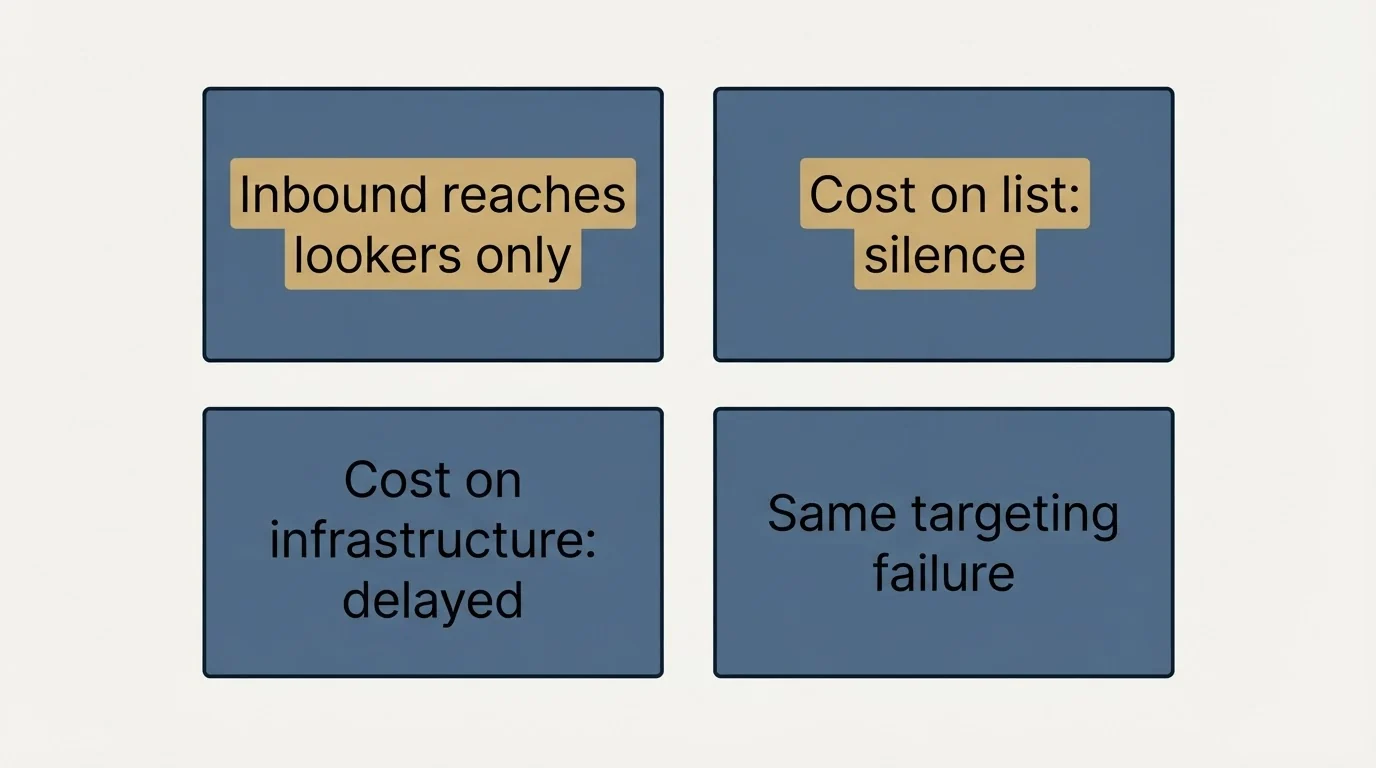
The case for outbound is a case about reach rather than about efficiency, and it rests on one fact: inbound can only ever reach people who were looking. If the accounts you most want to sell to are not searching for your category, no amount of publishing will produce a conversation with them, and the comparison written out in full is inbound marketing against outbound.
The cost of getting it wrong is specific and it lands in two places.
On the list. A poorly chosen audience produces silence that reads exactly like a message problem. Teams then rewrite the copy, send again, get the same silence, and conclude that outbound does not work for them. The diagnostic that separates the two is whether the non-responders were people who could plausibly have bought, and it is answerable from the list rather than from the results.
On the sending infrastructure. Volume aimed at addresses that do not resolve, or at people with no reason to want the message, damages a sending reputation that is shared across everything else the company sends. That cost is delayed, it is not visible in a campaign report, and it is paid by future campaigns rather than by the one that caused it.
Both failures come from the same place, which is why the targeting job is the one worth over-investing in. Volume is the cheapest input in the whole motion and it is the one teams reach for first.
How it is actually run
A campaign that works is mostly decisions taken before anything sends.
Build the segment so it supplies the opening line. A company chosen only for its industry and headcount gives a writer nothing specific to say, because nothing specific is known. A company chosen because it runs a particular system, has opened a second location, or is visibly hiring into the function your product supports can be opened with something true that the reader recognises. The mechanism is set out under market segmentation: in outbound, a segment is a premise.
Verify the addresses before the send, not after. Undeliverable records are the largest avoidable cost in the motion and the only one that damages an asset you cannot replace.
Write one message that could be wrong. A claim specific enough to be false is the only kind worth a stranger's attention. Copy that could be sent to any company in the segment is copy that says nothing about any of them.
Agree what a qualified reply is, in writing, before launch. A positive reply is not automatically a lead, and the boundary between the two is a definition somebody has to own. The instrument is lead qualification, and where money depends on the answer, the criteria belong in the agreement rather than in a conversation after the meeting.
Read what comes back yourself. The negative replies carry more information than the positive ones, because they say why. A programme where nobody internal reads the actual responses has exported its own feedback loop.
Channel choice follows deal size rather than preference, because every channel has a different cost per attempt and the contract value decides how far down that list you can afford to go. Channel mix by deal size works the arithmetic through band by band.
The tools that do each of those jobs, priced in their own units, are compared layer by layer in outbound lead generation tools.
Where the textbook definition misleads
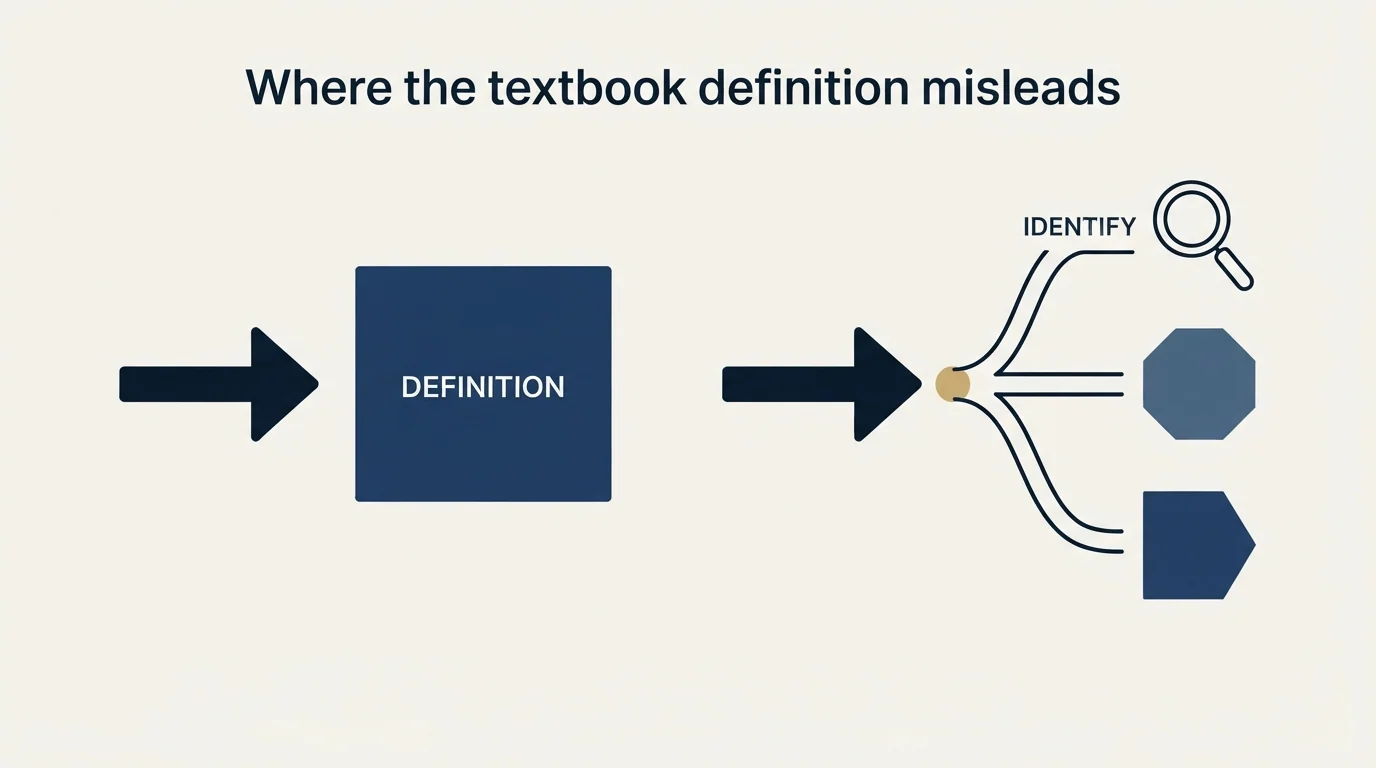
Outbound is presented as a volume lever. Most published material treats the motion as a function of how many messages go out, and the reliable levers are upstream of volume. Two hundred companies where you know something specific will produce more conversations than two thousand where you know only the industry.
The channels are treated as the strategy. Choosing cold email or the telephone is a decision about cost per attempt. It says nothing about who is being contacted or why, and a team that leads with the channel has let a tool's affordances choose its audience.
"Outbound lead" is used for everyone on the list. A target becomes a lead when they respond in a way that makes a conversation plausible, and counting the list as leads inflates every ratio computed from it, starting with the conversion rate.
Repetition is assumed. The standard shape is a sequence: an opening message, then several scheduled reminders to the people who did not answer. Our position is different and it is deliberate. We send one message per campaign, built on one premise, once. Silence from somebody who read the message and chose not to reply is information about their priorities rather than an absence to be filled. The full argument, including what it cost us, is in why we stopped using follow-ups.
It gets asked to validate an offer nobody has tested. Outbound is an efficient way to distribute a message that already lands and an expensive way to discover that it does not. Where the offer has never been put to a stranger, the first campaign is a research exercise and should be budgeted as one.
Confirm all six before reading the reply rate
- The segment is defined tightly enough to name twenty example companies
- The premise says something specific that could turn out to be untrue
- Undeliverable addresses were removed before the first send, not after
- What counts as a qualified reply is written down and agreed
- Somebody internal reads the replies, including the negative ones
- Enough has been sent for a reply rate to mean anything
Related terms
Inbound lead is the counterpart population, and the contrast with it is where most of this term's meaning comes from. Lead qualification decides which replies become leads at all. Lead scoring is the automated ranking that structurally cannot see this audience, because a company that has never visited you scores zero on every behavioural signal. And market segmentation is the work that decides whether the list was ever worth writing to. The inbound version of the same job, and where the two overlap, is covered in inbound lead generation.
The short version
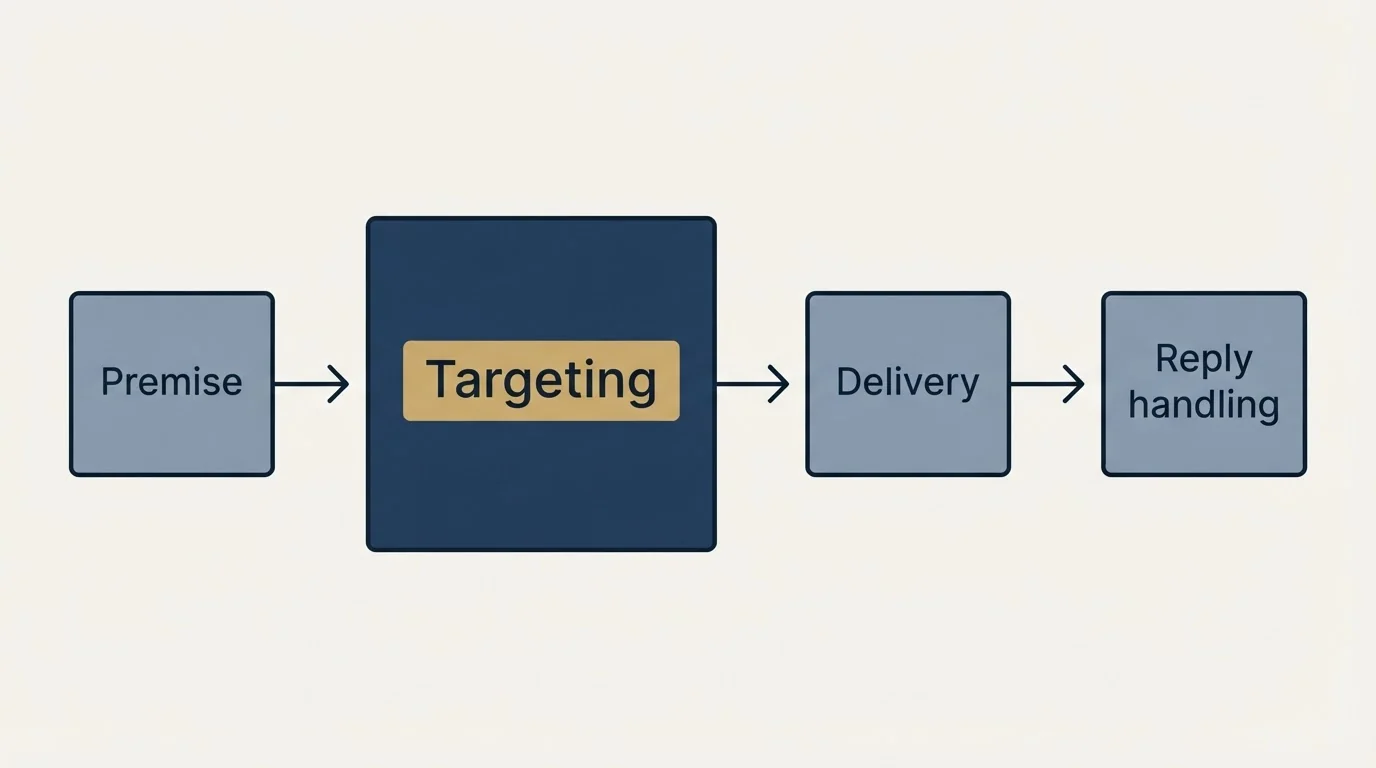
Outbound lead generation is choosing who to talk to and contacting them first. It is four jobs rather than one, and the first of them decides the value of the other three: targeting, then the premise, then delivery, then handling the reply.
The motion's real advantage is that it reaches good-fit companies who were never going to search for you, and its real risk is that volume aimed at the wrong list costs you a sending reputation you share with everything else. Build the segment so it supplies the opening line, verify the addresses first, write something that could be wrong, and agree what a qualified reply means before anything sends. The targeting work that decides all of it starts with an ideal customer profile with the arithmetic attached.
That is the half we run for clients, on email and on professional networks, priced against qualified meetings rather than against activity: see what a first campaign produces.
Frequently asked questions.
Frequently asked questions- What is outbound lead generation?
- Outbound lead generation is the practice of starting sales conversations with people who have not contacted you first. The company chooses the accounts and the individuals, decides what to say, and makes the first move by email, telephone, a professional network or post. Its output is a reply or a booked meeting, not a signed deal.
- What is the difference between outbound and inbound lead generation?
- Who initiates. In outbound you decide which companies hear from you, reach good-fit accounts that never searched for you, and get an answer in days. In inbound the audience selects itself, you reach only people already looking for your category, and results arrive over quarters. Outbound is limited by targeting and sending capacity, inbound by existing demand.
- What counts as an outbound lead?
- A person your team decided to contact who has responded in a way that makes a sales conversation plausible. The term is often used for everyone on the target list, which inflates every ratio built on it. A name on a list is a target. Agree in writing what a qualified reply is before launch, so the count means something.
- How do you run outbound lead generation?
- Take the decisions in order. Build a segment narrow enough to supply the opening line, verify the addresses before sending, write one message with a claim specific enough to be wrong, agree in writing what a qualified reply is, and have somebody internal read every reply. Channel choice follows deal size, because each channel has a different cost per attempt.