AI Cold Calling: What a Per-Minute Price Buys
Retell lists AI voice agents at $0.07 to $0.31 a minute. JustCall lists $0.99. The fourteen-fold gap is the most instructive thing about the category.
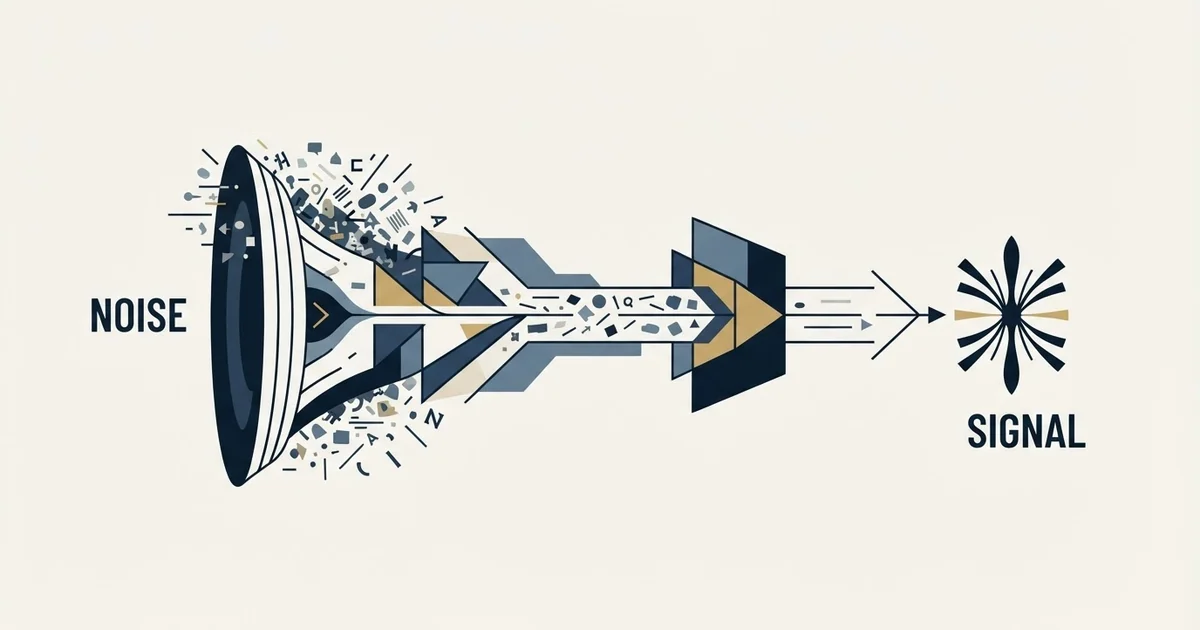
AI cold calling is a synthetic voice placing outbound calls from a list and handing interested prospects to a person. Vendors price it per minute: Retell AI lists $0.07 to $0.31 at the infrastructure layer and JustCall $0.99 for a packaged agent. The FCC has ruled AI-generated voices artificial under the TCPA, so calls to mobiles need prior express consent.
Key takeaways
- Retell AI's pricing page lists $0.07 to $0.31 a minute and itemises the stack, voice infrastructure at $0.055, text to speech at $0.015 and a language model line, composing to $0.11 in its own example.
- JustCall's AI Voice Agent page lists $0.99 a minute pay as you go, 100 minutes for $99 a month or 300 for $249, and its pricing page advertises volume discounts down to $0.15 a minute.
- The FCC's 2024 declaratory ruling confirms that the TCPA's artificial or prerecorded voice restrictions cover AI-generated voices, so such calls need the called party's prior express consent.
- The FTC's business exemption does not carry across: the FCC rule keys on the line type and the voice, and B2B prospecting runs on mobile numbers, so counsel comes before the pilot.
Reviewed and updated September 18, 2026
Two vendors will sell you an AI voice agent this week at prices that differ by a factor of fourteen. Retell AI's pricing page lists $0.07 to $0.31 a minute for AI voice agents. JustCall's AI Voice Agent product page lists $0.99 a minute on pay as you go. Both numbers are real, both are published, and the gap between them is the most instructive thing about this category.
That is AI cold calling as the market sells it today, and the technology now works well enough that the interesting questions are commercial and legal rather than technical. This piece covers what the per-minute price actually contains, what the rules say about machines on the phone, and the narrow set of jobs where the model earns its keep. RevenueFlow does not sell calling of any kind, synthetic or human, so nothing here is a pitch for one.
What is AI cold calling?
AI cold calling is a synthetic voice placing outbound calls from a list, holding a short scripted conversation, and handing anyone interested to a person. Vendors sell it per minute, from $0.07 to $0.31 at the infrastructure layer to $0.99 for a packaged agent. The FCC has ruled that AI-generated voices are artificial voices under the TCPA, so calls using them need the called party's prior express consent.
What a per-minute price is made of
The reason two vendors can be fourteen times apart is that they are selling at different layers. One sells infrastructure that you assemble, the other sells a finished product that you switch on.
Retell's pricing page itemises the stack, which makes it a useful reference even if you buy elsewhere. Its own voice infrastructure is listed at $0.055 a minute. Text to speech is listed at $0.015 a minute for platform voices, rising to $0.040 a minute for ElevenLabs voices. The language model is a separate line that varies by which model you pick, and the page's own worked example composes to $0.11 a minute. The pay as you go tier starts with $10 in free credits and includes 20 concurrent calls.
JustCall's $0.99 a minute buys the assembled version: a configured agent, telephony, and the support around it. Its AI Voice Agent product page adds bundles of 100 minutes for $99 a month and 300 minutes for $249 a month, its help centre bills overage at $0.99 a minute, and its pricing page advertises volume discounts down to $0.15 a minute for the add-on. Neither price is wrong. They answer different questions, and a buyer comparing them without noticing the layer difference will reach a conclusion about value that is really a conclusion about scope.
The per-minute framing hides one thing that matters more than the rate. Most dialled minutes are not conversation minutes. Ringing, voicemail and wrong numbers consume the list without producing anything, and the cost of a programme is set by how many minutes it burns to reach one real conversation, not by the sticker rate. Model the cost per connected conversation before the cost per minute, using your own connect rate.
What the rules say about a machine on the phone
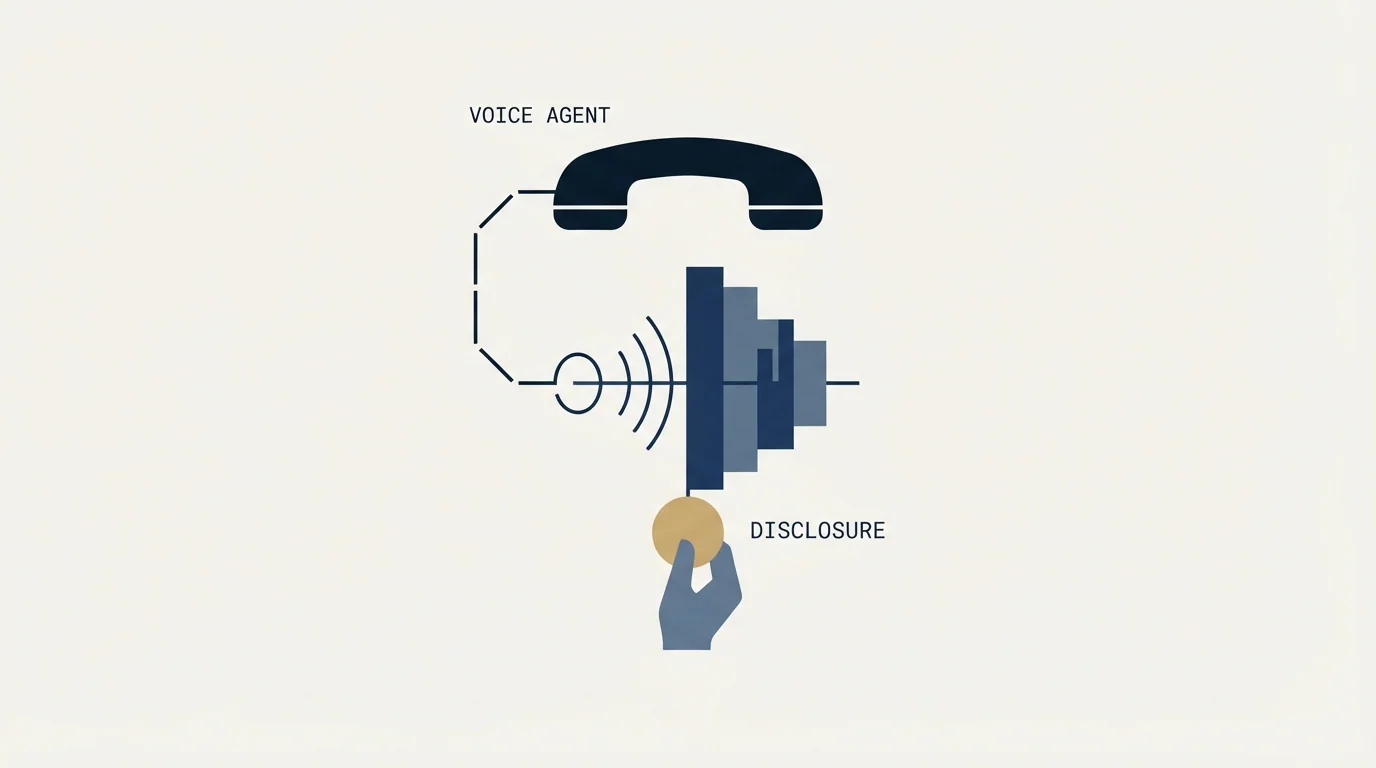
The Federal Trade Commission's Telemarketing Sales Rule is the document to read first, and its structure surprises people twice.
The first surprise is how much of it does not apply to business calling. The FTC's own compliance guide states that "most phone calls between a telemarketer and a business are exempt from the TSR," with narrow exceptions for the retail sale of nondurable office and cleaning supplies and for calls that solicit an employee to buy something personally. The guide also states that the National Do Not Call Registry prohibition "does not apply to business-to-business calls."
The second surprise is how hostile the covered part of the rule is to recorded audio. The guide defines a call as abandoned "if a person answers it and the telemarketer does not connect the call to a sales representative within two seconds of the person's completed greeting," and states plainly that "the use of prerecorded message telemarketing, where a sales pitch begins with or is made entirely by a prerecorded message, violates the TSR." The safe harbour for abandonment allows "no more than three percent of all calls answered by a live person," measured per campaign or per 30-day period, and requires letting a phone ring for 15 seconds or four rings.
The regulation behind that guide is more precise than the guide, and it is worth reading directly. The business exemption at 16 CFR 310.6(b)(7) covers "telephone calls between a telemarketer and any business to induce the purchase of goods or services", and it names exactly two things it does not cover: calls inducing the retail sale of nondurable office or cleaning supplies, and "the requirements of § 310.3(a)(2) and (4)". Those two survivors are the anti-deception provisions. Section 310.3(a)(2) prohibits "misrepresenting, directly or by implication" any material aspect of what is being sold, and 310.3(a)(4) prohibits "making a false or misleading statement to induce any person to pay for goods or services". So the part of the telemarketing rule that still binds a business-to-business caller is the part about telling the truth, which is the part a synthetic voice most needs to think about.
The Federal Communications Commission rule is the one that actually bites, and it is codified where anyone can read it. 47 CFR 64.1200(a)(1) states that no person or entity may "initiate any telephone call (other than a call made for emergency purposes or is made with the prior express consent of the called party) using an automatic telephone dialing system or an artificial or prerecorded voice" to a list of destinations that includes, at (a)(1)(iii), "any telephone number assigned to a paging service, cellular telephone service, specialized mobile radio service, or other radio common carrier service". Paragraph (a)(2) applies the same restriction to any call that "includes or introduces an advertisement or constitutes telemarketing".
The Commission has since said in terms what that text means for synthetic voices. Its declaratory ruling in docket 23-362, FCC 24-17, is described on the FCC's own document page as confirming "that the TCPA's restrictions on the use of "artificial or prerecorded voice" encompass current AI technologies that generate human voices", with the consequence that "calls that use such technologies require the prior express consent of the called party". So the question of whether an AI caller is an artificial voice is not open: the regulator has answered it, and the answer routes every AI cold call to a mobile number through the consent requirement.
Read those two together and the practical position is the opposite of the comfortable one. The artificial-voice trigger is independent of the dialing equipment, and the destination test is the line type rather than the person. It does not ask whether the called party is a consumer or a purchasing manager. B2B prospecting runs overwhelmingly on mobile numbers, and a mobile is a cellular line whoever is holding it, so the FTC's business exemption does not carry across to this rule. That is a materially different position from a human caller working the same list, and it is the single most important thing to establish with counsel before a synthetic-voice pilot.
State law adds a third layer, and several states regulate call recording on a two-party consent basis regardless of who or what is speaking.
None of that is legal advice, and none of it turns on a contested reading: the sentences quoted above are the current codified text. The honest summary is that this is the one outbound channel where the compliance question genuinely should reach counsel before the pilot rather than after it.
Where an AI caller earns its money
The category's marketing implies the agent replaces a sales development rep. What it currently replaces well is the part of the job that is procedural.
The person the agent reaches is often just a route into the account, and what point of contact actually means explains why that role differs from champion or decision maker.
Confirming meetings already booked works, because the recipient is expecting contact and the conversation has one branch. Verifying that a number reaches the right person works, and is quietly valuable, because a list with bad numbers wastes a human caller's most expensive hours. Answering an inbound call out of hours and taking a structured message works. Qualifying a warm inbound enquiry against three fixed criteria works.
Cold pitching a senior buyer does not work well, for a reason that has nothing to do with voice quality. The value of a cold call comes from the caller noticing something the script did not anticipate: a tone, an aside, a mention of a reorganisation, a question that reveals the real problem. That noticing is the job. A system optimised to complete a branch will complete the branch.
There is also a disclosure question that no pricing page addresses. If a prospect asks whether they are speaking to a person, the answer has to be yes or no, and it has to be true. Any programme whose economics depend on that answer being unclear is a programme with a reputational liability attached, and B2B markets are small enough that the story travels.
The last test: you would be comfortable if a prospect posted the recording publicly.
Three things to measure in a pilot, none of which is call volume

Volume is the metric these platforms report best and the one that tells you least. A synthetic agent will always dial more than a person, so a pilot that reports dials has measured the technology's least interesting property.
Measure the hang-up point instead. Record where in the call people leave: during the greeting, at the first question, at the ask. A concentration of exits inside the first few seconds usually means the voice or the opening is being recognised as automated, which is information about the market's tolerance rather than about the script.
Measure meetings held rather than meetings booked. Synthetic agents are good at getting a yes, because saying yes ends the call, and a booked meeting that nobody attends has cost you the account and produced nothing. The gap between booked and held is the honest read on qualification quality.
Measure what happens to the accounts you burn. Take the accounts the agent spoke to and did not convert, and check whether your human team can still get a conversation there three months later. If the answer is no, the pilot was more expensive than its invoice.
Hang-up point
Where in the call do people leave?
Exits in the first seconds mean the voice or opening is read as automated: a fact about the market's tolerance, not the script.
Meetings held, not booked
How many yeses turned up?
Saying yes ends the call, so booked is cheap. The booked-to-held gap is the honest read on qualification.
Burned accounts
Can a person still get in three months later?
If not, the pilot cost more than its invoice.
The comparison buyers actually face

The choice is rarely AI caller against human caller. It is usually AI caller against doing nothing with a list nobody has time to work, and in that framing the pilot looks free. It is not free, because a poor synthetic conversation with a target account spends the account, and there is no second first impression.
The list quality point compounds here. An AI agent multiplies whatever list you give it, in both directions, and phone data is the least reliable field in most B2B databases. Before spending on minutes, spend on establishing what proportion of your numbers reach the named person, which is the same discipline that decides whether a human calling programme works at all. The dialling layer underneath is a separate purchase with its own economics, covered in our piece on dialer modes and connect rates, and the definitional groundwork on what a cold call is and which rules apply is worth reading before either.
Getting the right person on the list still matters less than knowing why that person cares, a distinction the piece on defining the buyer persona works through in detail.
Worth being clear about the part of the job that automation has genuinely taken. Research, list assembly, logging and scheduling are largely machine work now, and what remains for the person is judgement inside a live conversation. Our piece on what automation left for the SDR to do sets out that boundary, and it maps onto this decision cleanly: automate the procedural half, keep a human on the half where noticing matters.
For written outbound the equivalent question resolves differently, because a written message is asynchronous and the recipient controls when they engage with it. That is the half we run. Our campaigns send a single message per prospect with nothing scheduled behind it, and if you want that built and quoted next to whatever voice vendor you are evaluating, we will build the first campaign as part of our outbound programmes.
Pricing and features are taken from the vendors' own pages. Regulatory statements are drawn from the regulators' published text and are not legal advice. Verify current terms and obligations before relying on them.
Sources: Retell AI pricing, JustCall AI Voice Agent and JustCall pricing, FTC: Complying with the Telemarketing Sales Rule, eCFR 47 CFR 64.1200, FCC: TCPA applies to AI technologies that generate human voices
Frequently asked questions.
Frequently asked questions- What is AI cold calling?
- A synthetic voice placing outbound calls from a list, holding a short scripted conversation and handing anyone interested to a person. Vendors sell it per minute, from infrastructure you assemble at $0.07 to $0.31 a minute on Retell AI's page to a packaged agent at $0.99 a minute on JustCall's. Most dialled minutes are ringing and voicemail, so the cost that matters is per connected conversation.
- Is AI cold calling legal in the United States?
- It is regulated rather than banned, and the binding rule is the FCC's. Its 2024 declaratory ruling confirms that the TCPA's restrictions on artificial or prerecorded voices cover AI technologies that generate human voices, so such calls require the called party's prior express consent, and 47 CFR 64.1200 applies that to any cellular line. The FTC's business exemption does not rescue a call to a mobile. This is not legal advice.
- How much does AI cold calling cost per minute?
- It depends on the layer. Retell AI's pricing page lists $0.07 to $0.31 a minute for AI voice agents, itemised as $0.055 for voice infrastructure, $0.015 for platform text to speech or $0.040 for ElevenLabs voices, plus a language model line, with $10 in free credits. JustCall's AI Voice Agent page lists $0.99 a minute, bundles of 100 minutes for $99 and 300 for $249, and volume discounts down to $0.15.
- What does an AI caller do well?
- The procedural half of the job: confirming meetings already booked, verifying that a number reaches the right person, answering inbound calls out of hours, and qualifying a warm enquiry against a few fixed criteria. Cold pitching a senior buyer works badly, because the value of a cold call is the caller noticing what the script did not anticipate, and a system built to complete a branch completes the branch.
About the author.

B2B cold email experts helping companies generate qualified leads through done-for-you outreach campaigns.
RevenueFlow Team
Explore more.
Ready to scale your outreach?
We build GTM engines that book real meetings. See the receipts.
Related articles.
Appointment Setting for Business Brokers: The Seller Meeting
What a bought meeting with a business owner has to be for a brokerage: the three-part qualification, the confidentiality rules, the licence line and the owner's reasons.
LinkedIn Outreach for Banks: A Regulated Message
How a bank's relationship managers use LinkedIn to reach business owners: what the FFIEC guidance, FINRA's notices and LinkedIn's own rules require, and where to stop.
SDR Outsourcing for Logistics Companies: The Brokerage Line
What an outside sales development team may do in a freight company's name, the calling and email rules it inherits, and which arrangement survives a bid-shaped market.
SDR Outsourcing for Business Brokers: The Fee Timing
Whether a success-fee brokerage should rent sales development at all: the fee timing, the texts that limit what an outside person may say about value, and who signs.
B2B Lead Lists for Aviation Companies: Build or Buy
Aviation is one of the few industries whose accounts are published by its regulator, which changes what is worth buying and what is worth downloading yourself.
Cold Calling for PPC Agencies: What You Can See First
A paid media prospect is partly readable before the call and has already been told by the platform what to do when a stranger rings about its ads.