Buyer Persona: The Version That Changes What You Send
A persona earns its week only if a list filter or an opening line changes because it exists. The five lines that do that, and the decoration that never does.
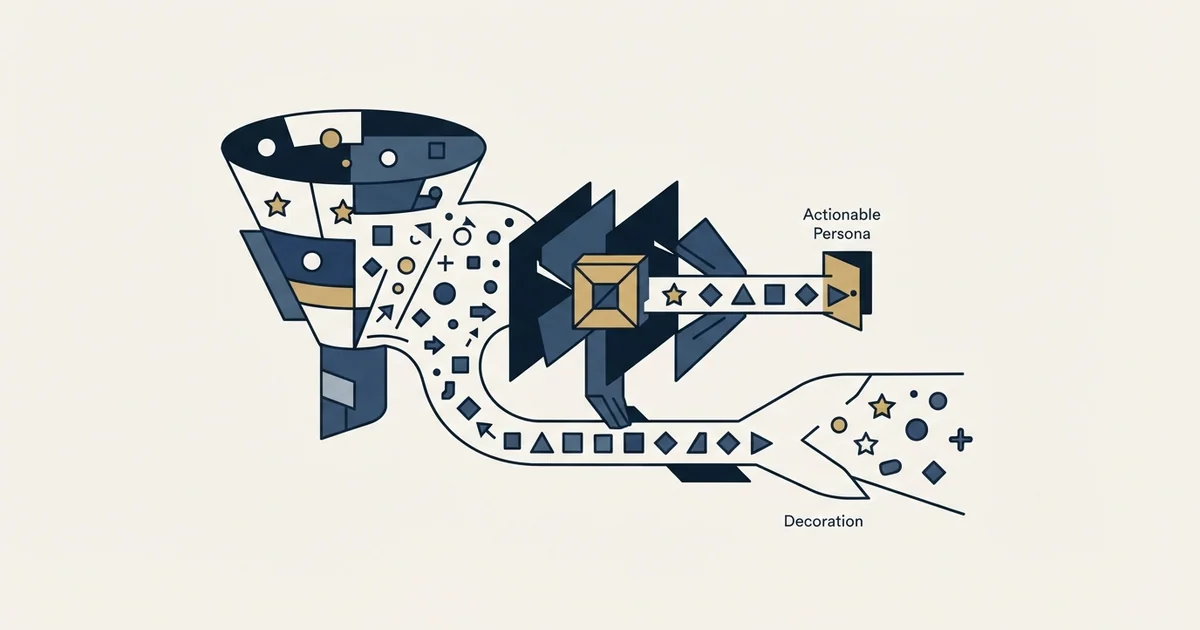
A buyer persona describes the person inside a qualified account who receives the message. The useful version names the job in their own words, the trigger that makes it urgent, what they can approve, who is disqualified, and where they are findable. Anything that changes no filter and no sentence is decoration.
Key takeaways
- The test is downstream: hold the persona next to your list filters and your opening line, and if neither changes, the document has described a person without changing a decision.
- Five lines carry a B2B persona. Job to be done in the buyer own words, the trigger, the authority boundary, the disqualifiers, and whether the attributes can actually be sourced.
- Company, cut, then human. The ideal customer profile decides which companies enter the list, segmentation decides how many campaigns you need, and the persona decides who inside receives it.
- Keep the persona count to the number of campaigns you can staff and read in a quarter. Splitting one audience across four profiles splits the reply data four ways and teaches less.
Reviewed and updated September 2, 2026
A marketing team spends a week on personas and produces four one-page profiles with stock photographs, first names, ages, and a line about what each one reads at the weekend. Six months later the list-building filters are unchanged, the outbound copy is unchanged, and nobody has opened the file since the workshop. The work was real. It just never touched anything downstream.
That is the ordinary outcome, and it comes from a definition problem rather than an effort problem. A buyer persona is worth the week only if something concrete changes because it exists: a filter on the list, a sentence in the message, a question in discovery, or a rule about who gets disqualified. A persona that changes none of those has described a person without changing a decision.
Because the distinction between what narrows a list and what shapes a sentence is easy to blur, the definition that separates persona from profile is worth reading next.
A buyer persona example is worth reading only for the five lines that change a filter or an opening line, which is what the worked one below shows.
A buyer persona template is useful only when every field on it changes what you send.
The test a persona has to pass
Hold the finished persona next to the two artefacts it is supposed to influence, which are the list you build and the message you send.
For the list, ask which filter changes. If the persona says the buyer is a head of operations at a mid-sized logistics company, the filter changes from any title at any company to two specific inputs. That is a persona doing work. If the persona says the buyer is time-poor, values reliability and dislikes jargon, no filter changes, because there is no field for any of it.
For the message, ask which sentence changes. A persona that names the condition under which the problem becomes urgent gives the writer an opening line. A persona that names a personality trait gives the writer an adjective, and adjectives are what fill the cold emails nobody answers.
- Yes: At least one list-building filter is different because of it
- Yes: It names the condition that makes the problem urgent this quarter
- Yes: It states what this person can approve without asking anyone
- Yes: It names at least one disqualifier, so somebody gets excluded
- No: Age, hobbies, favourite publications and a stock photograph
What belongs in a B2B persona
Five things carry their weight. Everything else is decoration that survives because it is easy to write.
The job to be done, in the buyer's own words. Not the category label the vendor uses. Operations leaders rarely describe themselves as buying visibility. They describe a specific recurring failure, in a specific week, with a specific person complaining about it.
The trigger. The problem exists permanently. The purchase happens when something makes the problem newly expensive: a hire, a site, a funding round, a customer loss, a regulation, a system that stopped being supported. The trigger is the single most useful line in a persona because it is the one that becomes an opening sentence.
The authority boundary. What this person can sign for, what they have to take upstairs, and who they have to bring with them. This is the line that decides whether a meeting with them is worth booking at all.
Signing authority over that budget often depends on how the vendor's fee is structured, a question the guide on what a retainer fee actually buys untangles.
The disqualifiers. A persona that excludes nobody has not been written. Company shapes where the problem does not exist, stack combinations that make the product redundant, and stages where the budget does not exist yet all belong here, because they save more time than the inclusion criteria do.
Where they are findable. The persona is only operative if the attributes it names can be sourced. A persona built on a trait that appears in no database and on no profile is a persona that produces no list.
Persona, ICP and segment are three different objects
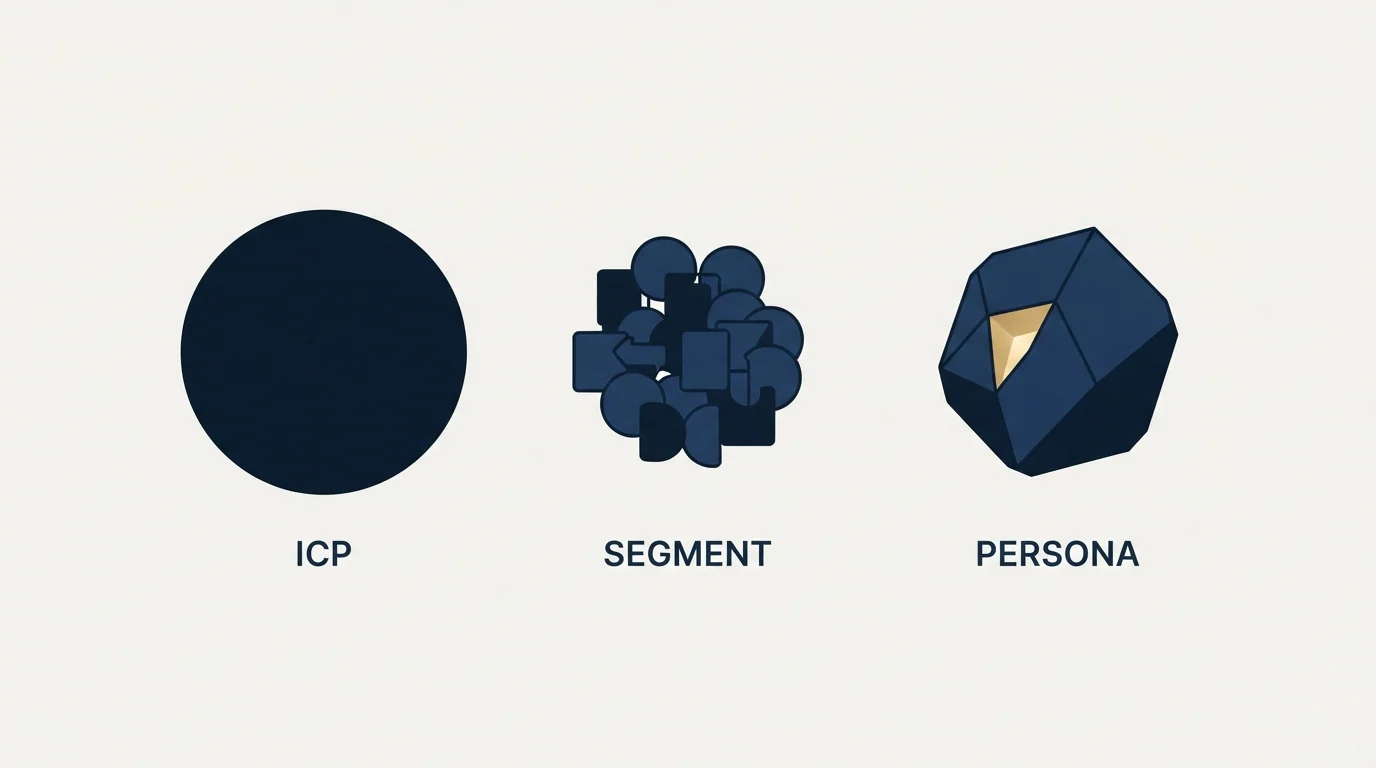
The three get used interchangeably and they answer different questions, which is why teams end up with three documents that contradict each other.
- Firmographics: size, sector, geography, stage
- Whether the problem exists at this company at all
- Decides which companies enter the list
- A grouping that changes what you say or how you sell
- Tested by whether the groups get treated differently
- Decides how many campaigns you need
- Role, authority, trigger, language, disqualifiers
- Assumes the company already qualified
- Decides who inside the account you write to
A useful ordering is company, then cut, then human. The company filter comes from the ideal customer profile. The cut comes from segmentation, and the test a cut has to pass is set out in our note on market segmentation: a segmentation that produces neat groups you would treat identically has described the market without changing anything. Only then does the persona decide who inside the qualified account receives the message.
Building one from evidence you already have
Persona work goes wrong when it is built from opinion in a room. Three sources sitting inside most companies produce better material and take less time.
Won deals are the first. Read or listen to the last ten and write down the sentence in which the buyer explained why they started looking. That sentence is the trigger, in the buyer's own words, and it usually differs from the marketing narrative.
Lost deals are the second, and they are more useful than won ones for the authority line. Deals that died after a good first meeting usually died at a boundary the persona had wrong: the champion could not sign, the budget sat in another function, or a second department had a veto nobody mapped.
Replies are the third. The language people use when they answer outbound, including the refusals, is the cheapest vocabulary source available. A persona whose language section is copied from the website has copied the seller's words back into the seller's mouth.
Those replies belong to a wider measure, since activity the buying side produces counts replies, meetings attended and questions asked rather than seller touches.
- Step 1Collect
Ten won deals, ten lost, and a month of outbound replies.
- Step 2Extract
The trigger sentence, the authority boundary, the words they used.
- Step 3Write
Five lines: job, trigger, authority, disqualifiers, where they are findable.
- Step 4Apply
Change one list filter and one opening line. If neither changes, the persona failed.
How many personas a team can actually run
Persona counts grow because every new title someone sells to looks like it deserves its own profile. The constraint that stops the growth is not documentation effort. It is that each persona implies a different message, and a different message implies a separate campaign with its own list, its own copy and its own result to read.
Each of those messages is also a first impression, and what a cold message decides about a buyer starts before anyone on the seller's side knows a name.
A team running one outbound campaign can support one persona properly and a second one badly. The honest test is to count the campaigns you can staff, build and read the results of in a quarter, and keep that many personas. The rest belong in a backlog with a note about which trigger would promote them.
There is a second reason to keep the count low, which shows up at review time. Splitting the same audience across four personas splits the reply data four ways, and four thin datasets teach less than one thick one. Personas that differ only in job title, with the same trigger and the same authority boundary, are one persona with a title list attached, and merging them costs nothing.
The persona for outbound and the persona for content
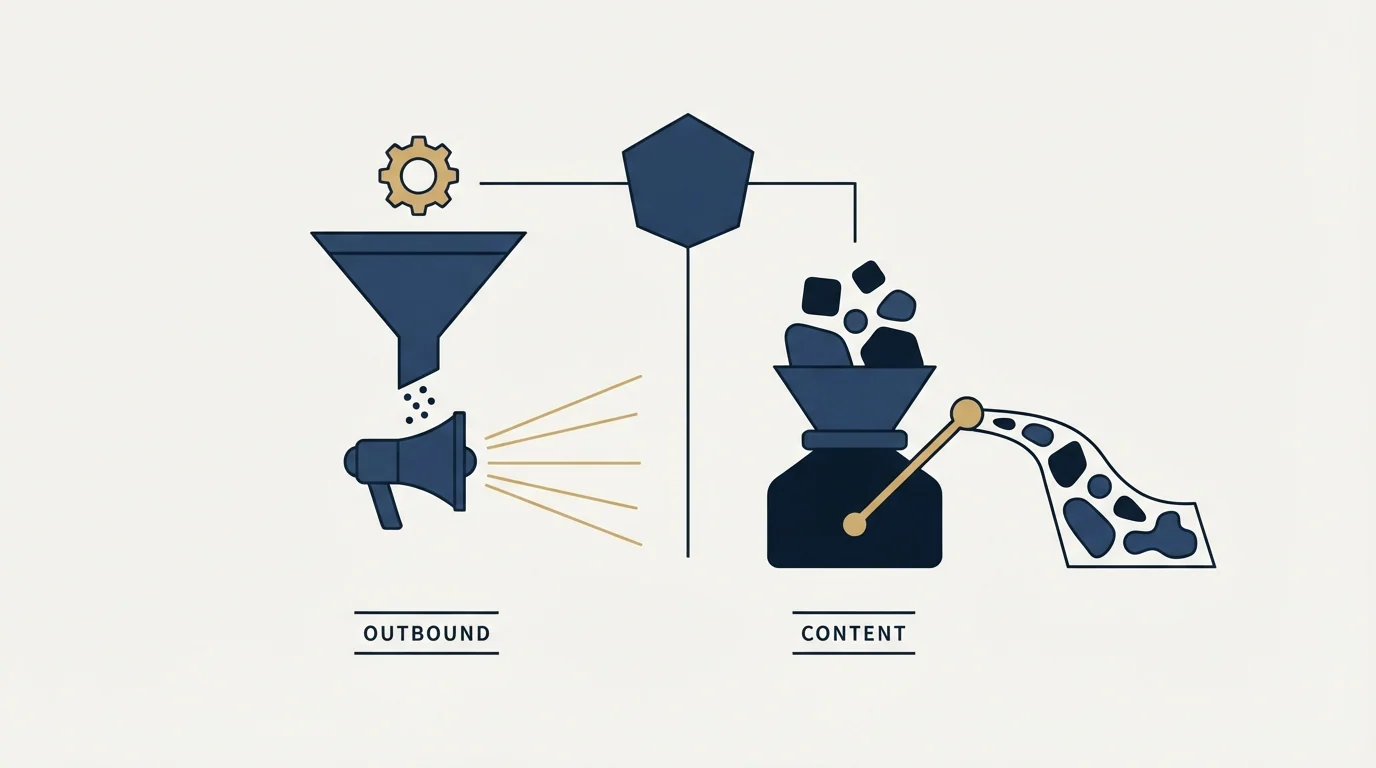
The same document rarely serves both jobs well. Outbound needs the attributes that can be filtered and the trigger that can be verified from outside the company, because both have to survive being sourced at volume. Content needs the questions the person types into a search box and the objections they raise internally, which are not filterable attributes at all.
Keeping them as one file is what produces personas full of interests and reading habits that no list-building tool can act on. Keeping them as two short files, sharing the job-to-be-done line, keeps each one honest about what it is for.
Where personas mislead
The persona names one human, and most B2B purchases involve several. Writing to the persona while ignoring the other people in the room produces a deal that progresses pleasantly and then stops, because the person who was persuaded was never the person who decides.
The practical repair is to treat the persona as the entry point rather than the buying unit. Name who else has to be convinced, what each of them cares about, and which of them can end the deal quietly. Our role-specific outbound guides cover what changes when the entry point is a technical buyer rather than a commercial one.
The second failure is age. A persona built on a trigger that has stopped happening, or on a stack that has been replaced, points the whole list at a market condition that ended. Personas are cheap to revisit and almost never revisited.
The third is the persona used as a qualification standard. Fit and qualification are different tests, and conflating them means meetings get argued about after they happen. Our practice is to agree qualification criteria in writing before a campaign launches, so that a meeting either meets them or does not, without the persona document being reinterpreted after the fact.
What it changes in the message
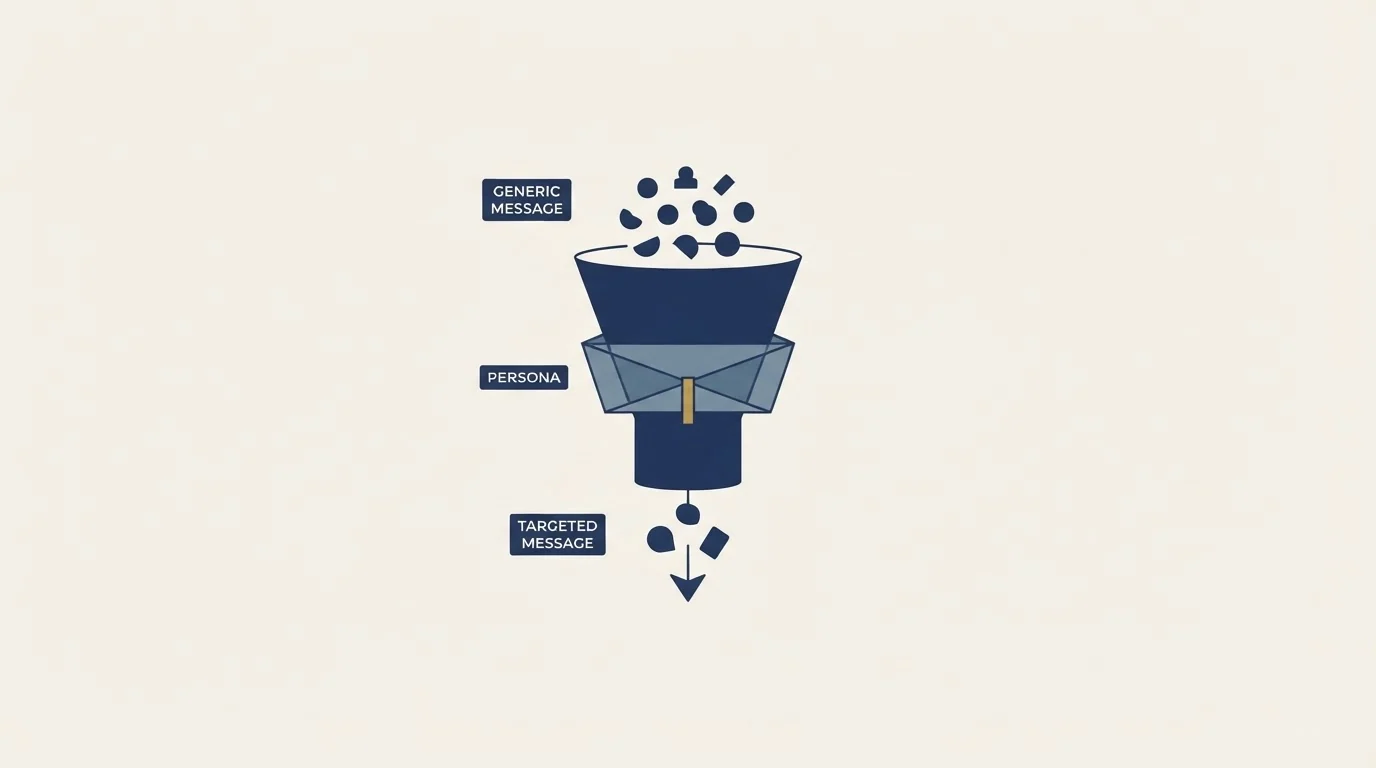
A persona does not write the message. It narrows what the message is allowed to be about. The opening line still has to come from one verifiable fact about that specific company, which is the discipline set out in how to write a cold email when it is the only one you send. The persona tells you which facts are worth looking for.
It also decides which channels are worth funding for that buyer, because reachability differs sharply by role. A plant manager and a chief financial officer are not equally present in the same places, and our sorting of lead generation channels by how fast they answer is the frame for choosing between them. If you would rather see the persona work as a built list with copy attached to it, that is what a free campaign build produces.
Underneath all of it sits the sentence the company can say about itself, which is a separate artefact with its own test. Our note on the positioning statement covers the version that has to survive being put in a cold email.
The short version
A buyer persona earns its week when it changes a filter, an opening line, a discovery question or a disqualification rule. The five lines that do that work are the job in the buyer's own words, the trigger that makes it urgent now, the authority boundary, the disqualifiers, and where the person is findable. Demographics, personality traits and stock photographs feel like the deliverable and change nothing downstream. Build it from won deals, lost deals and replies rather than from a workshop, and check it against the list before anyone prints it.
Frequently asked questions.
Frequently asked questions- What is the difference between a buyer persona and an ICP?
- The ideal customer profile describes the company and decides which organisations enter the list at all. The persona describes the human inside an account that already qualified, and decides who receives the message. Confusing them produces a filter built on personality traits, which no data source can act on.
- How many buyer personas should a company have?
- As many as it can run campaigns for. Each persona implies a different message, and a different message implies its own list, copy and result to read. Profiles that share a trigger and an authority boundary and differ only in job title are one persona with a title list attached.
- What information actually belongs in a B2B buyer persona?
- The recurring failure the buyer describes in their own words, the condition that makes it urgent now, what they can sign for without asking anyone, who gets excluded, and which of the attributes can be sourced from a database or a profile. Age, hobbies and reading habits change nothing downstream.
- Where do you get the evidence to build one?
- Three sources sit inside most companies. The last ten won deals give the trigger in the buyer own language, lost deals give the authority boundary that was wrong, and a month of outbound replies gives the vocabulary. A workshop with no transcripts in the room produces the persona nobody opens again.
About the author.

B2B cold email experts helping companies generate qualified leads through done-for-you outreach campaigns.
RevenueFlow Team
Explore more.
Ready to scale your outreach?
We build GTM engines that book real meetings. See the receipts.
Related articles.
Appointment Setting for Business Brokers: The Seller Meeting
What a bought meeting with a business owner has to be for a brokerage: the three-part qualification, the confidentiality rules, the licence line and the owner's reasons.
LinkedIn Outreach for Banks: A Regulated Message
How a bank's relationship managers use LinkedIn to reach business owners: what the FFIEC guidance, FINRA's notices and LinkedIn's own rules require, and where to stop.
SDR Outsourcing for Logistics Companies: The Brokerage Line
What an outside sales development team may do in a freight company's name, the calling and email rules it inherits, and which arrangement survives a bid-shaped market.
SDR Outsourcing for Business Brokers: The Fee Timing
Whether a success-fee brokerage should rent sales development at all: the fee timing, the texts that limit what an outside person may say about value, and who signs.
B2B Lead Lists for Aviation Companies: Build or Buy
Aviation is one of the few industries whose accounts are published by its regulator, which changes what is worth buying and what is worth downloading yourself.
Cold Calling for PPC Agencies: What You Can See First
A paid media prospect is partly readable before the call and has already been told by the platform what to do when a stranger rings about its ads.