Buyer Persona: The Definition That Has to Change a Sentence
A buyer persona names a role, its remit, its vocabulary and what it can approve. The four fields that change copy, and the ones that only look like research.
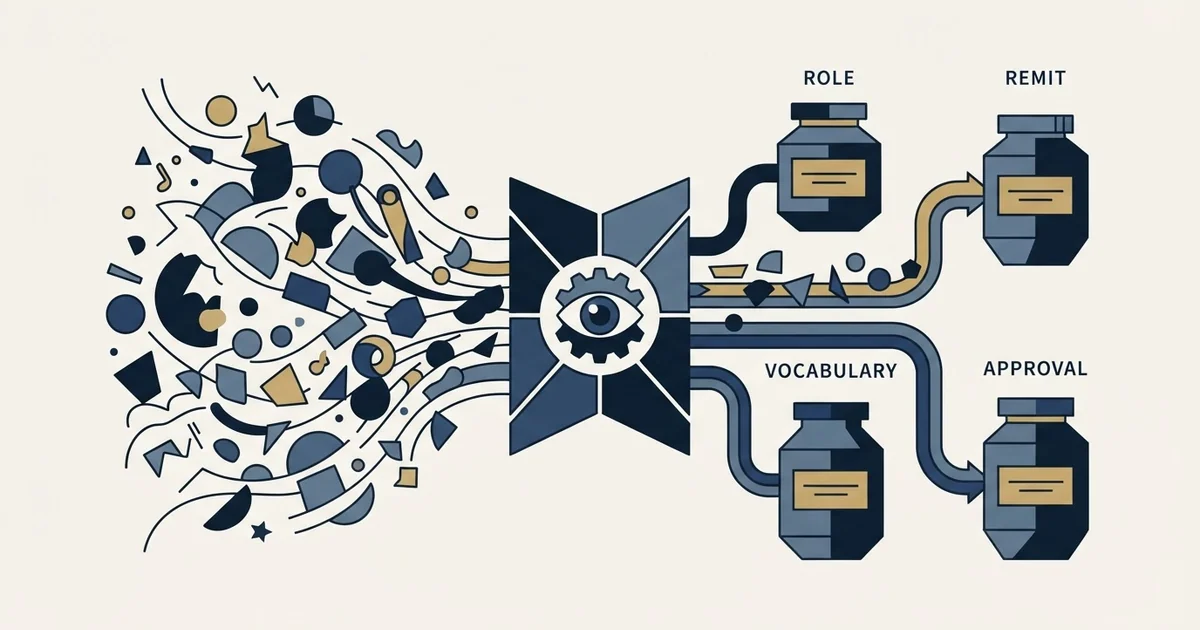
A buyer persona is a written description of one role inside a buying organisation: the outcome that role owns, the situation that makes your category relevant, the words it uses about that situation, and what it can approve alone. The ideal customer profile decides which companies receive a message. The persona decides what the message says.
Key takeaways
- An ideal customer profile chooses the companies and a buyer persona chooses the sentence, so a team running outbound needs both.
- Four fields carry a persona: the outcome the role owns, the situation that makes the category relevant, the vocabulary it uses, and its authority boundary.
- Vocabulary taken from recorded calls and real replies beats vocabulary agreed in a workshop, because a category noun cannot be pasted into an email.
- Judge a persona by reply rate against the premise it produced, which is readable within weeks, rather than by agreement in the room that wrote it.
Reviewed and updated September 2, 2026
A persona document arrives with a stock photograph, a first name, a coffee preference and three bullet points about wanting to be more efficient. Six months later the same team is writing cold emails that could be addressed to anybody, and nobody has opened the document since the workshop that produced it. The exercise was real work. What it produced could not change a sentence.
A buyer persona is a written description of one role inside a buying organisation: the job that role owns, the situation that makes your category relevant to them, the words they use about it, and what they can and cannot decide alone. That is the whole definition, and every clause in it is there because a persona missing that clause cannot change what gets sent.
What separates a persona from a profile of a company
The two get used interchangeably and they answer different questions. An ideal customer profile describes the company you should be selling to, expressed as filters that resolve to a list of names. A buyer persona describes a person inside one of those companies, and its output is language rather than a list.
The practical division: the profile decides who receives a message, and the persona decides what the message says. You need both, and they fail in different ways. A weak profile produces a long list of companies that will never buy. A weak persona produces a correct list receiving a message that reads as being about somebody else's problem. Building the profile side properly, with the count arithmetic shown, is covered in the ideal customer profile guide.
- Firmographic and situational filters
- Output is a countable list of companies
- Owned by whoever builds lists
- Tested by whether a stranger can rebuild the list
- Wrong when it resolves to adjectives
- A role, its remit, and its vocabulary
- Output is the premise of a first sentence
- Owned by whoever writes the message
- Tested by whether a holder of the role recognises themselves
- Wrong when it collects demographics
The four things a usable persona records
Most persona templates ask for a dozen fields and the extra ones dilute the four that matter. A persona that carries these four can be written into copy the same afternoon.
The job the role owns. Not the title, which varies by company, but the outcome this person is accountable for and would be asked about in a review. Titles are how you find people. The owned outcome is why they would read a message about it.
The situation that makes the category relevant. What has to be true about their week for your product to be worth a conversation. Volume they cannot cover, a system they have outgrown, a deadline that arrived, a hire they did not get approved. This is where a persona stops being a description of a person and becomes a description of a moment.
The vocabulary. The nouns and verbs the role actually uses about the situation, taken from calls, replies and support tickets rather than from your category. A buyer says the quotes take too long to get out. The category says quote-to-cash cycle time. Only one of those can be pasted into an email without translation.
The authority boundary. What this role can approve alone, what needs a second signature, and who can veto. A message that asks for a decision the reader cannot make gets forwarded at best, and the shape of the ask should differ between the person who owns the problem and the person who owns the budget. The distinction between the two is the definition of the economic buyer.
Everything else that usually appears in a persona document, including age bands, tools they enjoy, an invented name and a photograph, is set dressing. None of it changes a sentence and it makes the document feel finished, which is the more expensive cost.
Where the textbook definition breaks
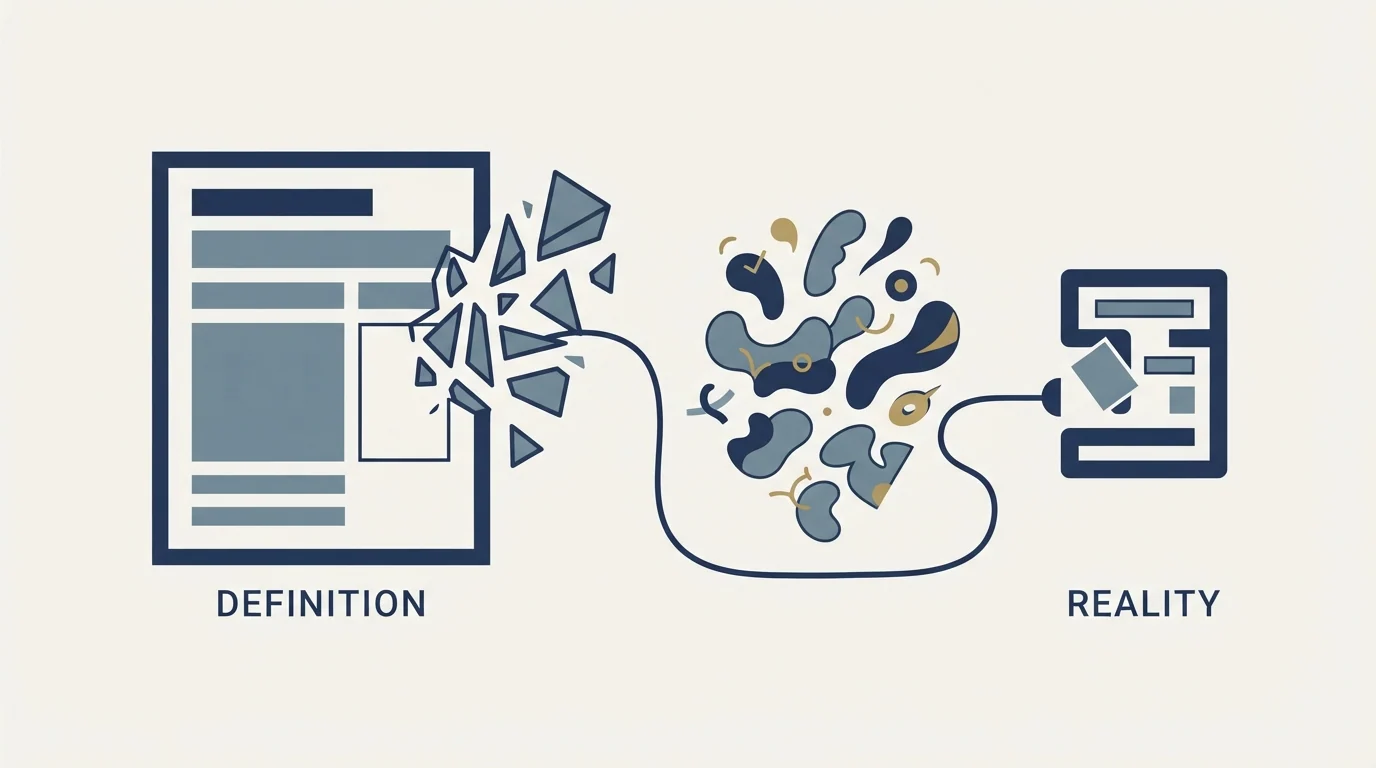
Personas get built from opinion in a room. Four people who have never held the role describe the role, and the output is a consensus fiction. The corrective is unglamorous: read twenty recent replies, listen to five recorded calls, and write down the phrases the role used unprompted.
Demographics displace the job. Consumer marketing supplies the template, so B2B personas inherit fields that predict nothing about a business purchase. What predicts is the remit and the situation.
One persona is written for a committee. Most B2B purchases involve several roles with different stakes, and averaging them produces a person who exists nowhere. Separate personas for the clinician and the procurement lead, or for the head of sales and the operations manager, are more useful than one blended buyer.
They are never revisited. A persona is a claim about how a role currently works, and roles change when the tooling under them changes. A document written before a function absorbed a new responsibility describes a job nobody holds now.
They never reach the copy. The most common failure is organisational rather than analytical. The persona lives in a slide deck owned by marketing, and the person writing outbound messages has never read it. A persona that has not rejected a draft sentence has not been used.
- Depends: It names the outcome the role is accountable for, not just the title
- Depends: It names the situation that makes your category relevant this quarter
- Depends: The vocabulary was taken from recorded calls or replies, not from a workshop
- Depends: It says what this role can approve alone and who can veto
- Depends: Separate roles in the buying group have separate entries
- Depends: It has changed at least one sentence of live copy
How to build one in an afternoon
The research method that works is small and specific, and it beats a longer exercise built on internal opinion.
Start from the calls you already recorded. Five calls with people in the role, listened to for language rather than for objections. Write down the exact phrases used for the problem, the current workaround, and the internal step that slows a decision.
Read the replies, including the unhelpful ones. A reply saying that this sits with a different team is a fact about the authority boundary, and it is more reliable than an org chart. Replies that say the timing is wrong tell you what the trigger looks like when it is absent.
Replies belong to a wider class of signals produced by the other side, and activity the buying side actually produces is what separates that from seller-side counts.
Ask the two people who talk to buyers most. The account executive and whoever handles inbound support hear the vocabulary daily. Ask both what a person in this role says in the first two minutes of a call.
Write it as four short paragraphs, not a template. Job owned, situation, vocabulary, authority. If a paragraph cannot be written from evidence, leave it empty and mark it as unknown, since an empty field invites research and a plausible guess prevents it.
That four-paragraph structure pairs well with questions worth asking a persona, which narrows the inquiry to the few answers that actually change a filter or a sentence.
Test it on one campaign. The premise of the opening sentence comes out of the situation paragraph. If a segment written against that premise produces no better response than the general list, the persona described a role that does not experience the problem the way you assumed.
- Step 1Situation
The persona names what has to be true about the reader's week for the category to matter.
- Step 2Premise
The opening sentence states that situation in the reader's own vocabulary, specifically enough to be wrong.
- Step 3Ask
The ask is sized to what the role can approve alone, so the message does not need forwarding to be actionable.
- Step 4Evidence
Reply rate against that premise, read within weeks, which is the only test of the persona that does not rely on agreement in a room.
How many to keep, and what they cannot fix
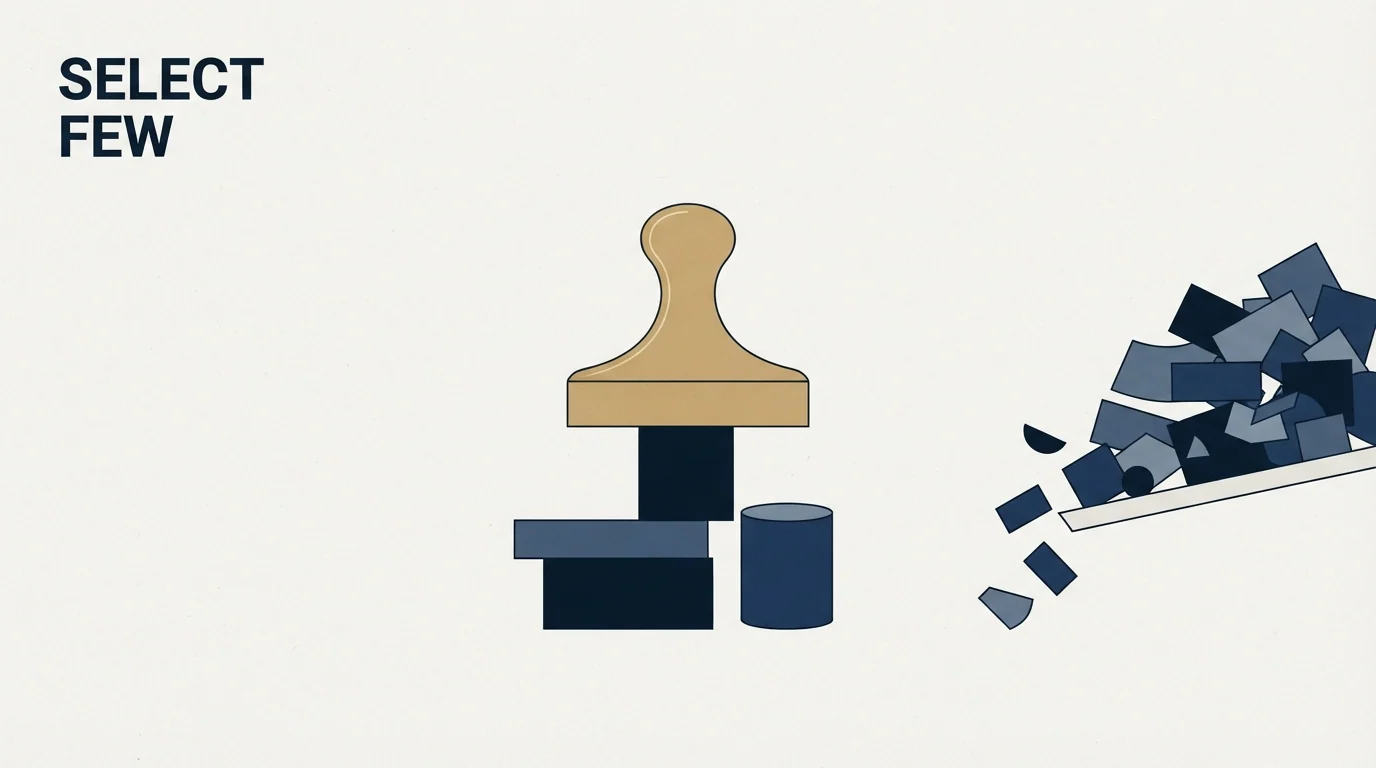
The right number is the number of genuinely different opening premises you can write and stand behind, which for most teams is two or three. Each additional persona multiplies the copy, the list work and the reporting, and it only pays back when the message to that role differs in substance rather than in tone. A set of eight personas is almost always a research output that was never converted into a decision about what to send.
Two things a persona cannot repair are worth naming, because both get blamed on the persona work when a campaign underperforms. It cannot make a badly drawn company list work, since a perfectly accurate description of a role inside companies that do not have the problem produces polite silence. And it cannot supply a reason for the message to arrive today, which comes from a situational signal about that specific account rather than from the role description. When replies stop, check the list definition and the trigger before rewriting the persona, because those two are more often the cause and both are cheaper to test.
Deciding whether that silence points to a fit problem or a reach problem is exactly the question explored in product market fit versus go-to-market.
Using it without breaking the rest of the system
Two boundaries are worth setting when a persona meets an outbound programme.
The persona informs the premise, and the segment supplies the specific fact. A message that opens with a persona-level generality reads like every other message; a message that opens with something true about that company, chosen because the segment was built on it, reads as addressed. The relationship between the cut and the sentence is set out under market segmentation, and the phrasing work itself is in pain point templates. The order that work runs in, from the profile through the premise to a written message, is covered in how to write a cold email.
The persona also decides how much has to be said. A role that recognises the situation in one line does not need three paragraphs of context, which is the mechanism behind short cold emails getting more replies: specificity carries the weight that length is usually asked to carry.
Our own operating policy is one message per campaign, with no bumps and no thread replies, so the persona has one message in which to be right. A re-approach happens as a new campaign with a different angle, usually because something changed at the account, which means the persona work has to produce more than one premise worth sending rather than one message repeated.
The internal sentence that fixes the audience and category above the persona is a positioning statement, and the test that it survives contact with a stranger is the same test described here.
The short version
A buyer persona is a written description of one role: the outcome it owns, the situation that makes your category relevant, the words it uses, and what it can approve. The ideal customer profile chooses the companies and the persona chooses the sentence. Build it from recorded calls and real replies rather than from a workshop, split the buying group into separate roles, mark unknown fields as unknown, and judge the result by reply rate within weeks rather than by agreement in the room.
If the premise is written and the list against it does not exist yet, that is the part we build: see what one campaign against it produces, with qualification criteria agreed in writing before anything sends.
Frequently asked questions.
Frequently asked questions- What is a buyer persona?
- It is a written description of one role in a buying organisation, covering the outcome that person is accountable for, the situation that makes your category relevant to them, the language they use about it, and what they can approve without a second signature. Its output is the premise of a first sentence rather than a list of companies.
- What is the difference between a buyer persona and an ideal customer profile?
- The profile describes the company, expressed as filters that resolve to a countable list of names. The persona describes a person inside one of those companies and supplies the language. A weak profile produces a long list that will never buy. A weak persona produces a good list receiving a message that reads as being about somebody else.
- How many buyer personas should we have?
- As many as you have genuinely different opening premises you can write and stand behind, which is usually two or three. Each extra persona multiplies copy, list work and reporting, and only pays back when the message differs in substance rather than tone. Eight personas is normally a research output that was never converted into a decision.
- What makes a buyer persona useless?
- Demographics in place of the remit, a name and photograph in place of a situation, and vocabulary invented in a workshop by people who have never held the role. The organisational failure is more common than the analytical one: the document sits with marketing and the person writing outbound messages has never read it, so it rejects nothing.
About the author.

B2B cold email experts helping companies generate qualified leads through done-for-you outreach campaigns.
RevenueFlow Team
Explore more.
Ready to scale your outreach?
We build GTM engines that book real meetings. See the receipts.
Related articles.
Appointment Setting for Business Brokers: The Seller Meeting
What a bought meeting with a business owner has to be for a brokerage: the three-part qualification, the confidentiality rules, the licence line and the owner's reasons.
LinkedIn Outreach for Banks: A Regulated Message
How a bank's relationship managers use LinkedIn to reach business owners: what the FFIEC guidance, FINRA's notices and LinkedIn's own rules require, and where to stop.
SDR Outsourcing for Logistics Companies: The Brokerage Line
What an outside sales development team may do in a freight company's name, the calling and email rules it inherits, and which arrangement survives a bid-shaped market.
SDR Outsourcing for Business Brokers: The Fee Timing
Whether a success-fee brokerage should rent sales development at all: the fee timing, the texts that limit what an outside person may say about value, and who signs.
Cold Calling for PPC Agencies: What You Can See First
A paid media prospect is partly readable before the call and has already been told by the platform what to do when a stranger rings about its ads.
LinkedIn Lead Generation for Financial Services Firms
A LinkedIn message from a regulated firm is a communication the rulebook already defines, and the definition turns on how many people receive it within thirty days.