B2B Buyer Persona Questions That Change What You Send
A persona question earns its place only if you can name what changes depending on the answer. The five loads worth extracting, and the ones that fill a document.
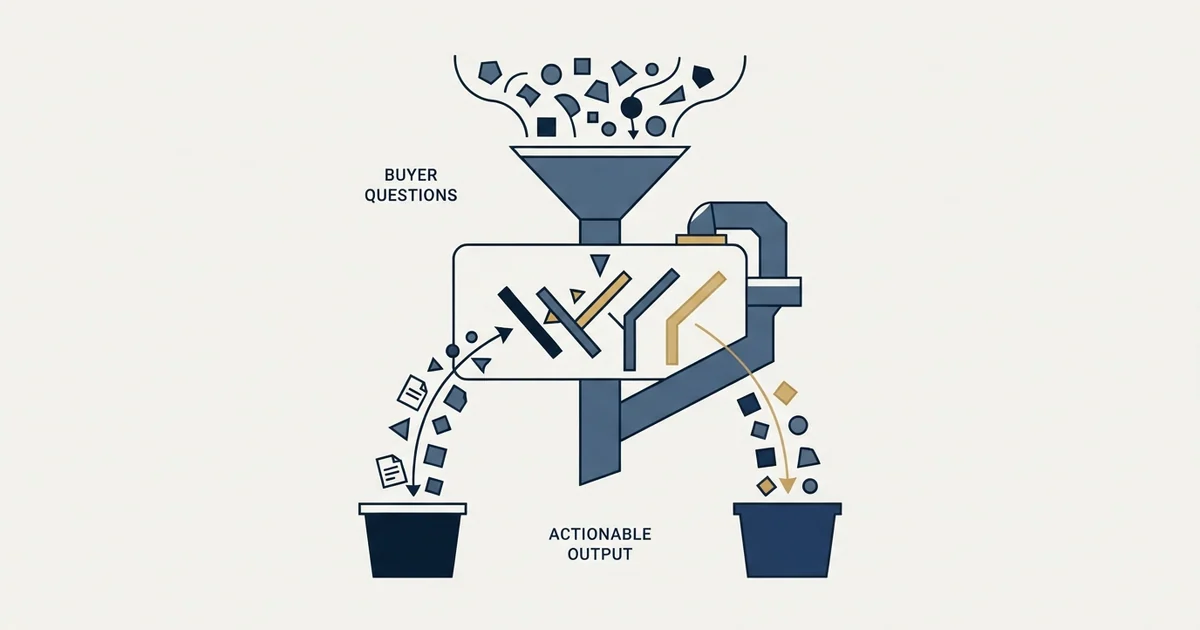
The useful B2B buyer persona questions are the ones whose answers change a list filter or a sentence in your first message. Five loads carry a persona: the trigger event, the current alternative, the authority boundary, the buyer own words for the problem, and the disqualifiers that exclude companies.
Key takeaways
- Before asking a question, finish this sentence: if they answer X, we will do Y differently. A question that cannot finish it is research rather than persona work.
- Ask about the last time rather than about general practice. Sequence and timing are recoverable; motivation is a story assembled after the purchase and filters built on it fail.
- Six to eight recorded conversations across won, lost and churned deals usually reach repetition. Lost and churned are the ones that correct an authority boundary.
- Finish with two artefacts: a filter built only from sourceable attributes, and one opening sentence naming the trigger and the current alternative in the buyer own words.
Reviewed and updated September 2, 2026
A product marketer runs six customer interviews, works through a forty-question guide with each one, and produces a document with quotes in it. The list filters do not change. The opening line of the cold email does not change. The discovery script does not change. Six good conversations happened and the machine downstream carried on exactly as before.
The questions were the problem. Most published B2B persona question lists are inventories of everything you could ask a buyer, which is a different thing from the set of questions whose answers change a decision. A question earns a place in the guide when you can name, in advance, what changes if the answer comes back one way rather than another.
The filter to apply before you ask anything
Take each candidate question and finish this sentence: if they answer X, then we will do Y differently. If the sentence cannot be finished, the question is research rather than persona work, and research is a different budget with a different timeline.
Two examples make the distinction concrete. "What is your biggest challenge this year" cannot finish the sentence, because every plausible answer produces the same behaviour, which is nodding. "What had to happen before you started looking for something like this" finishes it immediately: the answer becomes the trigger you filter on and the sentence you open with.
- What keeps you up at night
- What are your goals this year
- How do you like to be contacted
- What publications do you read
- Describe your ideal vendor
- What is your biggest challenge
- What happened in the two weeks before you started looking
- What were you doing instead before you bought
- What can you approve without asking anyone
- Who could have killed this and why did they not
- Which words did you type into Google
- What would have made this a no in the first minute
The five things worth extracting
A usable B2B persona carries five loads, and each has a small number of questions that get at it. Everything else is padding that survives because it is easy to ask.
The five loads a persona carries only matter once the definition itself is precise, and the definition that changes a sentence sets out what a buyer persona must actually contain.
The trigger. The problem is usually permanent. The purchase happens when something makes it newly expensive. Ask what changed in the weeks before they started looking, whether anything broke, who first raised it, and what would have happened if they had done nothing for another six months. The last one separates a real trigger from a preference.
The current alternative. Every buyer is already solving the problem somehow, including badly, manually, or by ignoring it. Ask what they were doing instead, what it cost them in time rather than money, and who was doing it. A message aimed at the current alternative outperforms one aimed at the category, because the category is an abstraction and the spreadsheet with somebody's name on it is not.
The authority boundary. Ask what they can sign for alone, what has to go upstairs, who else had to be convinced, and who could have stopped it. This is the line that decides whether a meeting with this title is worth booking at all, and it is the line most persona documents replace with a job title.
The language. Ask what they call the problem internally, what they searched for, and what they called the category before they knew its name. Take the phrasing verbatim. Vendors and buyers describe the same problem in different vocabularies, and the buyer's version is the one that belongs in the first sentence.
The disqualifiers. Ask what would have made this an immediate no, what they evaluated and rejected, and what they would tell a peer to check before buying. A persona that excludes nobody has not been written, and the exclusions save more list-building time than the inclusions do.
Who to ask, and how many
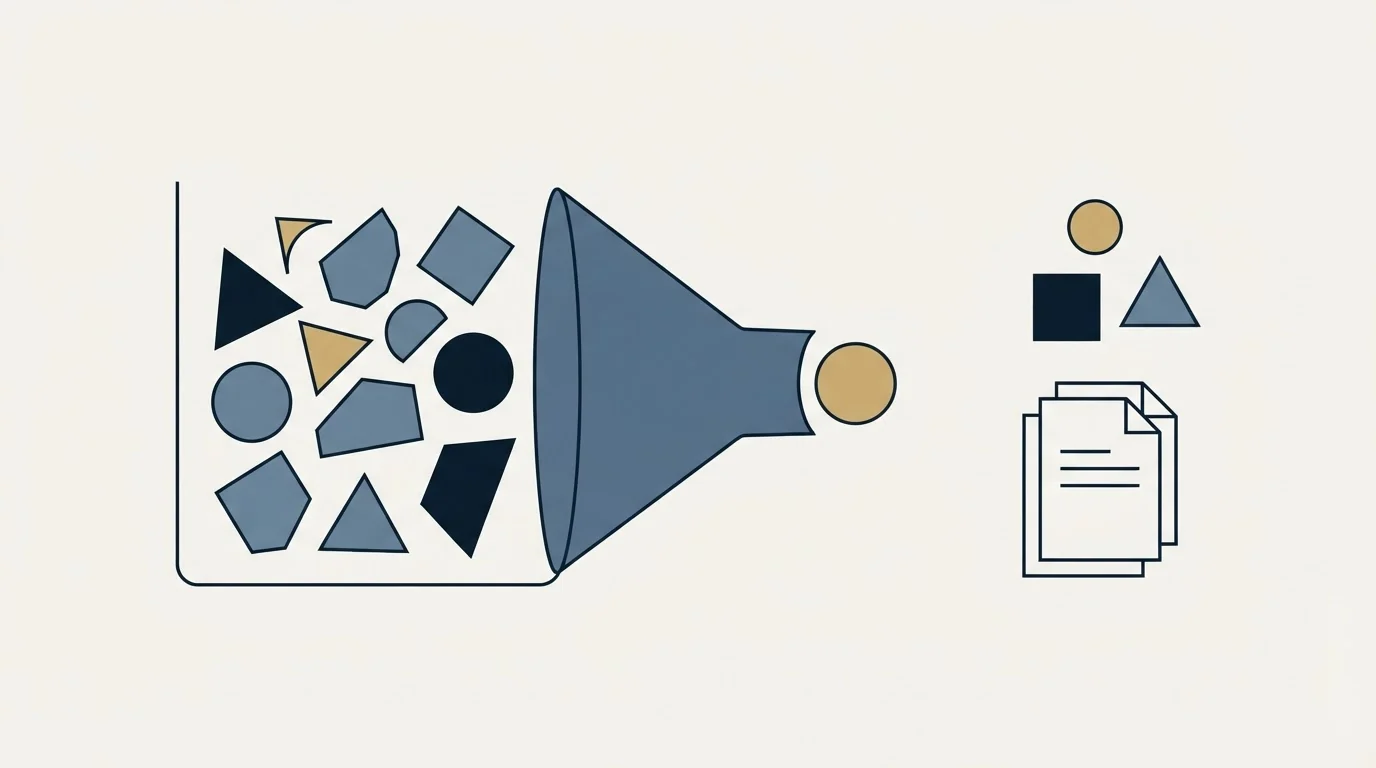
Three sources sit inside most companies and they answer different questions.
Recent won deals give you the trigger and the language, and the recency matters more than the count. Lost deals give you the authority boundary that turned out to be wrong, which is the single most useful thing a persona can correct. Churned customers give you the disqualifiers in their sharpest form, and they are the interviews people avoid.
Before booking anything, read what you already hold. Deal notes, call recordings and the last few closed-won write-ups answer some of these questions for free, and the interviews are then aimed at what the records do not contain, which is usually the authority boundary and the wording. Six to eight conversations across those three groups is usually enough to reach the point where answers repeat. When the fourth interview in a row produces the same trigger in the same words, that is the signal to stop and write.
There is a fourth source that costs nothing and gets ignored. If you have run outbound at any volume, the replies are a corpus of unprompted buyer language, including the negative ones. People who say they already have this, or that the timing is wrong because of a specific event, are telling you the current alternative and the trigger without being asked.
Those replies are also the first chapter of the buyer's experience, which outbound decides at first contact rather than in the demo or the proposal.
- Step 1Ask
Six to eight recorded conversations across won, lost and churned, using the five loads rather than a topic list.
- Step 2Extract verbatim
Pull the exact phrasing for the trigger, the current alternative and the internal name for the problem. Do not paraphrase into vendor language.
- Step 3Change a filter
Turn the attributes that are actually sourceable into list criteria, and write the disqualifiers as exclusions.
- Step 4Change a sentence
Rewrite the first line of the first message using the trigger and the buyer's own words, then send it to the segment the filter produced.
How to run the conversation
Record it, with permission, and work from transcripts. Notes get filtered through what the note-taker already believed, and the words you most need are the ones that sound unremarkable in the room.
Ask about the last time rather than about general practice. "How do you usually evaluate vendors" produces a policy answer. "Walk me through what happened after the first demo" produces what actually happened, including the part where somebody in finance nearly killed it.
Do not ask buyers to design the product or the message. They will answer, because people are helpful, and the answer will be an opinion presented with the authority of a customer. Their expertise is their own situation, in their own words, and that is what the interview is for.
Keep the guide short enough to abandon. Ten questions you can hold in your head beats forty on a page, because the useful material almost always arrives in the answer to the next question rather than in the first answer itself.
Turning answers into things that ship
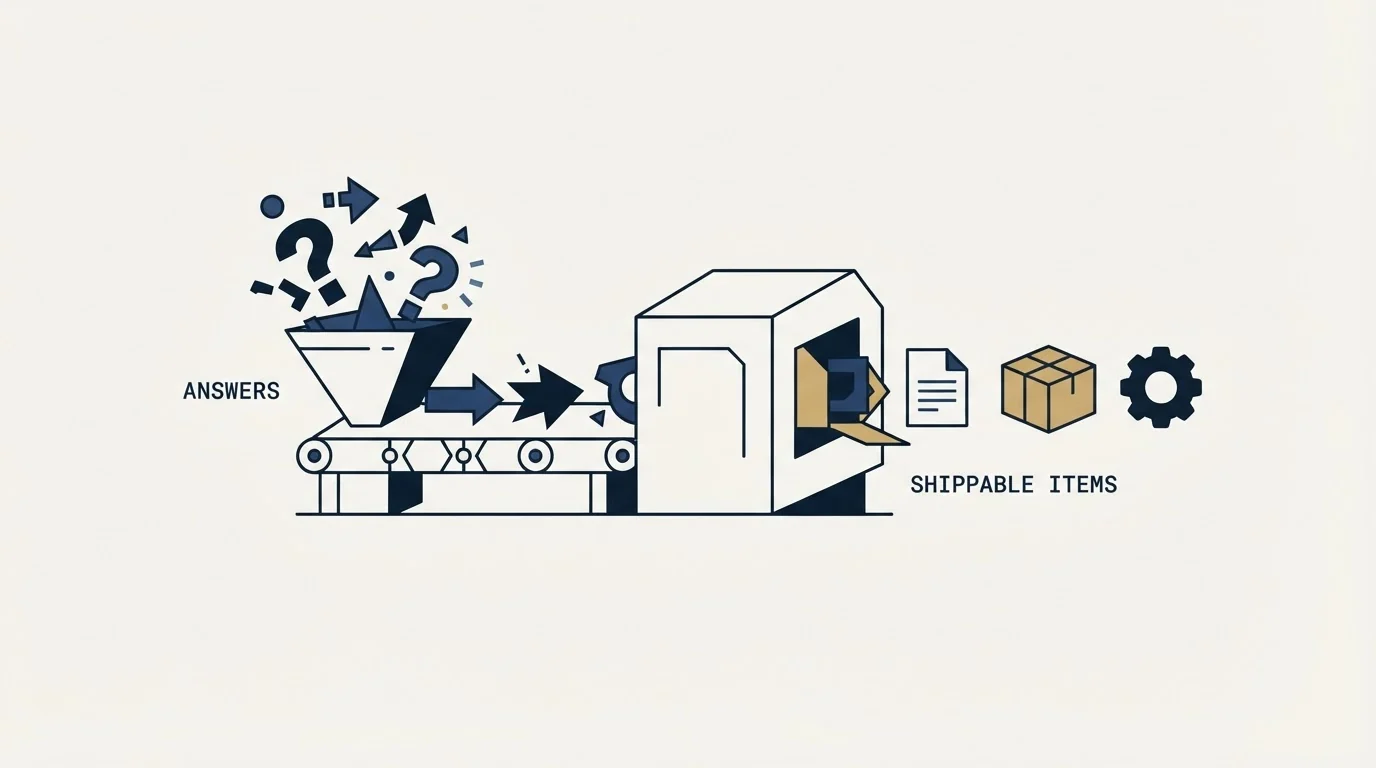
The output is two artefacts and a rule.
The first artefact is a filter. Take every attribute the interviews surfaced and sort it into sourceable and not sourceable. Headcount band, sector, stack, funding stage and job title can be filtered. Attitude, ambition and communication preference cannot, and a persona built on them produces no list at all. The company-level half of this work sits in the ideal customer profile guide, and where the cuts imply genuinely different messages you are into segmentation, which is defined in the market segmentation entry.
The second artefact is a first line. Take the trigger and the current alternative and write one sentence that names both in the buyer's vocabulary. If the persona work cannot produce a specific sentence, the trigger is still too abstract and the interviews are not finished. The same test appears at the top of the strategy: a segment and a problem statement that cannot generate an opening sentence have not been decided, which is the argument made in the go-to-market strategy guide. For senior buyers the constraint tightens further, and what survives contact with that inbox is covered in the guide to cold emailing CMOs.
The rule is about what happens next. A new persona insight is a reason to run a new campaign with a new angle, not a reason to send another message into a thread somebody already ignored. We run a single message per campaign and we do not send bumps, so a better trigger earns a fresh list and a fresh first line rather than another touch on the same thread.
- Yes: At least one list filter is different because of an answer
- Yes: The trigger is stated as an event, with a rough time window
- Yes: The current alternative is named, including the manual version
- Yes: The authority boundary says what this person can approve alone
- Yes: At least three phrases are verbatim from a transcript
- Yes: At least one disqualifier excludes companies you would have contacted
- No: The document contains an age range, a stock photograph or a hobby
Where the answers mislead
Two failure modes are worth naming, because both produce a confident document built on soft ground.
Buyers reconstruct their own purchase. Asked why they bought, people supply a tidy narrative with reasons in it, and the reasons arrive in the order that makes them look rational. This is why the questions above ask about order and timing rather than motivation. What happened in which week is recoverable. Why somebody felt what they felt is a story assembled after the fact, and building a filter on it produces a list of companies that resemble a memory.
The second is the sample you can reach. The customers who agree to an interview are, by construction, the ones who like you enough to give you an hour. Their disqualifiers are softer and their trigger is cleaner than the market's. Lost and churned conversations are the corrective, which is precisely why the round that skips them ends up describing an audience that already buys.
The questions to leave out
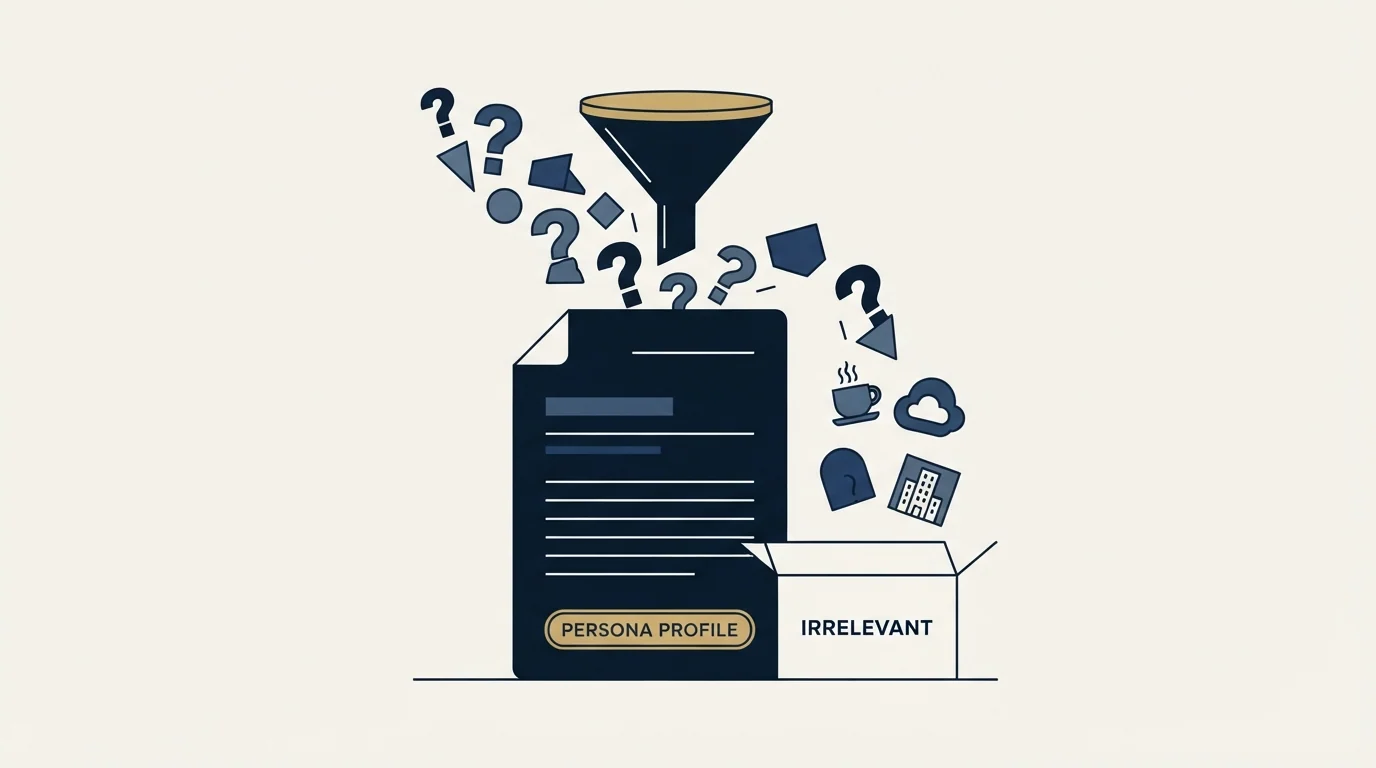
Demographics that no database carries produce nothing downstream. Preference questions about tone and channel produce answers that contradict observed behaviour. Hypothetical pricing questions produce numbers that are wrong in a predictable direction. Questions about what content they consume are worth asking only if somebody is going to act on the answer this quarter, and usually nobody is.
The hardest omission is the flattering question. "What do you like about working with us" produces material for a case study and nothing for a list filter or a first line. Keep it if you need the testimonial, and count it as a different project.
The short version
The test for a persona question is whether you can name, before asking it, what changes depending on the answer. Questions that fail that test fill guides and change nothing.
Five loads are worth carrying: the trigger event, the current alternative, the authority boundary, the buyer's own language, and the disqualifiers. Six to eight recorded conversations across won, lost and churned deals will usually reach repetition, and the replies from any outbound you have already run are a free corpus of unprompted buyer language on top of that.
Buyer persona fundamentals lays out how the same five loads combine into a usable filter and a findable person, not a demographic sketch.
Finish with two artefacts. A filter built only from attributes that can actually be sourced, and one opening sentence that names the trigger and the current alternative in the words the buyer used. If neither exists at the end, the interviews were research rather than persona work.
The fastest way to find out whether the trigger and the language are right is to put them in front of the segment they describe. You can see what a campaign would look like for your market.
Frequently asked questions.
Frequently asked questions- What questions should I ask in a B2B buyer persona interview?
- Ask what changed in the weeks before they started looking, what they were doing instead beforehand, what they can approve without asking anyone, who could have stopped the purchase, and which words they typed into a search box. Each of those answers changes either a list filter or the first line of a message.
- How many people do I need to interview?
- Six to eight is usually enough, spread across recent won deals, lost deals and churned customers. Stop when the same trigger comes back in the same words for the third or fourth time. Interviewing only happy customers produces a cleaner trigger and softer disqualifiers than the market actually has.
- What is the difference between persona questions and ICP work?
- The ideal customer profile decides which companies enter the list, so it deals in firmographics and whether the problem exists at that company at all. Persona questions deal with the human inside an account that already qualified: what triggered the search, what they can sign for, and how they describe the problem.
- Can I skip interviews and use my outbound replies instead?
- Replies are a genuine corpus of unprompted buyer language and cost nothing to read, including the negative ones that name the current alternative or the timing. They are weaker on the authority boundary and the buying process, so they supplement interviews rather than replacing them.
About the author.

B2B cold email experts helping companies generate qualified leads through done-for-you outreach campaigns.
RevenueFlow Team
Explore more.
Ready to scale your outreach?
We build GTM engines that book real meetings. See the receipts.
Related articles.
LinkedIn Outreach for Banks: A Regulated Message
How a bank's relationship managers use LinkedIn to reach business owners: what the FFIEC guidance, FINRA's notices and LinkedIn's own rules require, and where to stop.
Appointment Setting for Business Brokers: The Seller Meeting
What a bought meeting with a business owner has to be for a brokerage: the three-part qualification, the confidentiality rules, the licence line and the owner's reasons.
Cold Calling for Chemical Companies: Who Picks Up
A chemical cold call rarely arrives first. It reaches a formulator who has already been comparing suppliers on a screen, for one of three published reasons.
Cold Calling for PPC Agencies: What You Can See First
A paid media prospect is partly readable before the call and has already been told by the platform what to do when a stranger rings about its ads.
SDR Outsourcing for Logistics Companies: The Brokerage Line
What an outside sales development team may do in a freight company's name, the calling and email rules it inherits, and which arrangement survives a bid-shaped market.
LinkedIn Lead Generation for Financial Services Firms
A LinkedIn message from a regulated firm is a communication the rulebook already defines, and the definition turns on how many people receive it within thirty days.