Attio Pricing: The Per-Seat Rate Is Only One of Two Meters
Attio prices on seats and on credits, and every comparison quotes only the first. The plan ladder, the credit allowances, and the overage blocks that rival the licence.
Attio runs Free, Plus, Pro and Enterprise plans priced per seat, and a second consumption meter of seat credits and workspace credits allocated monthly. Extra workspace credits are sold in blocks whose published rates can exceed several seats. The page prices regionally, so confirm currency and billing cycle before quoting any figure.
Key takeaways
- Attio bills on two meters. Third-party pricing breakdowns quote the per-seat rate and omit the credit pools entirely, which understates the cost of an enrichment-heavy or AI-heavy workspace.
- Seat credits run 100, 500, 1,000 and 2,500 per user per month across the ladder, and workspace credits run 250, 1,500, 10,000 and custom. Overage is sold in blocks from 5,000 to 50,000.
- The pricing page prices by region and renders monthly and annual states into one document, so a figure grepped from the source can be one no visitor was ever shown.
- Seat ceilings gate the tiers before features do: three seats on Free and ten on Plus, which makes the next hire a pricing decision rather than a capability one.
Reviewed and updated September 2, 2026
Every third-party breakdown of Attio's pricing leads with the per-seat number, and every one of them stops there. That is the part of the page that looks like the price. Underneath it sits a second meter, printed on the same page, which decides what a heavy workspace actually pays: credits, allocated per seat and per workspace, sold in blocks when you run out.
A CRM priced on seats is a predictable line item. A CRM priced on seats plus consumption is a line item that moves with how much enrichment, AI and automation the team actually uses. Attio is the second kind, and the plan cards alone will not tell you that.
What the pricing page publishes
Attio runs four plans: Free, Plus, Pro and Enterprise. Fetched from a European address, the page prices Plus at £34 per user per month billed monthly and £27 billed annually, and Pro at £74 per user per month billed monthly and £59 billed annually, with a "Save 20%" label on the annual column. Free is £0 for up to three seats. Enterprise is quoted as custom and billed annually (Attio, Plans and Pricing).
Two cautions about those figures before you carry them anywhere. The page renders the monthly and annual states into the same document and toggles between them, so a number lifted out of the source can easily be one no visitor was shown. And the prices are regional, which is why the dollar figures in circulation do not agree with each other.
Two breakdowns published within weeks of each other make the point. Stacksync's review states that "Attio is free for up to 3 seats" and that "Paid plans are $29/user/month (Plus) and $69/user/month (Pro), both billed annually" (Stacksync, Attio CRM Review). Fluid CRM's breakdown, dated 28 July 2026, states that "Plus is $35 per user per month on annual billing or $44 monthly" and "Pro is $79 annual or $99 monthly" (Fluid CRM, Attio Pricing). Those are the same two plans on the same billing cycle, six dollars and ten dollars apart.
Both are probably honest readings taken at different moments or from different regions. That is the point: open the page yourself from the country that will be billed, confirm which toggle state you are reading, and treat every secondhand figure, including the ones on this page, as needing that check before it reaches a budget.
The seat ladder also gates capacity, not just features. The page publishes seat ceilings of three on Free and ten on Plus, with Pro and Enterprise unlimited. Object limits run three, five, twelve and unlimited. Record limits run 50,000, 250,000, one million and custom. File storage is 50 GB on both Free and Plus, then unlimited above. Email and calendar sync is one account per user on Free and Plus, two on Pro, and three or more on Enterprise.
- 0 per user per month
- Up to 3 objects, 50,000 records
- 50 GB file storage
- 1 email and calendar account per user
- 100 seat credits and 250 workspace credits per month
- 34 per user per month billed monthly
- 27 per user per month billed annually, labelled Save 20%
- Up to 5 objects, 250,000 records
- 50 GB file storage
- 500 seat credits and 1,500 workspace credits per month
- 74 per user per month billed monthly
- 59 per user per month billed annually, labelled Save 20%
- Up to 12 objects, 1,000,000 records
- Unlimited file storage
- 1,000 seat credits and 10,000 workspace credits per month
The credit meter is the part that moves
Attio's pricing page publishes two credit pools side by side. Seat credits are allocated per user per month and run 100 on Free, 500 on Plus, 1,000 on Pro and 2,500 on Enterprise. Workspace credits are allocated per workspace per month and run 250, 1,500, 10,000 and custom across the same ladder.
Metered contact data works the same way one aisle over, where 6sense publishes three packages and no rate and a credit meter gates every contact export.
When those run out, the page sells more. Additional workspace credits are priced in blocks, and the served European card lists them at £70 a month for 5,000, £120 for 10,000, £250 for 25,000 and £445 for 50,000, with annual rates of £55, £95, £200 and £360 for the same blocks.
Read that ladder next to the seat prices and the shape of the bill becomes clear. Comparing like with like on monthly billing, the largest credit block costs more than six Pro seats do. For a team doing heavy enrichment or running AI agents across a large record set, the consumption line can plausibly exceed the licence line, and nothing on the plan cards signals that in advance.
This is not a criticism of the model. Consumption pricing is honest about the fact that an AI-heavy workspace costs the vendor more to run than a quiet one. It is a warning about the comparison method. Putting Attio's per-seat figure next to another CRM's per-seat figure and declaring a winner compares one of Attio's two meters against the whole of the other product's.
- Step 1Count the seats
Free caps at three and Plus at ten, so the seat count can force a tier before any feature does.
- Step 2Check the object and record ceilings
Objects run three, five and twelve across the paid ladder, and records run 50,000, 250,000 and one million. A data model that needs a thirteenth object needs Enterprise.
- Step 3Estimate monthly credit burn
Seat credits plus workspace credits are the included allowance. Enrichment, AI and automation draw on it.
- Step 4Price the overage blocks
Extra workspace credits are sold in 5,000 to 50,000 blocks at published monthly and annual rates.
- Step 5Add the two meters together
Only the combined figure is comparable to another vendor's per-seat quote.
What the free tier is genuinely for

Three seats, three objects, 50,000 records and 100 seat credits a month is a real working allowance rather than a demo. A founder-led team running a simple pipeline can operate on it for a long time, and the automatic contact syncing and data enrichment named on the Free card are the features people actually open a CRM for.
The constraint that ends the free period is usually the seat count rather than the record count. Adding a fourth person is a paid decision at a moment when nothing about the data has changed, which is worth knowing when you plan a hire.
The largest discount on the page is not on the pricing page
The single biggest lever on what Attio costs is published on a different page entirely, and no comparison breakdown we found mentions it. Attio runs a startup programme offering "80% off the annual Pro plan and credits for the first year" and "30% off the second year", along with dedicated onboarding support and third-party perks. The qualifying condition is printed on the same page: "Startups must be venture-backed to qualify", or affiliated with one of the partner venture firms and accelerators (Attio, Startup Program).
An 80% discount changes the analysis completely for the companies that qualify, and changes nothing at all for the ones that do not. That is worth checking before spending an afternoon modelling seat counts, because for an eligible company the first-year Pro cost drops below what a bootstrapped competitor pays for Plus, and the comparison against other CRMs inverts. It is also worth noting what happens in year three, when both discounts have expired and the workspace has a data model, an integration and a team habit built on the platform. Price the year-three bill, not the year-one one.
What actually forces a tier upgrade

The features are distributed across the ladder in a way that rewards reading the table rather than the plan names. Call Intelligence and Sequences appear at Pro, along with permission controls and advanced reporting. Automations, workflows, integration blocks, API and webhook access, the app SDK and the MCP server sit across the paid tiers. Email and calendar sync moves from one account per user on Free and Plus to two on Pro and three or more on Enterprise, which matters for anyone running more than one sending mailbox per person.
Since webhook access sits among those paid-tier features, it helps to contrast Attio's approach with how Salesforce delivers platform events, which subscribes rather than posts.
In practice, three things force the upgrade for most teams and none of them is a headline feature. The seat ceiling is the first, at three on Free and ten on Plus. The object limit is the second, because a data model that has grown a thirteenth object has outgrown Pro regardless of team size. The email account limit is the third, and it catches outbound teams specifically, since a seller working two mailboxes needs Pro before anything about the CRM itself is inadequate.
Where the API sits in the cost picture
Attio publishes API and webhook access across the paid tiers, and the rate-limiting behaviour is its own subject: the platform runs two limit systems that behave differently, and only one of them is a rate limit in the usual sense. Anyone planning to sync outbound data into Attio programmatically should settle the limits, the webhook uniqueness rule and the caching strategy before designing the integration rather than after the first overage.
Where Attio splits native limits from paid credit consumption, how Pipedrive handles calling shows a similar split between native call logging and marketplace dialers that add recording and SMS.
That matters here because the integration design and the credit burn are the same decision. A sync that re-enriches records it has already seen spends credits to learn nothing, and the fix is a caching decision made at build time rather than a plan upgrade made after the invoice. The related failure is duplicate creation, where an enrichment source and a CRM disagree about which records are the same person: the Apollo and HubSpot deduplication rules work through a concrete version of that problem, and the logic transfers.
Comparing it honestly against the alternatives
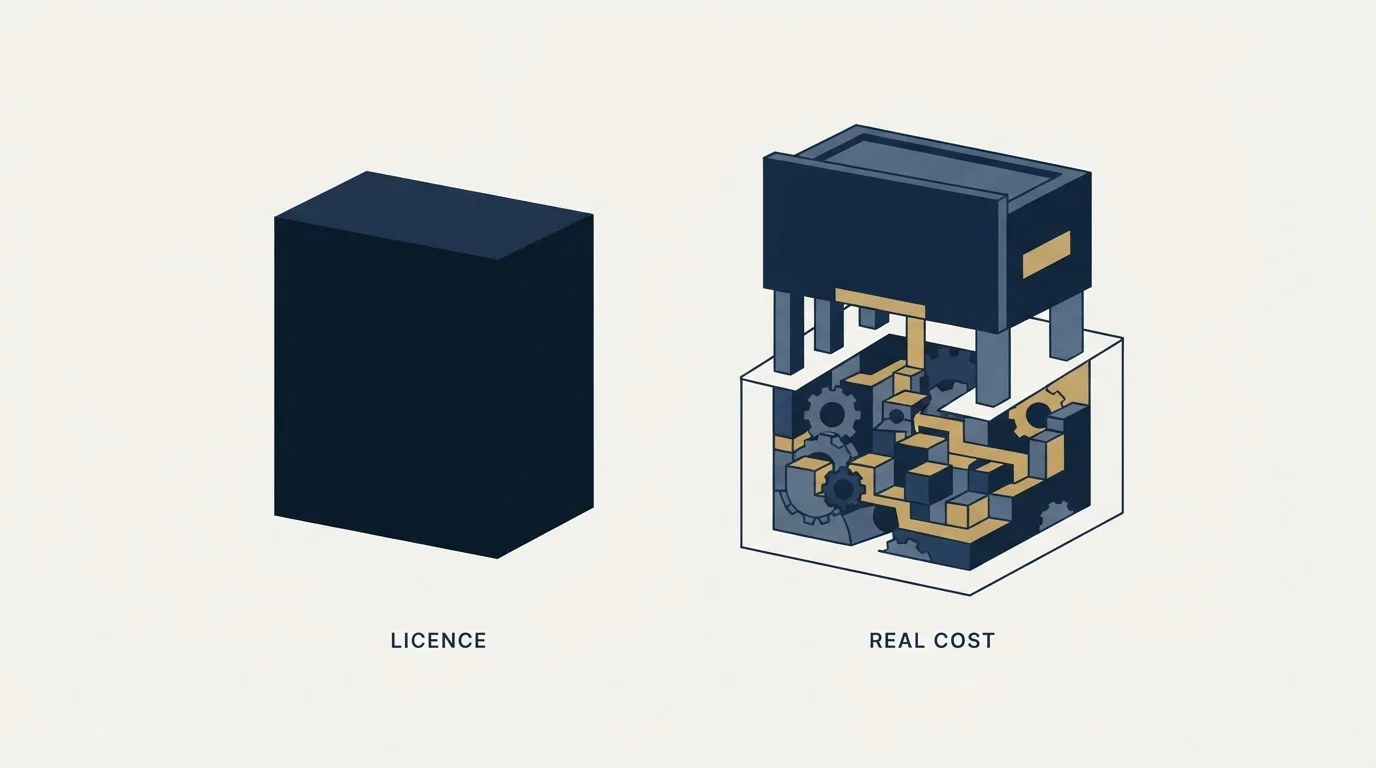
The useful comparison is not seat against seat. It is total monthly cost at your expected usage against total monthly cost at your expected usage, with the consumption estimated rather than assumed to be zero.
As an invented illustration purely to show the arithmetic, and not a quote for any team: eight seats on the annual Pro rate is eight times the published annual per-seat figure, and if that workspace consistently needs one extra 10,000-credit block a month, the block adds roughly the cost of another two seats to the same bill. Whether that lands as good value depends entirely on what the credits are buying, which is why the estimate has to be made against your own enrichment and automation plans rather than against a feature grid.
Two adjacent purchases are worth separating from this one. A CRM is not a sending tool, and the pricing logic in Smartlead's plans or Lemlist's tiers answers a different question about a different meter. Where a CRM decision and an outbound decision get bundled, the CRM usually wins on inertia and the outbound stack gets chosen badly. If the shortlist is still open, the HubSpot CRM alternatives set out the wider field Attio is competing in.
The short version
Attio publishes four plans, and the per-seat rate on the card is one of two meters. Seat credits and workspace credits are the second, they are allocated monthly, and overage blocks are sold at published rates that can rival the licence cost for a heavy workspace. The page prices regionally and renders monthly and annual states into one document, so confirm the currency and the toggle before quoting a figure. Size the credit burn before choosing a tier, and cache aggressively in any integration, because that is the lever that keeps the consumption line flat.
Want your CRM and your outbound stack sized against the same volume plan, so neither one is chosen on a number that describes the other? Get a free campaign plan and we will work through it with you.
Pricing and plan limits verified against the Attio pricing page linked above as of mid-2026. The page prices by region and renders both billing cycles into one document. Verify current terms with the vendor, from the country that will be billed, before relying on them.
Frequently asked questions.
Frequently asked questions- How much does Attio cost per user?
- The pricing page served to a European visitor in mid-2026 listed Plus at 34 pounds per user per month billed monthly and 27 billed annually, and Pro at 74 monthly and 59 annually, with Free at zero for up to three seats and Enterprise quoted custom. The page prices regionally, so open it from the country that will be billed.
- What are Attio credits and what uses them?
- Credits are Attio second billing meter, published on the same pricing page as the seat rates. They come in two pools, seat credits allocated per user per month and workspace credits allocated per workspace per month, and they are drawn down by enrichment, AI and automation work. When the allowance runs out, more are bought in blocks.
- Why do sites disagree about Attio pricing?
- Three reasons stack up. The page prices by region, so dollar and pound figures are set separately rather than converted. It renders monthly and annual rates into one document, so the two get mixed up. And plans change, so older breakdowns describe a ladder that has since moved. Published third-party figures range widely as a result.
- Is the Attio free plan usable for a real team?
- For a small one, yes. Free covers three seats, three objects, 50,000 records, 50 GB of storage and 100 seat credits per user monthly, with contact syncing and enrichment included. The limit that usually ends it is the seat ceiling rather than the data ceiling, so the fourth hire is what turns it into a paid decision.
About the author.

B2B cold email experts helping companies generate qualified leads through done-for-you outreach campaigns.
RevenueFlow Team
Explore more.
Ready to scale your outreach?
We build GTM engines that book real meetings. See the receipts.
Related articles.
Sales Automation Software for Small Business: Four Buys
One search returns four unrelated products, and on at least one vendor's published plan list the automation is gated above the tier a small team buys.
Sybill: The Credit Meter Is the Number to Model
Sybill meters by credits per week rather than by seat, and its pricing page carries three different figures for the same two plans. Both facts change the model.
Pipedrive Pricing: Half the Numbers Online Are Retired
Pipedrive renamed every plan in 2025, so most pricing write-ups quote a retired rate card. The five inputs that actually decide your bill, from the vendor's own docs.
Pipedrive Calling: Native Surfaces, Marketplace Dialers
Pipedrive's knowledge base says it has no built-in calling integration. What ships natively is a set of shortcuts to your phone, and the dialer is a second subscription.
Avoma Pricing: Recorder Seats, Free Viewers, and the Add-Ons
Avoma charges only for people whose meetings get recorded and makes viewers free, so the seat count to price is smaller than the team and the add-ons are larger.
Calendly Pricing: Every Plan and What Changes With Seats
Calendly's published rates read as annual by default. What each tier unlocks, why the same page shows three currencies, and where the non-profit discount lives.