Avanan Spam Filter: The Fixes Worth Doing First
Avanan is now Check Point Harmony, and it connects by API rather than sitting in the MX record. That one detail makes every bounce-reading diagnostic useless.
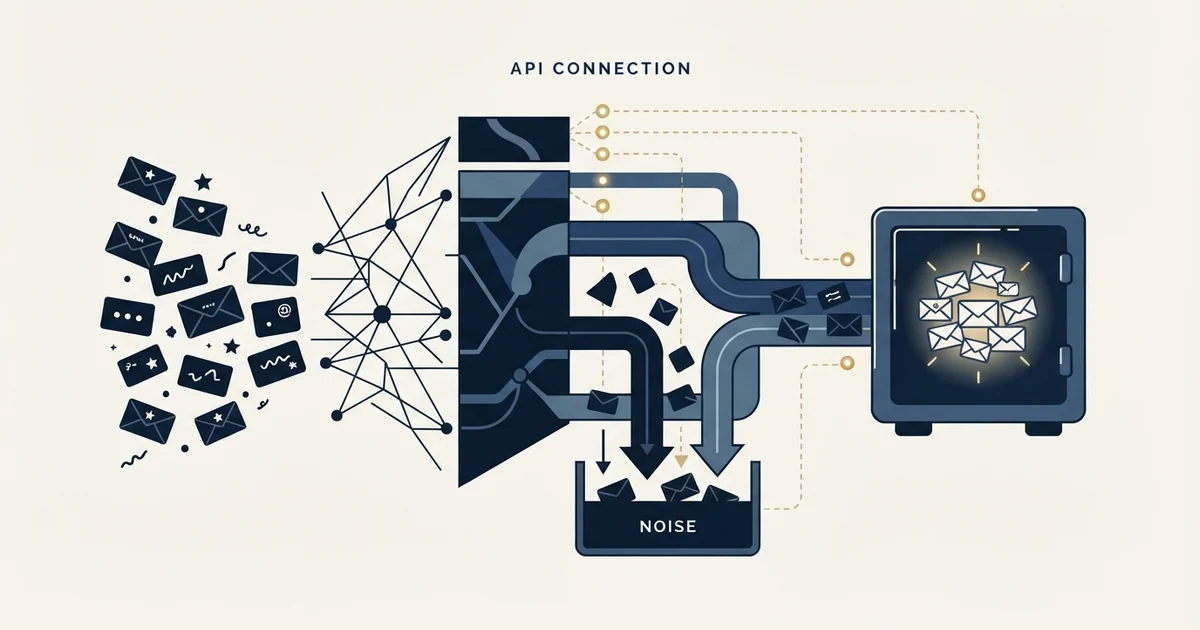
Avanan is email security sold by Check Point as part of Harmony Email and Collaboration, and its own domain redirects there. Check Point's page describes an API connection rather than a gateway in the MX record, so it inspects mail after the provider has accepted it and returns no bounce or rejection text to the sender.
Key takeaways
- The product connects to a mailbox by API rather than through the MX record, so no DNS lookup reveals it and no rejection text is ever returned.
- Delivery reports at these recipients look excellent by construction: acceptance is near total because acceptance happened before the security product formed a view.
- Reply rate split by receiving domain is the only first-party instrument that sees this layer, because it is the only one that depends on a human reading the message.
- Check Point sells a choice of enforcement mode, so behaviour varies by customer and no general characterisation of the vendor predicts what a given company does.
Reviewed and updated August 28, 2026
Avanan Spam Filter: The Fixes Worth Doing First
Someone on the team searches for Avanan after seeing the name in a bounce or a banner, and lands on Check Point's website. That redirect is the first useful fact about this product. Type avanan.com into a browser today and it resolves to Check Point's Harmony email security page, because Avanan is now sold as part of Check Point Harmony Email and Collaboration. The documentation lives under Check Point's name, and searching for the old one will keep sending you sideways.
The second fact matters more, and it changes how you diagnose everything that follows.
The deployment model is the whole story
Check Point's own page for the product leads with how it attaches to a mailbox: "Connect in minutes via API and pick your enforcement mode."
An API connection is a different animal from the gateway model most deliverability advice assumes. A traditional secure email gateway sits in the MX record, receives your message before the mailbox provider does, and can refuse it during the SMTP conversation. Your sending platform gets an explicit rejection, with text, naming the product. That is the friendliest possible failure, because it tells you what happened.
Teams that still expect a gateway rejection will find how enterprise spam filters trigger a useful contrast, since that model judges mail before the mailbox provider ever sees it.
A product that connects by API is not in that path. Mail reaches Microsoft 365 or Google Workspace by the normal route, is accepted, and the security product inspects it through the provider's interface afterwards. Nothing is refused at SMTP time, because by the time the product forms a view the SMTP conversation is long over.
- Named in the recipient domain's public MX record
- Can refuse during the SMTP conversation
- Refusal text is returned to your sending platform
- Discoverable before you send, with a DNS lookup
- Invisible in the MX record, which names the mailbox provider
- Cannot refuse at SMTP time, because it acts after acceptance
- Produces no rejection text and no bounce
- Its decisions reach you only as silence
The consequence for a sender is uncomfortable and worth stating plainly. Every diagnostic habit built around reading bounce text is inert here. There is no bounce. Your platform reports the message accepted, because it was accepted, and what happened next happened inside an organisation that has no reason to tell you.
If you arrived looking for a Check Point spam filter
The two names describe one product, and the confusion is worth clearing up because it sends people to the wrong documentation.
Avanan was an independent email security company. Its technology now ships inside Check Point's Harmony family, and its own domain no longer serves a site of its own. Search results still split across both names, and older material, reseller pages and managed-service provider help articles use whichever name was current when they were written. If you are trying to work out what a recipient organisation is running, treat the two names as the same finding.
Check Point also sells other things called spam filtering, including protection built into its network security appliances, and those are a separate product line addressing a different position in the network. For a cold email sender the distinction rarely matters, because the question you are actually asking is whether the recipient's mail is inspected by something beyond the mailbox provider's own filtering, and the answer for either product is yes.
What does matter is the phrase Check Point puts next to the API connection: the buyer picks an enforcement mode. A security product that offers a choice of enforcement is a product whose behaviour at any given company is a decision that company made, not a fixed property you can look up and plan around. Two organisations running the identical product can treat identical mail differently, which is why a per-domain reading of your own results beats any general characterisation of a vendor, including this one.
What this means for your numbers
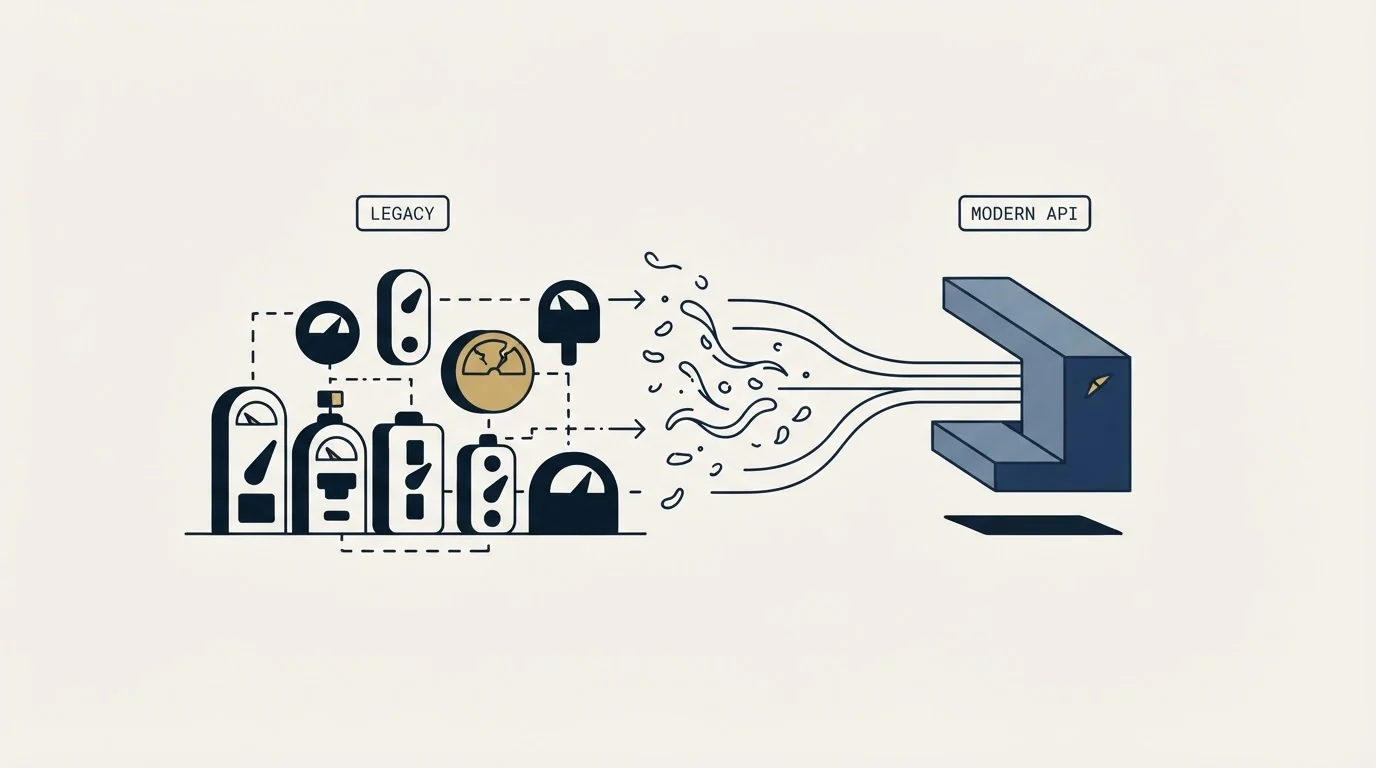
A recipient population running an API-connected security product will show you a delivery report that looks excellent. Acceptance near total, bounces near zero, and the campaign performing worse than comparable segments for reasons the dashboard cannot express.
That is the same shape described in inbox placement: accepted and placed are different events, and only one of them is reported. The distinction is doing real work here, because the usual sender-side instinct on seeing clean delivery numbers is to conclude the infrastructure is fine and start editing copy.
The infrastructure probably is fine. The copy is probably not the variable either. What has happened is that a second decision was made after the one your platform can see.
- Step 1Confirm the absence rather than assume it
Check that these domains genuinely produce no rejections. An acceptance with no bounce is a finding, not an empty result, and it is different from a gateway refusal.
- Step 2Split reply rate by receiving domain
Reply is the only first-party evidence a human saw the message. A segment replying far below the campaign average on identical copy is where the filtering is.
- Step 3Rule out your own side by comparison
Sibling campaigns on the same sending inventory running normally is strong evidence the inventory is healthy and the recipients are the variable.
- Step 4Verify authentication at the published DNS
Do this to eliminate it, not because you expect to find it. A product acting after acceptance did not reject you for a record, but a broken record is worth knowing about regardless.
The fixes worth doing first
Ordered by how much they change the outcome per hour spent.
Get authentication genuinely correct, and verify it at the DNS rather than in the sending tool. This is first not because it defeats the product, but because it is the one input you fully control and the one that every other layer reads. The setup and the verification method are in SPF, DKIM and DMARC for cold email.
Verify the list before it is loaded. Bounces feed the sender reputation that every filtering system, API-connected or otherwise, consults. This is cheap, it is entirely within your control, and it is the single most common gap behind a segment that underperforms for no visible reason.
Send from domains with a real history. A product built to detect unfamiliar senders is being handed exactly what it looks for when the sending domain was registered recently. The relevant timelines are in how long to warm up a cold email domain.
Reduce the reasons a human would report the message. An API-connected product learns from what recipients do, and a recipient pressing the junk button is the strongest signal any of these systems receive. That is a targeting and relevance problem rather than a technical one, and it is the one place where effort on the message genuinely pays.
Stop treating a clean delivery report as an all-clear. Build the reply-rate-by-domain view once and it answers this question permanently, for every campaign, at no ongoing cost.
- Yes: Rejection text checked, and its absence confirmed rather than assumed
- Yes: Reply rate broken out by receiving domain, not read as a campaign average
- Yes: Sibling campaigns on the same sending inventory compared
- Yes: Authentication verified at the published DNS records
- No: Copy rewritten to avoid supposed trigger words before any of the above
What not to spend effort on
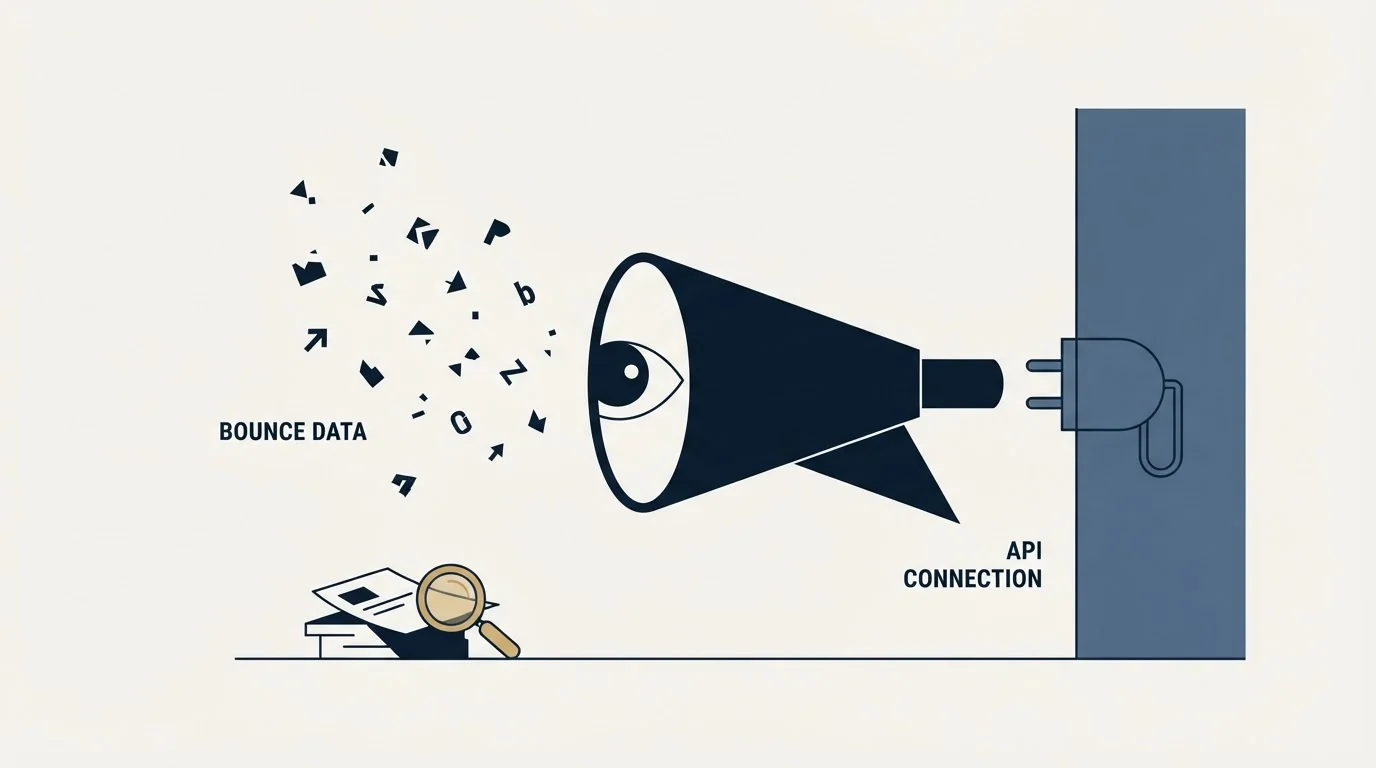
Requesting an allowlist entry from a prospect's security team is a change to somebody else's security posture, asked for by a stranger, and the administrator who would make it is the person who bought the product. It happens for customers. It does not happen for cold outreach, and building a process around it wastes the time of everyone in the chain.
Chasing an MX lookup for this product will also come back empty, and the empty result is easy to misread as an absence of filtering. A domain whose MX record names Microsoft may still run an API-connected security layer, and no external lookup will reveal it. The technique remains valuable for products that do sit in the mail path, which is covered in third-party spam filter, and it simply does not reach this case.
Retrying is the third one. There is nothing to retry into, since nothing refused you, and volume aimed repeatedly at a population that is not responding accumulates against your own reputation for no return.
Where the effort actually belongs
The honest summary is that this layer is not a sending problem with a sending fix. It is a property of the audience, and it is best handled at the point where the audience is chosen.
A segment where most target companies run modern email security is a segment with a lower expected reply rate. Knowing that before a launch turns a disappointing campaign into a forecast, and turns the question from why is this failing into whether this segment is worth the volume at the rate it actually produces. The wider diagnostic path, for every layer above and below this one, is in the cold email deliverability guide, and running your own deliverability audit is the checklist version.
One structural note, because it interacts with a product that learns from recipient behaviour. We send one message per campaign, sent once, and any later approach to the same person is a separate campaign built on a different premise. Repeated arrivals from an unfamiliar sender into a mailbox that has never engaged is among the clearest patterns these systems learn, and it is learned per sender. Sending once removes that pattern from the evidence they weigh.
The short version
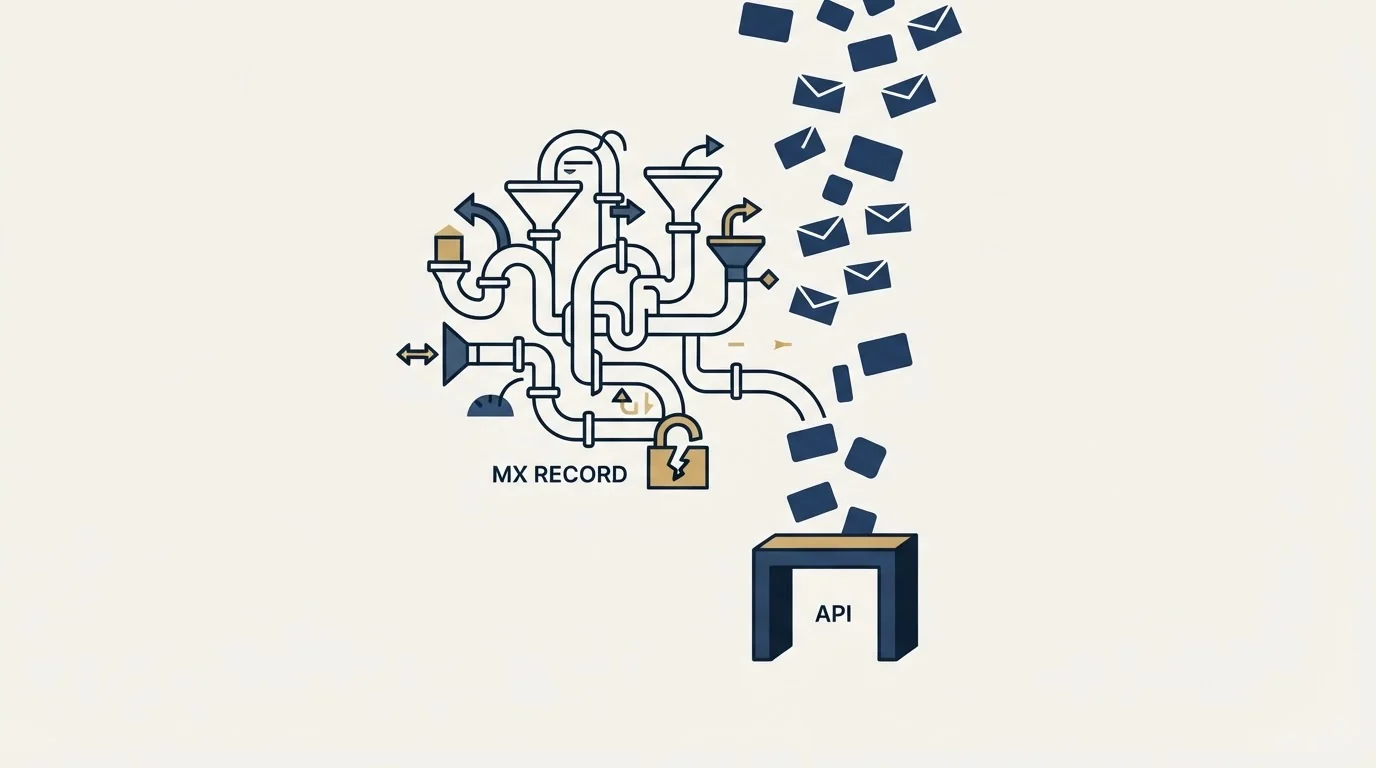
Avanan is Check Point Harmony Email and Collaboration, its own domain redirects there, and Check Point's page describes an API connection rather than a gateway in the MX path. That single architectural fact means it produces no bounce, no rejection text and no MX tell, so it is invisible to every diagnostic built on reading refusals. Diagnose it by reply rate split by receiving domain, fix the things you control, and treat the presence of modern email security across a segment as a targeting input rather than a fault to be repaired.
Reading results per receiving domain, rather than off a delivery report that cannot see this layer, is part of how RevenueFlow runs B2B cold email and LinkedIn outreach: one message per campaign, on sending infrastructure we monitor ourselves. See how the campaigns work.
Product and deployment details verified against Check Point's own published pages as of mid-2026. Verify current terms with the vendor before relying on them.
Frequently asked questions.
Frequently asked questions- Is Avanan the same as Check Point Harmony?
- Yes. Avanan's technology is sold within Check Point's Harmony Email and Collaboration product, and avanan.com now redirects to Check Point's Harmony email security page. Older reseller and support material still uses whichever name was current when it was written, so treat a mention of either name as the same finding.
- Why do I get no bounce from domains running this product?
- Because it connects by API and acts after the mailbox provider has accepted the message. A gateway in the MX record can refuse during the SMTP conversation and hand your platform an explicit rejection. A product acting after acceptance has nothing to refuse, so its decisions reach you as silence.
- Can I check whether a domain uses it before sending?
- Not from outside. An MX lookup names the mailbox provider and reveals nothing about an API-connected security layer, and an empty MX finding is easy to misread as an absence of filtering. The lookup remains worth running for products that do sit in the mail path.
- Should I ask the prospect's IT team to allowlist me?
- It is a change to somebody else's security configuration, requested by a stranger, and the person who would make it bought the product to stop mail from unfamiliar senders. Customers can ask for it successfully. Building a cold outreach process around it wastes everyone's time.
About the author.

Tim Carden is CMO / CTO at RevenueFlow, which builds and operates outbound revenue engines for B2B companies. Studied at McGill University.
Tim Carden · CMO / CTO
Connect on LinkedIn →Explore more.
Ready to scale your outreach?
We build GTM engines that book real meetings. See the receipts.
Related articles.
GMass Inbox Tester: The Public Seed List Cuts Both Ways
GMass publishes the fifteen seed addresses behind its free placement tester. That makes the test repeatable, and it also makes the absolute result pessimistic.
Proofpoint Spam Filter: Diagnosing Placement
Two different Proofpoint systems can stop a cold email, and the remedies have nothing in common. Telling them apart takes a minute and saves a month.
Office 365 Spam Filter: What Actually Triggers It
The same message lands in the inbox at one Microsoft tenant and in quarantine at the next. A setting the recipient chose decides which, and the headers say so.
Sending Cold Email From the CRM You Already Pay For
A CRM sequence tool sends from your primary domain and your own mailbox, and vendor terms usually require documented consent. What a separate cold stack buys.
Mass Email From Outlook: The Limits Microsoft Publishes
Microsoft publishes the ceiling on one mailbox and, a few paragraphs later, recommends that bulk commercial mail go to a specialist provider instead.
IMAP or SMTP: One Sends, One Reads, and the Ports
A mail setup pane asks for two servers because the two protocols run in opposite directions. The RFCs define both jobs, and the ports are where providers disagree.