11 Cold Email Agencies: What Each One Publishes About Price
Eight of eleven cold email agencies publish a rate and three publish only terms. Four publish what they count as a qualified lead, and those definitions differ sharply.

Eight of eleven cold email agencies publish a dollar figure on their own site and three publish contract terms instead. Only four publish what they count as a qualified lead, and those definitions range from clearing five named filters to simply agreeing to a call. Commitment runs from cancel-anytime to annual.
Key takeaways
- Eight of the eleven agencies publish a rate somewhere on their own site and three publish contract terms with no rate at all.
- Only four of the eleven publish what counts as a qualified lead, and the standards differ enough that the same prospect is billable to one agency and free to another.
- Cleverly publishes four different prices across four of its own pages, so a cold email figure for this agency is meaningless without the page it came from.
- Published commitment runs from cancel-anytime at SalesHive to annual contracts at EBQ, which changes total committed spend far more than the monthly rate does.
Reviewed and updated September 21, 2026
Eight of the eleven agencies below publish a dollar figure for cold email work on their own websites. The other three publish contract terms and no rate at all. Nothing about that split predicts quality, and it is not a proxy for size: the largest names in the category sit on both sides of it.
Amplemarket's published pricing breakdown explains why only its entry tier carries a public rate while every higher plan moves straight into a sales conversation.
What is worth reading closely is the other thing they publish, which almost nobody compares. Four of the eleven state, on their own pages, what they count as a qualified lead. Those four definitions are so different from each other that the same prospect would be billable to one agency and free to another, and that gap moves more money than any price on this page.
Which agencies are here, and which are not
The eleven are the agencies that sell email outreach as a service you can buy, and for which a price or a term is published on the agency's own site. Directory listings, review-site profiles and aggregator rankings were not used for anything.
Four well-known names in the wider category are deliberately absent, and the reason in each case is the same shape:
- Superhuman Prospecting sells cold calling. Cold email appears on its pricing page as an inclusion inside the Premium SDR bundle and as an "Optional Addons (Additional Cost)" line beside the calls-only plan, rather than as a service in its own right.
- MarketJoy names email once on its outbound SDR page, as one channel inside "Multi-Channel Outreach", where the page reads "We engage prospects through email, LinkedIn, and phone".
- Operatix carries no instance of the word email at all on its homepage or its FAQ. It sells outbound sales development as a staffed function.
- UnboundB2B publishes a 44-page site map with no cold email service page on it. Its service lines are content syndication, ABM, demand generation and SDR as a service.
That distinction matters more than it sounds. An agency selling email as a service is accountable for deliverability, domain infrastructure and copy as the product. An agency selling a calling team that also sends email is accountable for conversations, and the email is a supporting channel with nobody's name on it.
Cheaper still is doing it on a bulk marketing platform, and what MailerLite's own policy prohibits rules a purchased or scraped list out entirely.
One further vendor, Growthonics, returned HTTP 522 across repeated attempts, meaning the CDN answered and the origin server did not. That is a failure to read the page rather than evidence about the company, so it appears in no group here.
The eight that publish a price

Each figure below belongs to the page it was read on, in mid-2026, and several of these agencies publish different numbers on different pages of their own site.
| Agency | Published figure | Page it appears on |
|---|---|---|
| Belkins | "The average starter price: from $5,000" | appointment setting service page |
| CIENCE | $5,000 setup, $2,000/mo team, $499/mo platform, $7,499 first month | pricing page |
| Callbox | $15,000 to $30,000 estimated monthly for one Campaign Pod | lead generation pricing page |
| SalesRoads | "Total investment $11,950 / 4 wks" for one SDR | pricing page |
| LevelUp Leads | "pricing starting at $5,000" | packages page |
| SalesBread | "3k/month plus a one time set up fee" | done-for-you page |
| Cleverly | $397/mo to $997/mo for lead generation | FAQ |
| EBQ | $5,000 half-time, $10,000 full-time, per month | pricing page |
Three of those need a caveat that the number alone hides.
Belkins publishes $5,000 in the visible copy of its appointment setting page, while the same page's structured data declares 8000. A reader sees $5,000, and that is the figure to use.
Callbox publishes a second figure on a different basis. Its pricing FAQ states "Our clients spend between US$20,000 and US$40,000 quarterly on their Callbox program", which is an observed spend over three months rather than the monthly pod estimate. Note also that this agency is callboxinc.com. The domain callbox.com belongs to an unrelated phone-tracking company whose pricing has nothing to do with lead generation.
Cleverly publishes four prices across four of its own pages. Lead generation is quoted at $397 to $997 a month on the FAQ, appointment setting at $697 to $2,997 a month, outsourced SDR at $3,000 a month, and its cold email page prices by tier name only: Growth billed as a "Flat Monthly Retainer", Scale billed "Pay per lead". Quoting one Cleverly price without naming the page is close to meaningless.
The three that publish terms instead of a rate
These are not evasions. Each publishes something concrete, and in two cases the term is more consequential than a price would be.
SalesHive publishes structure and no number. Its pricing page states everything comes "in one flat monthly fee. No setup fees. No long-term contracts. Cancel anytime with written notice", with a "$0 Setup fees, ever" tile. It also names the three inputs that set your quote: team model, channel mix, and daily volume of 150+, 250+, or 500+ touches. That is a usable specification even without a rate, because it tells you which variable to negotiate.
Martal Group publishes the fee shape and the commitment, and neither the fee. Its pricing page reads "Pricing: flat fee per month" on the entry tier and "flat fee per month + sales commission" on the two above it, each closing with "Inquire about pricing". Commitment is a "3 Month Pilot Campaign" or a "4 Month Pilot Campaign", then a monthly subscription. That commission element is the only performance-linked component published by any of the eleven.
Leadium has a page at /pricing that publishes no rate. The dollar figures on it are a budget picker in a contact form, running from "$2,500 to $3,500" up to "Above $10,000", which ask what the buyer's budget is. Reading those as Leadium's prices is the single most likely way to misquote this agency.
What each one publishes about a qualified lead

This is the field with the least competition and the most money attached, and only four of the eleven publish anything at all.
- Criteria are the ones "you defined prior to the campaign start"
- Splits a completed lead from a qualified appointment
- Interest and fit alone is a completed lead
- Agreeing to a meeting is what makes it an appointment
- Matches your perfect targeting criteria
- AND has expressed interest
- Interest counts as agreeing to meet
- Or as asking to find out more about the company
- "if a prospect agrees to connect on a sales call, we consider it qualified"
- No firmographic condition stated
- No title or seniority condition stated
- No attendance condition stated
Cleverly is the fourth, and its appointment setting page publishes an explicit filter list rather than a sentence: title, company size, industry, buying authority, and timing, all "defined upfront", with the page stating a prospect does not reach your calendar until they have "cleared every filter".
Read those four next to each other and the practical consequence is unmissable. Under Leadium's published standard, a prospect who agrees to a call is qualified regardless of who they are. Under Callbox's, the same person is a completed lead until they agree to a meeting, and the criteria that make them relevant were yours to set. Under SalesBread's, they must both match the targeting and have expressed interest. Under Cleverly's, they must clear five named filters including buying authority.
The other seven publish no definition at all. Several of them use the phrase "qualified meetings" repeatedly in their marketing without ever stating criteria, which is the specific gap to close in writing before anything sends.
- Yes: The written definition of a qualified lead or meeting, in criteria you can check yourself
- Yes: What happens to a no-show: rebooked, credited, or billed anyway
- Yes: The dispute window, and what counts as a valid rejection
- Yes: Who owns the sending domains when the engagement ends
- No: The published price is the whole cost
Domain ownership is the one that gets forgotten until the end. If the agency bought and warmed the sending infrastructure, leaving means leaving the warmed domains behind and starting cold somewhere else. Arranging it at the start costs nothing.
The commitment lengths are further apart than the prices
Four of the eleven publish a commitment term, and the range runs from nothing to four months.
SalesHive publishes "No long-term contracts. Cancel anytime with written notice." SalesRoads publishes "No long-term commitment. Cancel anytime." on its pricing page. LevelUp Leads publishes "an initial 3-month commitment" that then rolls month-to-month. Martal publishes a three or four month pilot depending on tier. EBQ publishes annual contracts, payable monthly.
Between a cancel-anytime retainer and an annual contract, the total committed spend differs by an order of magnitude on identical monthly rates. That figure, rather than the monthly one, is what belongs in the comparison, and it is the reason the three agencies publishing terms without a price are sometimes easier to evaluate than the eight publishing a rate without a term.
The short version
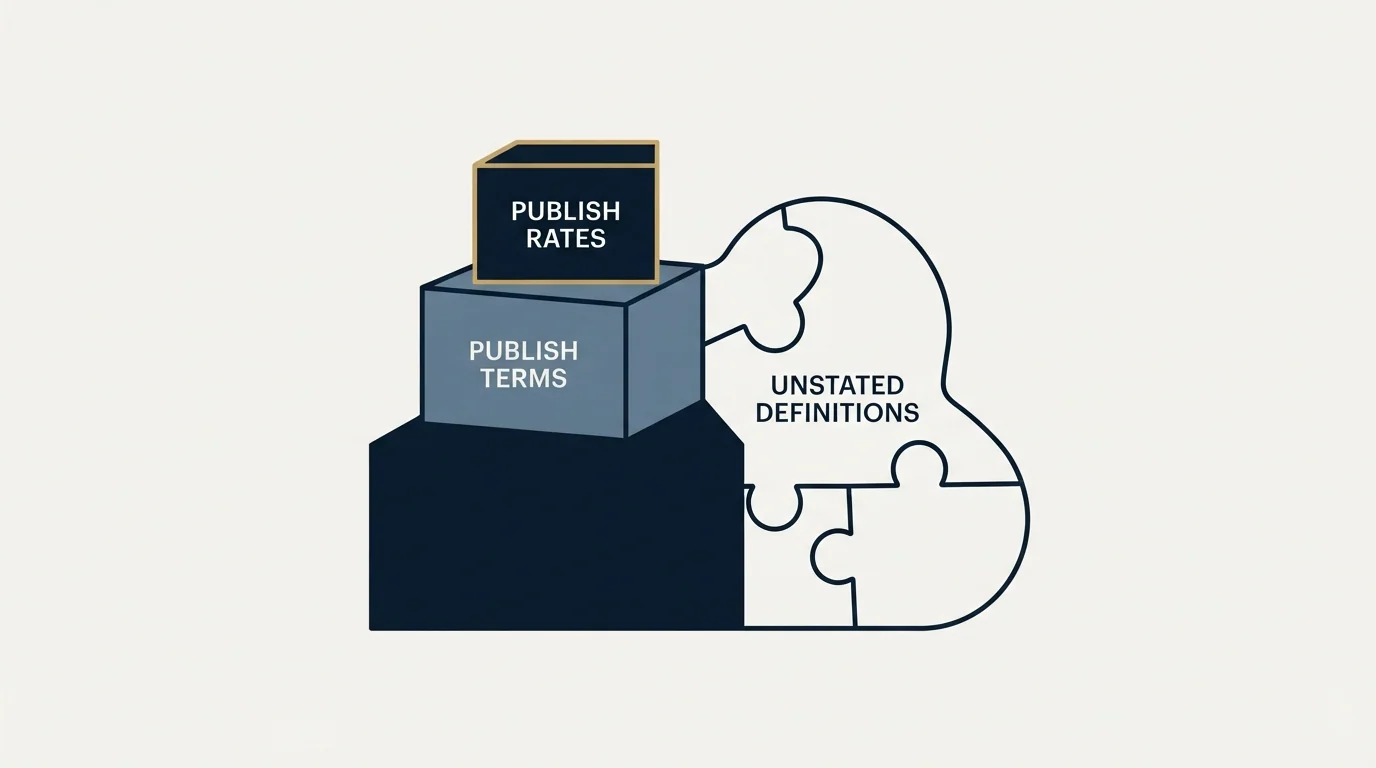
Eight of eleven publish a rate, three publish terms instead, and several publish more than one rate across their own pages, so a figure without its page is not a fact. Only four publish what they count as a qualified lead, and those four standards are far enough apart that they are not the same product. Commitment runs from cancel-anytime to annual. The comparison worth running starts with the definition, then total committed spend, and reaches the headline rate last.
GMass's trial cap and pricing breakdown shows how a similarly worded free offer still hides real per-mailbox costs behind the fine print.
RevenueFlow runs done-for-you cold email and LinkedIn outreach, and the free campaign engagement is priced per qualified meeting against a definition agreed in writing before anything sends, with retainer engagements where the scope is broader than meeting generation. What distinguishes how the campaigns themselves run: one message per campaign, no bumps, so a flat result earns a new angle rather than another attempt at the same person. The cold email agency page sets out the whole scope.
Pricing and terms verified against each agency's own pages in mid-2026. Verify current terms with the agency before relying on them.
Related reading: the same census applied to appointment setting companies, all fifteen vendors grouped by pricing model, what SDR outsourcing companies publish about how they charge, and the payment schedule hiding behind a monthly rate.
Frequently asked questions.
Frequently asked questions- How much does a cold email agency cost?
- Published rates in mid-2026 range from $397 a month for Cleverly's entry lead generation plan to $15,000 to $30,000 a month for one Callbox Campaign Pod. SalesBread publishes 3k a month plus a setup fee, SalesRoads $11,950 per four weeks for one SDR. Three of the eleven agencies checked publish no rate and quote per client instead.
- What should a cold email agency's contract define?
- Four terms, and most agencies publish none of them. What counts as a qualified lead or meeting, in criteria you can check yourself. What happens to a no-show. The dispute window and what counts as a valid rejection. And who owns the sending domains when the engagement ends, since walking away can otherwise mean starting cold.
- Why do agencies define a qualified lead so differently?
- Because the definition decides the invoice. Leadium's published bar is that a prospect agrees to connect on a sales call. Callbox splits a completed lead from a qualified appointment and lets the client set the criteria. SalesBread requires targeting match plus expressed interest. Cleverly requires five named filters including buying authority.
- Is a cheaper cold email agency worse?
- Price tracks scope more than quality here. The lowest published figures cover single-channel programs at modest volume, while the highest cover a dedicated pod with data, tooling and management wrapped in. Compare total committed spend over the minimum term against a written definition of what gets delivered, rather than comparing monthly rates.
About the author.

Ben Carden is CRO at RevenueFlow, which builds and operates outbound revenue engines for B2B companies. Previously at Gartner Enterprise. Studied at London School of Economics.
Ben Carden · CRO
Connect on LinkedIn →Explore more.
Ready to scale your outreach?
We build GTM engines that book real meetings. See the receipts.
Related articles.
Cold Email Frameworks: Which One Fits Your Offer
AIDA, PAS and Before-After-Bridge arrange the same four elements in different orders. What each one assumes about the reader, and what none of them fix.
QuickMail Pricing: Volume Bands, Not Seat Counts
QuickMail charges on monthly sends and stored contacts rather than seats. The three bands, the missing annual option, and the inbox billing its own pages disagree about.
Lemlist Pricing: Plan Tiers and Credit Costs vs Instantly
Lemlist prices per user with a sender cap where Instantly gives unlimited mailboxes. Which is cheaper depends on whether your constraint is headcount or mailboxes.
CAN-SPAM Act Compliance for B2B Cold Email: The Rules
The CAN-SPAM Act makes no exception for business-to-business email. Here are the seven requirements, the opt-out clocks, and where liability lands when an agency sends.
How to Write a New Year Outreach Email, Line by Line
A new year outreach email works only where January is a fact about the account. Who that is, the structure line by line, and two worked examples.
How to Write a Third Follow Up Email, Line by Line
A third follow up email belongs only in a thread where the person replied or agreed to something. When to send one, and how to write it line by line.