Landing Page Optimization Tools: Four Jobs, Four Meters
The category label covers building, testing, observing and asking. Those need different traffic volumes, and the meters they bill on are not the same unit.
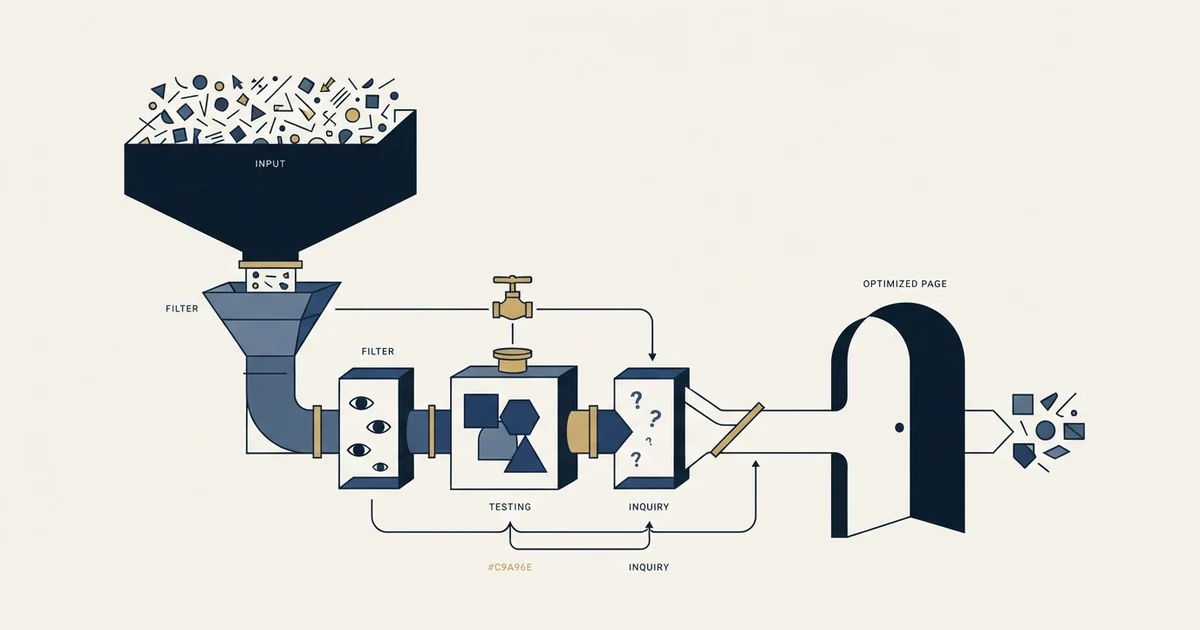
Landing page optimization tools cover four jobs: building pages, running variant tests, observing behaviour and asking target buyers. They bill on different units. Unbounce charges by deduplicated monthly visitors, Leadpages by pages and domains, and VWO by monthly active users with quotas stepping per tier.
Key takeaways
- Unbounce meters deduplicated monthly visitors with ceilings from 500 to 50k, and A/B testing starts on its third tier.
- VWO meters monthly active users, with events stored per user stepping 200, 100 and 50 and data retention stepping three, two and one month.
- Testing platforms need a conversion sample, so a page taking a few hundred visits a month cannot supply one at any price tier.
- Pricing pages in this category localise currency inconsistently, so a page title and its plan cards can quote different currencies.
Reviewed and updated September 2, 2026
Landing Page Optimization Tools: Four Jobs, Four Meters, One Question About Traffic
A B2B marketing team buys a testing platform, installs it on the campaign landing page, and runs a headline test. Six weeks later the test has not reached significance, because the page receives around four hundred visitors a month and the two variants are separated by nine conversions against seven.
Traffic for that test has to come from somewhere, and asking one page to rank and to convert shows why organic search is a poor way to supply it.
Nothing was configured wrong. The tool did what it was sold to do and the page could not supply what the tool needed. The purchase failed at the shortlist, where a category label covering four different jobs was treated as a single product decision.
Here is what actually separates the tools in this category, which parts of a comparison are checkable, and the one number that should decide the shortlist before any feature is compared.
The label covers four jobs
Search for landing page optimization tools and the roundups return a single ranked list mixing builders, testing platforms, behaviour analytics and copy research. Those are four jobs with different buyers, different failure modes and different volume requirements.
A landing page testing tool is one of those four jobs rather than a separate purchase, which is why a search for one lands on this same mixed list: the experimentation feature is bundled into the builders as often as it is bought standalone.
Build is publishing a page without a developer. Unbounce and Leadpages sit here. The value is scheduling: a page this week instead of a page next quarter.
A ClickFunnels alternative is usually sought at this same Build row, and the comparison is not like for like: ClickFunnels lists visitors as unlimited on every plan and meters email contacts and monthly sends instead, so a page fed by outbound rather than by paid traffic sizes on a different axis entirely.
Instapage belongs in this same build column, and the alternatives a shortlist actually weighs it against are the other builders in it, each metering on a different unit, which is the dimension worth comparing them on before any feature table.
Test is running a controlled experiment between variants. VWO and Optimizely sit here. The value is a defensible answer, and the requirement is a sample.
Observe is watching what visitors do without asking them. Heatmaps and session replay sit here, which since the Contentsquare acquisition means Hotjar is one part of a larger experience analytics suite. The value is a hypothesis, and the requirement is recorded sessions.
Ask is putting the page in front of people from your target market and collecting their reaction. Copy research tools sit here. The value is a read at low volume, which is the one thing the other three cannot give you.
That last row is the interesting one for B2B, and it is usually the row a roundup treats as a curiosity. A tool that produces a signal from twenty deliberate readers is structurally better suited to a page with four hundred monthly visitors than a tool that needs four hundred conversions.
- Publish pages without a developer
- Run controlled variant experiments
- Testing needs conversions, not visits
- A thin sample returns a confident wrong answer
- Click, move and scroll maps
- Session recordings and friction signals
- Built from recorded sessions rather than all traffic
- Patterns need volume before they are real
- Reactions from a defined target panel
- Works at twenty readers rather than four hundred conversions
- Answers why rather than which
- Fits low-traffic B2B pages best
The meters, which is the part that is genuinely comparable
Feature tables in this category are close to useless, because every vendor lists every feature and the differences live in tiers. What is checkable is how each product charges, and the meters are not the same unit.
Unbounce meters monthly visitors, per tier, and defines the unit. Its pricing page counts a visitor as a person who views your landing page, popup or sticky bar at least once in a given month, deduplicated with cookies, and lists "Unlimited conversions" among the things every plan includes. The traffic ceilings on that page run from "Traffic volume: up to 500" on Starter through 20k on Build and 30k on Experiment to 50k on Optimize. Published rates are $22 or $29 a month for Starter, $74 or $99 for Build, $112 or $149 for Experiment and $187 or $249 for Optimize, the lower figure in each pair carrying a save 25 percent annual billing label. A/B testing appears at Experiment, so the second cheapest plan cannot run a test.
Leadpages meters pages and domains rather than traffic. Its pricing page splits into two products, an HTML publishing tier and an optimisation tier, with page counts, custom domain counts, storage, analytics retention and monthly AI credits stepping up per plan. "Unlimited traffic" and unlimited pages arrive at the optimisation tier alongside manual A/B testing and dynamic text replacement, the same page labels the annual option "Save 20% with annual billing", and the trial is seven days.
VWO meters monthly active users. Its pricing page carries no static rate card in the served page, and the plan comparison instead varies quotas under the description "Per MAU quota of events stored or collected per user": "200 events stored per MAU", then 100, then 50 across the tiers, with data retention stepping three months, two months and one month. Recordings appear as unlimited. The feature text on that page refers to Wingify, the company behind the product, which is worth knowing when reading its terms.
A VWO alternative is shopped at this same Test row, and the useful split in that shortlist is between the platforms that publish a rate card and the platforms that quote: Statsig and GrowthBook publish per-event and per-seat ladders, while VWO and Optimizely publish neither.
Contentsquare, which now owns Hotjar, served no plan figures to the pricing page fetch made for this comparison. That page renders client side and returned nothing but navigation. The honest reading is about the fetch rather than the vendor: the price is not verifiable without an account or a conversation, not that no price exists.
A Lucky Orange price is published in full where that one is not: its pricing page carries a complete rate card metered on monthly sessions tracked, from a 3,500 session entry tier up to a custom enterprise band, with every feature listed as available on every plan and additional websites charged per site.
- Yes: You know whether you are billed on visitors, pages, active users or seats
- Yes: You checked which tier the capability you actually need starts on
- Yes: You know what happens when you exceed the ceiling
- Yes: You confirmed the currency on the page matches the currency you will be charged
- No: You compared two vendors by their headline entry price
- No: You assumed testing is included because the plan mentions optimisation
A currency warning worth carrying into any comparison
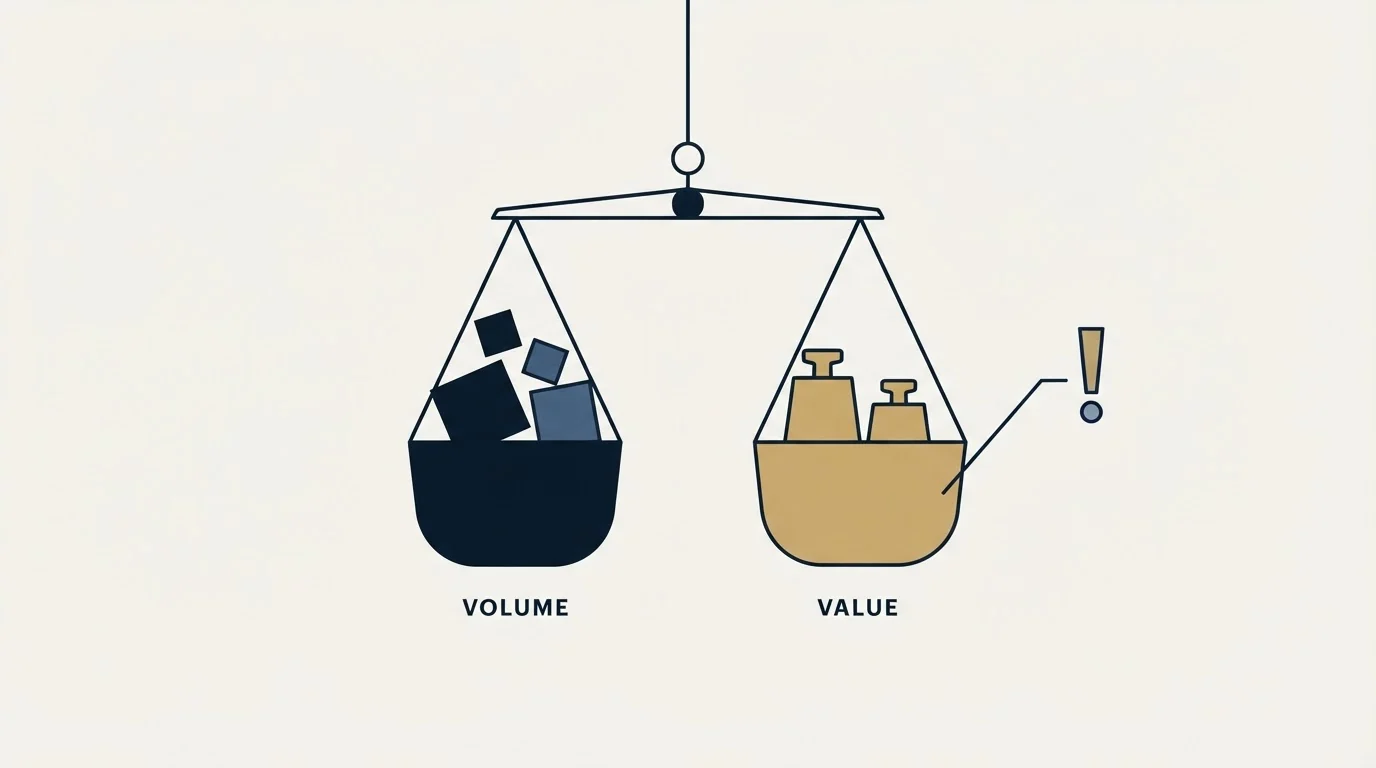
One practical trap surfaced while checking these pages, and it is not specific to one vendor. Pricing in this category can localise by visitor location, inconsistently within a single document: a page can carry a dollar figure in its title while rendering another currency on the plan cards below it for a visitor outside the United States, with no conversion between them and no announcement of the substitution anywhere on screen.
A figure copied from a comparison article, or from your own quick look, can therefore be the right number in the wrong currency, or a title's number rather than a card's. Check the symbol beside the number you are about to budget, and check it from the location that will actually be billed.
The question that should decide the shortlist
Before comparing anything, count the visitors your page receives in a month, and count the conversions. Do not start from a published average: average landing page conversion rate sets out what those figures counted and why none of them describes an outbound-fed page.
If the conversion count is in single or low double digits, testing tools are the wrong purchase, and no tier of them will change that. The arithmetic is the same as it is for email, where the sample required to separate a real effect from noise is set out in cold email A/B testing benchmarks. Below the threshold, a test produces a winner that is a coin flip wearing a percentage, and the general form of that error is covered in conversion rate: a rate computed over a few dozen records is dominated by chance, and reporting eleven of forty says more than twenty eight percent does.
At that volume the useful spend is on the two jobs that work at low sample. Observation gives you a hypothesis from behaviour rather than a verdict from statistics. Asking gives you the reason, from people who match your buyer, at a sample size a panel can supply.
At genuine volume the ordering flips, and a testing platform becomes the correct centre of the stack, with a builder underneath it if production is a bottleneck.
- Deduplicated monthly visitors
- Conversions unlimited on every tier
- Five pages
- One root domain
- Experiment, above Starter and Build
- Unlimited variants
- Confidence intervals
- Manual traffic allocation
- Events stored per active user step 200, 100 and 50
- Recordings listed unlimited
- Metered on monthly active users
- No static rate card served
What none of these tools fixes
Two failures are common enough to name, and no product in this category reaches either.
The first is that the page is not the constraint. A landing page converts demand that already exists and creates none, so when the flow of visitors is thin the tool is optimising the wrong end of the problem. That argument, and the offer ladder question underneath it, is in landing page lead generation.
The second is that the leak is on the site rather than on the campaign page. A dedicated page and a website page fail in different places, and the site leak points in order are covered in lead generation website.
There is a third, quieter one. Optimisation tooling is bought by market label, and bottlenecks live somewhere else in the process. The layer map that separates which bottleneck each class of tool can actually reach is in sales process optimization tools, and it applies here directly: a testing platform cannot fix an offer, and a builder cannot fix targeting.
How to run the evaluation
Take the shortlist in this order rather than by feature count.
Name the job first, in one sentence, using the four above. A shortlist that spans two jobs is two shortlists.
Read the meter and find the tier where your capability starts, not the tier where the price is attractive. On this category's own published ladders, the capability boundary and the price boundary rarely sit in the same place.
Then run the trial against a real page with real traffic for a full billing period, and judge it on whether it produced a decision you acted on. A tool that produces a dashboard nobody changes anything because of has failed, whatever its feature list said.
The short version

Landing page optimization tools are four jobs under one label: build, test, observe and ask. The comparable dimension is the meter, and the meters differ in kind. Unbounce bills deduplicated monthly visitors, with testing starting on its third tier. Leadpages bills pages and domains, with unlimited traffic higher up. VWO bills monthly active users, with quotas and retention stepping by tier. Contentsquare, which now owns Hotjar, returned no plan figures to the fetch made for this comparison.
Count your monthly visitors and conversions before shortlisting anything. Below the sample a test needs, spend on observation and on asking real buyers rather than on an experiment platform. When the shortage is the traffic rather than the page, see what a first campaign produces against your own market.
Pricing and plan contents above were read from each vendor's own pricing page in August 2026. Contentsquare's renders client side and returned no figures to a plain fetch, so none appear. Verify current terms with the vendor before relying on them.
Sources: Unbounce pricing, Leadpages pricing, VWO pricing, ClickFunnels pricing, Lucky Orange pricing, Contentsquare pricing, Optimizely plans, Statsig pricing, GrowthBook pricing, Instapage plans
Frequently asked questions.
Frequently asked questions- What is the best landing page optimization tool?
- That depends which of four jobs you are buying. Building a page without a developer, running a controlled test, observing behaviour through heatmaps and replays, and asking target buyers for a reaction are separate purchases with different volume requirements. A shortlist spanning two of them is two shortlists, and comparing across them produces no useful ranking.
- How much traffic do you need before A/B testing a landing page?
- Enough conversions, not enough visits, and the distinction is what catches people out. A test separates two variants by comparing outcome counts, so a page producing single or low double digit conversions a month cannot reach a defensible result inside a quarter. Below that threshold, observation and buyer research produce more usable answers than experimentation.
- How do these tools charge?
- On different units, which is what makes headline prices misleading. Unbounce bills deduplicated monthly visitors per tier with unlimited conversions. Leadpages bills page counts, custom domains, storage and analytics retention. VWO bills monthly active users with per user event quotas. Read the meter and find the tier your capability starts on before comparing entry prices.
- Does buying a landing page tool fix a low conversion rate?
- Frequently not, because the constraint is often somewhere else. A landing page converts demand that already exists and creates none, so thin traffic is a supply problem no tier addresses. A leak may also sit on the website rather than the campaign page, and a weak offer is not something a testing platform or a builder can reach.
About the author.

B2B cold email experts helping companies generate qualified leads through done-for-you outreach campaigns.
RevenueFlow Team
Explore more.
Ready to scale your outreach?
We build GTM engines that book real meetings. See the receipts.
Related articles.
Sales Prospecting for Consulting Firms: Find the Event
Prospecting for a consulting firm: where triggers are published by practice, who inside the firm reads them, why alumni and referrals come first, when to skip it.
LinkedIn Outreach for Utilities: Selling to the Sector
How a vendor selling to utilities uses LinkedIn next to a published sourcing process: the three ownership models, the registration gate and what a message may ask.
Cold Calling for Telecom Companies: A Carrier's Own Rules
What only a telecom company meets on the phone: the FTC exemption that stops at its contractor, the verified carrier change, and the CPNI limit on lists.
B2B Lead Lists for Associations: The Census Is Public
The anatomy of an association list: the IRS master file that enumerates every business league, the Form 990 lines that name officers and dues, and what vendors sell.
SDR Outsourcing for Business Brokers: The Fee Timing
Whether a success-fee brokerage should rent sales development at all: the fee timing, the texts that limit what an outside person may say about value, and who signs.
SDR Outsourcing for Agriculture Companies
Whether an outside sales development team can work for a company selling into agriculture: who already covers the account, which weeks exist, and the show rule.