The Sales Onboarding Process: What a New Seller Demonstrates
Most onboarding programmes are content schedules that can be completed without anyone learning the job. The demonstration list that replaces them, and the order to teach.
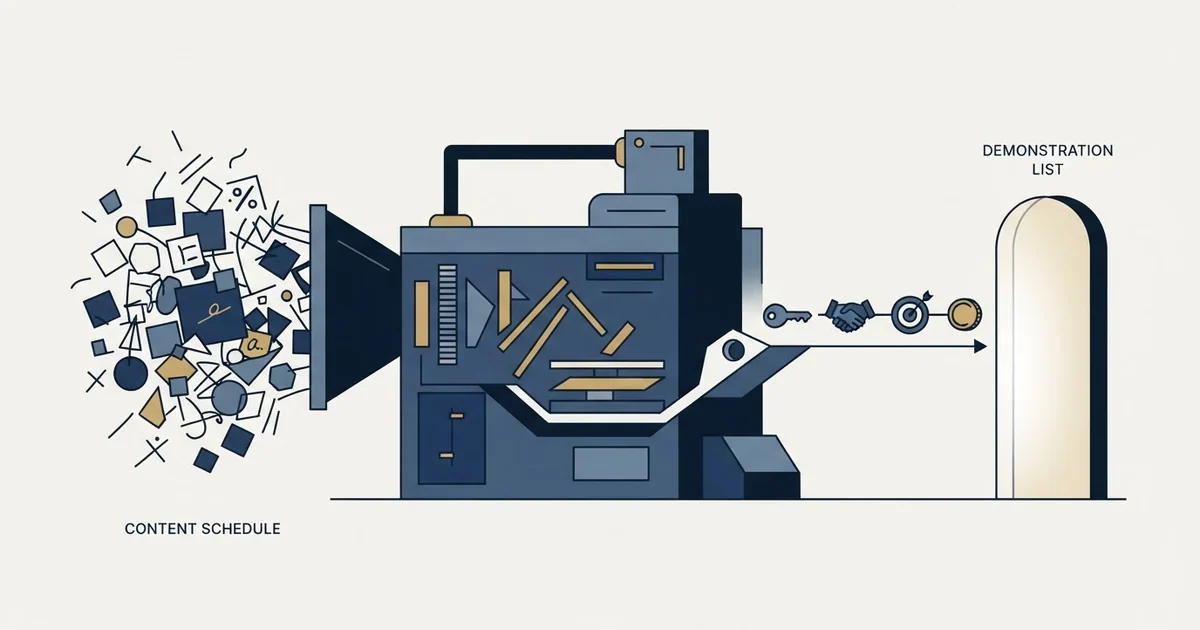
A sales onboarding process takes a hired seller to unsupervised conversations. The version that works lists demonstrations the seller has to produce under observation rather than modules the company delivers, teaches the market and the buyer problem before the product, and certifies against a bar written before the cohort started.
Key takeaways
- Onboarding narrows the spread between your fastest and slowest new seller; the average time to competence is decided by hiring and no programme moves it much.
- Write milestones as things the seller did under observation, because a delivery schedule can be completed in full by someone who cannot yet run a conversation.
- Teach the market and the buyer problem before the product, since a rough product answer is recoverable in a live call and thirty minutes on the wrong problem is not.
- A new seller with four conversations a month has a supply problem rather than a ramp problem, and training is the wrong answer to it.
Reviewed and updated September 1, 2026
A new seller finishes four weeks of onboarding having passed a product certification, watched eleven recorded calls and shadowed two live ones. On their first real conversation a prospect describes a workflow the deck does not cover, and the seller reaches for the only thing they have been given, which is the product tour. The call ends politely. Nothing in the onboarding programme predicted that, because nothing in it required the seller to produce anything under conditions resembling the job.
Sales onboarding is the process that takes a hired seller to the point where they can run a real conversation without supervision, and most versions of it are content schedules wearing a process costume. The difference between the two shapes up in one question: does the programme list things the company will deliver, or things the new seller has to demonstrate.
What onboarding is actually for
The honest objective is narrower than the marketing around it. Onboarding does not create good sellers, and the average time to competence across a team is dominated by hiring rather than by any programme.
What a programme can move is the spread. The distance between your fastest new seller reaching a defined bar and your slowest one is where onboarding earns its keep, because that gap is made of things the company controls: what got explained, what got practised, and whether anybody checked. Ramp time measured as an average hides this completely, which is why teams reporting a healthy average often have half their hires still guessing at month five.
The second objective is protecting the pipeline the new seller works. Every early conversation is spent from a finite supply of attention in the market, and a conversation burned by an unprepared seller is not recoverable by a better one later.
Build it from demonstrations, not modules
The repair is the same one that fixes a sales process. Write each milestone as something the new seller did that somebody else can verify, rather than as something the company delivered.
Mapping each decision point and its exits gives managers the same verifiable structure that onboarding milestones need, a discipline covered in drawing a flowchart with exits.
- Product training completed
- Competitive deck reviewed
- Ten recorded calls watched
- CRM walkthrough attended
- Shadowed a discovery call
- Certification quiz passed
- Explained what we do to a colleague who plays a sceptical buyer, without slides
- Named the three companies in a list of ten that fit the profile, and why the others do not
- Ran a discovery conversation that ended in an honest disqualification
- Wrote the account notes from a recorded call so a manager could reconstruct the deal
- Handled the two objections that arrive in the first minute, unscripted
- Explained the pricing shape and what changes it, without checking
The right-hand column is harder to build and it is the only one that produces information. A delivery list tells you the company did its part. A demonstration list tells you whether the seller can do the job, and it fails loudly rather than quietly.
The practical way to derive your own is to take your last three hires who ramped well and the last three who did not, and list what the successful ones could do at the four-week mark that the others could not. That list is your onboarding programme. Anything on the delivery schedule that does not appear in it is content, and content belongs in a library rather than in a critical path.
The ordering most programmes get backwards

The standard running order starts with the product, because the product is the thing the company knows best and the material already exists. It is the wrong place to start, for a reason that shows up in the first live conversation.
A seller who knows the product and not the buyer will present. A seller who knows the buyer and only roughly knows the product will ask, and a rough answer to a product question is recoverable in a way that an irrelevant demonstration is not. Buyers forgive a seller who says they will confirm a detail. They do not re-book with one who spent thirty minutes on the wrong problem.
- FirstThe market
Who we sell to, who we do not, and how to tell the difference from a company's own website
- SecondThe problem
How the work is done today at a typical buyer, what it costs them, and which parts they complain about
- ThirdThe conversation
Practice under observation, with a colleague playing the buyer, until the seller can hold the diagnosis without slides
- FourthThe product
What it does, mapped onto the problems already learned, rather than presented as a feature tour
- FifthThe system
CRM, stages, what has to be recorded and why a manager will read it
- SixthLive, with a net
Real conversations with a manager present and a debrief that names the phase that did not complete
Two of those deserve emphasis. The first milestone is the one most programmes skip entirely, and it is the cheapest to teach: a seller who can look at ten companies and sort them correctly has absorbed more about the business than any product module delivers. Where the profile is written down with the reasoning attached, as in an ICP with the arithmetic behind it, this becomes an exercise rather than a lecture.
The third is the one that gets cut when the calendar tightens. Reading and watching produce recognition. Conversations require production, and the gap between the two is where most of a training budget goes to die. Structured practice with feedback is the mechanism, and thirty uncomfortable minutes of it outperforms a week of recordings.
Choosing how to deliver that structured practice comes down to whether a simulated buyer can substitute for a colleague, which rehearsing conversations under pressure examines in detail.
Certification that means something
A certification is worth exactly as much as the conditions it was earned under. A quiz certifies recall. A recorded conversation with a colleague playing a buyer who pushes back certifies something closer to the job.
- Yes: Every milestone is a thing the seller did, observed by somebody other than themselves
- Yes: At least one milestone required handling a buyer who disagreed
- Yes: The seller disqualified something correctly and can explain why
- Yes: Their written account notes let a manager who was not there reconstruct the conversation
- Yes: The bar is the same for every hire, and it was written before this cohort started
- No: Sign-off happens on a date regardless of what was demonstrated
- No: The main evidence is completion of a course
The disqualification item does more work than it looks. A new seller who has never ended a conversation honestly will treat every prospect as a live deal, and the first months of their pipeline will be uninterpretable to their manager. Teaching disqualification early is also the fastest way to teach the profile, because the reasons are the same reasons. Structuring a discovery call around disqualifying well is the specific skill being certified here.
The written-bar item catches a slower failure. Where the standard lives in a manager's head, it moves with how badly the team needs headcount producing, and two hires six months apart get certified against different bars. Nobody can then read ramp data across cohorts, which removes the only feedback the programme has.
The manager is the variable nobody schedules
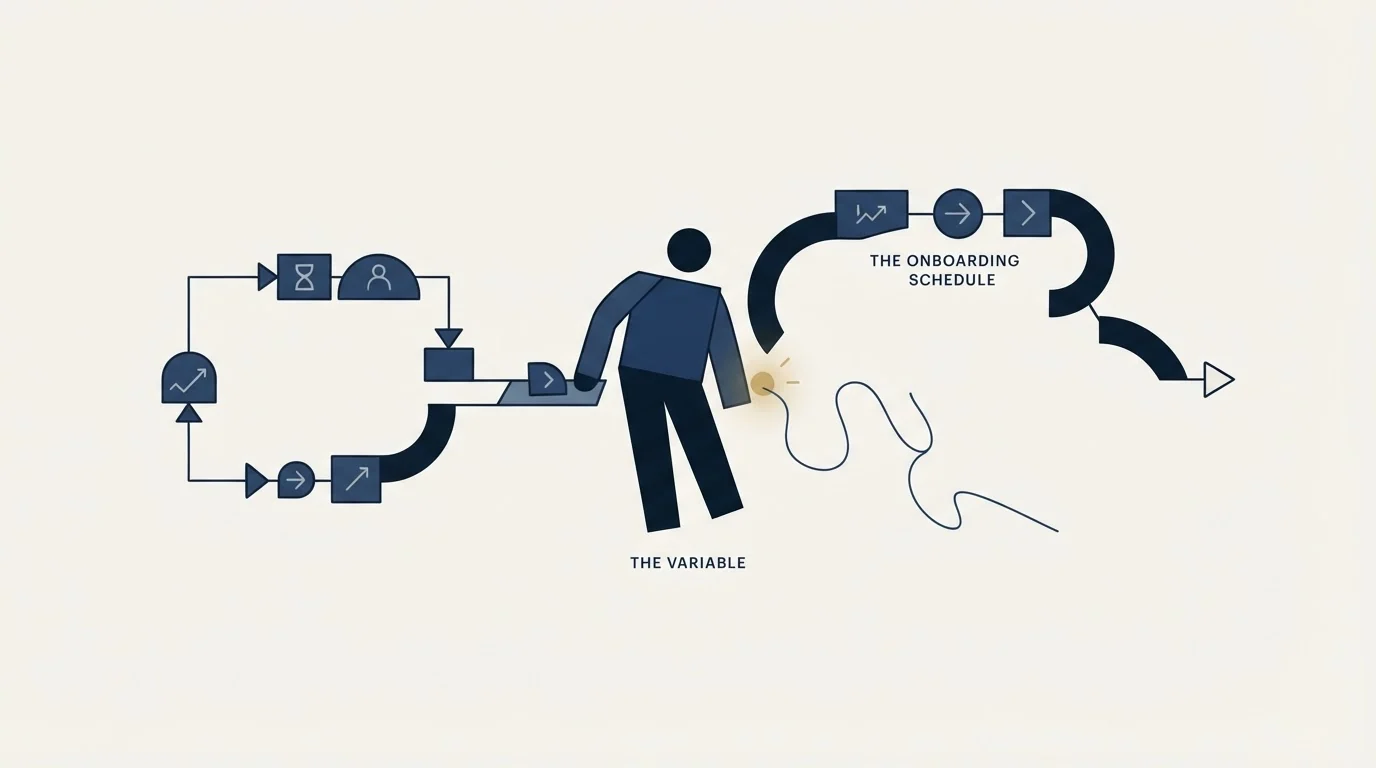
Onboarding content is delivered once and reinforcement is delivered daily, and the second one decides the outcome. A programme handed to a manager who runs one weekly review of deal status produces sellers who learn to describe deals favourably. The same programme handed to a manager who listens to one recorded call a week and asks what the buyer said the problem cost them produces sellers who go and find out.
That asymmetry is why the highest-yield edit to most onboarding programmes is not a new module. It is a standing debrief format for the first sixty days that asks which step of the conversation did not complete, rather than how the call went. Which objection responses are worth keeping is the same diagnostic applied to the moment objections arrive.
The other manager-side variable is what gets read. A new seller whose account notes nobody opens learns within a fortnight that the notes are administrative, and after that the record of their early conversations is a summary of their own impressions. A manager who reads one deal record a day and asks a question that can only be answered from what the buyer said teaches note quality faster than any template does, and note quality is what makes the rest of the ramp reviewable at all.
None of this requires more of the manager's time than the deal review they are already running. It requires a different question in it. Status reviews ask where the deal is and produce optimistic answers, because the seller supplying the answer is also the person being evaluated on it. Evidence reviews ask what the buyer did that moved it there, which either has an answer or exposes the gap, and the exposure is the training.
What onboarding cannot fix
Three things get blamed on onboarding and belong somewhere else. A hiring profile that does not match the sale produces sellers who ramp slowly whatever the programme does. A territory or account list with no addressable volume produces a seller who looks slow and is idle. And a product with no clear buyer produces conversations nobody could rescue.
The supply constraint is the one that most often masquerades as a ramp problem. A new seller with four conversations a month cannot become competent at any speed, because competence in this job is built from repetitions and there are none. That is a demand problem, and measuring it as a ramp problem produces a training answer to a pipeline question.
Where we differ from standard practice

Since this page sits on our site, one divergence is worth naming. Standard onboarding for a new outbound seller includes teaching them a contact cadence: a sequence of messages to each prospect over several weeks, with later ones landing in the same thread. We do not run that and we do not teach it. We run one message per campaign, with no bumps and no thread replies, and where an audience does not respond we build a separate campaign with a genuinely different premise. The practical effect on onboarding is that a new seller spends their practice time on the premise and the profile rather than on message counts, and that meetings we are paid for are qualified against criteria agreed in writing before launch. The reasoning is mechanical: a reminder reaches the population that already saw the message and chose not to answer, which is the population most likely to complain, and the cost lands on the sending domain across everything else it sends. The full trade, including what it costs us, is in why we stopped using follow-ups.
The short version
Sales onboarding earns its budget by narrowing the spread between your fastest and slowest new sellers, not by lifting the average, which hiring decides. Build the programme as a list of demonstrations rather than deliveries, and put the market and the buyer's problem before the product, because a seller who knows the buyer and roughly knows the product recovers from a gap that a seller who only knows the product cannot.
Certify against observed production, including one honest disqualification, with a bar written before the cohort started. Then give the manager a debrief format that asks which part of the conversation did not complete. Where the constraint is the number of conversations a new seller can get in front of, that is the half we run: see what a first campaign produces.
Frequently asked questions.
Frequently asked questions- How long should sales onboarding take?
- Long enough to produce the demonstrations, which is a different question from how many weeks the calendar allows. Fixing the duration and letting the bar move is the common failure, because it certifies whoever the deadline arrives for. Fix the bar, record how long each cohort took to clear it, and use that spread as the number worth managing.
- What should a new sales hire learn first?
- Who the company sells to and how to recognise them, before anything about the product. A seller who can sort ten companies into fits and non-fits with reasons has absorbed the commercial logic of the business, and that is what lets them hold a conversation when a buyer describes something the deck never anticipated.
- How do you measure whether onboarding worked?
- By the spread rather than the average: the distance between the fastest and slowest new seller reaching a written competence bar, tracked across cohorts. Course completions and quiz scores measure delivery. Time to first self-sourced qualified conversation and consistency of behaviour in recorded calls measure the thing you were buying.
- Is sales onboarding the same as sales enablement?
- Onboarding is one job inside enablement, which also owns content, tooling, ongoing training and messaging. Treating them as the same thing is how onboarding turns into a library handover, since content is the cheapest of those jobs to deliver and the easiest to mistake for completion of the others.
About the author.

Ben Carden is CRO at RevenueFlow, which builds and operates outbound revenue engines for B2B companies. Previously at Gartner Enterprise. Studied at London School of Economics.
Ben Carden · CRO
Connect on LinkedIn →Explore more.
Ready to scale your outreach?
We build GTM engines that book real meetings. See the receipts.
Related articles.
Sales Enablement: The Four Jobs Hiding Under One Name
Readiness, messaging, materials and process support are four different jobs with four different failure modes, usually resourced in reverse order of impact.
Monthly Sales Meeting Agenda: What the Month Decides
The weekly meeting triages deals in flight. The monthly one closes a period and changes the list. Six blocks, ninety minutes, one output each.
Sales Kickoff Meeting: The Decisions It Has to Leave With
A kickoff is the one moment a whole sales organisation can change at once. The four decisions it has to publish, and the week-six check that tests them.
Sales Call Planning: The Plan a Booked Call Needs
A call cannot produce a commitment nobody named in advance. The four fields a call plan carries, and why the ask has to be decided before the meeting opens.
The Seven-Step Sales Process: What Each Step Assumes
Prospecting through follow-up, walked one box at a time. Each of the seven steps carries an assumption about the buyer, and most of them have quietly stopped holding.
The Five-Step Sales Process: What You Stop Checking
Cutting a process to five steps is a decision about which checks you drop. Which deals the short version fits, and the two loss patterns that say it does not.