Pay Per Meeting Pricing When the Deal Is Small
Pay per meeting is decided by your deal economics before it is decided by the vendor. The arithmetic that settles it, and what to buy when it does not clear.
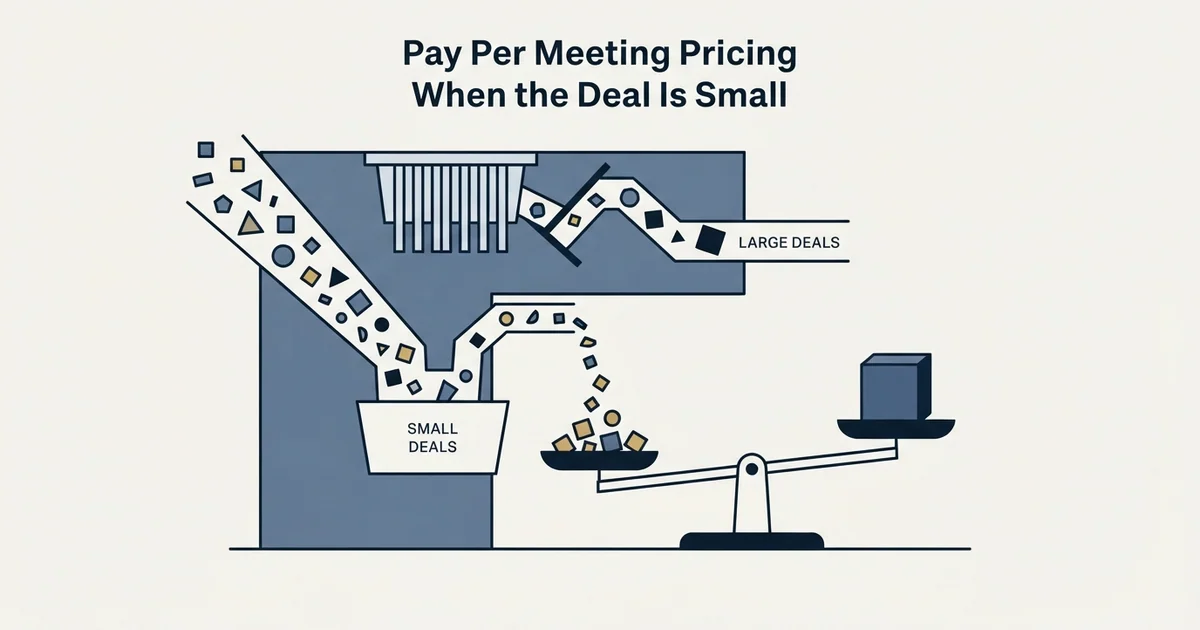
Pay per meeting works when the quoted rate multiplied by the meetings it takes to close one deal stays comfortably below gross profit per deal. Below roughly that line the model cannot be negotiated into working, because the vendor's floor is set by your market rather than by your deal size.
Key takeaways
- The deciding calculation is the quoted rate multiplied by your cold sourced meetings per close, compared against gross profit rather than revenue.
- A vendor's per meeting floor is set by the fixed cost of running a campaign in your market, so it does not fall because your deals are small.
- Repeat revenue and expansion move a small deal into range only when retention has been measured rather than assembled after the quote arrived.
- Where the arithmetic fails, change the billing unit rather than the rate, because a rate pushed low enough forces a loose meeting definition.
Reviewed and updated September 2, 2026
Pay Per Meeting Pricing When the Deal Is Small: Where the Model Breaks
A quote arrives at a few hundred pounds per attended meeting, and the buyer on the other side sells something that closes at four figures. The rate is fair, the vendor is competent, the definition is tight, and the arrangement is still wrong, because the arithmetic underneath it never resolves. Nothing in the negotiation will fix that, since the problem is not the price.
Pay per meeting is usually discussed as though the only variable is how good the vendor is. The variable that decides whether the model can work at all is on the buyer's side, and it is the value of a closed deal. Below a certain deal size the model stops being a way to buy pipeline and becomes a way to buy conversations at a price your revenue cannot repay.
The arithmetic that decides it, before anything else
The number a per meeting arrangement has to clear is not the rate. It is the rate multiplied by the number of meetings it takes you to close one deal, compared against the gross profit that deal produces.
Three inputs, all of which you already have or can estimate honestly:
- The quoted cost per attended meeting.
- Your meeting to close rate, measured on cold sourced meetings rather than on referrals or inbound.
- Gross profit per closed deal, which is revenue minus the cost of delivering it, not revenue.
Multiply the first two and you have your acquisition cost from this channel. Set it against the third and the answer is usually visible in under a minute.
- Step 1Take the quoted rate
Per attended meeting, not per booking, since a booking that nobody attends is not a unit you received.
- Step 2Divide by your close rate on cold meetings
Referral and inbound close rates do not transfer. Use the cold sourced number or say plainly that you are guessing.
- Step 3Compare against gross profit per deal
Revenue minus delivery cost. A high revenue, low margin deal behaves like a small deal here.
- Step 4Then apply repeat revenue, if it is real
Only revenue you actually retain, over a period you can defend, and only if churn is measured.
The reason this rarely gets done before the negotiation is that the second input is uncomfortable. Plenty of teams have never separated their cold sourced close rate from their overall close rate, and the two are usually far apart, because a referral arrives pre trusted and a cold meeting does not. Averaging them together produces a flattering number and an arrangement that disappoints on schedule. The general form of that error, and what a defensible target looks like instead, is in target cost per acquisition.
A worked example, with invented figures
Every number in this section is invented to show the shape of the calculation. None of it is measured, none of it is a benchmark, and none of it describes any engagement.
Suppose a quoted rate of 400 per attended meeting, a cold sourced close rate of one in eight, and a gross margin of sixty percent.
| Illustrative deal value | Acquisition cost at 8 meetings per close | Gross profit per deal | Result |
|---|---|---|---|
| 3,000 | 3,200 | 1,800 | Loses money on the first deal and on every repeat of it |
| 12,000 | 3,200 | 7,200 | Works, with room for the close rate to be worse than assumed |
| 60,000 | 3,200 | 36,000 | Works comfortably, and the rate stops being the interesting variable |
The middle row is where the argument usually sits. It works, and it works on an assumption about the close rate that nobody has verified. Move that assumption from one in eight to one in fifteen, which is an entirely ordinary difference between two markets, and the acquisition cost becomes 6,000 against 7,200 of gross profit. The arrangement survives, barely, and it now has no tolerance left for a slow quarter.
The top row is the case people imagine when they picture this model. The bottom row is the case that produces the complaint, and it produces it whatever the vendor does, which is the point worth internalising before the first call.
Why the rate cannot simply come down to meet you
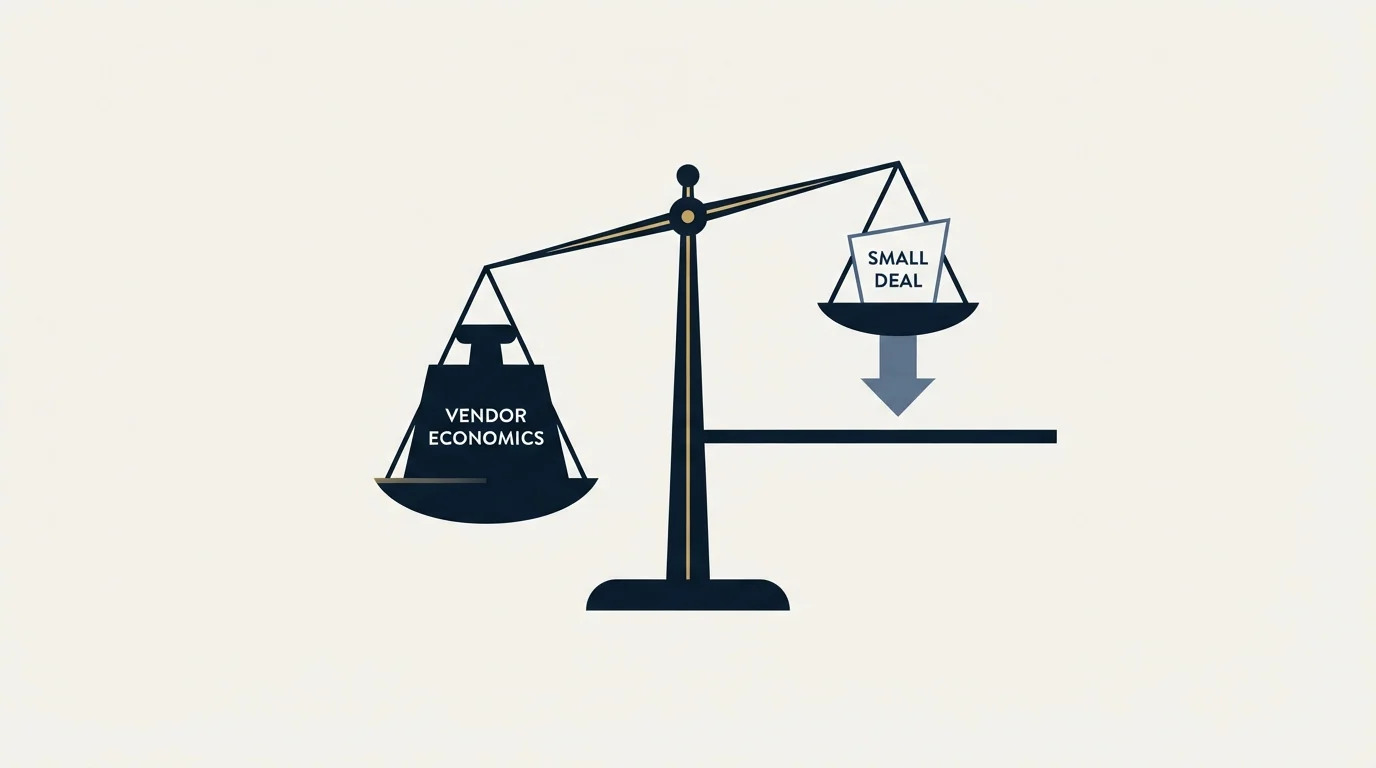
The instinct on reading the top row is to negotiate the rate until the arithmetic clears. That works over a narrow range and then stops, for a reason that has nothing to do with greed.
Under a per meeting arrangement the vendor funds the entire programme before receiving anything: the list, the sending infrastructure and its warm up, the copy, the reply handling, the qualification, the scheduling, and the chasing that converts an interested reply into a slot on a calendar. All of that cost is incurred per campaign rather than per meeting, and it does not shrink because your deals are small. What the rate has to cover is that fixed cost divided by the number of meetings the campaign produces, plus the work that never becomes billable at all.
So the vendor's floor is set by your market, not by your pricing. A market where the right person is hard to reach, or where the audience is small, or where the qualification bar is high, produces fewer accepted meetings per unit of work and a higher unavoidable rate. That is the same mechanism described from the vendor's side in outsourced SDR pricing, where tightening a definition raises the rate because it moves work from the billable side of the ledger to the unbillable side.
A vendor who does drop the rate a long way to win a low deal value account has to recover it somewhere, and the only place available is the definition. That produces exactly the failure the model exists to prevent, and the specific mechanics of it are set out in pay per appointment B2B.
What changes the answer honestly
Three things genuinely move a small deal into range, and all three are checkable rather than hopeful.
Repeat revenue you actually retain. A transactional first order followed by reliable reordering is a different asset from a one off sale of the same size. Use a retention period you can defend from your own data and a churn figure somebody has measured, not a lifetime value assembled to make the model work. If nobody in the business can say what the repeat rate is, the honest position is that this input does not exist yet.
Expansion inside the account. A small first deal that reliably becomes a larger second one changes the denominator, provided the expansion is a pattern rather than an anecdote.
Margin rather than revenue. On the same invented figures, a 20,000 deal at a fifteen percent margin throws off 3,000 of gross profit, less than the 3,200 that eight meetings cost at the quoted rate, while a 6,000 deal at a ninety percent margin throws off 5,400 and clears it. Revenue is the number people quote and margin is the number that pays the invoice.
- One transaction, no reliable reorder
- Margin thin or unmeasured
- Close rate on cold meetings unknown
- Sales cycle short, so volume is the only lever
- Every meeting has to repay itself immediately
- First order is the start of a retained account
- Retention measured rather than assumed
- Cold sourced close rate known separately from referral
- Expansion inside the account is a pattern
- The meeting is repaid over a period you can defend
What to buy instead when the arithmetic does not clear
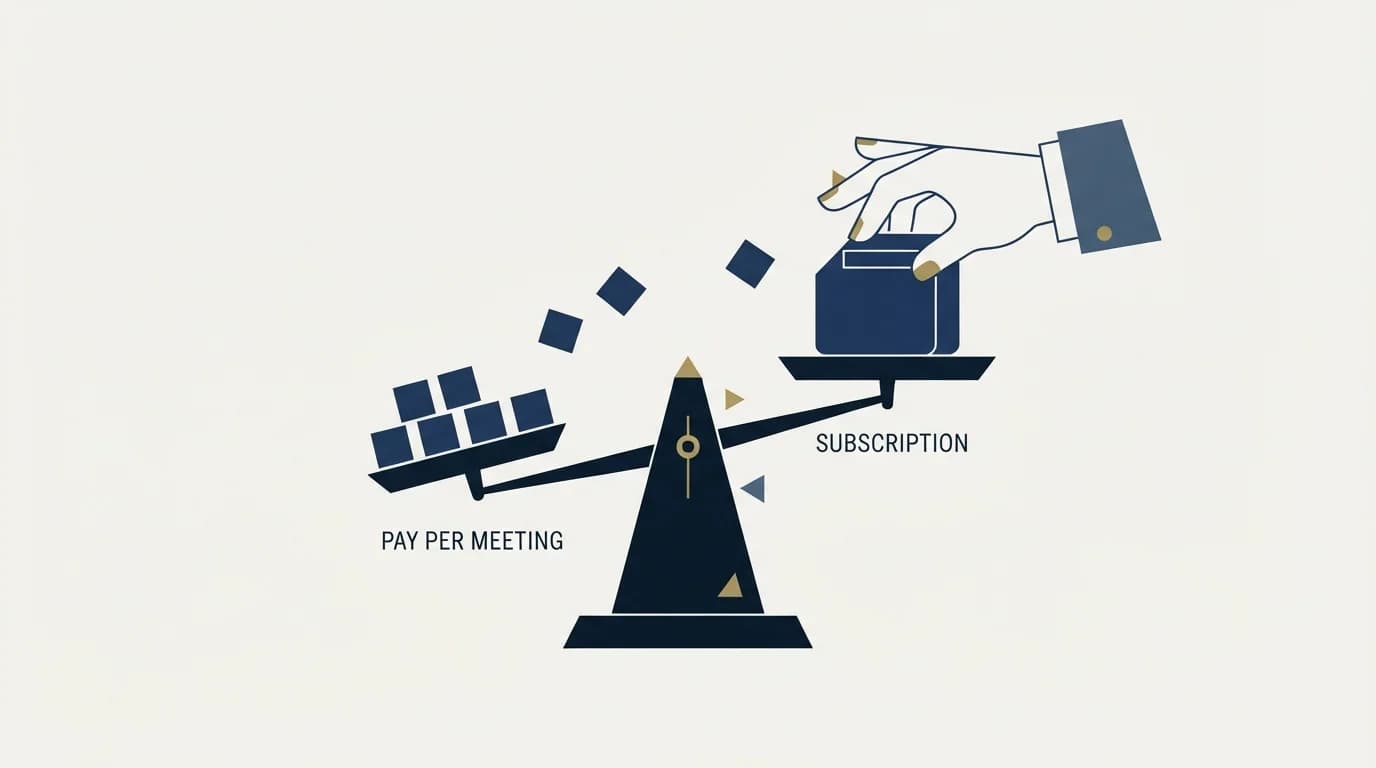
The useful outcome of running this calculation early is that it points at a different purchase rather than at a worse negotiation.
A capacity arrangement you direct. Where you cannot afford to pay per outcome, paying for effort and controlling the pace is the cheaper unit, because nobody is charging you a premium to hold your risk. You take on the delivery risk, which is the trade, and you get to decide where the volume goes. The comparison between the units, and what each one leaves you holding, is in outsourced SDR pricing.
Volume against a wider audience, at a lower cost per touch. Small deals usually come with short cycles and larger addressable markets, which is the condition under which volume is doing real work rather than diluting a premise. The boundary between honest volume and dilution is set out in quality or quantity in outbound.
A different channel entirely. Where the deal is small and the cycle is short, a channel that answers quickly and cheaply may beat any human led motion. Sorting channels by how fast they answer, rather than by how good they sound, is covered in lead generation channels.
Nothing, for now. If the arithmetic only clears on an assumed close rate and an assumed retention figure, the honest first purchase is the measurement rather than the meetings.
Measurement tools carry their own unit problem, and a behaviour analytics plan metered on sessions counts visits rather than the people behind them.
The version of this that is a real disagreement
There is a legitimate counter argument and it is worth stating properly, because dismissing it makes the rest of this look like a sales position.
A team with small deals and no pipeline at all sometimes buys meetings knowing the unit economics do not clear, because what they are actually buying is market evidence: which segments answer, which premise lands, what the objections are, and whether the offer survives contact with a stranger. Bought at that framing, with a stated end date and a stated question, it can be a reasonable use of money. What makes it reasonable is that nobody is pretending it is a pipeline programme.
The failure is the same purchase made without that framing, where month four arrives, the meetings happened as agreed, and the argument is about vendor quality rather than about arithmetic that was never going to work. Deciding which purchase fits which bottleneck is the subject of appointment setting versus lead generation.
- Yes: Cold sourced close rate is measured separately from referral and inbound
- Yes: Gross profit per deal is used rather than revenue
- Yes: Any repeat revenue in the model is retained revenue somebody has measured
- Yes: The arithmetic still clears if the close rate is half what you assumed
- Yes: The meeting definition is written and agreed before anything sends
- No: The rate was negotiated down and the definition left loose
- No: Lifetime value was assembled after the quote arrived
The short version

Pay per meeting is decided by your deal economics before it is decided by the vendor. Multiply the quoted rate by the meetings it takes you to close one deal on cold sourced conversations, compare that against gross profit rather than revenue, and check that the answer survives a close rate half as good as the one you assumed. Repeat revenue and expansion can move a small deal into range when they are measured rather than hoped for, and margin matters more than headline deal value.
Where the arithmetic does not clear, negotiate the unit rather than the rate. A capacity arrangement you direct, a higher volume motion against a wider audience, or a faster channel are all better answers than a per meeting rate pushed low enough to force a loose definition, because a loose definition is the same cost arriving where you cannot see it.
Our own arrangement is priced on attended meetings that meet criteria agreed in writing before anything sends, and where the arithmetic above does not clear we would rather say so than sign it. You can see what a campaign would look like for your market.
Frequently asked questions.
Frequently asked questions- What deal size do you need before pay per meeting makes sense?
- There is no universal figure, because the answer depends on your close rate on cold sourced meetings and your gross margin rather than on headline deal value. Multiply the quoted rate by the meetings it takes you to close one deal, then check that the result sits comfortably below gross profit per deal, and that it still clears if the close rate is half what you assumed.
- Can I just negotiate the rate down until it works?
- Only over a narrow range. Under a per meeting arrangement the vendor funds list building, sending infrastructure, copy, reply handling and scheduling before receiving anything, and that cost is set by your market rather than by your deal size. A rate pushed well below the floor gets recovered through a looser meeting definition, which costs more than the discount saved.
- Does lifetime value change the answer for a transactional business?
- It can, provided the retention behind it is measured. A first order that reliably becomes a retained account is a different asset from a one off sale of the same size, so use a retention period you can defend from your own data. If nobody in the business can state the repeat rate, that input does not exist yet and should not be used to rescue the model.
- What should a small deal business buy instead?
- Usually a capacity arrangement you direct, where you carry the delivery risk and nobody charges a premium to hold it, or a higher volume motion against a wider audience, since small deals often come with short cycles and large addressable markets. Where the arithmetic only clears on assumed inputs, the honest first purchase is the measurement rather than the meetings.
About the author.

B2B cold email experts helping companies generate qualified leads through done-for-you outreach campaigns.
RevenueFlow Team
Explore more.
Ready to scale your outreach?
We build GTM engines that book real meetings. See the receipts.
Related articles.
Appointment Setting for Business Brokers: The Seller Meeting
What a bought meeting with a business owner has to be for a brokerage: the three-part qualification, the confidentiality rules, the licence line and the owner's reasons.
SDR Outsourcing for Business Brokers: The Fee Timing
Whether a success-fee brokerage should rent sales development at all: the fee timing, the texts that limit what an outside person may say about value, and who signs.
SDR Outsourcing for Logistics Companies: The Brokerage Line
What an outside sales development team may do in a freight company's name, the calling and email rules it inherits, and which arrangement survives a bid-shaped market.
LinkedIn Outreach for Banks: A Regulated Message
How a bank's relationship managers use LinkedIn to reach business owners: what the FFIEC guidance, FINRA's notices and LinkedIn's own rules require, and where to stop.
Sales Prospecting for Health Systems: The Public Record
Where health systems are written down in public: the Medicare cost report, the facility list a non-profit system files, and the two gates that follow qualification.
Cold Calling for PPC Agencies: What You Can See First
A paid media prospect is partly readable before the call and has already been told by the platform what to do when a stranger rings about its ads.