Personal Selling Examples: Where the Conversation Decides
Personal selling is defined by adaptation: the next sentence depends on the last answer. The examples in ascending cost order, and where the hours stop paying.

Personal selling is selling directly to a person or a small group, and its defining property is adaptation: the next sentence depends on what the buyer just said. Common B2B examples are discovery calls, technical validation conversations, tailored demos, field and trade show selling, account reviews and renewal negotiations.
Key takeaways
- The property that defines personal selling is adaptation, which is also why it does not scale: every hour of it has a price attached to one account.
- The examples sort cleanly by cost per conversation, from a discovery call through technical validation and tailored demos to field and trade show selling.
- Fixed messages create the opportunity and personal selling happens inside it; handling replies with more templates wastes what the top of the funnel bought.
- The test before adding another conversation to a deal is what the buyer could say in it that would change the next step, and nothing is a common honest answer.
Reviewed and updated September 2, 2026
Personal selling is the oldest term in the sales vocabulary and the one most likely to be dismissed as a textbook artefact. It arrives from marketing coursework, where it sits in a list beside advertising and sales promotion, and that framing makes it sound like a category rather than a description of anything a modern team does.
The examples are what make it concrete. Once you look at where a real B2B deal actually turns, most of the turning points are personal selling in the strict sense: a specific person, adapting what they say to what this buyer just said, in a conversation that could not have been sent.
What the term means
Salesforce's guide to the subject defines personal selling as selling directly to another person or to groups of people, and notes that it is common where products or services are complex enough to need detailed explanation. That is a fair working definition, and the second half of it is the part that matters commercially: the complexity of the thing being sold is what decides whether a human conversation is worth its cost.
The defining property is adaptation. A billboard, an email sequence and a landing page all say the same thing to everyone who encounters them. A person can hear an objection and change the next sentence. That is the entire economic argument for personal selling, and it also explains its limit, since adaptation does not scale and every hour of it has a price.
- The next sentence depends on the last answer
- Objections handled where they arise
- Cost scales with hours, not impressions
- Same message regardless of response
- Objections handled only if anticipated
- Cost per additional recipient near zero
Examples, in ascending order of how much they cost
The clearest way to see the term is through the situations where it happens, ordered by how expensive each is per conversation.
A discovery call is the everyday example. A rep and a prospect talk for half an hour, and the value comes from the questions rather than the pitch: the rep is finding out which of several possible problems this buyer actually has, and no fixed message could have chosen among them in advance.
Discovery has frameworks built for that unpredictability, and NEAT qualification worked in any order asks about need, economic impact, access to authority and timeline as the conversation supplies them.
A technical validation conversation is the next step up. Someone who understands the product in detail answers questions from someone who understands their own environment in detail, and both sides learn something. This is where complex products get sold or lost, and it is almost impossible to substitute with content, because the questions are specific to a stack nobody outside the room knows.
A live demo tailored to the buyer's own workflow costs more again, because preparation time is spent on one account. It is personal selling in the fullest sense: the same product shown differently depending on what the audience said they care about.
Trade show and field selling sit at the expensive end, where travel and physical presence are added to the hours. The reason they persist in some industries and have almost vanished in others is a straightforward calculation about deal size against the cost of being in the room.
Retail and consumer examples belong in the textbook version of this list, and they are genuinely the same mechanism, but the economics are different enough that B2B teams should not reason from them. A shop assistant adapting a recommendation and an enterprise seller adapting a security answer are doing the same thing structurally, while the value of one conversation differs by several orders of magnitude, and that difference is what decides how much preparation each one justifies.
Two more examples sit inside existing relationships rather than new ones, and they are the ones most often left off the list. An account review where a supplier proposes a change based on what they have observed is personal selling, and so is the conversation where a renewal is negotiated. Both are adaptive, both are one to one, and both are usually staffed by people who would not describe what they do as selling at all.
No human conversation yet
Fixed copy, sent at volume
Adaptation starts here
Personal selling proper
Multiple people, mostly without you
The boundary that matters for outbound teams
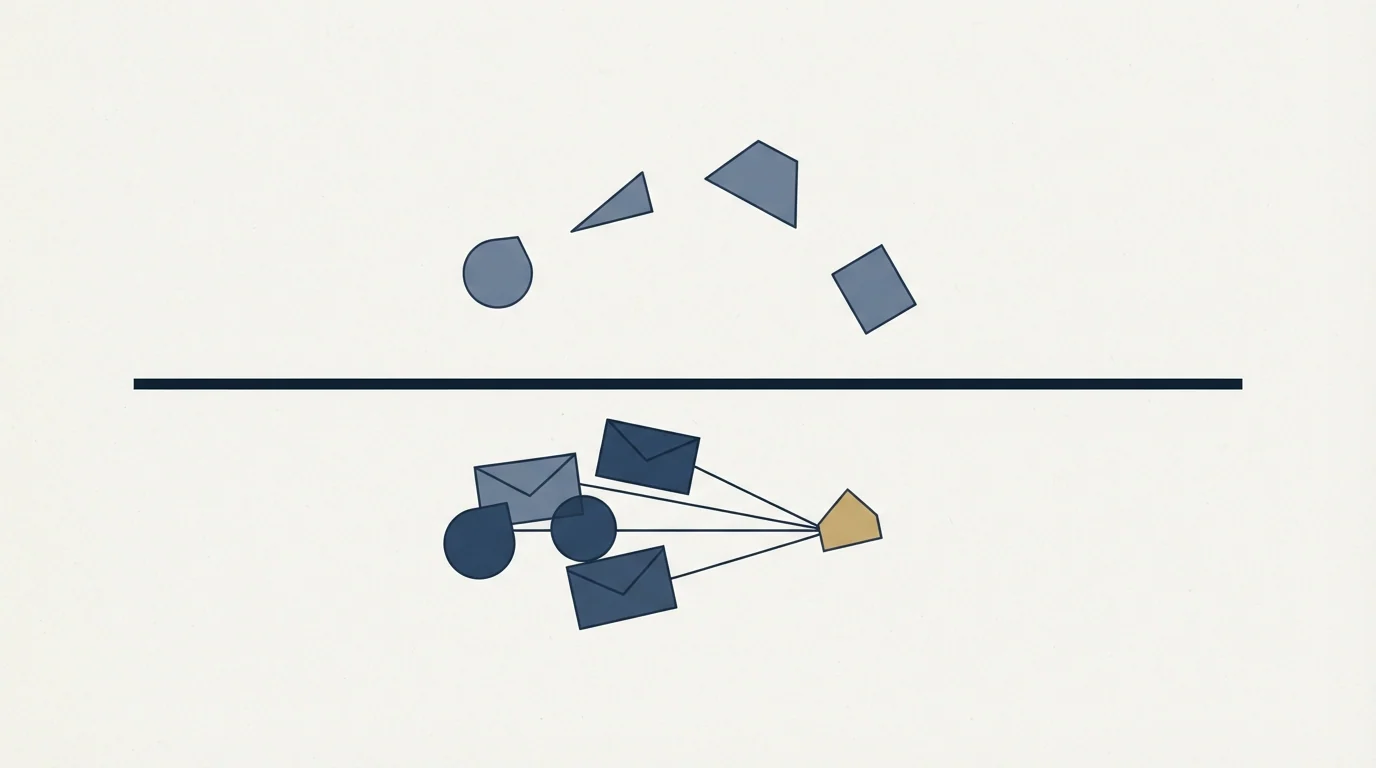
An outbound programme is not personal selling, and pretending otherwise causes two specific mistakes.
The first is expecting a cold email to do the adaptive work. It cannot, because the message is written before the recipient has said anything. What a first message can do is describe a problem precisely enough that the right person recognises it, and that is a targeting and copy problem rather than a relationship one.
The second mistake runs the other way: treating volume as a substitute for the conversation. Once someone replies, the value of adaptation is very high and the cost of getting it wrong is a lost opportunity you already paid for. Teams that industrialise the top of the funnel and then handle replies with more templates lose most of what the top of the funnel bought them.
The clean division is that fixed messages create the opportunity to have a conversation, and personal selling is what happens inside it. We run the first half for clients as one message per campaign with no bumps or thread replies, and a re-touch is a new campaign with a different angle rather than a nudge, precisely because a fixed message cannot adapt its way into a better outcome by repeating.
Software now sits inside that second half, and next best action recommendations still hand the decision to a seller rather than acting on it.
The advantages and disadvantages, without the coursework framing
Textbook treatments list advantages and disadvantages as though both sides were equally weighted. In practice each side has one item that dominates.
The advantage that matters is that objections get handled where they arise. Every other channel handles only the objections its author anticipated, and it handles them to an audience that has already stopped reading. A person hears the actual objection, including the one nobody predicted, and can address it before the buyer files the whole idea away.
The disadvantage that matters is cost per contact, and it is not only the seller's hours. It is the buyer's hours too, which is why a request for a conversation is a real ask rather than a neutral one. That asymmetry is the reason a booking link in a first cold email lands badly: it treats the buyer's time as free.
Two secondary items are worth naming because they are frequently ignored. Personal selling produces inconsistency, since every conversation is different and quality varies by seller. And it produces very little reusable record unless someone deliberately writes one, so what was learned in the conversation often exists only in the head of whoever had it.
Writing down what a conversation revealed is the only way it survives past the seller who had it, a discipline explored in the record-keeping backbone of GTM systems.
Where the human part actually changes the outcome
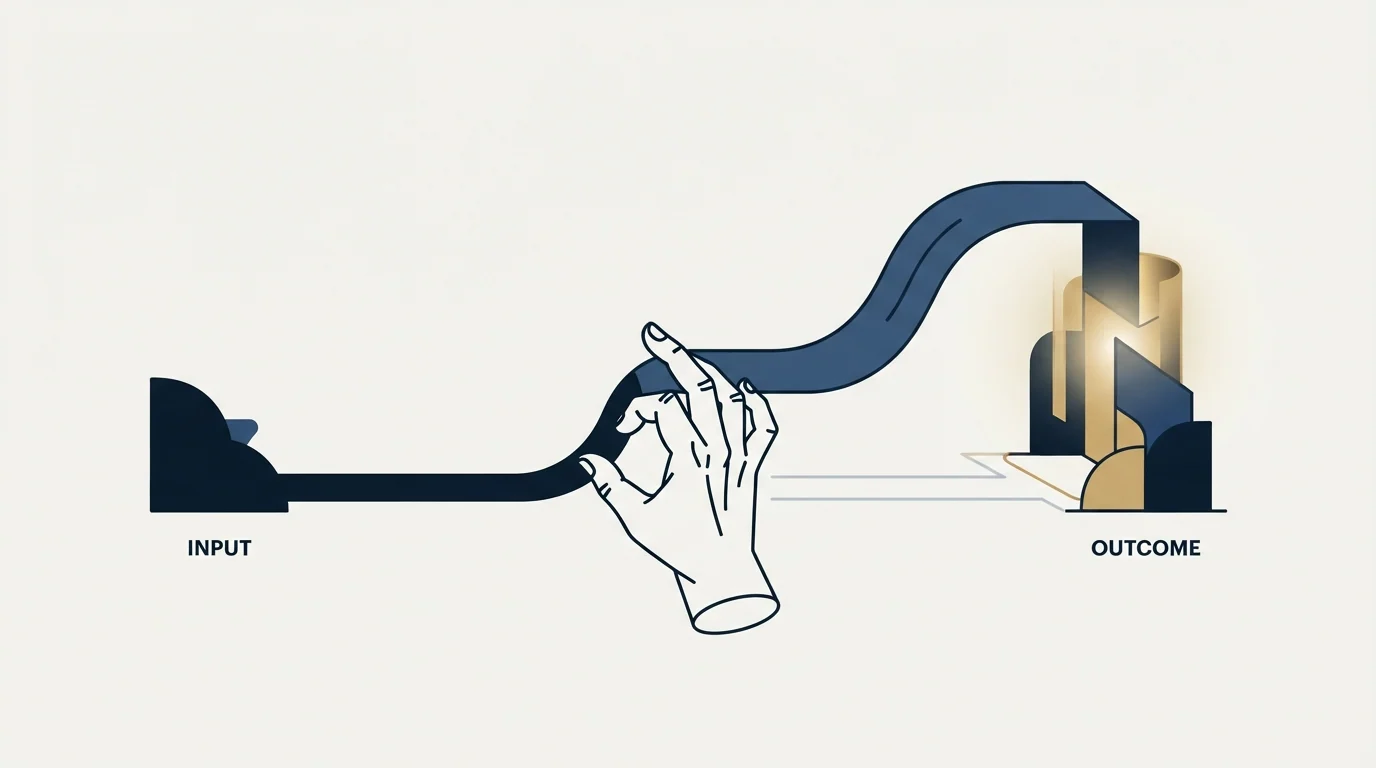
Not every moment in a conversation is doing adaptive work. Most of a bad sales call is a person delivering a fixed message slowly, which is the worst of both models: it costs an hour and adapts to nothing.
The moments that earn the hour are identifiable. When the buyer describes their situation and it does not match the assumption the seller arrived with. When a question gets asked that the seller has to think about. When something is ruled out, which narrows the deal into something real. And when a second stakeholder's concern surfaces, because that concern was never going to appear in a form.
A useful discipline after any call is to name which of those happened. A conversation with none of them was a broadcast, and the next one with that account should either be structured differently or not booked.
What makes it work, stripped of the vocabulary
Three things separate a personal selling conversation that changes a deal from one that fills a calendar slot.
Preparation that is specific rather than general. Knowing what this company appears to be doing, and having one hypothesis about why it might matter, is worth more than knowing everything about the industry.
Questions that can return an unwelcome answer. A question the seller would be unhappy to hear a no to is usually the only one worth asking, and a conversation with no such question is a presentation with pauses.
Willingness to disqualify in the room. The most valuable outcome of many first conversations is finding out quickly that there is nothing here, which is only available to a seller who is not committed to a yes before the call starts. The methodical version of that discipline is covered in SPIN selling, and what a good live conversation looks like in practice is in discovery calls.
Where it stops being worth the hours

The honest limit is arithmetic. Personal selling costs hours per account, so it is worth it when the deal is large enough, complex enough, or strategic enough that the adaptation changes the outcome.
Below that line, the same hours produce more if they are spent on targeting, on the message, or on qualifying harder so fewer conversations are wasted. That is not a claim that human conversation is inefficient; it is a claim that it is expensive, and expensive tools belong on the deals that repay them.
The practical version of the boundary is a question worth asking before adding another conversation to a deal: what specifically could the buyer say in it that would change what we do next. When the answer is nothing, the conversation is ceremony, and the hours belong further up the funnel. The wider motion around all of this is in the outbound sales playbook, and the prospecting layer that feeds it in b2b prospecting.
Source for the definition: Salesforce, "Personal Selling: How To Build Better Customer Relationships and Close More Deals", https://www.salesforce.com/blog/sales/personal-selling/
Want the fixed-message half of this handled so your people spend their hours in the conversations? Start with a free campaign.
Frequently asked questions.
Frequently asked questions- What is personal selling?
- Selling directly to another person or to a small group, typically where the product is complex enough to need explanation. Salesforce's guide to the topic uses that definition. The property that distinguishes it from every other promotional channel is adaptation: the seller can hear an objection and change what they say next.
- What is an example of personal selling in B2B?
- A discovery call is the everyday one: half an hour where the value comes from the questions rather than the pitch, because the rep is working out which of several possible problems this buyer actually has. Technical validation conversations, demos tailored to a buyer's workflow, account reviews and renewal negotiations are all the same mechanism at higher cost.
- Is cold email personal selling?
- No. A cold email is written before the recipient has said anything, so it cannot adapt, which is the defining property. What a first message can do is describe a problem precisely enough that the right person recognises it. Personal selling begins at the reply, and that division is worth keeping explicit in how a team is staffed.
- What are the disadvantages of personal selling?
- Cost per contact dominates, counting the buyer's hours as well as the seller's, which is why a request for a conversation is a real ask. Two secondary costs get ignored: quality varies between sellers, and almost nothing is reusable afterwards unless someone deliberately writes down what was learned in the room.
About the author.

B2B cold email experts helping companies generate qualified leads through done-for-you outreach campaigns.
RevenueFlow Team
Explore more.
Ready to scale your outreach?
We build GTM engines that book real meetings. See the receipts.
Related articles.
Appointment Setting for Business Brokers: The Seller Meeting
What a bought meeting with a business owner has to be for a brokerage: the three-part qualification, the confidentiality rules, the licence line and the owner's reasons.
SDR Outsourcing for Logistics Companies: The Brokerage Line
What an outside sales development team may do in a freight company's name, the calling and email rules it inherits, and which arrangement survives a bid-shaped market.
SDR Outsourcing for Business Brokers: The Fee Timing
Whether a success-fee brokerage should rent sales development at all: the fee timing, the texts that limit what an outside person may say about value, and who signs.
Cold Calling for Chemical Companies: Who Picks Up
A chemical cold call rarely arrives first. It reaches a formulator who has already been comparing suppliers on a screen, for one of three published reasons.
Cold Calling for PPC Agencies: What You Can See First
A paid media prospect is partly readable before the call and has already been told by the platform what to do when a stranger rings about its ads.
SDR Outsourcing for Financial Services: The Third Party
What a bank, broker-dealer, adviser or agency's regulators say about an outside team that speaks for it, the licensed line, and which arrangement survives due diligence.