Self-Hosted CRM: What Your Outbound Stack Assumes
The licence is free and the deployment is a job. What EspoCRM, SuiteCRM, Twenty and Vtiger say you take on, and what it does to the tools above the CRM.
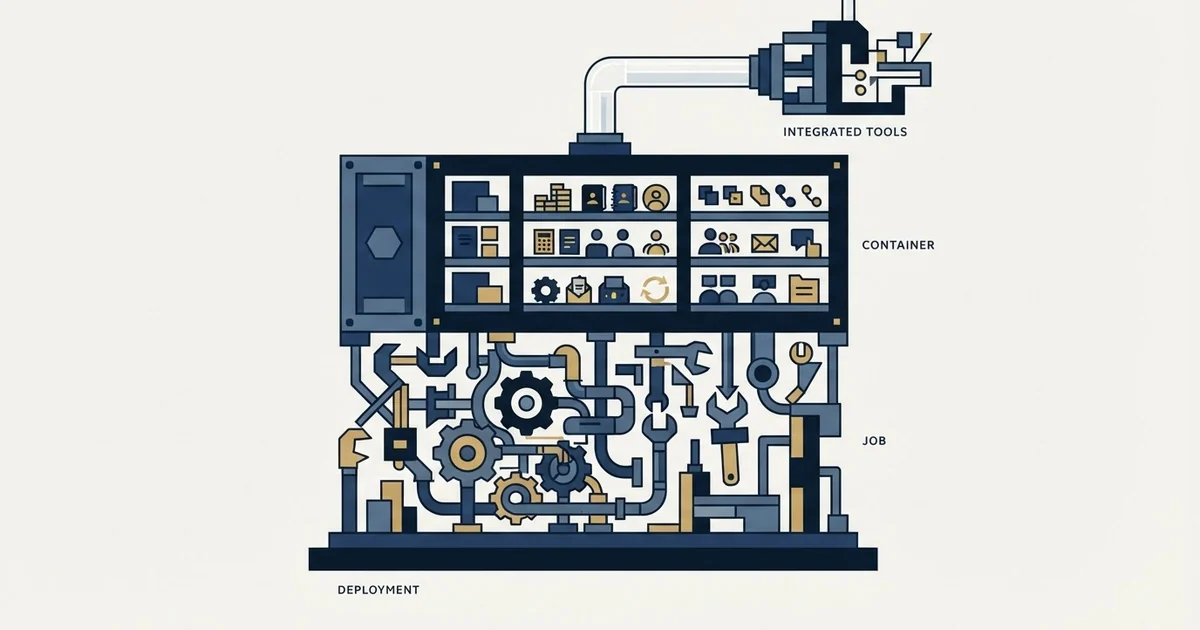
A hosted CRM is installed, updated and secured by the vendor. A self-hosted CRM runs on your own server, so the licence can be free while maintenance, security and updates become your team's work. For an outbound stack the larger cost is the integration surface, because no third party publishes a connector to an instance it cannot reach.
Key takeaways
- Hosted and self-hosted are two deployments of the same software: EspoCRM, SuiteCRM and Twenty each sell both and state on their own pages what moves between them.
- EspoCRM lists its Advanced Pack as purchased separately when self-hosted and included when cloud-hosted, and SuiteCRM makes Standard support required on managed hosting and optional otherwise.
- Self-hosting removes the cheapest of the three integration shapes, because nobody publishes a native connector to an instance they cannot reach, so direct API work becomes the default.
- The seat-cost saving is only real once somebody is named as the person who applies a security patch, and unnamed ops work is a cost that has been moved rather than removed.
Reviewed and updated September 18, 2026
A hosted CRM runs on the vendor's servers and a self-hosted CRM is the same kind of software running on yours, and the gap between them is wider than the download button suggests. Vtiger's own open source CRM page answers the question buyers actually arrive with, and the answer is a list rather than a number. Asked whether open source CRM is free, the FAQ published on vtiger.com and read there on 2 September 2026 says "Open source CRM software is generally free to download and use. However, costs may arise from customization, maintenance, hosting, and support services, so budget accordingly for these additional expenses."
Four items, and none of them is the software. That is the honest frame for this decision, and it is the vendor's own.
What that list leaves out, and what the open source comparisons leave out with it, is the fifth cost: what running your own instance does to the outbound stack sitting on top of it. A sequencer, an enrichment provider and a reporting layer all make assumptions about the CRM underneath them, and every one of those assumptions was written for a hosted platform. This is the operator's version of the question rather than the sysadmin's.
Hosted CRM vs self-hosted CRM: what is the difference?
A hosted CRM is installed, updated and secured by the vendor, and you pay for that as a subscription. A self-hosted CRM is software you install on your own server, where, in EspoCRM's words, "All the server maintenance, as well as data security, will be your responsibility." The software can be free. The CRM hosting, meaning the server and the person who looks after it, never is.
Several vendors sell both deployments of the same product, which makes the trade unusually easy to read off their own pages.
| What the page states | Self-hosted | Vendor-hosted |
|---|---|---|
| Installation and maintenance (EspoCRM) | Your responsibility | None needed |
| Advanced Pack (EspoCRM) | Purchased separately | Included |
| Support (SuiteCRM) | Optional | Standard support is required |
| Who it is for (SuiteCRM, Twenty) | Technical teams with in-house IT | A zero-ops setup |
If hosted CRM software is what you came to compare, the table is the short version: labour and a capability bundle move between the columns, and the application itself stays the same. The rest of this page is about the column on the left, and about one cost neither column lists.
What self-hosting actually names
Self-hosting is a deployment decision, not a licence decision. The two get conflated because the products that offer it are usually open source, but they are separate choices and one of them can be reversed cheaply.
The other side of that decision, and what a vendor takes on when it operates the instance for you, is cloud-based CRM.
EspoCRM states the deployment half plainly. Its comparison page, published on espocrm.com and read on 2 September 2026, says "You install the software and have all the data stored on your own server. All the server maintenance, as well as data security, will be your responsibility." Its download page on the same day describes the product as "EspoCRM is a free, open-source CRM you host on your own server."
Twenty puts the same fork in its pricing FAQ, published on twenty.com and read on 2 September 2026: "You can self-host to fully own your infrastructure, or run it on our managed cloud for a zero-ops setup."
SuiteCRM builds its entire pricing page around the fork. Its self-hosted card, published on suitecrm.com and read on 2 September 2026, is labelled "Best for: technical teams with in-house IT", lists the software cost as "Free to download" beside "your infrastructure costs", and states in the same card that "Your team manages updates and security".
One warning from Vtiger's page is worth carrying because it catches people at the download button. It notes that "This open-source (on-premise) edition is not the same as a cloud-free edition." The free thing you install and the free thing you sign up for are different products with different feature sets, and a shortlist built from a listicle usually collapses them into one row.
Before any of this matters, the object model has to be settled, which is the prior question set out in CRM basics.
What the free download excludes

The gap between the two deployment options is where the real comparison lives, and two of these vendors publish it directly.
EspoCRM's comparison page lists "Advanced Pack and VoIP integration are purchased separately" under self-hosted, and lists "Advanced Pack included" under cloud-hosted. Same vendor, same software, and a capability bundle that arrives with one deployment and is a separate purchase in the other. Under cloud-hosted it also lists "No CRM software installation or maintenance needed", which is the labour side of the same trade.
SuiteCRM prices support as a third step and writes the asymmetry into it: "If you are on fully managed hosting, Standard support is required", and on the self-hosted path that step is optional. Optional means the free configuration ships with community forums and nobody to call, which is a defensible choice and a choice somebody has to make deliberately.
The pattern across all three is the same. The licence is genuinely free and the deployment is genuinely a job, and the vendors are unusually direct about which is which. Where the arithmetic of that job gets worked in full for one product, the SuiteCRM three-part bill walks hosting, implementation and support as separate lines.
The patching clock nobody is assigned
An open source CRM ships releases, and applying them is a task with an owner or it is a task with no owner. EspoCRM's download page names its current build and the date it shipped, and the build named there has already moved on since this page was first written. The vendor publishes; you apply.
That is not a hypothetical burden. The same page offers a container route, noting that "The official Docker image sets up EspoCRM, NGINX, and MySQL automatically." Read the components in that sentence rather than the convenience: a web server, a database and the application. Three things to patch, back up and restore, and the database holds every contact record your campaigns write to.
For an outbound team the consequence is scheduling rather than security theatre. An upgrade window is a window in which the sync is down, and a sync that is down while a campaign is running does not fail loudly. It simply stops writing replies back, and the gap is discovered when somebody asks why a reply from Tuesday is not on the record. A team that self-hosts needs the upgrade window to sit outside the sending window, and needs somebody to notice when it does not.
Vtiger's FAQ states the staffing version of this in one line: "Open source is flexible but may require more technical resources". That sentence is doing more work than it looks. Technical resource here means a named person with server access who is on the hook for a security patch, and on a small revenue team that person usually turns out to be the one who also owns the campaigns.
What an outbound stack assumes about the CRM
This is the section the open source comparisons do not write, and it is the one that decides whether self-hosting is affordable for a sending team.
Every tool that sits above the CRM in an outbound motion expects four things: a reachable API endpoint, an authentication app it can own, a way to be told when a record changes, and somebody else's rate limiter. On a hosted platform, three of those four are supplied by the vendor and the fourth is supplied by whichever integration vendor listed a connector. On your own instance, all four become yours.
The connector stops being a product. The three ways an integration gets built, a native connector, middleware, or direct API work, are set out with their real costs in CRM integration, and self-hosting removes the cheapest of the three from the menu. Nobody publishes a native connector to an instance they cannot reach, so the option that costs a subscription and no engineering time is not available and the option that costs engineering time forever is the default.
Webhooks need an address. A third party can only tell you a record changed if it can reach your instance from the public internet, which turns an integration question into a firewall, certificate and uptime question. The hosted platforms handle this in ways worth understanding before you take the job on: Salesforce publishes to an event bus you subscribe to rather than posting to a URL you nominate. Either way it is somebody else's operational problem until the instance is yours.
Deduplication rules become yours to write. A native connector decides how records match, and those buried choices are what produce or prevent duplicates, as the worked example in Apollo and HubSpot's deduplication rules shows in detail. Self-hosting means nobody has made those choices for you, which is genuine control and genuine work, and the volume of duplicates scales with the volume of the sync either way.
Nothing meters you, which is not the same as being safe. A hosted CRM's rate limiter is an annoyance that also functions as a circuit breaker: a runaway job hits a wall. On your own instance the wall is your database, and the first symptom is usually the CRM getting slow for the people using it rather than an error code your client can back off from.
Our own sending model makes one part of this simpler. Every campaign carries exactly one message, with no bumps and no thread replies, so the write path back into the CRM is a single reply event per prospect rather than a reconciled thread. A team running multi-step sequences against a self-hosted instance is maintaining a harder integration than a team running one message per campaign, and that difference is worth pricing before the deployment decision, not after it.
Where self-hosting is genuinely the right answer
Three cases hold up, and they are the ones the vendors themselves lead with.
Seat count is the strongest. EspoCRM's download page states "No per-user fees" and SuiteCRM heads its pricing page "Scale Without Licence Costs". Per-seat pricing is the axis every proprietary CRM scales on, so a team whose headcount is growing faster than its CRM sophistication is the team for whom this arithmetic works, and the wider direction of travel is the argument in per-seat pricing is dying.
Data residency is the second, and SuiteCRM's self-hosted card names it directly: "Ideal if data must stay on your own servers". When a contract or a regulator requires records to sit in a specific place, the deployment decision is made for you and the rest of this page is a cost to plan rather than a choice to weigh.
Schema control is the third. Both EspoCRM and Twenty advertise source-level modification, and a team whose motion genuinely does not fit a standard object model gets something from that which no configuration screen supplies. That case is rarer than it feels at shortlist time, because a motion that does not fit contact, company and deal is usually a motion that has not been written down yet.
What none of the three cases survives is the absence of an operator. If nobody on the team can name who applies the security patch, the seat-cost saving has not been made, it has been moved onto whoever ends up doing the work at the worst possible moment.
The decision, in the order it gets made
Settle these before the download, because each one is cheap to answer now and expensive to discover later.
Answer these first. A blank means not yet
Then price these, from vendor pages
- Which capability bundle is a separate purchase on this deployment
- Whether support is optional on your path, and what you do without it
- What the migration route back to managed hosting is
- How many seats it takes for the licence saving to cover the ops time
If the first column has four names in it, self-hosting is a reasonable decision and the second column is a budget exercise. If the first column has any blanks, the honest reading is that the team is buying a server and calling it a saving.
For choosing the CRM itself rather than the deployment, best CRM tools for SDR teams compares the field with the seat question in front. And the decision underneath all of it is usually not the CRM at all: a system of record only earns its cost once there is enough pipeline flowing through it to be worth recording, so if that is the actual constraint, get a free campaign plan first.
Vendor deployment terms verified against pages fetched on 2 September 2026. Verify current terms with the vendor before relying on them.
Sources: Vtiger open source CRM, EspoCRM self-hosted vs cloud, EspoCRM download, Twenty pricing, SuiteCRM pricing
Frequently asked questions.
Frequently asked questions- What is the difference between a hosted CRM and a self-hosted CRM?
- A hosted CRM runs on the vendor's servers, and the vendor installs, updates and secures it in return for a subscription. A self-hosted CRM is software you install on your own server. EspoCRM's comparison page states that with self-hosting all the server maintenance, as well as data security, will be your responsibility, while its cloud option needs no installation or maintenance.
- Is a self-hosted CRM actually free?
- The software usually is and the deployment is not. Vtiger's own FAQ lists customization, maintenance, hosting and support as costs that arise after the download, and SuiteCRM's self-hosted card prices the software as free to download beside your infrastructure costs. Whether that is cheaper than a per-seat product depends on seat count and on whether the ops time already exists.
- What breaks in an outbound stack when the CRM is self-hosted?
- The connector layer. Sequencers, enrichment providers and reporting tools list integrations against hosted platforms, so an instance they cannot reach has no listing to use. That pushes every integration onto direct API work, which is the most expensive of the three integration shapes, and it makes the instance's public reachability a prerequisite for change notifications.
- When is self-hosting a CRM the right call?
- Three cases hold up: seat count high enough that per-seat licensing dominates the bill, a contractual or regulatory requirement that records stay on your own servers, and a motion that genuinely does not fit a standard object model. All three collapse if nobody on the team can be named as the operator of the instance.
About the author.

B2B cold email experts helping companies generate qualified leads through done-for-you outreach campaigns.
RevenueFlow Team
Explore more.
Ready to scale your outreach?
We build GTM engines that book real meetings. See the receipts.
Related articles.
SDR Outsourcing for Business Brokers: The Fee Timing
Whether a success-fee brokerage should rent sales development at all: the fee timing, the texts that limit what an outside person may say about value, and who signs.
SDR Outsourcing for Logistics Companies: The Brokerage Line
What an outside sales development team may do in a freight company's name, the calling and email rules it inherits, and which arrangement survives a bid-shaped market.
Appointment Setting for Business Brokers: The Seller Meeting
What a bought meeting with a business owner has to be for a brokerage: the three-part qualification, the confidentiality rules, the licence line and the owner's reasons.
Sales Enablement Charters: What the Published Ones Ask For
Six publishers set out what a sales enablement charter should contain. Five describe a document nobody can check, and one writes a definition with inspection in it.
Sales Prospecting for SEO Agencies: Four Public Signals
How an SEO agency builds its own prospect list from signals Google documents: the index check, position, core update dates and site moves, under the warning owners read.
LinkedIn Outreach for Banks: A Regulated Message
How a bank's relationship managers use LinkedIn to reach business owners: what the FFIEC guidance, FINRA's notices and LinkedIn's own rules require, and where to stop.