Taplio: Two Products in One Subscription
Taplio schedules and analyses posts, then on its top tier automates commenting and DMs. Those halves sit in very different places under LinkedIn rules.
Taplio is a LinkedIn content tool that writes, schedules and analyses posts, with automated commenting and, on its top tier, auto-connect and direct messaging. Its pricing page published Starter at $39, Growth at $69 and Pro at $199 a month, with a yearly state at $32, $49 and $149.
Key takeaways
- Published monthly rates on 16 August 2026 were $39, $69 and $199, each carrying the page's own billed monthly label, with a yearly state marked minus 25 percent.
- The automated outreach module sits on the $199 tier, so the largest price step and the largest risk step happen at the same point.
- LinkedIn's User Agreement names automated commenting and message sending explicitly among its prohibited automated methods.
- The product launched in 2022 and was acquired by Lempire, the company behind lemlist, in 2023.
Reviewed and updated September 1, 2026
Taplio is the odd entry in the LinkedIn tooling category, because most of what it does is not outreach. It writes, schedules and analyses posts. Then, on the same subscription, it offers automated commenting and an outreach module that auto-connects and sends DMs. Those two halves sit under very different parts of LinkedIn's rules, and a buyer who evaluates the whole product as one thing will misprice the risk.
Its pricing page published Starter at $39 a month, Growth at $69 and Pro at $199, each with the note "billed monthly", alongside a yearly state at $32, $49 and $149. Fetched 16 August 2026.
What Taplio actually sells
The product is organised around a content workflow. It generates post drafts from a topic, a URL, a video link or an existing piece of content, schedules them into a queue timed to your audience, surfaces a database of high-performing posts to draw ideas from, and reports on what worked.
Around that sit three further modules. Carousels turns content into swipeable documents. Engage puts you in front of other people's posts with comment assistance. Connect auto-connects and sends direct messages to what the page calls warm leads.
The company launched in 2022 and was acquired by Lempire, the company behind lemlist, in 2023. That ownership is worth knowing for a practical reason rather than a trivial one: it puts a content product inside a group whose main business is cold outreach, which is a plausible explanation for why an outreach module exists in a posting tool at all. Its pricing page also advertises an MCP server, letting the product be driven from an external AI assistant, which is a genuinely recent addition to this category.
What it costs
- Positioned for posting consistently
- Schedule posts into a queue
- Core metrics and analytics
- Build posting consistency
- 250 AI credits per month
- 500 comment credits per month
- Everything in Starter
- AI post writing
- Faster replying and commenting
- Team collaboration
- Marked as the page's top choice
- Everything in Growth
- Unlimited AI posts and comments
- Automated lead outreach
- Priority support and access
- The tier where the outreach module lives
The page also states a 30 day money back guarantee, a 7 day trial with full Pro access whichever plan is chosen, and a team or agency option described as saving up to 30 percent with multi-seat discounts and admin, writer and client roles.
The jump from Growth to Pro is the one to think about, because it is nearly three times the price and it is where automated outreach appears. A buyer who wants scheduling and analytics is choosing between Starter and Growth. A buyer who wants the DM automation is buying Pro and taking on a different category of risk with it.
The two halves, under LinkedIn's rules
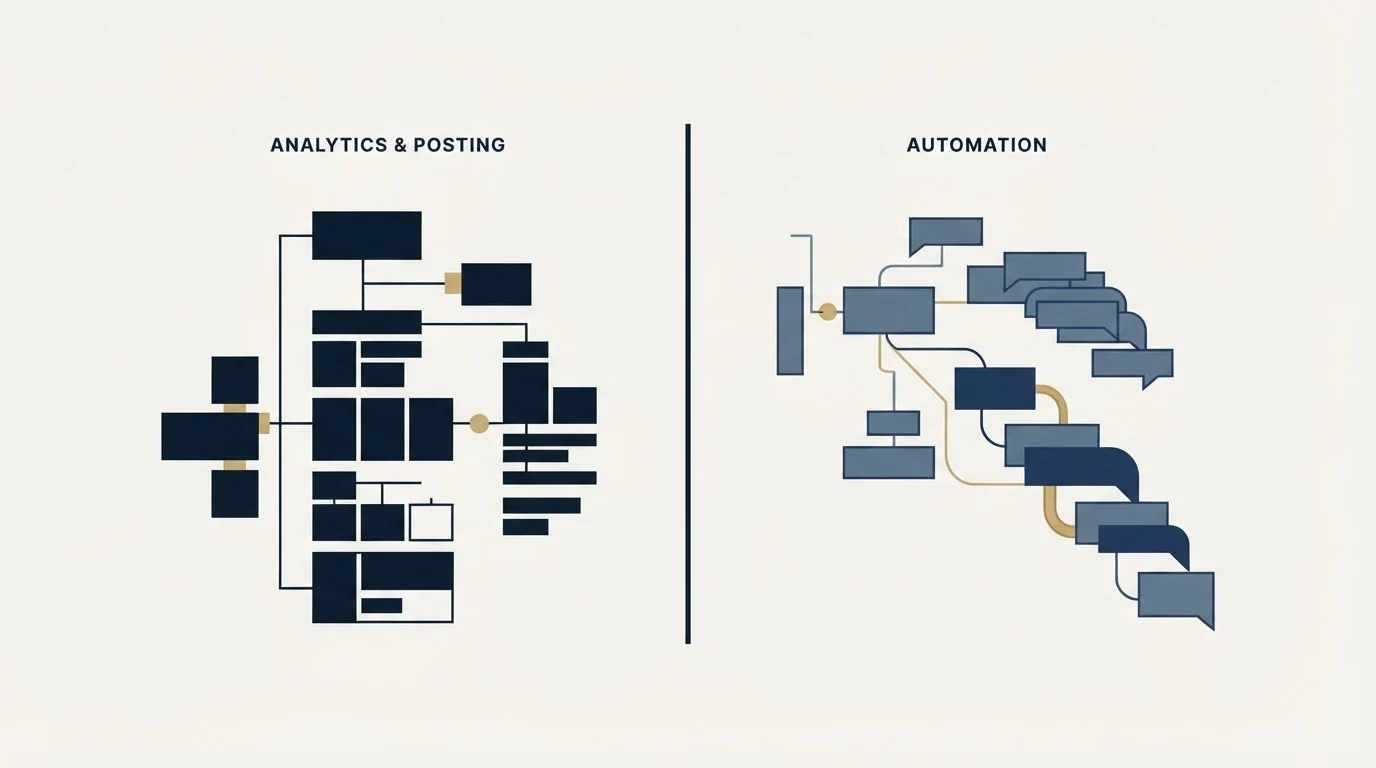
This is where the evaluation has to split, because the product does not.
Scheduling and drafting posts is, on its own, ordinary software use. You are writing your own content and choosing when it publishes, and nothing about that manufactures a signal.
Automated commenting and automated connection requests and DMs are a different matter. LinkedIn's User Agreement, effective 3 November 2025, prohibits members from using bots "or other unauthorized automated methods to access the Services, add or download contacts, send or redirect messages, create, comment on, like, share, or re-share posts, or otherwise drive inauthentic engagement". Automated commenting is named in that list explicitly, and so is sending messages.
LinkedIn's help page on prohibited software and extensions is broader still. It states that LinkedIn does not permit third-party software including "browser plug-ins, or browser extensions that scrape, modify the appearance of, or automate activity on LinkedIn's website", and does not permit "fake engagement" or "any tools or services that try to manipulate LinkedIn's content algorithms". Members using such tools "risk having their accounts restricted or shut down".
- Yes: Drafting and scheduling your own posts is ordinary software use
- No: Automated commenting is named in User Agreement section 8.2
- No: Automated connection requests and DMs are named in the same clause
- No: Browser extensions that automate activity are named on the prohibited software page
- Depends: LinkedIn publishes how much automated activity triggers detection
- No: The risk is uniform across all three modules
The practical reading is that the content half and the automation half of this subscription carry very different exposure, and the price step between them happens to line up with the risk step. That is a useful coincidence for anyone who wants the first half and not the second.
A different pricing shape appears in a platform combining LinkedIn automation and cold email, which bundles both risk profiles into one agency tier rather than separating them by plan.
What the vendor's own architecture implies
Taplio operates through a browser extension using cookie-based authentication rather than an official LinkedIn API. That is the standard arrangement in this category and it is worth understanding rather than glossing.
Cookie-based authentication means the tool acts as your logged-in session. Everything it does looks, from LinkedIn's side, like it came from you, because in a real sense it did. That is the mechanism the whole category depends on, and it is also precisely what the prohibited-software page describes when it names browser extensions that automate activity.
The consequence people actually feel is fragility rather than enforcement. A session that needs re-authenticating, a tool that stops working after a platform change, a feature that quietly degrades: LinkedIn's own page states that prohibited tools may become non-functional without notice, and that is the routine outcome rather than the dramatic one.
The MCP server, and what it changes
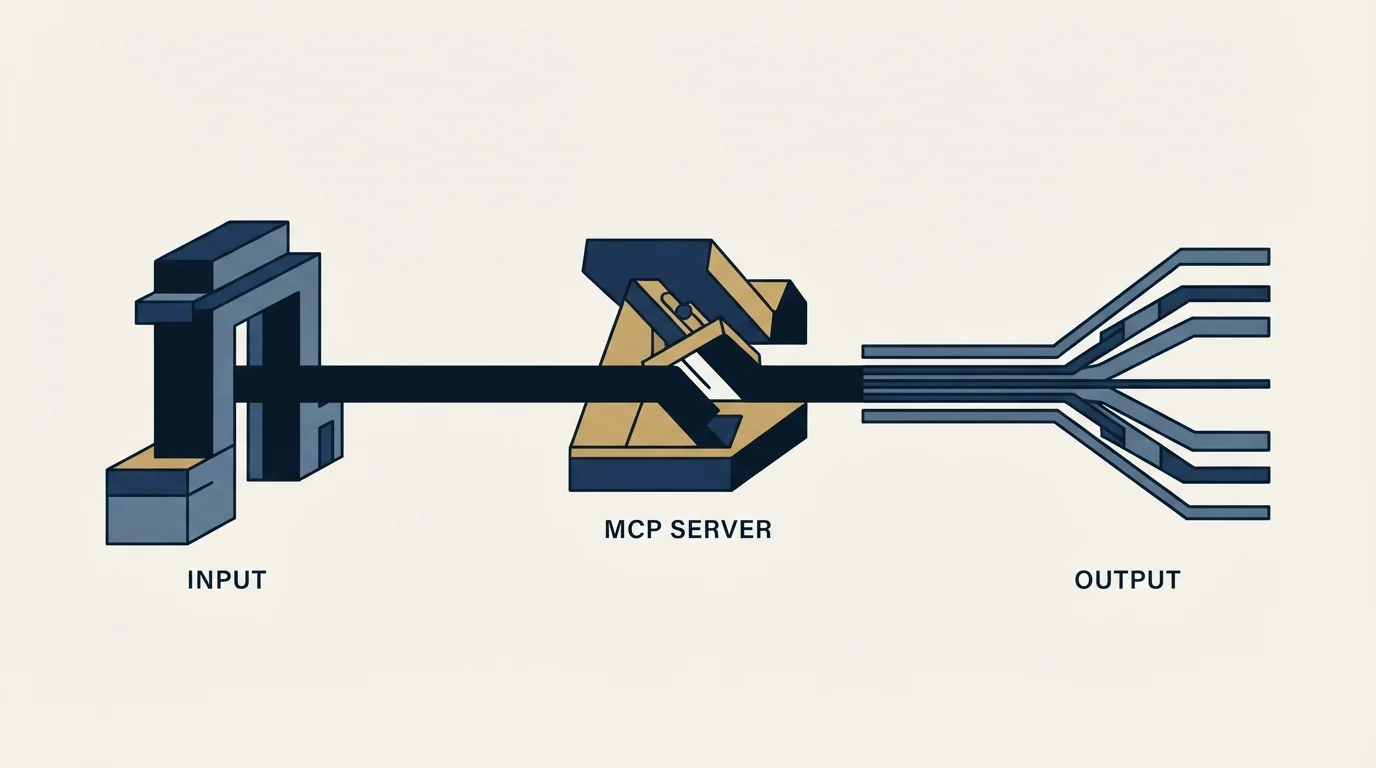
The pricing page advertises an MCP server, described as running Taplio from Claude, ChatGPT or any MCP-enabled assistant. That is new enough in this category to be worth a paragraph on its own.
What it changes is where the drafting happens. Instead of writing inside the tool's editor, an assistant that already has your context can draft and queue posts through the tool's own interface. For anyone whose notes, transcripts and product detail already live with an assistant, that removes the copy-paste step that makes content workflows fail.
What it does not change is anything about the platform relationship. The posting still happens through the same extension and the same session, so an MCP integration is a nicer front door onto the same mechanism rather than a different mechanism. It is a workflow feature, not a compliance one, and it should not move the risk half of the evaluation at all.
It does introduce one thing to watch. An assistant that can queue posts on your behalf is an assistant that can publish in your name, so the useful configuration is one where drafts land in a queue for review rather than going straight out. The failure mode of generated content is not that it is wrong, it is that it is bland in public under your name.
Who it suits
Taplio suits a founder or operator who has decided to publish on LinkedIn consistently and wants the workflow to stop being a weekly scramble. Scheduling, a drafting assist and honest analytics are worth paying for if the alternative is not posting.
It suits an agency managing several people's content, which is what the multi-seat roles exist for, and where the per-seat discount matters.
Where per-seat discounts shape an agency's calculus here, the same buyer question, whether pricing fits an agency or a per-user team, plays out in pricing models for CRM and agency platforms.
It suits a team wanting outreach automation less well than a purpose-built sequencer does, because the outreach module is the newest and least central part of a content product, and it sits behind the most expensive tier.
The criticism that recurs most in public review corpora concerns AI output quality, and it is the fair one. Generated drafts read generically until someone with a point of view rewrites them, which means the tool saves the blank page rather than the work. That is still worth $39 a month to a lot of people, and it is not worth $199 to anyone who was hoping the AI would do the thinking.
How we would use it, and would not
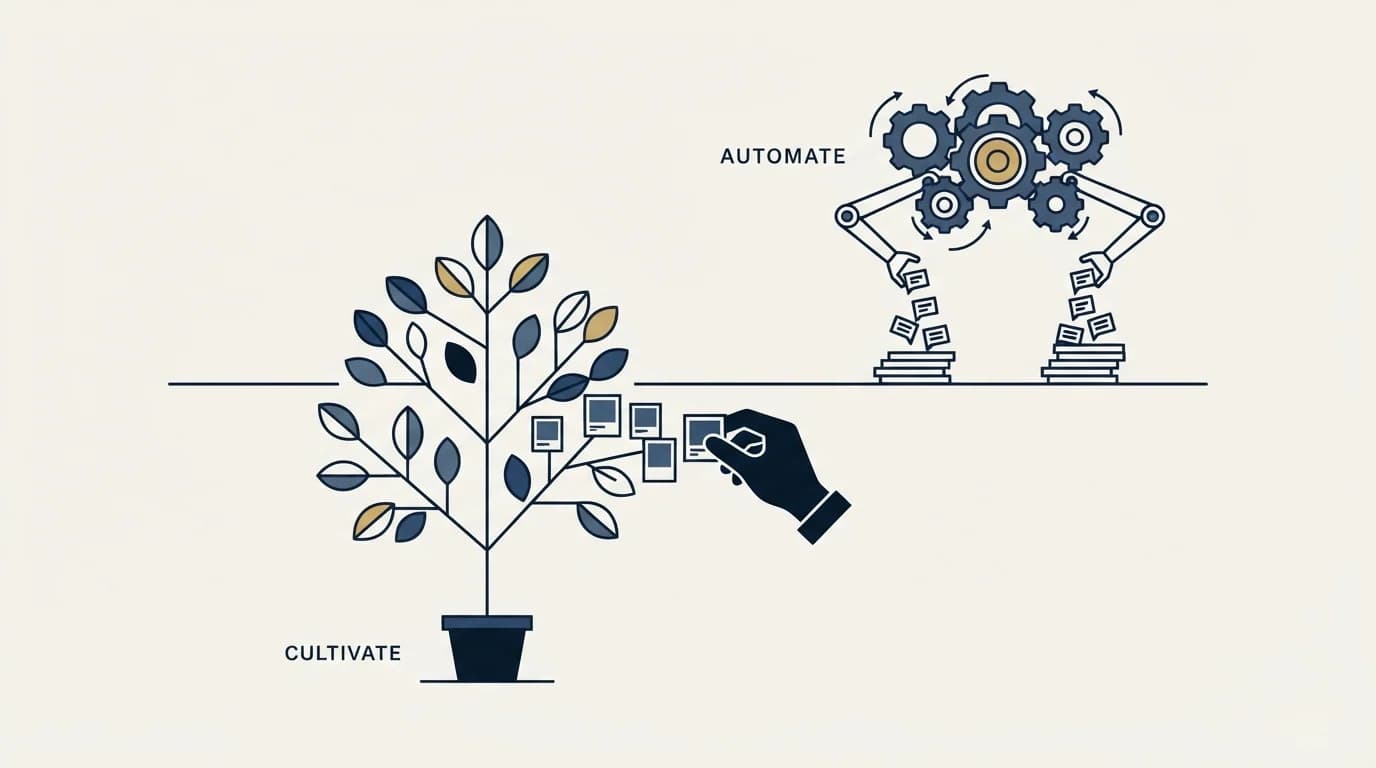
RevenueFlow runs LinkedIn outreach through HeyReach alongside cold email, and our content work is written rather than generated. If a tool of this shape were in the stack, it would be for scheduling and analytics on the content side only.
The outreach half would not be, for a specific doctrinal reason as well as a risk one. We send one message per campaign and never bump, and we do not run LinkedIn no-reply retargets, because a second message lands underneath the one they ignored and reads as a nudge whatever the campaign structure calls it. Auto-DM modules are built to do exactly that, and the setting that matters most in tools like this is the follow-up you switch off.
The content-side reasoning, and what actually makes posts travel, sits alongside the outreach model in LinkedIn prospecting. The category-wide architecture comparison is in LinkedIn automation tools, the multi-sender model we use is in our HeyReach review, and the direct substitutes are in Taplio alternatives.
What to settle before buying
Confirm which billing state a quoted figure came from, since monthly and yearly both render into the same document and the gap is 25 percent.
Confirm what the AI and comment credit allowances mean in practice at your posting cadence, because Starter's 250 AI credits and 500 comment credits are the constraint on that tier and unlimited only arrives at Pro.
Decide, explicitly, whether you are buying the content half or the automation half. They are priced together and they are not risked together, and the honest version of this evaluation treats them as two products that happen to share a login.
If the underlying goal is booked meetings rather than impressions, get a free campaign plan and we will map the channel to your ICP before anything sends.
Pricing and features verified as of mid-2026. Verify current terms with the vendor before relying on them.
Frequently asked questions.
Frequently asked questions- How much does Taplio cost?
- Its pricing page published Starter at $39, Growth at $69 and Pro at $199 a month on monthly billing, each labelled billed monthly, with a yearly state at $32, $49 and $149 marked minus 25 percent. It also states a 30 day money back guarantee and a seven day trial with full Pro access.
- Is Taplio against LinkedIn terms?
- The two halves differ. Drafting and scheduling your own posts is ordinary software use. Automated commenting and automated connection requests are named explicitly in LinkedIn's User Agreement among prohibited automated methods, and its prohibited software page names browser extensions that automate activity and tools that manipulate content algorithms.
- Is the AI writing any good?
- The recurring criticism across public review corpora is that generated drafts read generically, and that is a fair description of the category rather than of this product alone. A model given a topic returns the consensus view of it. The tool saves the blank page; it does not supply the point of view that makes a post travel.
- Which tier should I buy?
- If you want scheduling and analytics, the decision is between Starter and Growth and the outreach module is irrelevant. If you want the DM automation, that is Pro at nearly three times Growth, and it is a different category of purchase carrying exposure the content half does not.
About the author.

B2B cold email experts helping companies generate qualified leads through done-for-you outreach campaigns.
RevenueFlow Team
Explore more.
Ready to scale your outreach?
We build GTM engines that book real meetings. See the receipts.
Related articles.
Airscale Pricing: Three Plans, One Credit, Four Rates
Airscale prints a different credit cost on every plan, and its advertised per-email price belongs to the custom one. The dated ladder and the rollover rules.
Twain Pricing: Credits per Lead, Three Research Modes
Twain sells credits, not seats, and a lead costs 1 to 14 of them depending on the research mode. The two ladders, the four expiry clocks and the cap.
The Real Cost per 1,000 Emails, Verifications and Data Credits in 2026
Unit prices computed from verified vendor plans: $1.00 per 1,000 emails sent, $2.00 per 1,000 verifications and $19.60 per 1,000 enrichment credits.
Lavender Pricing: Two Products, No Pricing Page
Lavender has no pricing page. The Email Coach ladder per seat at both billing states, the free routes, and the separate per-agent price for Ora.
What Cold Email and Sales Tools Actually Cost in 2026: Pricing Data From 386 Vendors
RevenueFlow's verified dataset of 386 sales tools puts the median starting price at $39.98 a month. Here is the spread by category, tier and billing model.
Snitcher Pricing: The $49 Table Is the Annual Rate
Snitcher's visible price table is the annual-billing ladder. The ten bands at both billing states, the unique-company meter, and the rules on a help page.