ZoomInfo Sales: What Is Inside the Product
The query reads like a discount and resolves to a product. What ZoomInfo Sales contains, why its own volume figures disagree, and what to test first.
ZoomInfo Sales is ZoomInfo's B2B prospecting product, built on three pillars its product page names: a verified contact database, buying signals, and CRM integration. The product page and the developer documentation state different database volumes, so evaluate coverage of your own segment rather than the headline totals.
Key takeaways
- ZoomInfo's product page states 420M+ contacts, 120M+ direct dials and 145M+ companies across 300+ filterable attributes.
- ZoomInfo's developer documentation states different volumes for the same platform, describing 100M+ companies and 500M+ professionals.
- The product is currently branded ZoomInfo Sales, and the older name circulating online appears nowhere in the visible copy of its current product pages.
- Pricing is quoted rather than published, and the pricing page and the Sales product page describe the credit model in incompatible ways.
Reviewed and updated September 1, 2026
Search for "ZoomInfo sale" and you will not find a discount. Google resolves the phrase to ZoomInfo Sales, which is the vendor's named product for B2B prospecting, and the results are the product's own pages rather than anything about a promotion. If you arrived looking for a deal, the short version is that ZoomInfo negotiates rather than discounts publicly, and the number you get is built from your seat count and credit volume in a quote.
If you arrived looking for the product, this page is the practitioner's read of it: what is inside ZoomInfo Sales according to ZoomInfo, which of its published numbers contradict each other, what the name confusion is about, and what to evaluate before you buy.
Most of what people mean by ZoomInfo search happens in that web app: filters over the contact and company database, saved as lists, with the same credit consequences described below.
The name, and why the internet is confusing about it': "The name in question is SalesOS. It does not appear in the visible copy of ZoomInfo's Sales, Operations or Data-as-a-Service pages; it survives in a single image filename on the vendor
What ZoomInfo Sales is
s own verified facts: 'How you use ZoomInfo Sales day to day comes down to which surface you work in: the web app for building and saving lists, and the CRM sync for whatever you decide to keep.
ZoomInfo's product page titles it "ZoomInfo Sales - B2B sales prospecting software" and organises the pitch around three pillars in its own copy: a verified B2B database, buying signals for account prioritisation, and CRM workflow integration.
Those three do map onto three genuinely different jobs, and it is worth separating them because most teams buy for one and get billed for all three.
The database is the reason people buy. You need a person's mailbox or mobile number, and a directory that has it saves you the research. This is the part with a clear substitute market, which is why the comparison pages exist.
The Cognism Chrome extension guide explains how a comparable competitor surfaces ranked contact matches straight from a LinkedIn or Sales Navigator page.
The signals are the reason people renew. Knowing which accounts are showing buying behaviour changes what you do on Monday morning more than another contact record does. It is also the part that is hardest to evaluate on a trial, because you cannot easily test whether a signal was predictive without waiting.
The CRM integration is the reason people stay. Once ZoomInfo is writing into Salesforce or HubSpot and your workflows assume it, replacing it stops being a data decision and becomes a migration project. That is not a criticism of the vendor. It is the normal physics of an integrated system, and it belongs in your thinking at purchase rather than at renewal.
The numbers on the page, and the numbers behind it

The ZoomInfo Sales page states access to 420M+ global contacts including 120M+ direct dials and 145M+ companies, filterable on 300+ attributes such as technology stack and funding data.
Those are large numbers and they are the vendor's own, published on the product page. Here is the part worth knowing before you quote them in a business case: ZoomInfo's developer documentation states different volumes for the same underlying data, describing 100M+ companies and 500M+ professionals.
- 420M+ global contacts
- 120M+ direct dials
- 145M+ companies
- 300+ filterable attributes including technology stack and funding data
- 500M+ professionals
- 100M+ companies
- Written for an audience integrating against the data rather than buying it
- Same platform, different count, no reconciliation published
Neither number is wrong in any way you can prove from outside, and the gap is probably about what each surface counts. That is precisely the point. A database volume is a definition before it is a measurement, and two pages at the same company can count differently without anyone lying.
The practical consequence is that total-volume figures are close to useless for a purchase decision, whichever vendor publishes them. What matters is coverage of your segment, in your geography, at the seniority you sell to. A directory with 420 million contacts and thin coverage of European mid-market operations directors is an empty directory for a team selling to European mid-market operations directors. Test the slice you need rather than reading the total.
The name, and why the internet is confusing about it
If you research this product you will find a great deal of writing that uses a different product name for it, and some of that writing is recent enough to look current.
Here is what can be verified today. ZoomInfo's own product page brands it ZoomInfo Sales. The older name that circulates so widely does not appear in the visible copy of ZoomInfo's Sales, Operations or Data-as-a-Service pages at all. It survives in one image filename on the vendor's CDN and nowhere a reader would see it.
What that means for your research is not that the old name is wrong. It is that any article using it confidently is describing a state of the product that its author has not checked against the current pages. Treat the naming as a freshness signal, and discount the specifics in any write-up that fails it, especially the numbers.
This is a recurring pattern with ZoomInfo specifically, because the company renames and repackages more often than most, and third-party coverage does not keep up. The same thing has happened to its browser extension, which most of the internet still calls by a name absent from its current store listing.
Where the cost actually accrues

ZoomInfo does not publish a rate card on any of its pricing surfaces, and no dollar figure appears in this article for that reason. What its own pages do publish is the shape of the bill, and the shape is enough to plan with.
The pricing page states that ZoomInfo pricing is based on features and functionality, number of licences and credit usage, and its FAQ states the model is seat-based. On credits, the pricing page states that each export costs one credit, describes a credit as the export of a professional or company profile out of the platform, and states that credits require a minimum bulk purchase.
Teams comparing credit systems across vendors may find it useful to see how LeadIQ prices calls versus emails, since its credit split shapes the same seat and usage math.
There is a contradiction to carry into the conversation. The ZoomInfo Sales product page itself answers a pricing question by stating that ZoomInfo uses platform-based access rather than per-credit constraints. The pricing page says exports cost credits. Both statements are the vendor's own, on the vendor's own site, and they describe different economics at volume.
- Step 1Seats
The FAQ states the model is seat-based, so the licence count multiplies everything downstream.
- Step 2Data depth
Basic contact and firmographic data sits at one end. Technographics, org charts and intent are named as the depth axis that moves the number.
- Step 3Credits
Each package carries a predetermined monthly credit volume. The pricing page's model charges one credit per profile export.
- Step 4Add-ons
Premium applications, including conversation intelligence and AI prospecting, are named as separate from the core package.
- Step 5Term
Contract length and volume discounts are named as factors, which is where most of the negotiable room sits.
The single most useful move before that conversation is deciding who genuinely needs a seat. Seat-based pricing makes an over-optimistic rollout expensive in a way that renews itself silently every year.
What to evaluate, in the order that matters
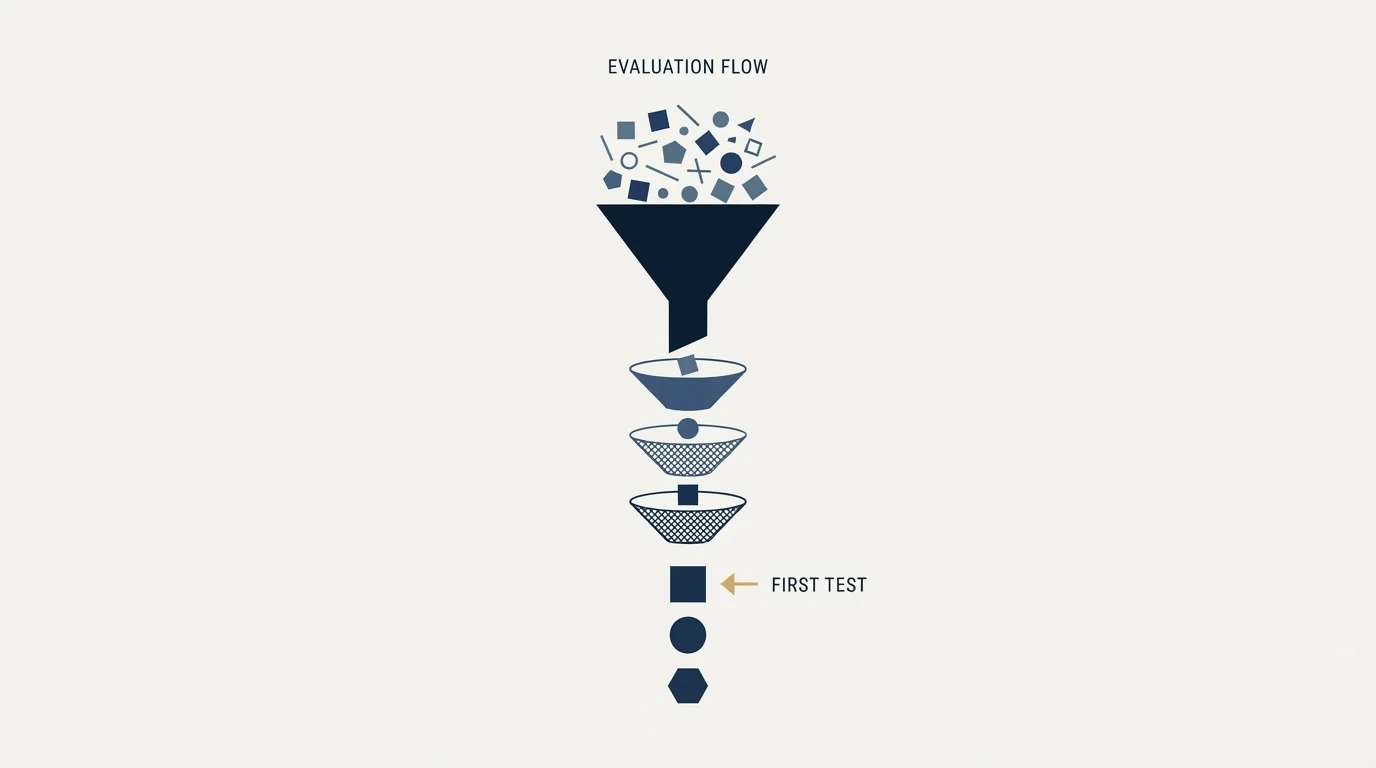
Coverage of your actual segment. Take 200 accounts you genuinely want and check them, rather than checking a list the vendor supplies. This is the test everything else depends on, and it is cheap to run during an evaluation.
Contact-level accuracy, not just presence. A record that exists is not a record that is current. Job changes are the dominant decay mechanism in B2B contact data, and the failure is silent: a valid mailbox at somebody's previous employer passes every technical check and fails the only test that matters. Our Apollo versus ZoomInfo accuracy comparison sets out a testing method you can run yourself on a sample.
Whether the signals change your behaviour. Intent and buying signals are worth real money if they change who your team contacts on a given day, and worth nothing if they produce a dashboard nobody opens. Ask specifically what a rep is supposed to do differently when a signal fires, and whether anyone will notice if they do not.
Whether you need the platform or the data. These are different purchases. If your team works inside the ZoomInfo interface all day, the platform is the product. If you want records flowing into systems you already run, you are buying data with a user interface attached and you should evaluate the integration and the API rather than the app.
Beyond the web app and CRM sync, it is worth knowing what the browser extension installs and can see on every site you visit while prospecting.
Whether the trial answers your real question. ZoomInfo's pricing FAQ states that it offers a free trial, typically including unlimited searches and views of contact and company profiles, with support and integration assistance included. That is a genuine window, and most teams waste it by browsing the interface rather than running a test. Decide the question before the trial starts, write down the 200 accounts, and spend the window answering it. Note also what a search-and-view trial cannot tell you: exporting is the metered action on the pricing page's model, so a trial that grants unlimited views is not a test of what your credit consumption will look like in production.
What the substitutes cost, properly costed. The comparison is against the specific alternative you would otherwise operate, including its labour. The ZoomInfo alternatives roundup covers the field, and the Apollo head-to-head is the comparison most teams are actually running. If your fork is platform versus orchestration across several sources, ZoomInfo versus Clay is the more useful read.
The summary a buyer needs
ZoomInfo Sales is a mature prospecting platform whose vendor documents it well and prices it privately. Its own pages state large volume figures that its developer documentation states differently, which is a reason to test your own segment rather than a reason for suspicion. Its credit model is described two incompatible ways across its own surfaces, which is a question for your account team and belongs in the contract rather than in an email.
The purchase decisions that actually determine whether it works out are yours rather than the vendor's: how many seats you really need, whether the coverage holds in your specific market, and whether anyone changes what they do when a signal fires.
And if the constraint you are solving is that not enough qualified conversations are happening, rather than that not enough contact records exist, that is a different purchase entirely. RevenueFlow runs the campaigns end to end and charges per qualified meeting, against criteria agreed in writing before launch, which you can try on your own market with a free campaign.
Pricing and features verified as of mid-2026. Verify current terms with the vendor before relying on them.
Frequently asked questions.
Frequently asked questions- Is there a ZoomInfo sale or discount?
- Not a published one. The search phrase resolves to ZoomInfo Sales, the product, rather than to a promotion. ZoomInfo does not publish a rate card, and its pricing FAQ names contract length and volume discounts as factors in a quote. Any discount you get is negotiated against your seat count, credit volume and term rather than advertised.
- What is included in ZoomInfo Sales?
- ZoomInfo's product page organises it around three pillars: a verified B2B contact and company database, buying signals used to prioritise accounts, and CRM workflow integration. It states access to 420M+ contacts including 120M+ direct dials and 145M+ companies, filterable on 300+ attributes such as technology stack and funding data.
- Why do ZoomInfo's contact numbers differ between pages?
- Both figures are ZoomInfo's own. The Sales product page states 420M+ contacts and 145M+ companies, while the developer documentation states 500M+ professionals and 100M+ companies. No reconciliation is published. The likely explanation is that each surface counts differently, which is a good reason to test coverage of your own segment rather than trusting a total.
- How should I evaluate ZoomInfo Sales before buying?
- Check 200 accounts you actually want rather than a list the vendor supplies, test contact accuracy rather than presence, and ask what a rep will do differently when a signal fires. Decide whether you need the platform or just the data, since those are different purchases with different integration work behind them.
About the author.

B2B cold email experts helping companies generate qualified leads through done-for-you outreach campaigns.
RevenueFlow Team
Explore more.
Ready to scale your outreach?
We build GTM engines that book real meetings. See the receipts.
Related articles.
Video Prospecting Tools by Job: What Each One Is For
Ten video prospecting tools sorted by the job each vendor's own page describes: record and share, personalise at volume, avatars, hosting and interactive demos.
Firmographic Data Providers: What Six of Them Publish
Six firmographic data providers read from their own pages: the fields each sells, the coverage each states, how the data is delivered, and who prints a price.
Zeliq Pricing: One Seat Rate and a Credit Meter
Zeliq prices one self-serve seat in dollars with a credit meter that never expires. Both billing states, the three credit rates, the top-up ladder and the Custom floor.
Salesgear Pricing: Two Ladders Under One Plan Title
Salesgear's page is titled as one plan and carries a Data ladder and an Outreach ladder. Both at both billing states, what each meters, and the two vendor-side conflicts.
Bookyourdata Pricing: 25 Packs, Priced Per Contact
Bookyourdata sells credits in twenty-five packs with no subscription. The dated ladder, the per-contact rates rendered in the browser, the guarantee rule and BeSpoke.
LinkedIn Chrome Extensions, Sorted by the Job They Do
The category holds four unrelated products. Which job each extension does, what six vendors publish about their own, and what none of them change.