Scraping ZoomInfo: What the Terms Say
ZoomInfo's terms name browser plugins and add-ons by category. The bigger problem is that an extracted snapshot loses the thing you were paying for.
ZoomInfo's Terms of Use prohibit systematic or automated data collection without express written consent, and its License Terms prohibit bots or crawlers outside its own integration tools. Beyond the terms, an extracted snapshot loses continuous verification, which is the part of a contact database that actually holds its value.
Key takeaways
- ZoomInfo's Terms of Use prohibit scraping, data mining, data extraction and data harvesting without express written consent, naming browser plugins and add-ons among the covered technologies.
- Its License Terms also bar licensees from reselling, sublicensing or incorporating Licensed Materials into their own products, so even a compliant customer cannot productise the data.
- ZoomInfo enforces technically as well as contractually, running bot management in front of its site and disallowing AI training crawlers in robots.txt.
- The sanctioned automated route is ZoomInfo's own API and integration tools, which the License Terms carve out explicitly as the permitted exception.
Reviewed and updated September 1, 2026
ZoomInfo's Terms of Use contain a sentence written specifically about the tool you are probably searching for. Users may not "develop, support, or use software, devices, scripts, robots, or any other means or processes (including crawlers, browser plugins and add-ons or any other technology) to scrape the Platform or otherwise copy profiles and other data from the Platform."
Browser plugins and add-ons are named explicitly, which tells you the clause was drafted after somebody tried exactly that.
This page is not a how-to. It is the answer to the question underneath the search, which is almost always some version of: I need contact data and I do not want to sign a ZoomInfo contract, so what are my options. That is a completely reasonable position to be in, and there are good answers to it. Scraping ZoomInfo is not one of them, and the reasons are more practical than moral.
What ZoomInfo's own terms actually say
Two separate documents cover this, and they cover it in different ways for different people.
The Terms of Use apply to anyone using the platform. They prohibit conducting "any systematic or automated data collection activities (including without limitation scraping, data mining, data extraction, and data harvesting) on or in relation to our Platform without our express written consent." Separately, they prohibit developing, supporting or using tooling to scrape the platform or copy profiles from it, with browser plugins and add-ons named among the technologies covered.
The License Terms and Conditions apply to paying customers, and they go further. Clause 2.4 prohibits licensees from using "automated means, such as bots or crawlers, to access any ZoomInfo Technology or extract information therefrom," except through ZoomInfo's own integration tools or with prior written approval.
The LTC then closes the doors around the data itself, which is the part most people underestimate.
- No: Access or extract via automated means such as bots or crawlers, outside ZoomInfo's own integration tools
- No: Distribute, sublicense, transfer, sell, offer for sale, disclose or make available Licensed Materials to any third party
- No: Incorporate any portion of the Services or Licensed Materials into your own products or services
- No: Share, sell, rent or lease access, or run a timesharing or service bureau business on it
- No: Employ any measure intended to circumvent limitations on purchased credits or Authorized Users
- No: Incorporate ZoomInfo API credentials into third-party applications
- Yes: Use ZoomInfo's own integration tools, which is the sanctioned automated path
Read that list as a whole and a pattern appears. The resale and incorporation clauses mean that even a fully licensed, fully compliant customer cannot turn ZoomInfo data into a product of their own. The credit-circumvention clause means the metering is contractual as well as technical. Those two together are the real answer to "can I just pull the data out and keep it": for a licensee, the terms say no in four different places, and the automation question is only the first of them.
And ZoomInfo enforces it technically
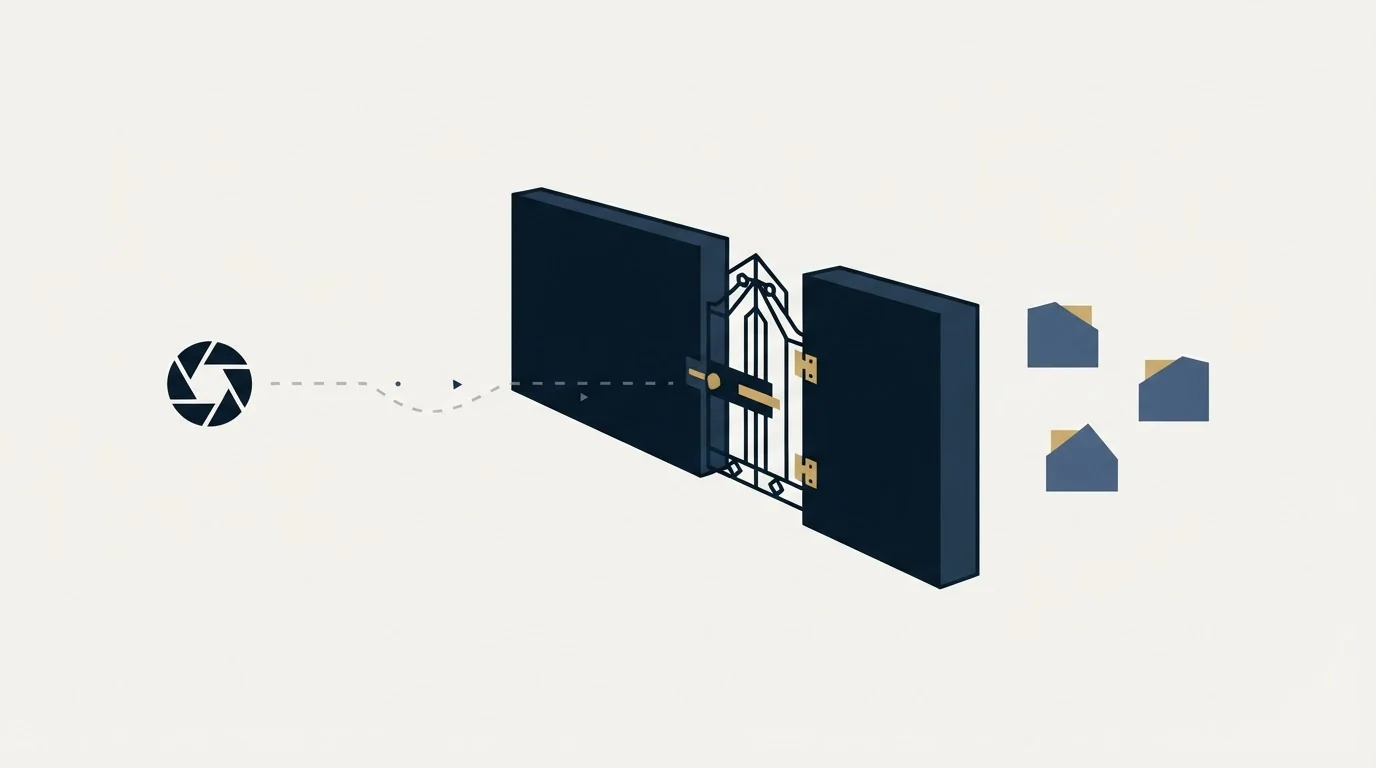
Contracts are one layer. ZoomInfo also runs a bot-management service in front of its website, which returns a challenge page instead of content to requests it does not like. Researching this article ran into it repeatedly, on ordinary pages, from ordinary tooling.
There is a detail worth knowing if you ever have to do legitimate vendor research on this site. The block is applied before routing, so a blocked request and a page that does not exist return the same response. A failed fetch tells you nothing about whether the page is there, which is a genuinely awkward property when you are trying to establish what a vendor does or does not publish.
ZoomInfo's robots.txt is the other half of the same posture. It disallows a long list of crawlers outright, including AI training crawlers such as CCBot, Bytespider, Diffbot and cohere-training-data-crawler, and applies crawl delays to others. A company whose business is aggregating information about other companies is unusually specific about who may aggregate information about it. That is not hypocrisy, exactly. It is a clear statement of where the value is understood to sit.
How ZoomInfo compiles its records traces the underlying sources and shows where each one thins out.
The practical case against, which is stronger than the legal one
Set the terms aside for a moment. Assume you could extract records with no consequences at all. The output would still be a poor foundation for outbound, for four reasons that have nothing to do with lawyers.
The data decays and you have no refresh path. Contact data is a subscription rather than a purchase because people change jobs. A snapshot is accurate on the day you take it and degrades from then on, silently. The vendor's value is not the records, it is the continuous re-verification, and that is exactly the part a copy does not include.
You inherit the errors without the corrections. Every large contact database carries wrong rows. A licensed user gets updates when those are fixed. A copy keeps the errors permanently, and you find them one bounce at a time.
You cannot verify what you took. A record extracted from any aggregator is a claim about a mailbox, not a working mailbox. It still needs verification immediately before any send, at which point you have paid for the extraction and the verification and skipped the part that made the source worth paying for.
The compliance position is worse than it looks. Contact data in Europe and the UK carries obligations regardless of where you got it, and "we scraped it from an aggregator" is a materially worse answer to a data subject request than a documented commercial source. That exposure sits with the sender rather than with the tool.
- No refresh when people change jobs
- Errors are permanent, because corrections never arrive
- Still needs verification before every send
- Provenance is hard to document if anyone asks
- Prohibited by the platform's own terms in several places
- Records are re-verified on an ongoing basis
- Corrections propagate to you
- Documented provenance for compliance questions
- Metered, so cost tracks usage rather than ambition
- Sanctioned automation through published integration tools
The sanctioned automation path, and why it is not a consolation prize
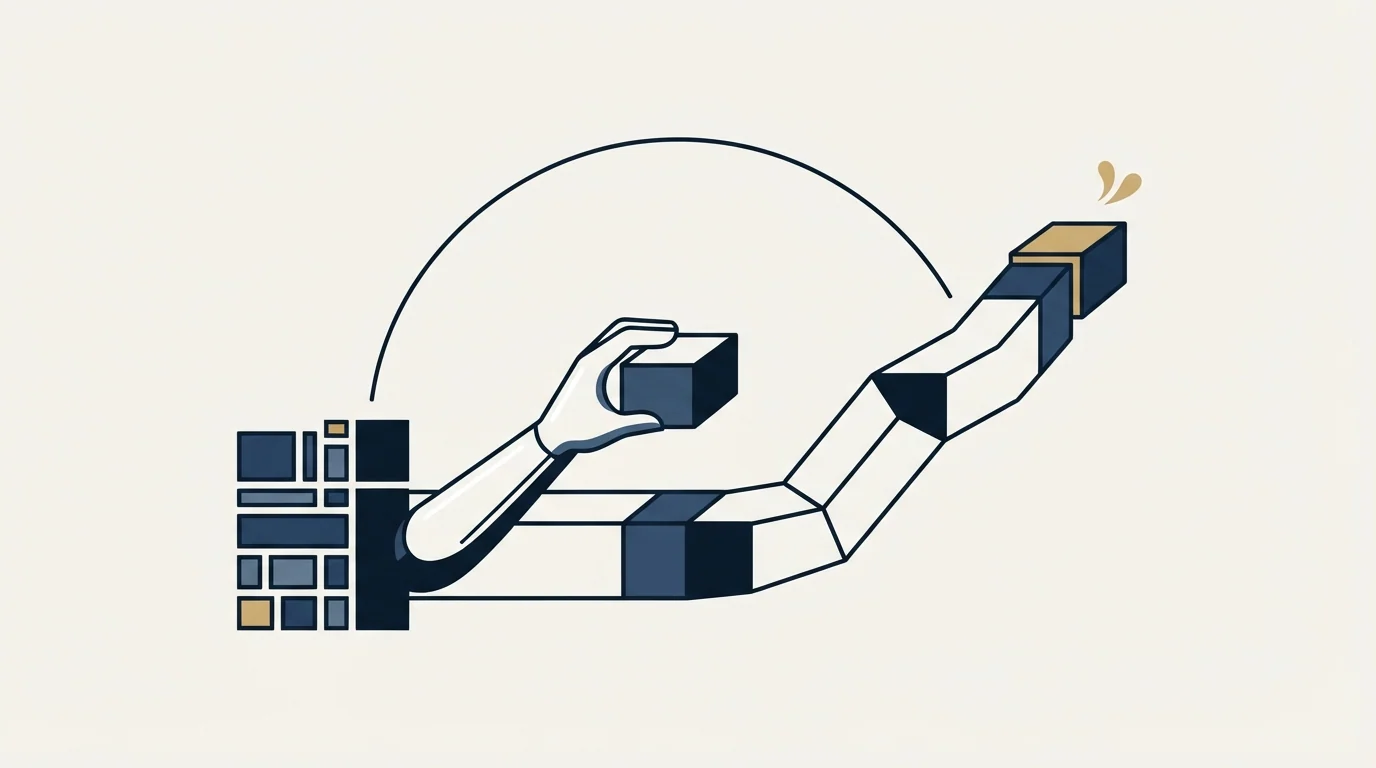
The exception clause in the LTC is the interesting part of it. Automated access is prohibited "except such means as are included within the ZoomInfo Technology, such as Integration Tools, or such other means as are expressly approved in advance in writing by ZoomInfo." So the vendor is not against automation. It is against automation it did not sell you.
That sanctioned path is genuinely capable, and it is documented far better than most vendors document theirs. The current API publishes its rate limits as a package-tier table, returns quota state on every response, and states that rejected requests do not consume quota. Enrichment endpoints accept up to 25 records per call. Access is gated two ways, by the scopes your subscription reaches and by field-level entitlement, so an endpoint in the documentation is not automatically an endpoint your key can call.
The trade is honest and worth naming. Extraction is free of charge and prohibited, unmaintained and unverifiable. The API is metered, permitted, refreshed and documented. If the volume of records you need makes the metered version unaffordable, that is real information about the fit between this vendor and your motion, and it is better answered by choosing a different vendor than by routing around the meter.
The ZoomInfo reviews guide explains why star ratings answer support and renewal questions well, but cannot show whether coverage matches your own segment.
What people actually need instead
Almost everyone searching for this wants one of three things, and each has a legitimate route.
You want ZoomInfo's data without the workflow. That is the API, and it is the path ZoomInfo's own terms carve out as sanctioned automation. It is metered per record returned and gated by subscription, so it is not free, but it is the thing you were trying to build without permission.
You want comparable data more cheaply. That is a vendor selection question rather than an extraction question, and the field is deep. Our ZoomInfo alternatives roundup covers the landscape, and the Apollo head-to-head is the comparison most teams end up running. Several of these vendors publish their pricing openly, which makes the budget arithmetic possible before you talk to anyone.
You want to build a list from public sources yourself. Legitimate, common, and a different discipline entirely. It also has its own terms to respect, which is the point of our LinkedIn scraping guide: the platform's rules matter, and the deliverability consequences of a badly sourced list are the part people discover late. Whatever route you take, verification sits between sourcing and sending, and the email verification tools comparison covers that step. If you are orchestrating several sources rather than buying one, the Clay enrichment guide covers the layer that does it.
If somebody is offering to do it for you
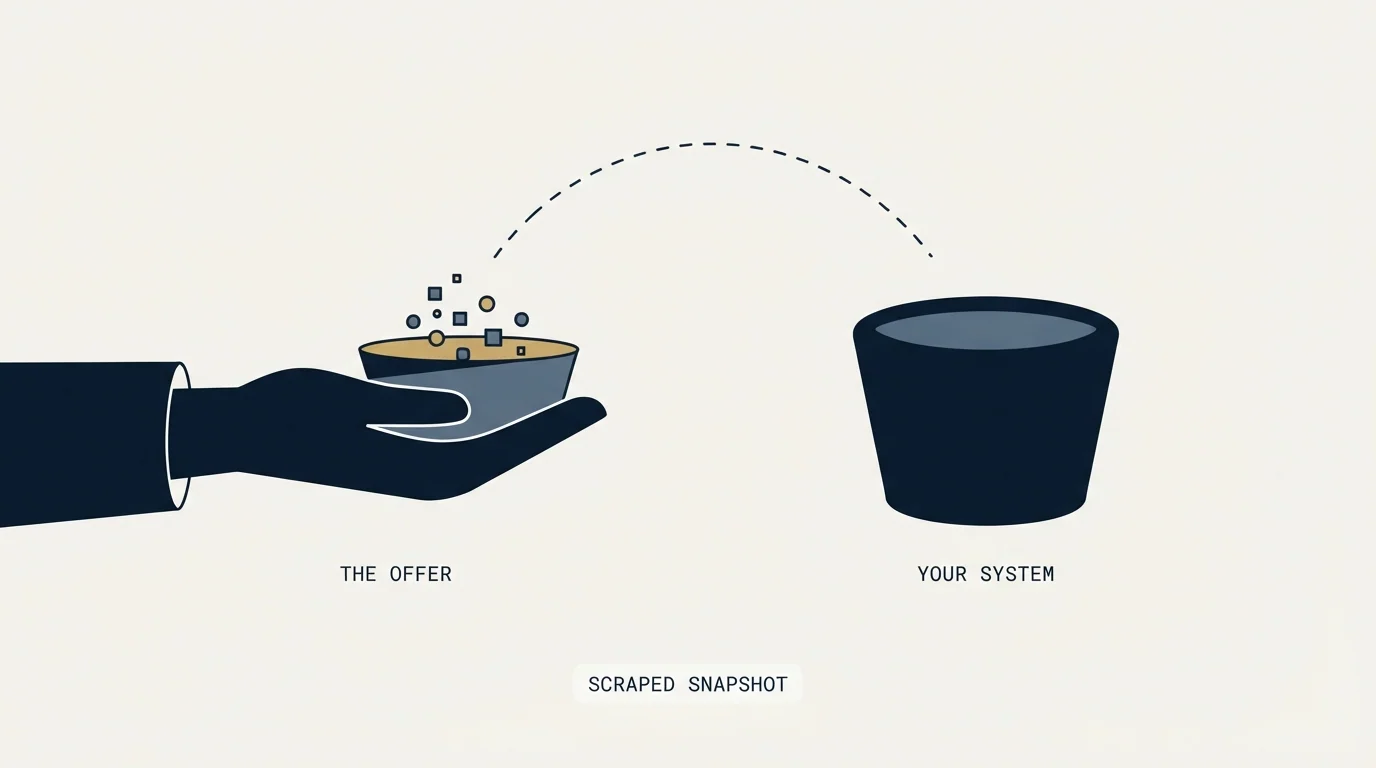
There is a market of tools and freelancers offering ZoomInfo extraction as a service. Three questions cut through it quickly.
Where does the data actually come from? A tool that claims ZoomInfo data is either licensed and reselling in breach of the resale clause quoted above, or extracting it, or making it up from public sources and using the brand name for marketing. All three are worth knowing about before you buy.
Who carries the risk? The sender does. The tool vendor is not the party a data subject or a regulator contacts, and no terms of service they write change that.
What happens when the records are wrong? With a maintained source, they get corrected. With an extraction service, you are buying a snapshot with no correction path, and the failure surfaces as bounces against your sending domain rather than as a support ticket.
The honest summary of this whole topic: the thing being extracted is not the asset people think it is. The asset is continuous verification, and that is precisely what does not come out with the records.
If the underlying goal is more qualified conversations rather than more rows in a spreadsheet, that is a different problem with a cleaner solution. RevenueFlow sources, writes and runs the campaigns and charges per qualified meeting, against criteria agreed in writing before launch. You can see it run on your own market with a free campaign.
Pricing and features verified as of mid-2026. Verify current terms with the vendor before relying on them.
Frequently asked questions.
Frequently asked questions- Is scraping ZoomInfo against its terms?
- Yes. ZoomInfo's Terms of Use prohibit any systematic or automated data collection activity, naming scraping, data mining, data extraction and data harvesting, without express written consent. A separate clause prohibits developing, supporting or using software, scripts, robots, crawlers or browser plugins to scrape the platform or copy profiles from it.
- Can a paying ZoomInfo customer export and resell the data?
- Its License Terms say no. Licensees may not distribute, sublicense, transfer, sell, offer for sale, disclose or make available Licensed Materials to any third party, and may not incorporate any portion of the Services or Licensed Materials into their own products or services. Automated access outside ZoomInfo's own integration tools is separately prohibited.
- What is the legitimate way to automate ZoomInfo data?
- The API, which the License Terms carve out as the permitted exception alongside ZoomInfo's own integration tools. It publishes rate limits by package, returns quota state on every response, and accepts up to 25 records per enrichment call. Access is gated by subscription scope and by field-level entitlement, so check what your contract actually reaches.
- Why is scraped contact data a poor foundation for outbound?
- Because the value of a contact database is continuous re-verification rather than the records themselves. A snapshot is accurate on the day it is taken and decays from then on as people change jobs, with no correction path. You still have to verify every address before sending, and the provenance is hard to document if anyone asks.
About the author.

B2B cold email experts helping companies generate qualified leads through done-for-you outreach campaigns.
RevenueFlow Team
Explore more.
Ready to scale your outreach?
We build GTM engines that book real meetings. See the receipts.
Related articles.
The Real Cost per 1,000 Emails, Verifications and Data Credits in 2026
Unit prices computed from verified vendor plans: $1.00 per 1,000 emails sent, $2.00 per 1,000 verifications and $19.60 per 1,000 enrichment credits.
Firmographic Data Providers: What Six of Them Publish
Six firmographic data providers read from their own pages: the fields each sells, the coverage each states, how the data is delivered, and who prints a price.
Free Tiers and Trials in Sales Tools: What $0 Gets You Across 386 Vendors
37.0% of 386 verified sales tools have a permanent free plan. The median free data tier gives 50 credits and the median free sending plan 2,500 emails a month.
Salesgear Pricing: Two Ladders Under One Plan Title
Salesgear's page is titled as one plan and carries a Data ladder and an Outreach ladder. Both at both billing states, what each meters, and the two vendor-side conflicts.
Bookyourdata Pricing: 25 Packs, Priced Per Contact
Bookyourdata sells credits in twenty-five packs with no subscription. The dated ladder, the per-contact rates rendered in the browser, the guarantee rule and BeSpoke.
Zeliq Pricing: One Seat Rate and a Credit Meter
Zeliq prices one self-serve seat in dollars with a credit meter that never expires. Both billing states, the three credit rates, the top-up ladder and the Custom floor.