How ZoomInfo Gets Its Data: Four Sources, What Each Misses
ZoomInfo names four data sources on its own pages. Each one predicts where coverage is strong, where it thins out, and what to measure on your own accounts.
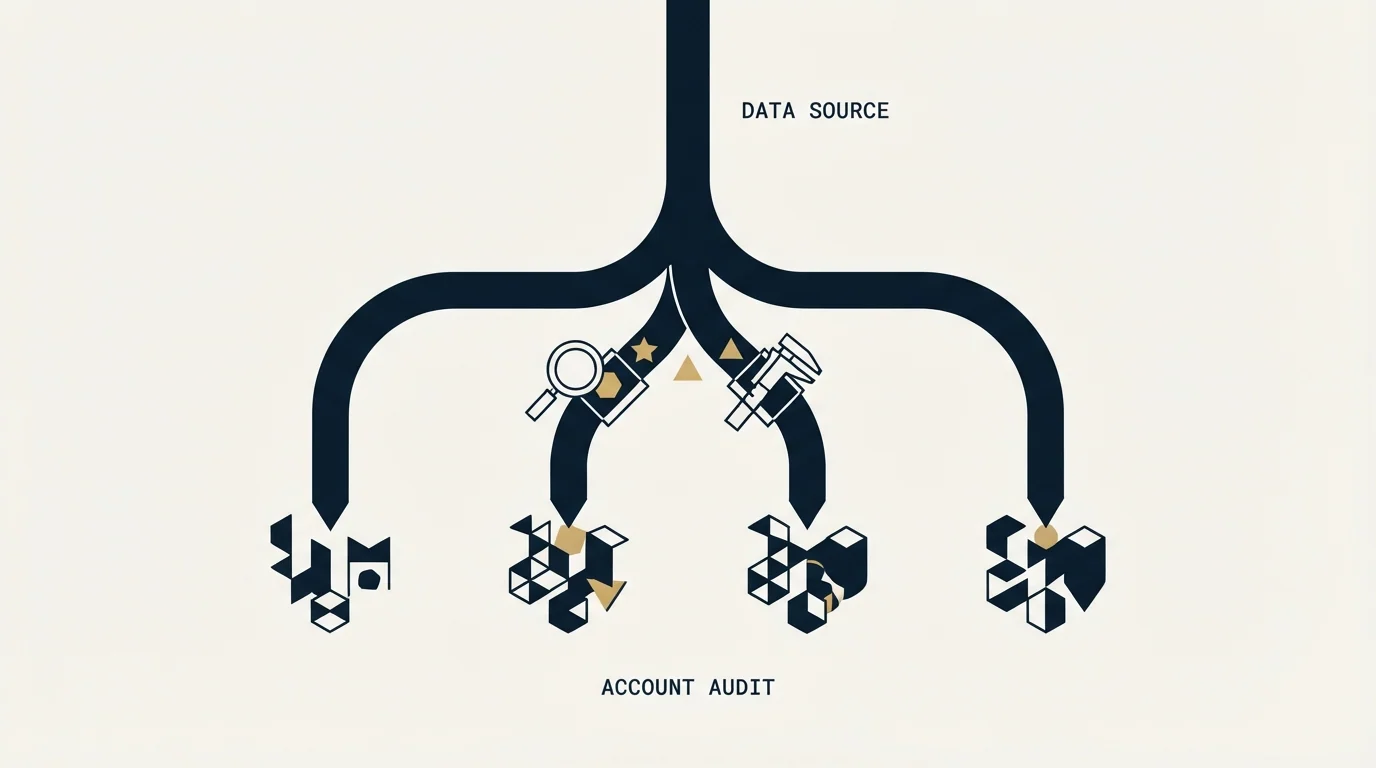
ZoomInfo publishes four data sources: automated collection across public web pages, commercial data partners, a contributory community of free-tier users who share contact data for access, and an in-house research team. Each mechanism predicts where coverage is strong and where it thins, which is testable on your own accounts during a trial.
Key takeaways
- ZoomInfo's data-sources page names four categories: unstructured public information viewed across over 28 million sites and domains daily, commercial data partners, a contributory community and an in-house research team.
- The contributory community is self-selecting, drawing contact data from more than 200,000 ZoomInfo Lite users, so coverage skews toward the roles and industries that install free sales tools.
- Partner-sourced intent is described as anonymised web activity from company IP addresses, which makes it an account-level signal rather than evidence that a named person is in market.
- No published figure describes coverage of your accounts specifically, so the only answer that settles a purchase is a trial measured on a sample list you already know well.
Reviewed and updated September 1, 2026
A buyer evaluating ZoomInfo usually asks the accuracy question first and the provenance question never. That order is backwards. Where a record came from predicts where it will be right, and no accuracy percentage quoted in a sales call tells you which half of your target market the database actually knows.
ZoomInfo publishes the answer itself, across two of its own surfaces, in more detail than most data vendors offer. Reading those pages properly turns a vague trust judgement into a specific one: strong here, thin there, and testable before the contract.
The ZoomInfo database is not one collection but four feeding one store, and which of the four produced your record is what predicts whether it is right.
How accurate ZoomInfo is has no single answer, because accuracy is a property of a segment rather than of a database: the four numbers below are the accuracy figure that applies to you, and they take a trial rather than a contract to produce.
The four sources ZoomInfo names
ZoomInfo's data-sources page, fetched on 16 August 2026, describes four categories rather than one pipeline.
The first is unstructured public information. The page says its data is updated through automated machine learning that views public information on over 28 million sites and domains every day, and it lists what those sources are: corporate websites, press releases, news articles, Securities and Exchange Commission filings, job postings and other online sources carrying industry, location and revenue attributes. The same page states that its tools do not attempt to bypass password restrictions or CAPTCHAs, which is a narrower claim than "we only use public data" and a more checkable one.
The second is data partners. ZoomInfo describes a network of partners supplying specific data points, and names four uses: capturing job postings to reveal technologies and upcoming projects, monitoring anonymised web activity and traffic to identify consumption patterns from company IP addresses to power its Intent product, updating restaurant, branch and retail locations for large United States brands, and standardising address and location information for 95 million businesses.
The third is the contributory data community. The page states that more than 200,000 business professionals use the ZoomInfo Lite platform and provide accurate business contact information in exchange for free access. It also describes wider data-sharing programmes in which customers' use of ZoomInfo tools improves the underlying data, giving the example that a connected email tool may help it understand email accuracy through deliverability data. ZoomInfo's own blog explainer on the same subject, updated 7 July 2026, is more specific about what gets shared: professional contact details from sources such as email signature blocks or business contact books.
Anyone weighing that contributory pipeline should also see how the ZoomInfo browser extension quietly surfaces and exports those same records from inside LinkedIn and a connected CRM.
The fourth is an in-house research operation. The data-sources page calls it a data training lab and research team focused on continuous improvement of the database, and says the team benchmarks data quality for critical performance indicators such as email bounce rates, employer relationships and firmographic accuracy. The blog explainer puts a number on it and describes a Data Training Lab of 300 or more human researchers.
The two pages are worth reading side by side rather than treating either as the whole story. The data-sources page describes machine learning that views public information on over 28 million sites and domains; the blog explainer describes systems that scan 28 million company domains daily. Those are the same figure attached to slightly different nouns, and a careful reader should quote the surface rather than the vendor.
- Unstructured public information: over 28 million sites and domains viewed daily
- Data partners: job postings, IP-level web activity, location data on 95 million businesses
- Contributory community: 200,000+ ZoomInfo Lite users trading contact data for free access
- Data Training Lab: 300+ human researchers benchmarking bounce rates and firmographics
- Companies that publish: filings, press, leadership pages, active job boards
- Account-level signals and physical locations for larger brands
- Job functions that use sales tooling, concentrated in tech and B2B services
- The metrics the lab chose to measure
- Small firms with no news, no filings and a five-page website
- Person-level intent, because IP activity is an account signal
- Functions and regions where nobody installs the free tier
- Anything the lab is not benchmarking
What each mechanism implies about your list

Public-web scraping is a coverage engine that rewards companies for publishing. A 400-person software business with a newsroom, a careers page and a leadership section is easy for that machinery. A 14-person specialist manufacturer with one page of static HTML and no press coverage is close to invisible to it, whatever the database's overall record count says. If your ideal customer profile sits in the second group, the headline coverage number is describing somebody else's market.
Partner-sourced intent works at the account level by construction. ZoomInfo's own description is anonymised web activity from company IP addresses, and that is a statement about which organisation showed interest rather than which person did. Treating an intent signal as a named buyer's intent is the single most common misreading of the product, and the vendor's own page is where the correction lives. There is a fuller treatment of what account-level signals can and cannot support in our guide to B2B intent data.
The contributory community is the most interesting mechanism for anyone doing outbound, because it is self-selecting. Contact records flow in from the inboxes and address books of people who chose to install a free sales tool. That population skews hard toward sales, marketing and revenue roles at companies that buy sales software. Coverage of a plant manager in industrial distribution or a practice lead at a mid-market accountancy firm does not benefit from the same tailwind, because those people are not the ones trading their address book for free lookups.
The research lab detail is easy to skim past and worth stopping on. ZoomInfo names email bounce rate as one of the quality indicators its own team benchmarks. That is the vendor agreeing, in public, that bounce rate is the number by which contact data is judged. It is also the number you can measure yourself, on your own list, before a renewal.
- Step 1Collect
Public web, data partners, contributory community and the in-house research team feed the same database
- Step 2Cross-reference
The vendor describes machine learning models, natural language processing, automated validation and human researchers checking signals against each other
- Step 3Publish
The record surfaces in search, in the browser extension and through the API
- Step 4Decay
People change jobs and the record ages from the day it is verified, which is why the sourcing question and the refresh question are the same question
The part the provenance page does not answer
Two things stay outside the published account, and both matter more at renewal than at purchase.
The first is recency per record. Knowing that a database is refreshed continuously says nothing about when your specific record was last confirmed. A contact sourced from a leadership page in March and never touched since is presented in the interface exactly like one verified last week. Data decay is not a defect in the sourcing model, it is the arithmetic of people changing jobs, and it is why the useful question at renewal is about verification dates rather than about database size.
The second is coverage of your segment specifically. Every published figure is a total. None of them is a statement about the 3,000 accounts you actually sell to, and the vendor cannot answer that question for you because it does not know your list.
Both gaps close the same way, and it costs a trial rather than a contract.
Testing provenance on your own accounts
Take a sample of accounts you know well, ideally ones where you already have verified contacts from another route. A hundred is plenty. Then measure four things.
Coverage: how many of your target roles exist in the database at all. This is the number that separates a vendor that knows your market from one that knows a market.
Correctness of the employer relationship: how many of the returned people still work where the record says. ZoomInfo names employer relationships as something its own lab benchmarks, so it is fair ground.
Deliverability: bounce rate on the addresses, measured rather than trusted. Our documented practice is that every address entering a campaign is verified independently of where it was bought, which is a policy about our sending reputation rather than a comment on any one vendor. The tooling options are covered in our roundup of email verification tools.
Uniqueness: how much of the returned data you already had. A vendor that duplicates your existing coverage is charging you for a second copy.
Those four numbers, on your own accounts, settle the buying question that no provenance page can. They also make the comparison honest, because the same test runs against any vendor. Running it across two or three providers in sequence is the practical form of waterfall enrichment, and it is how teams end up with a stack rather than a single supplier. If the results push you toward a comparison, ZoomInfo against Apollo is the most common fork, and the wider field is in our ZoomInfo alternatives roundup.
What ZoomInfo says it does not collect
The data-sources page also lists exclusions, and they are worth quoting because they bound the compliance conversation. It states that ZoomInfo does not track personal browsing history, does not collect sensitive categories of data, and does not collect information relating to individuals solely in their personal capacity. The page frames the whole programme against the California Consumer Privacy Act and the General Data Protection Regulation, and points individuals at a self-service privacy centre where a profile can be verified, claimed, updated or removed.
Since provenance and legal basis are equally vendor-specific, Lusha's legitimate interest approach shows how a different vendor documents the same buyer duties around consent and opt-outs.
That last mechanism is the one worth knowing about as a sender rather than as a subject. A contact who has removed their profile is not in the next export, which is a small, real and entirely legitimate source of coverage change between refreshes.
The short version
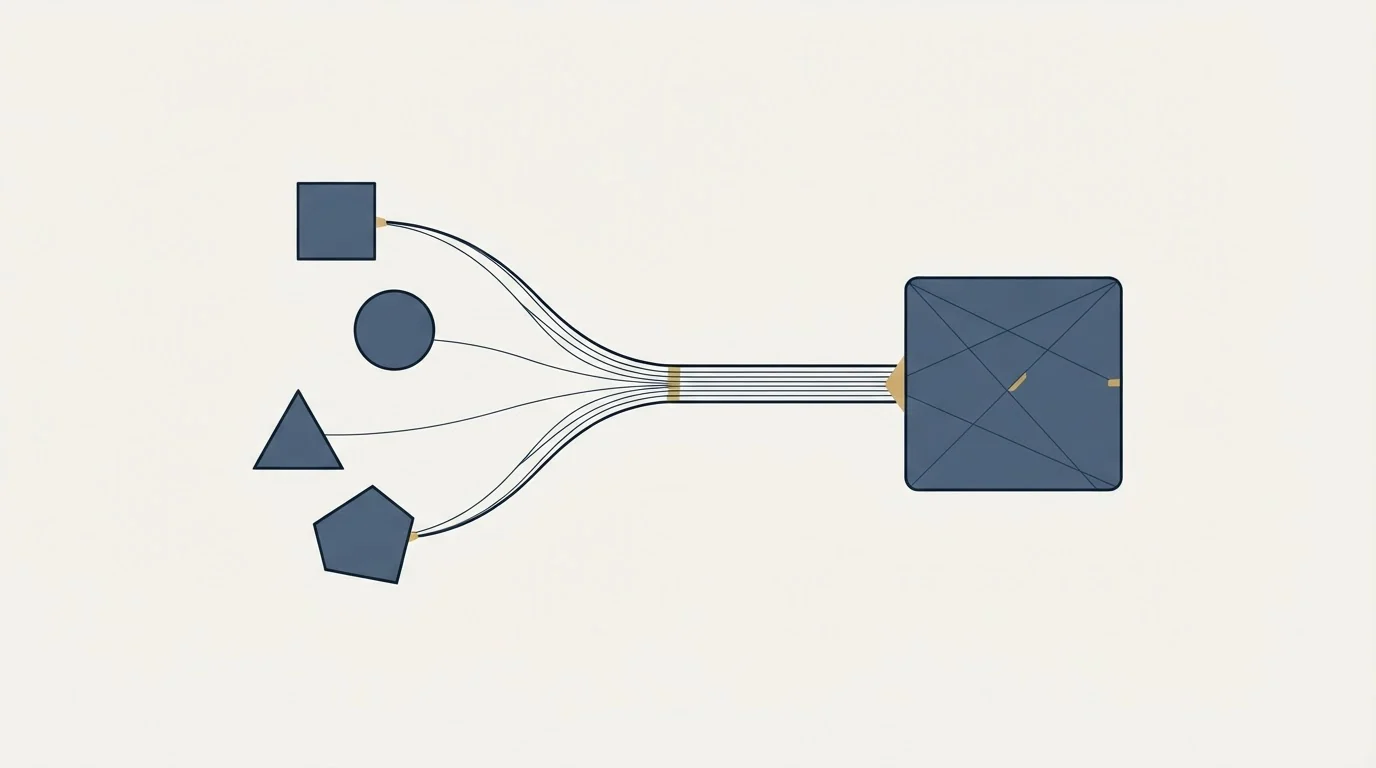
ZoomInfo gets its data from four places it names publicly: automated collection across public web sources, commercial data partners, a contributory community of free-tier users trading contact data for access, and an in-house research team. Each mechanism has a shape, and the shape predicts where coverage will be strong and where it will thin out. Nothing on those pages tells you how well the database covers your accounts, which is the only question your budget depends on, and the only way to answer it is to run your own list through a trial and count.
If you would rather see a campaign built and sent against your ideal customer profile before committing to any data vendor, start a free campaign and we will handle the list, the copy and the sending infrastructure.
Pricing and features verified as of mid-2026. Verify current terms with the vendor before relying on them.
Frequently asked questions.
Frequently asked questions- Where does ZoomInfo actually get its data?
- From four sources it names publicly. Automated systems collect from public web pages including corporate sites, press releases, news, regulatory filings and job postings. Commercial partners supply job postings, web activity and location data. A contributory community of free-tier users shares business contact details. An in-house research team reviews and corrects records continuously.
- Is ZoomInfo's data collection legal?
- ZoomInfo frames its programme against the California Consumer Privacy Act and the General Data Protection Regulation, states that its tools do not attempt to bypass password restrictions or CAPTCHAs, and says it does not track personal browsing history or collect sensitive categories. Individuals can verify, claim, update or remove a profile through its self-service privacy centre.
- How do I know if ZoomInfo covers my target market?
- Test it rather than reading a coverage figure. Take a hundred accounts you know well, run them through a trial, and count four things: how many of your target roles exist at all, how many people still work where the record says, what the bounce rate is on the addresses, and how much of the data you already had.
- Why does ZoomInfo have some contacts and not others?
- Because the collection mechanisms have shapes. Public-web collection favours companies that publish filings, press and leadership pages, so small firms with a thin web presence are harder to see. The contributory community favours job functions that install sales tools. Coverage follows those two patterns more closely than it follows any total record count.
About the author.

B2B cold email experts helping companies generate qualified leads through done-for-you outreach campaigns.
RevenueFlow Team
Explore more.
Ready to scale your outreach?
We build GTM engines that book real meetings. See the receipts.
Related articles.
Firmographic Data Providers: What Six of Them Publish
Six firmographic data providers read from their own pages: the fields each sells, the coverage each states, how the data is delivered, and who prints a price.
Zeliq Pricing: One Seat Rate and a Credit Meter
Zeliq prices one self-serve seat in dollars with a credit meter that never expires. Both billing states, the three credit rates, the top-up ladder and the Custom floor.
Salesgear Pricing: Two Ladders Under One Plan Title
Salesgear's page is titled as one plan and carries a Data ladder and an Outreach ladder. Both at both billing states, what each meters, and the two vendor-side conflicts.
Bookyourdata Pricing: 25 Packs, Priced Per Contact
Bookyourdata sells credits in twenty-five packs with no subscription. The dated ladder, the per-contact rates rendered in the browser, the guarantee rule and BeSpoke.
Video Prospecting Tools by Job: What Each One Is For
Ten video prospecting tools sorted by the job each vendor's own page describes: record and share, personalise at volume, avatars, hosting and interactive demos.
Social Selling Tools by Job, and the Account-Risk Line
Fourteen social selling tools sorted into six jobs, split by whether each acts through your LinkedIn account or beside it, from the vendors' own pages.