AI Email Copywriters: What a Model Cannot Know
A model writes a cold email in two seconds because it has read millions of them, most of which did not work. Fluency in the form is the cheap half of the job.
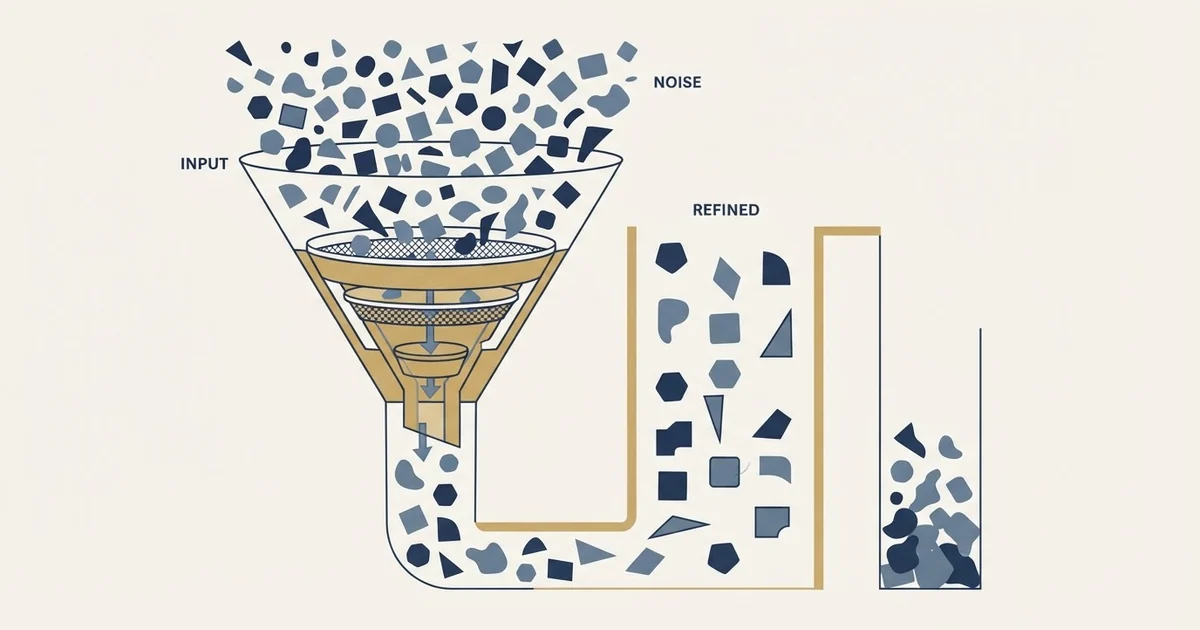
An AI email copywriter is either a standalone generator that knows only what you type into it, or a generation step inside a platform that can read the lead record and pages you supply. The second is the useful shape and the one that needs a check between generation and sending.
Key takeaways
- Output quality tracks the evidence supplied to the model far more than the model chosen, and that gap is larger than the gap between any two models.
- Generated copy needs a gate that template copy does not, because a bad generation is wrong on an unknown subset of rows rather than wrong once in review.
- Formatting artefacts such as list numbering ship inside merge variables, so a template can pass review while the rendered messages carry the defect.
- Copy has almost nothing to do with inbox placement, which is decided by sending reputation, authentication, mailbox count and pacing.
Reviewed and updated September 2, 2026
A language model asked to write a cold email will produce one in about two seconds. It will have a subject line, an opening that references the recipient's industry, a value proposition, and a call to action. It will read like a cold email because it was trained on several million of them, most of which did not work.
That is the whole problem in one sentence. The model is fluent in the form and knows nothing about the specific person receiving it, and fluency in the form is the cheap half.
Artificial intelligence in email marketing is a wider label than this, and it splits along the consent line. On an opted-in list the AI jobs are list-side: choosing a send time, grouping an audience, testing subject lines and picking which product to show, all of them optimising delivery to people who already agreed to hear from you. On cold outbound there is no engagement history to optimise against and the AI job is the message itself, which is the harder problem and the one below.
A disclosure before going further. RevenueFlow runs cold outbound as a service and generates copy with language models every day, under the constraints described below. Everything here is our own documented practice rather than measured results, and where a vendor is named it is from that vendor's own published pages as they rendered on 15 August 2026.
AI email copywriting is sold as two different products under one phrase, and knowing which one you are looking at settles most of the evaluation.
Elsewhere in the sales stack the same AI label covers note taking and CRM autofill, where Sybill meters credits per week rather than charging by the seat.
A product sold as an AI sales email generator is almost always the first shape: a box that turns a brief into a draft, knowing only what you typed into it, with no access to the lead record and nothing verified about the person receiving the message.
What is actually being sold
The phrase covers two different products that share a name, and knowing which one you are looking at settles most of the evaluation.
The first is a general writing tool with an email template on it: paste a brief, get a draft. These are useful, they are frequently free, and they do not know anything about your prospect because nothing about your prospect was supplied.
The second is a copy layer inside an outbound platform, where the generation step sits next to the lead record and can read from it. Smartlead, for instance, publishes an email copywriter tool alongside its sending, warmup and deliverability products, which places the writing step inside the system that already holds the contact.
- Knows only what you typed into the box
- Produces a template, however specific the brief sounds
- Fine for structure, tone and a first pass at a subject line
- No access to the lead record or the prospect's own material
- Every recipient gets the same message with a name swapped in
- Can read fields already on the contact record
- Can be fed pages fetched from the prospect's own site
- Output varies genuinely per recipient rather than by merge field
- Introduces a new failure class: wrong facts, at volume, unreviewed
- Needs a check between generation and sending
The second shape is the one worth having and the one that carries the real risk. A template that is bland reaches ten thousand people and is ignored. A generated message that states something untrue about a company reaches ten thousand people and is read by the person who knows it is untrue.
The input problem
Prospects now ask directly whether the research and outreach is AI generated or manual, and the honest answer describes the inputs rather than the tool: which facts were fetched from their own pages, which fields came from a verified source, and what a person read before anything sent.
The same category is sold as a cold email generator, and the name is the clearest statement of the input problem: a generator is asked to produce a message from nothing, while a copywriter is asked to write one from a fact.

Everything that determines whether generated copy works happens before the model is called.
Given nothing, a model writes from the average of everything it has seen, and the average cold email is the one you delete. Given a real, specific, checkable fact about the recipient, the same model writes something a person might answer. The gap between those two outputs is much larger than the gap between any two models, which is the finding that most reorganises how a team spends its time.
This is why our own generation is grounded rather than open. Before anything is written for a prospect, their actual pages are fetched, and the model writes from what those pages say rather than from what it recalls about the company. A model asked to describe a company it has heard of will produce a confident and frequently wrong description. A model handed that company's own services page will describe the services on it.
The same boundary governs merge variables. A field is only safe to drop into a message if something verified put it there. Names, companies and roles come from a data source; observations come from fetched pages; nothing comes from the model's memory. The wider version of that rule, applied to the enrichment layer rather than the copy layer, is in waterfall enrichment, and what a real target definition has to contain before any of this matters is in ideal customer profile.
The checks that have to sit between generation and sending
Generated copy needs a gate that template copy does not, because the failure modes are different. A bad template is bad once and someone notices in review. A bad generation is bad on some unknown subset of rows, and nobody reads all of them.
- Yes: Every factual claim traces to a fetched page or a verified field
- Yes: The rendered message is read, not just the template with placeholders
- Yes: Empty or failed variables degrade to a sentence that still reads naturally
- Yes: Numbering, list markers and stray formatting from the model are stripped
- Yes: A sample is read end to end by a person who knows the market
- No: Approving the template and assuming the rendered messages match it
- No: Sending a variant nobody read because the batch was large
The fourth item is not hypothetical and it is the cheapest one to get wrong. A model asked for three ideas returns three ideas with numbers in front of them, and if that output is dropped into a merge variable the numbering ships into the sent message. The template looks clean in review because the defect lives in the variable rather than in the template, which is exactly why the rendered message is the thing that has to be read.
The third item is the other quiet one. Every enrichment step fails on some rows. What the message says when a variable comes back empty is a decision somebody has to make deliberately, because the default is a sentence with a hole in it, and the hole is invisible in the template.
There is a sampling discipline that makes this tractable rather than exhausting. Sort the generated batch by the length of the variable content and read both ends. The shortest rows expose the empty and near-empty failures, and the longest rows expose the cases where the model over-produced and wandered off the evidence. The middle of the distribution is where the acceptable output lives and it is the part that needs the least attention, which is the opposite of how most people sample.
What generation does not change
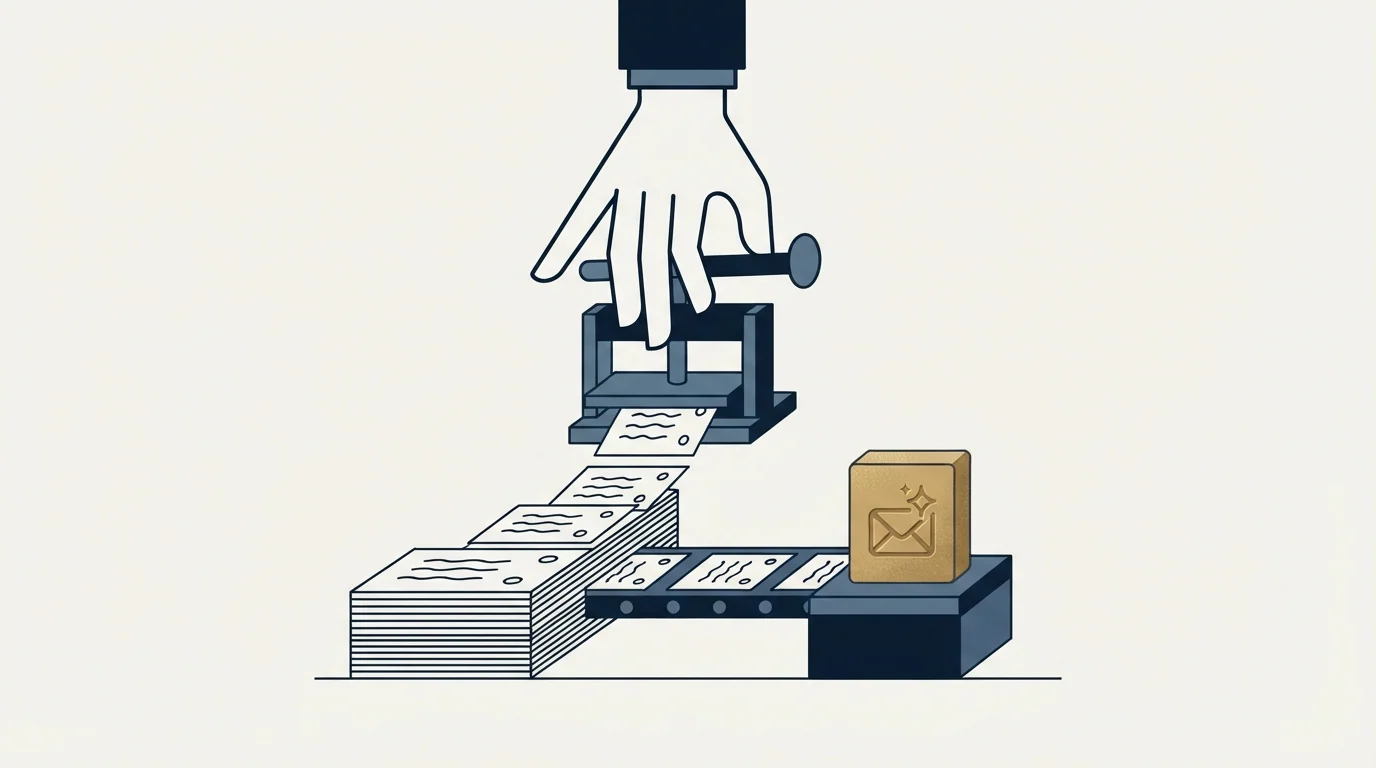
Three things stay exactly where they were, and each of them outranks copy quality.
The list is first. A better-written message to the wrong people performs worse than a plain one to the right people, and generation makes it cheaper to be wrong at scale rather than less likely. The distinction between a durable targeting attribute and a dated event worth acting on is in b2b prospecting.
Deliverability is second, and it is the one that surprises people. Copy has almost nothing to do with whether a message reaches an inbox. Sending reputation, domain authentication, mailbox count and pacing decide that, and a beautifully written message that lands in spam performs identically to a badly written one that does. The provider ceilings that shape the whole sending plan are in email sending limits by provider, and the free starting point for measuring placement is Google Postmaster Tools.
The offer is third. No amount of drafting rescues a message that gives the reader no reason to reply. That is a commercial problem wearing a copywriting costume, and it is the most common thing a team tries to fix with a writing tool.
Where we differ from the default
Two of our own positions change how generation gets used, and both cost us something worth stating.
We run one message per campaign for cold outbound, with no thread replies and no bumps. Cheap generation pushes hard in the opposite direction, because the obvious use of a writer that never tires is to write more messages to the same people. Every message after the first is delivered only to people who saw the previous one and chose not to answer, which is the population most likely to file a spam complaint, and the reputation cost of that lands on the sending domain across every campaign running on it. What replaces the follow-up is a new campaign with a genuinely different premise rather than a reminder. The full argument, including what the position costs us, is in email sequence software.
The consequence for copy is direct and it is the reason this matters here. When there is only one message, that message carries the entire burden. There is no second touch to recover from a weak opening and no sequence in which a later step can do the work. That is a demanding standard to hold a generated draft to, and it is the standard the one-message model imposes.
We also treat the model as a drafter rather than an author. It produces the first version from evidence somebody assembled, and a person edits before anything sends. That is slower than the alternative and it is the difference between using the tool and being used by it.
The short version

An AI email copywriter is either a standalone generator that knows only what you typed, or a generation step inside a platform that can read the lead record and pages you fetched. The second is the useful one and the one that needs a gate.
Output quality tracks the evidence supplied far more than the model chosen. Ground the generation in the prospect's own material, source every factual claim from a fetched page or a verified field, and never let the model supply a fact from memory.
Between generation and sending, read the rendered messages rather than the template, decide what happens when a variable comes back empty, and strip the formatting artefacts a model leaves behind. Those defects live in the variables, which is precisely where template review does not look.
None of it substitutes for the list, the sending infrastructure or the offer, and a single-message model puts the entire weight on one draft. If you would rather have the whole motion run than assembled, you can see what a campaign would look like for your market.
Vendor product details verified against the vendor's own pages as of mid-2026. Verify current terms with the vendor before relying on them.
Sources: Smartlead email copywriter
Frequently asked questions.
Frequently asked questions- Does AI-written cold email work?
- It works to the extent the model was given something real to write about. Handed a specific, checkable fact about the recipient, a model produces something a person might answer. Handed nothing, it writes from the average of every cold email it has seen, which is the one people delete.
- What should we check before sending AI-generated copy?
- Read the rendered messages rather than the template, since defects live in the variables. Confirm every factual claim traces to a fetched page or a verified field, decide what a message says when a variable comes back empty, strip formatting artefacts the model leaves behind, and have someone who knows the market read a sample.
- Which is better, a standalone AI writing tool or one inside a sending platform?
- The one inside the platform, because it can read the lead record and any pages you supply, so its output varies genuinely per recipient rather than by merge field. It also carries the larger risk, because a wrong fact reaches everyone at once, which is what the pre-send gate exists for.
- Can AI copy fix a low reply rate?
- Only if copy was the constraint, and usually it is not. The list decides more than the writing, deliverability decides whether the writing is read at all, and an offer that gives the reader no reason to reply cannot be drafted around. Check those three before changing the words.
About the author.

B2B cold email experts helping companies generate qualified leads through done-for-you outreach campaigns.
RevenueFlow Team
Explore more.
Ready to scale your outreach?
We build GTM engines that book real meetings. See the receipts.
Related articles.
Cold Outreach Automation: Where the Line Sits
Cold outreach automation is seven decisions, not one purchase. Four stages automate cleanly, two produce confident nonsense, and one is the feature we decline.
Apollo and Clay Integration: What Connects, Who Meters What
Clay's docs list one Apollo source and eleven actions. How the account connects, which way each action moves data, and which vendor bills each step.
Reply.io Salesforce Integration: The Sixteen Sync Steps
Reply's support article lists sixteen sync steps, two profiles, required field mappings and a two-hour cadence. What the native Salesforce integration moves.
Alta Pricing: No Rate Card, a Quote in Hours
Alta publishes no price. What its plans page, FAQ and blog disclose about how the platform is priced, the inputs that set a quote, and the numbers to ignore.
Gojiberry AI Pricing: One Plan, Then a Quote
Gojiberry AI publishes one plan and quotes the rest. The dated price, the meters it names, the billing terms, and the look-alike domain that is not the vendor.
CRM Setup: The Objects, Stages and Write-Back Loop
A vendor neutral CRM setup for an outbound team: the object model, stage exit criteria, the required field set, ownership rules and the campaign write-back loop.