Apollo for Cold Email: Use the Data, Send Elsewhere
Apollo is a strong data platform that also sells a sender. Why those two jobs should not share an account, and what belongs between the export and the send.
Use Apollo for sourcing and enrichment, then export, verify independently and send from dedicated infrastructure. A platform offering data and a send button in one view removes the moment verification would happen, and one account holding both is a single point of failure.
Key takeaways
- An all-in-one interface implies the addresses it hands you are already good, which is how the verification step disappears without anyone deciding to skip it.
- The export boundary is what makes verification a conscious decision rather than an omission, so the separation produces better hygiene than a policy relying on memory.
- One account holding sourcing and sending means a billing dispute, policy change or suspension removes your list and your ability to contact anyone at once.
- Apollo's own academy teaches a three-step email series, while we send one message per campaign and never bump, so choose a model deliberately rather than inheriting one.
Reviewed and updated September 1, 2026
The fastest way to damage a sending domain is to do every step inside one tool. Source a list, skip verification because the platform already handed you addresses, load those addresses into the same platform's sequencer, and send. Every step is one click, which is the selling point, and the bounce rate arrives about four days later.
That is the specific risk this page is about. Apollo is a genuinely strong data platform and it also sells a sending layer, and the question worth answering is not whether the sending layer works but whether you want your prospecting data and your sending reputation living in the same account. Our answer is no, and the reasons are mechanical rather than aesthetic.
For the end-to-end workflow, including how to search without burning credits, see our Apollo lead generation guide. This page goes deeper on one boundary in it.
Why an all-in-one quietly removes the verification step
The strongest argument against sending from a data tool has nothing to do with the sending features. It is about what the interface implies.
When a platform hands you an address and a Send button in the same view, the address carries an implicit warranty. It came from the data product, the data product is the thing you pay for, so the address must be good. Nothing in the interface suggests an intermediate step, and the intermediate step is unglamorous, so it gets skipped.
The cost of skipping it does not show up immediately. Bounces accumulate over the first days of a campaign, mailbox providers adjust their view of the sending domain, and by the time the numbers look wrong the sends that caused the damage are already delivered. Our bounce rate benchmarks cover what the resulting numbers look like and where the thresholds sit.
Moving the send to different infrastructure fixes this by making the gap visible. An export is a moment where a human decides what happens next, and verification naturally fills it. That is the entire mechanism, and it is why the architectural separation produces better hygiene than a policy asking people to remember.
- Step 1Source in the data platform
Filter to a defined segment and enrich only the rows you intend to contact.
- Step 2Export
Move the rows out. This is the boundary that makes the next step a conscious decision rather than a default.
- Step 3Verify independently
Run a bulk verifier across every address, whatever the source claimed about it.
- Step 4Send from dedicated infrastructure
Separate domains, separate mailboxes, separate vendor from the one that supplied the data.
The commercial argument, which is simpler
If sourcing and sending share one account, then a billing dispute, a policy change or a suspension removes your list and your ability to contact anyone at the same moment.
That is not a hypothetical failure mode, and it is worth picturing concretely before dismissing it. Data platforms enforce acceptable-use policies against sending behaviour, and the enforcement action lands on the account rather than on the feature. Keeping the two apart costs a second subscription and removes a single point of failure from the entire motion.
Our own stack runs Email Bison for sending and HeyReach for LinkedIn, and we do not send from our data tooling. We use data platforms for what they are good at, which is finding and enriching the right people.
The Apollo versus Cognism comparison examines exactly this pairing, contrasting Apollo's outreach orchestration with Cognism's verified contact sourcing for teams that keep the layers separate.
Where Apollo's own guidance and ours diverge
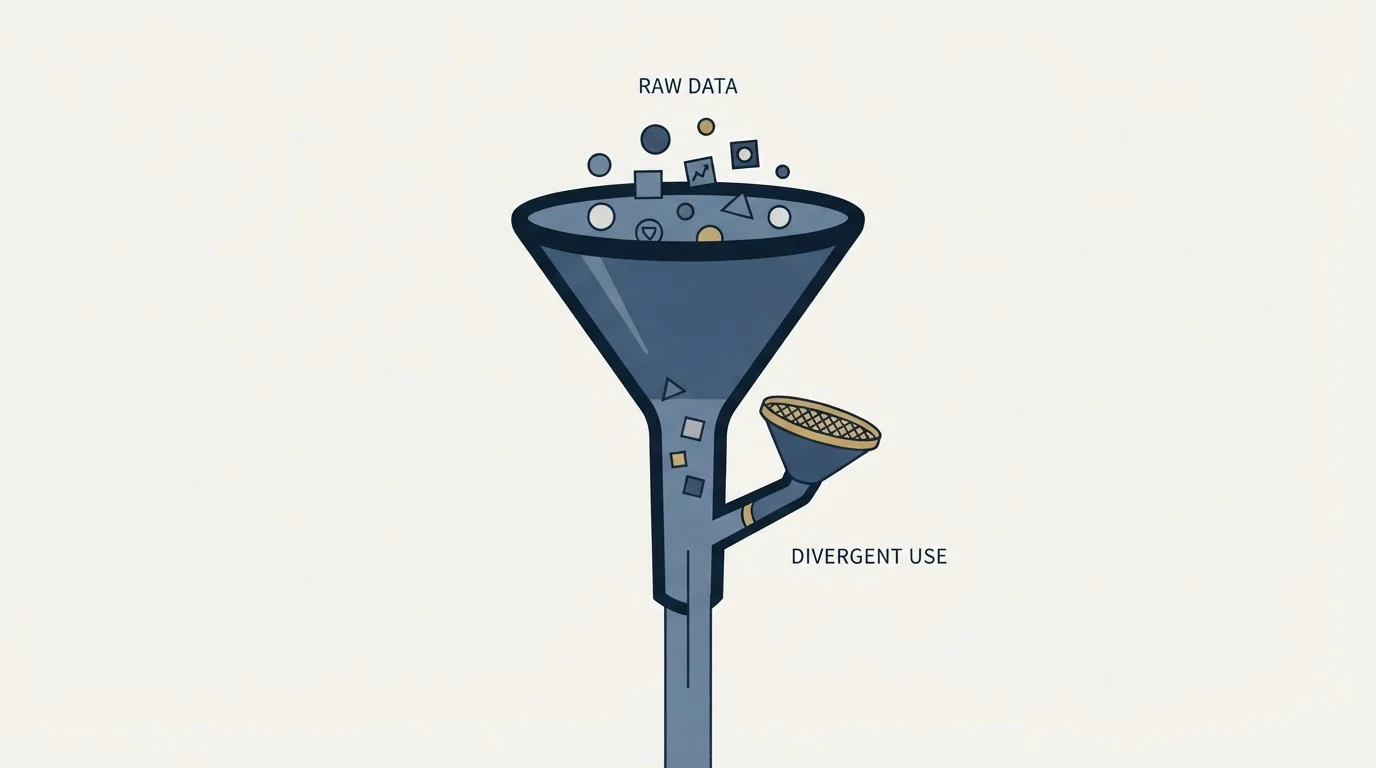
Apollo's academy teaches a three-step email series, and its guidance on follow-ups is to avoid the empty check-in and simply restate the original question.
That is reasonable advice inside a sequence-based model, and it is not the model we run. We send one message per campaign and never bump. When an angle does not land, we build a fresh campaign with a genuinely new angle rather than adding a step to the old one. A second message under the first one is a reminder that the first one was ignored, and it converts the message from an approach into a pursuit.
The distinction is worth being explicit about here, because a reader following a vendor's academy and a reader following our corpus will otherwise arrive at contradictory instructions and assume one of us has not thought about it. Both models are internally coherent. We chose the single-message one deliberately, on the view that the follow-up engine most sending platforms sell is a feature we pay for and leave switched off.
What is worth taking from Apollo
The criticism above is narrow, and it is worth being clear about what it does not cover.
The data and the filters. Apollo's search is genuinely capable, and its academy's advice on sub-segmenting a list by signal filters, things like recent funding, acquisitions or job changes, is the right instinct. A segment defined by a signal gives you something specific and true to say, which is the entire input to a message worth sending.
The enrichment surface. Enriching only the rows you intend to contact, rather than an entire search result, is the single largest lever on cost in a credit-metered platform. How the credits behave is covered in our page on the Apollo email finder.
The discipline of one address per company. Contacting three people at one account with the same message is how a single unimpressed recipient becomes three, and it is a habit an easy export encourages. It also wastes the account: the second and third recipients see a message that has already been discussed internally, and whatever chance the first one had is gone before they open it.
- Yes: Every address verified independently of the source that supplied it
- Yes: Accept-all domains separated out rather than mailed
- Yes: Sending domain separate from your primary company domain
- Yes: SPF, DKIM and DMARC configured on the sending domain
- Yes: One contact per account, not three
- Yes: One message per campaign, with no follow-up step attached
The objection worth taking seriously
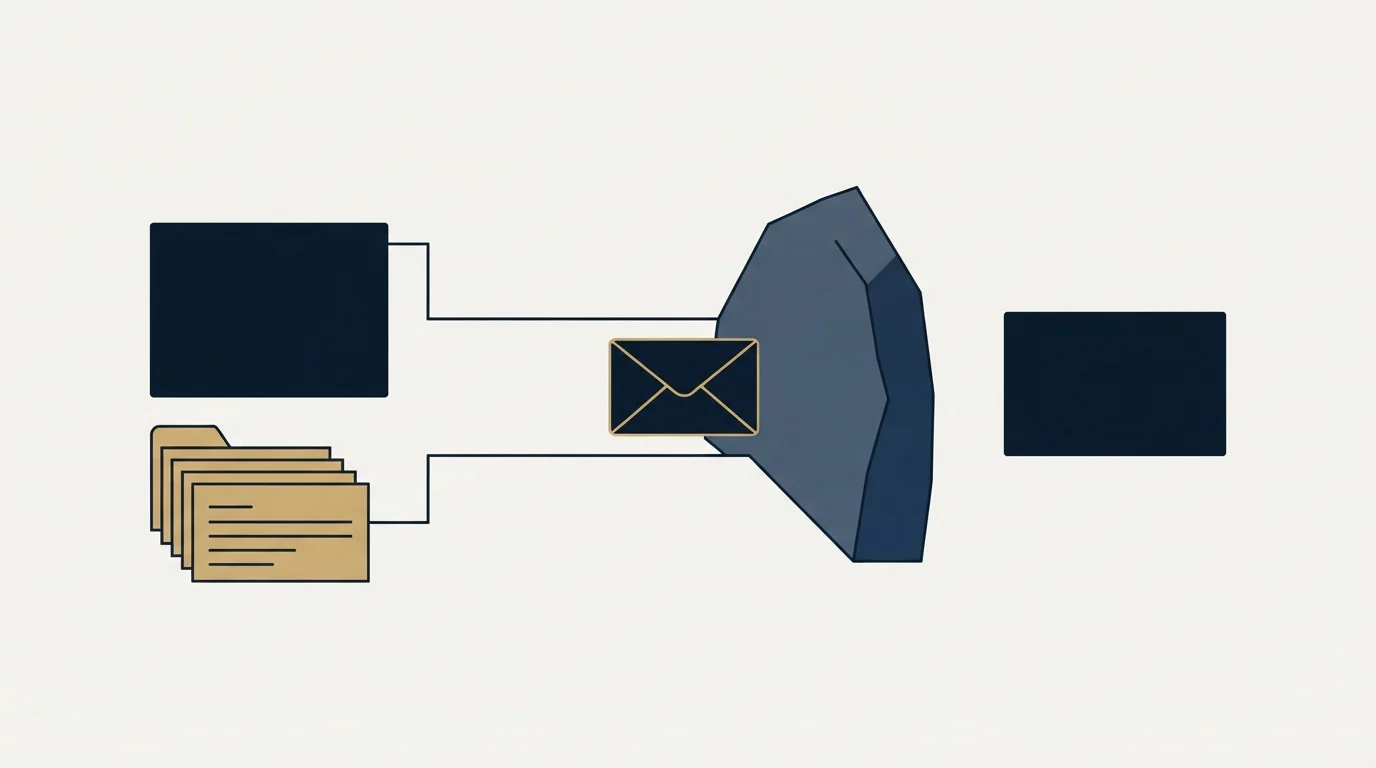
There is a real argument on the other side, and it deserves a straight answer rather than a caricature.
Consolidation is cheaper and simpler. One subscription instead of two, one interface for the team to learn, one place to look when something goes wrong, and no export step to automate or forget. For a founder sending thirty messages a week to a hand-built list, that simplicity is worth more than the architectural purity, and the risk being avoided is largely theoretical at that volume. Nobody suspends an account over thirty carefully chosen emails.
The calculation changes with volume and with dependence. Once outbound is a channel the business plans around rather than an experiment, two things become true at once: the blast radius of losing the account grows, and the chance of tripping a policy threshold grows with the send count. Those move together, which is why the separation looks like overhead early and like insurance later.
The honest version of the advice is therefore conditional. If outbound is exploratory and small, use whatever gets messages out. If outbound is load-bearing, separate the layers before you find out why, because the moment that teaches you is the moment you cannot reach your pipeline.
The infrastructure the send actually needs
Sending cold email well is an infrastructure problem before it is a copy problem, and it is the part a data platform is structurally not built to solve.
Authentication comes first: SPF, DKIM and DMARC on the sending domain, covered in our guide to SPF, DKIM and DMARC. Then a sending domain separate from the one your invoices and contracts come from, so a reputation problem in outbound cannot reach your commercial mail. Then volume pacing across enough mailboxes that no individual one carries a suspicious pattern. Our cold email deliverability guide covers the whole sequence.
None of that is a criticism of any particular sending feature. It is a description of a job that wants dedicated infrastructure and monitoring, and a data platform's sender is not where that work lives.
The verification step in the middle deserves the same seriousness. Whatever a source claims, a list arriving at a sending platform should have been checked by something with no stake in the answer, and the hard case, accept-all domains where any address appears valid, needs a policy rather than a tool. Ours is that the catch-all tail gets banked rather than mailed, and the mechanics are in our guide to email verification tools.
The short version
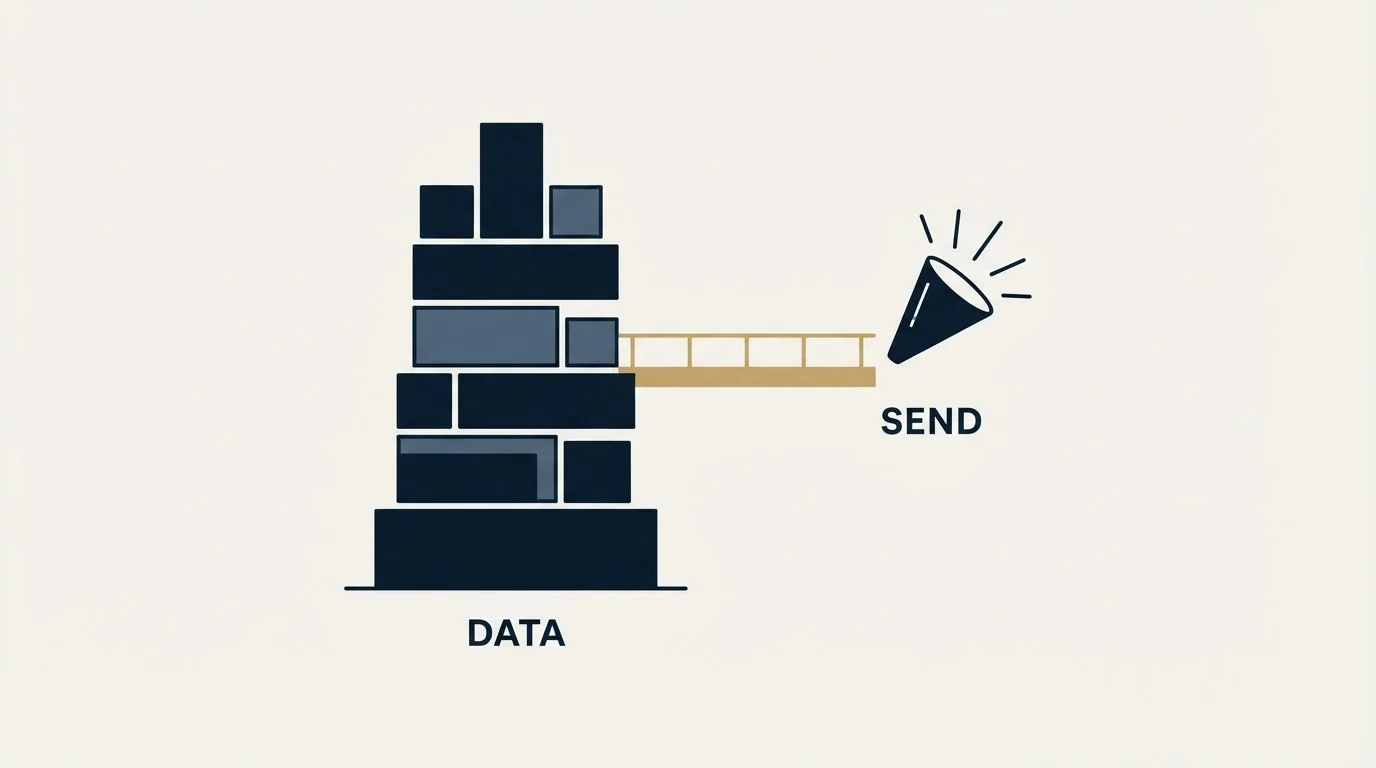
Apollo is a strong data platform that also sells a sending layer, and the two should not share an account. The mechanical reason is that a platform offering data and a Send button in one view removes the moment where verification would happen, and the resulting bounces damage a domain days before the numbers make it obvious. The commercial reason is that one account holding both means one dispute or policy action removes your list and your ability to contact anyone simultaneously. Use the data, export it, verify it independently, and send from dedicated infrastructure with its own authentication and pacing. Note also that Apollo's own academy teaches a three-step series, while we send one message per campaign and never bump, so pick a model deliberately rather than inheriting one from whichever tool you opened first.
If you would rather see the whole motion running on your own ICP without assembling the infrastructure first, start a free campaign and we will build the list, the copy and the sending infrastructure around it.
Pricing and features verified as of mid-2026. Verify current terms with the vendor before relying on them.
Frequently asked questions.
Frequently asked questions- Can you send cold email from Apollo?
- The platform includes a sending layer, so technically yes. We would not, and the reason is architectural: keeping data and sending in one account removes the export boundary where verification naturally happens, and concentrates commercial risk so that one dispute or policy action can take out sourcing and outreach simultaneously.
- What should go between Apollo and a sending platform?
- An independent verification pass over every address, whatever the source claimed, with accept-all domains separated out rather than mailed. Then confirm the sending domain is separate from your primary company domain, that SPF, DKIM and DMARC are configured on it, and that volume is paced across enough mailboxes.
- Is Apollo's data good enough for cold outreach?
- Its search and segmentation are genuinely capable, and its advice on sub-segmenting by signals such as funding, acquisitions or job changes is the right instinct, because a signal gives you something specific and true to say. Enrich only the rows you intend to contact, since that is the largest lever on credit cost.
- Should I add follow-up steps to an Apollo sequence?
- We do not. We run one message per campaign and never bump, and when an angle does not land we build a fresh campaign with a genuinely new angle instead of adding a step. A second message sitting under the first is a reminder that the first was ignored, which turns an approach into a pursuit.
About the author.

B2B cold email experts helping companies generate qualified leads through done-for-you outreach campaigns.
RevenueFlow Team
Explore more.
Ready to scale your outreach?
We build GTM engines that book real meetings. See the receipts.
Related articles.
What Cold Email and Sales Tools Actually Cost in 2026: Pricing Data From 386 Vendors
RevenueFlow's verified dataset of 386 sales tools puts the median starting price at $39.98 a month. Here is the spread by category, tier and billing model.
Apollo Integrations: What Connects, and on Which Plan
Apollo's integrations marketplace sorted by job: what its own pages say each CRM sync moves, which plan ticks which integration, and what a sync costs.
The Real Cost per 1,000 Emails, Verifications and Data Credits in 2026
Unit prices computed from verified vendor plans: $1.00 per 1,000 emails sent, $2.00 per 1,000 verifications and $19.60 per 1,000 enrichment credits.
Annual vs Monthly Billing: How Much Sales Tools Discount for Paying Yearly
Across 112 verified sales tools with both rates on record, the median discount for annual billing is 20.0%, and it only pays off after month 9.6.
Free Tiers and Trials in Sales Tools: What $0 Gets You Across 386 Vendors
37.0% of 386 verified sales tools have a permanent free plan. The median free data tier gives 50 credits and the median free sending plan 2,500 emails a month.
Best Time to Send a Sales Email: What Was Measured
The send time studies behind the midweek morning answer, what each one actually counted, and why a broadcast finding does not transfer to a sales email.