Digital Sales Rooms: Built for the People You Never Meet
A digital sales room earns its place on the handoff from your champion to colleagues you never meet. What belongs in one, and when a shared document does it.
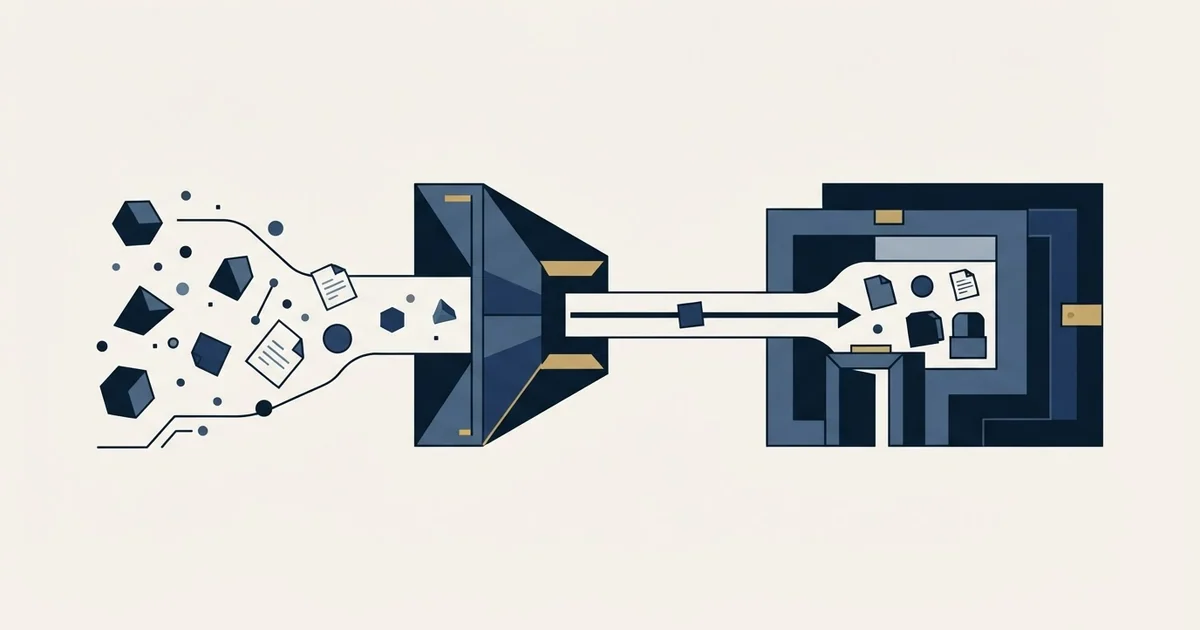
A digital sales room is a shared, buyer-facing space holding the material, plan and open questions for one opportunity. Its real job is the handoff from your contact to colleagues you never meet, so every artefact should read without narration. Its engagement data counts readers rather than measuring progress.
Key takeaways
- A digital sales room earns its place on the buyer-to-colleague handoff, the leg where your contact re-explains you to people you will never meet, so every artefact has to make sense with nobody there to narrate it.
- Buyer enablement is the practice and the room is one instrument of it, so the writing matters more than the software. No product supplies the answers, and the answers are the whole of it.
- Engagement data is a reliable headcount of the buying group and an unreliable forecast input, because a stalled deal generates opens while nobody decides and a fast decision can generate almost none.
- A shared document per opportunity does most of the job. Buy a product when the same security and procurement answers are rewritten every deal, or when access has to be controlled and revoked.
Reviewed and updated August 28, 2026
A champion forwards your proposal to a security reviewer, a finance manager and their own director. What arrives is a forty-slide deck attached to the eleventh message in a thread, a pricing sheet from a fortnight ago that has since changed, and a recording link nobody outside the original two people can open. Three people who will help decide the outcome form their first impression of you from an archive that was never assembled for them, and the person doing the forwarding is the one who pays for the mess.
That handoff is the problem a digital sales room is built for, and it is worth holding apart from the problems the category is sold on.
What the room is, and the job it does
A digital sales room is a shared, buyer-facing space for one opportunity: a private link holding the material, the plan and the open questions for a single deal, visible and editable from both sides. Deal room, client portal and sales microsite are the same object under other names, and every product in the category is some arrangement of those three contents plus a record of who looked at what.
The job it does that email cannot is not the seller-to-buyer leg. That leg already works, and a seller who cannot get a document to a buyer has a different problem. The leg the room is built for is buyer-to-colleague: the moment your contact has to re-explain a product they half understand to a colleague who has no context, using materials assembled for a conversation that colleague was not in.
Two consequences follow, and they decide whether a room earns its place.
The first is that the room is written for a reader you will never meet. The economic buyer who signs, the security reviewer who blocks, the procurement analyst comparing three vendors on one page: none of them attended your discovery call, none of them will read a deck built to be presented, and all of them will form a view in a few minutes. Material that needs narration to make sense arrives with the narration missing.
The second is that the room competes with the alternative your buyer already has, which is a folder and a thread. That alternative is free, already installed and understood by everyone. A room that merely relocates the same unreadable material has added a place to search.
- Content library, training, call review, competitive material
- Read by people who work here and share the vocabulary
- Success looks like a seller who is ready for the conversation
- Assumes a human will narrate whatever is unclear
- Owned by enablement or product marketing
- The plan, the answers, the numbers and the internal case
- Read by people who have never spoken to you
- Success looks like a colleague reaching a view unaided
- Assumes nobody is there to explain it
- Owned by whoever owns the deal, in practice nobody
Buyer enablement is the practice, and the room is one instrument of it
Buyer enablement is the work of making a purchase easy to make from the buyer's side: giving the people evaluating you what they need to build the internal case, in a form they can use when you are not in the room. Sales enablement makes the seller ready. Buyer enablement makes the buying group able to proceed without you, which is most of the time in any committee purchase.
Teams running product-led motions face a similar handoff question, and the sales assist trigger explains which signal justifies bringing in a human and what that person should then do.
Framed that way, the digital sales room is the delivery mechanism and not the practice. A team can run buyer enablement well with a shared document and badly with a purchased platform, and the reverse is not possible: no product supplies the answers, and the answers are the whole of it.
The practical test is one question asked about each artefact you have. If your champion sent this to a colleague with no covering note, would that colleague understand what is being proposed, what it costs, what changes for their team, and what happens next. Almost nothing built for a live presentation survives that test, which is why the useful work is usually writing two or three new pieces rather than uploading twenty old ones.
What goes in, and the order the buyer needs it
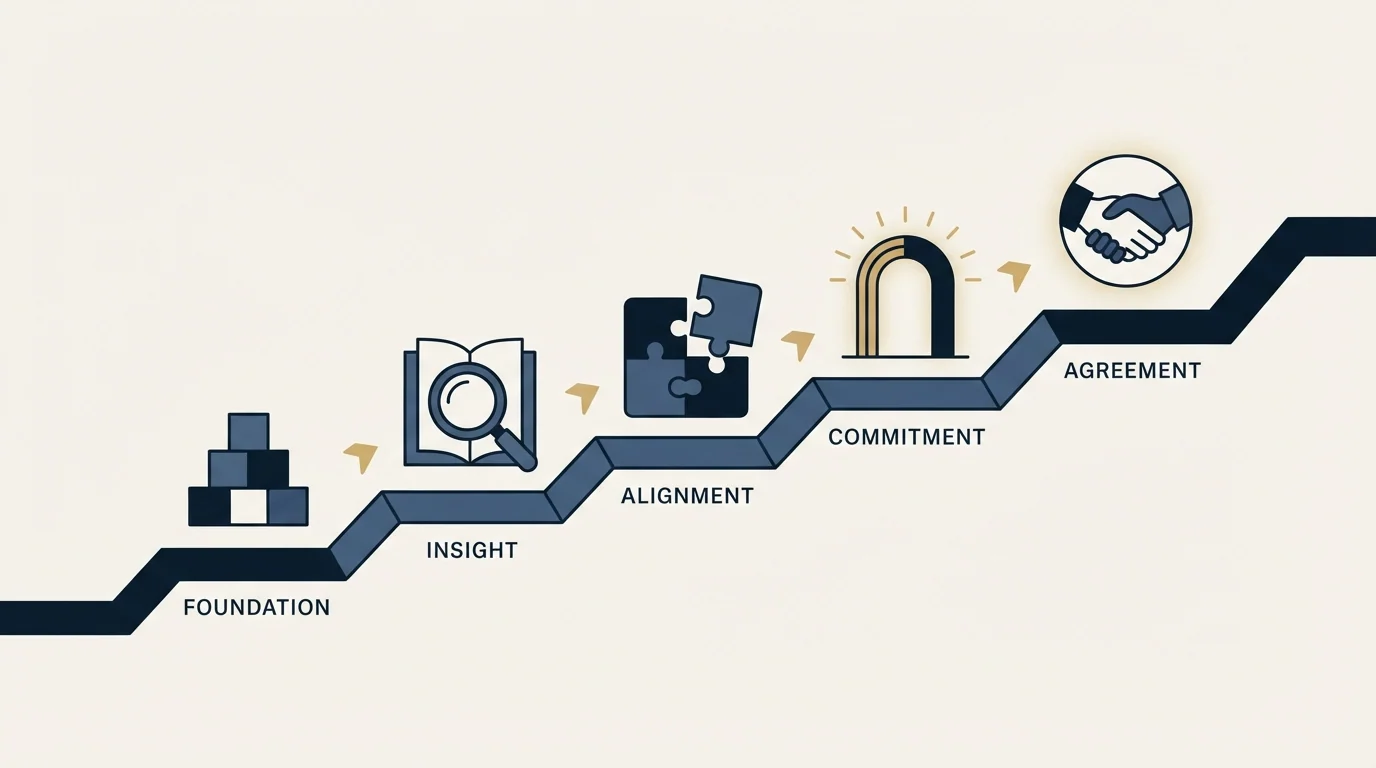
The room fails on its contents before it fails on its software. A useful one holds a small number of things assembled for a reader who is starting cold.
- Step 1The one-page case
What the problem is, what is being proposed, what it changes, in plain sentences a stranger can read in two minutes
- Step 2The plan and the dates
The mutual action plan: the steps to a decision, who owns each one, and the dates both sides have agreed
- Step 3The commercials, current
Pricing and terms as they stand today, with superseded versions removed rather than archived beside them
- Step 4The blocking answers
Security, data handling, integration and legal questions answered in writing, because these are the ones that stall deals in someone else's queue
- Step 5Everything else, below the fold
The deck, the recordings, the case material. Useful to have, rarely the reason anybody opens the link
The second item carries more weight than the rest combined. A mutual action plan written with the buyer, listing the steps to a decision with owners and dates, is the artefact that turns a room from a library into a working surface, and it is the one thing on the list that changes buyer behaviour rather than merely informing it. A room without one is a folder with branding.
The fourth item is the one sellers under-build and buying groups stall on. Security review, data processing terms and integration questions get answered ad hoc, in a reply to whoever asked, and are then invisible to the next person who asks the same thing. Writing them once, in the room, is cheap and it removes a category of delay that has nothing to do with whether the buyer wants what you sell.
The engagement signal measures the room
Every product in the category sells the same secondary promise: you will see who opened what, and you will know where the deal stands. The first half is real and genuinely useful. The second half does not follow from it.
What the signal tells you honestly is a headcount. If four people from the account opened the link and you have spoken to one, you have learned that the buying group is larger than your contact list, which is a fact worth having and hard to get any other way. It is a prompt to ask your champion who else is reading and what they are worried about.
What it does not tell you is whether the deal is progressing. Time on a page measures a page. A stalled deal generates opens while a decision is not being made, and a fast decision can involve almost no opens at all, because the buying group met in a room you have no visibility into and settled it verbally. The corpus position on this class of measurement holds here: our guide to what sales enablement tools actually leave behind treats a report of logins, downloads or completions offered as the outcome as the row that decides most renewals honestly, and a room's engagement dashboard is exactly that report.
Read the signal as a map of the buying group and not as a forecast input. The instruments that answer whether a deal is progressing are the ones you already have: movement between pipeline stages with exit criteria the buyer produces, and a next step with a date on it.
The manual version, and what the paid one has to beat
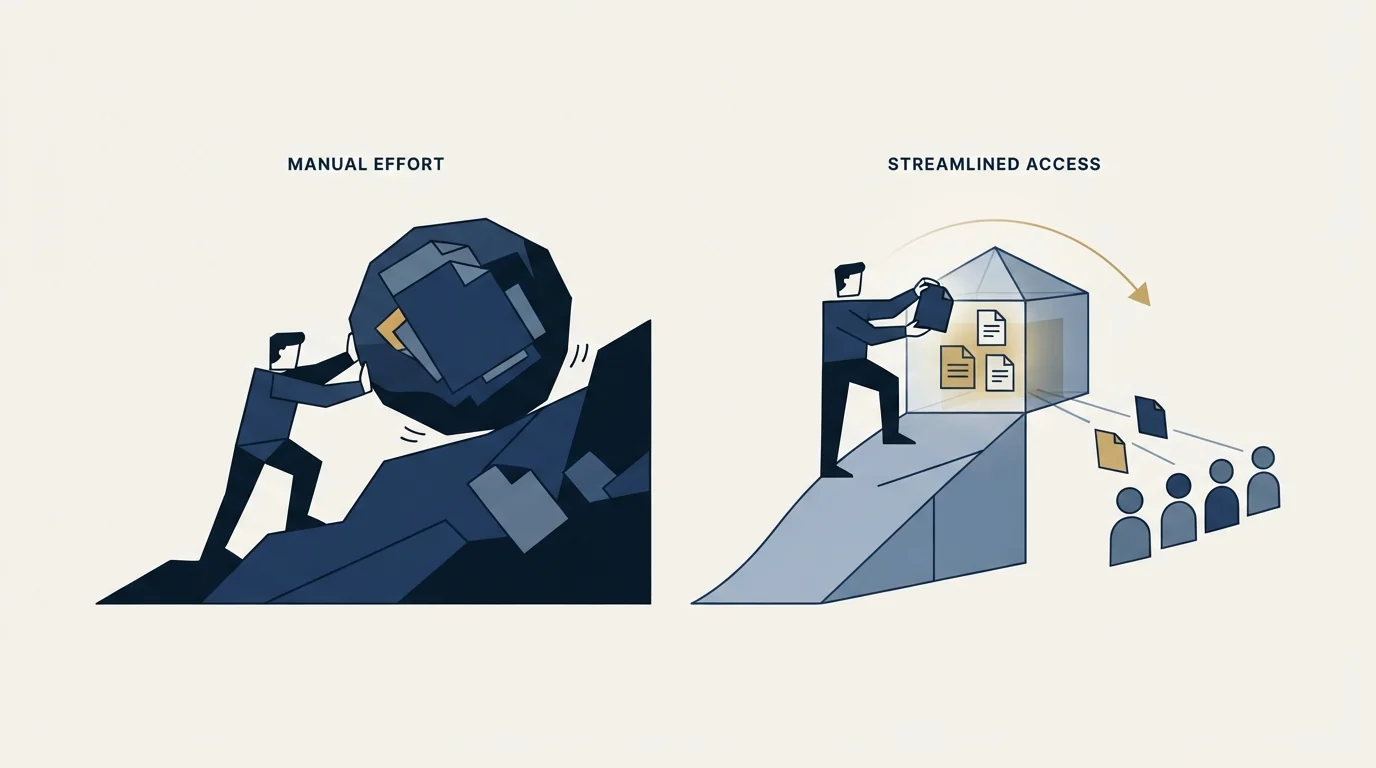
The honest first version of a digital sales room is a shared document per opportunity, and the corpus already makes that argument at category level. It costs nothing, it takes an hour, and it holds every one of the five contents above. What it cannot do is tell you who read them. Running it for a quarter is the cheapest way to find out whether your deals are actually stalling on information, because most teams discover that the material was never the constraint.
Three things a paid product does that the document does not, worth paying for only where the pain is real.
- Yes: Deals routinely involve more people than you have met, and you need the headcount signal
- Yes: The same security and procurement answers are rewritten for every deal
- Yes: Access has to be controlled and revoked, and a shared link is a compliance problem
- Depends: Sellers will not maintain a document, and a template with prompts is the fix
- No: The material is presentation decks nobody outside the call can read
- No: The reason to buy is that engagement data will improve the forecast
- No: Most deals close with one contact after two conversations
The fourth row is the one that decides the purchase in most organisations, and it is a management question wearing a software costume. A team that will not maintain a shared document will not maintain a room either, and the room makes the neglect harder to see because it looks finished.
Where a room is overhead
An outbound-sourced pipeline produces a shape that this category is not designed for. The first meeting is with one person, who did not ask for it, and who is deciding whether there is a problem worth working on at all. There is no buying group yet, no internal case to build, and nothing for a colleague to read. Building a room at that point is work for an audience of one who did not request it, and the same effort spent on the discovery call returns more.
The room becomes worth assembling at the point a second person from the account appears, which is a signal you can wait for rather than guess at. Before that, a well-written recap email does the job.
Two boundaries are worth stating because sellers cross them. A room link does not belong in a cold message. Our own campaigns carry one message with no bumps and no thread replies, and a link to a personalised space for a stranger who has not replied is both a second touch in spirit and a claim of a relationship that does not exist. And a room is not a substitute for qualification: meetings we book for clients are qualified against criteria agreed in writing before launch, which is what stops a beautifully assembled room from being built around a project that was never funded.
The other thing a room cannot do is tell you why you lost. It records what was shared, not what was decided after everyone left, and the only source for the second one is the buyer. That is the whole argument of win/loss analysis, and no amount of engagement data substitutes for it.
If the constraint turns out to be too few qualified conversations rather than the quality of the ones you have, no room in this category touches it. See what a first campaign produces.
The short version
A digital sales room is a buyer-facing space for one opportunity, and its real job is the leg from your champion to the colleagues you will never meet. Judge every artefact in it by whether a stranger could read it with no covering note.
Buyer enablement is the practice and the room is one instrument of it, so the writing matters more than the software. Lead with a one-page case and a mutual action plan carrying owners and dates, keep the commercials current, and answer the security and procurement questions in writing before they are asked. Read engagement data as a headcount of the buying group rather than as a forecast input. Run the shared-document version first, buy a product when the same answers are being rewritten every deal or access has to be controlled, and skip the room entirely while a deal still has one person in it.
Frequently asked questions.
Frequently asked questions- What is a digital sales room?
- A shared, buyer-facing space for a single opportunity, holding the material, the plan and the open questions where both sides can see and add to them. Deal room, client portal and sales microsite name the same object. Every product in the category is some arrangement of those contents plus a record of who opened what.
- What is the difference between buyer enablement and sales enablement?
- Sales enablement makes the seller ready for the conversation, and its material is read by people who already share your vocabulary. Buyer enablement makes the buying group able to proceed without you, and its material is read by colleagues who have never spoken to you. A digital sales room is one way of delivering the second, rather than the practice itself.
- Does engagement tracking in a digital sales room predict whether a deal will close?
- It reports who from the account opened what, which is a good headcount of the buying group and often the only way to learn that more people are involved than you have met. It does not report progress. A stalled deal produces opens while nobody decides anything, and a fast decision can happen in a meeting you cannot see.
- Do we need a digital sales room for outbound-sourced deals?
- Usually not at first contact. An outbound first meeting is with one person who did not ask for it and is still deciding whether the problem is worth working on, so there is no buying group yet and nothing for a colleague to read. Assemble the room at the point a second person from the account appears.
About the author.

B2B cold email experts helping companies generate qualified leads through done-for-you outreach campaigns.
RevenueFlow Team
Explore more.
Ready to scale your outreach?
We build GTM engines that book real meetings. See the receipts.
Related articles.
Sales Enablement Charters: What the Published Ones Ask For
Six publishers set out what a sales enablement charter should contain. Five describe a document nobody can check, and one writes a definition with inspection in it.
Sales Kickoff Agendas: Five Published, Session by Session
Five publishers print a sales kickoff agenda. They agree on four blocks and disagree on session length, rehearsal and where the agenda comes from.
Win Rate Benchmarks: Which Figures State a Population
A catalogue of the published average sales win rates, sorted by whether the page names the population behind its own number. Most do not.
Sales Cycle Length Benchmarks: What Each Figure Counts
The published B2B sales cycle benchmarks, sorted by what each page says it counted. The same number means two different things in two of them.
Sales Comp Plan Design: What the Publishers Prescribe
Four publishers set out how to design a sales compensation plan. Here are their procedures, their components, and which of their ratios carry a population.
Sales Prospecting for Utilities: Read the Filings First
Prospecting utilities from the proceedings that announce their spend: rate cases, resource plans and procurement decisions, who owns each, and the supplier gate.