Outbound Marketing Tactics: Which Ones Tell You Who Answered
A billboard and a cold email are both outbound and share almost nothing operationally. Sorting the tactics by whether they can attribute a response, then choosing.
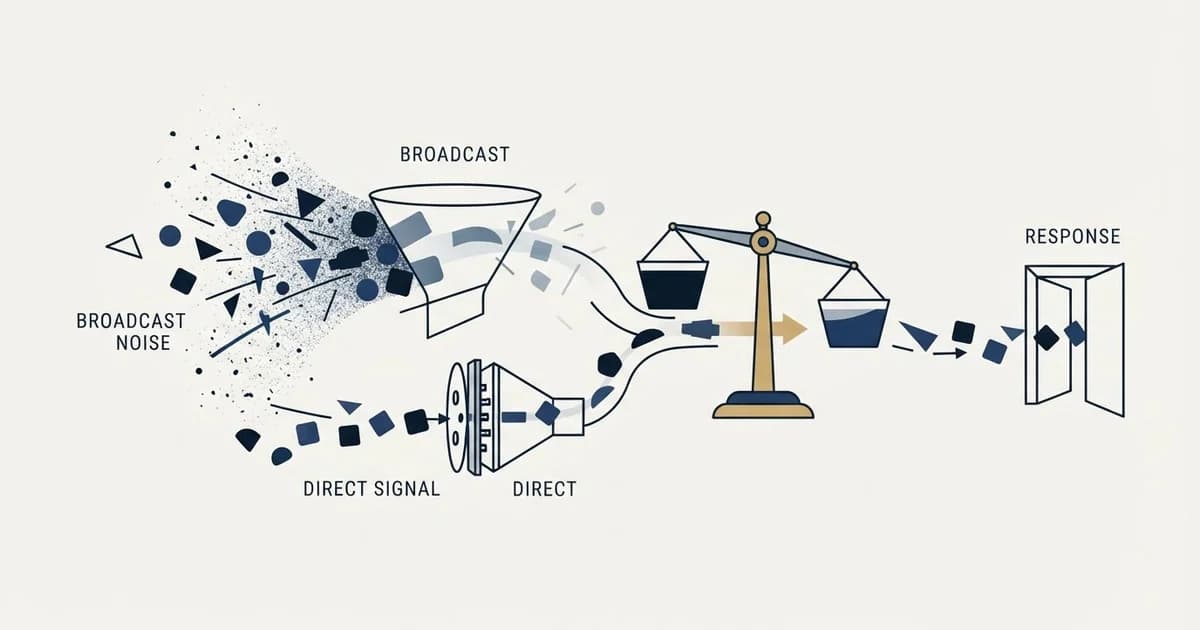
Sort outbound marketing tactics by whether they can tell you who answered. Addressable channels such as email, phone, LinkedIn and named direct mail attribute a response to a company; broadcast channels cannot. Let market size and customer value pick the lead channel, and run one properly before adding a second.
Key takeaways
- Broadcast tactics need sustained spend across years before they pay, because most of the audience cannot buy in the quarter they see the message.
- Market size chooses the channel: a market of two hundred companies rewards the phone, while a large reachable market rewards email.
- A trade show is two tactics, and the pipeline comes from the meetings arranged beforehand rather than from the booth.
- Timing costs almost nothing and improves every channel at once, which no additional channel does.
Reviewed and updated September 2, 2026
Every list of outbound marketing tactics ends up carrying the same eight or nine items: cold email, cold calling, LinkedIn outreach, direct mail, trade shows, sponsorships, display advertising, gifting, and radio or print for the lists that reach back far enough. They are grouped together because they share a definition, which is that you start the conversation rather than waiting for it.
That definition is true and it is not a useful way to choose between them. A billboard and a cold email are both outbound and they have almost nothing in common operationally. The line that actually separates them is whether the tactic can tell you who answered.
Because that distinction only matters once you have decided to reach out at all, the deeper commitment behind that choice is unpacked in what outbound prospecting actually requires.
Addressable and broadcast are two different businesses
An addressable tactic reaches a named person and produces a response you can attribute to them. A cold email to a specific buyer at a specific company either gets a reply or it does not, and you know which company it came from. A broadcast tactic reaches an audience and produces a response you can count but not trace: a spike in direct traffic, a lift in branded search, a general sense that people have heard of you.
Attribution of that kind is what makes an accountability claim possible, and marketing judged on pipeline instead of leads rests on the same measurement.
Both can work. They fail differently, they need different budgets, and the mistake almost every B2B team makes is running a broadcast tactic on an addressable budget and then trying to attribute it.
Broadcast in B2B needs sustained spend across many exposures before anything happens, because the buying window for most business purchases is narrow and rare. Most of the audience seeing your message this quarter cannot buy this quarter regardless of how good the message is. That is fine if you are funding two years of presence. It is a waste if you are funding one quarter and expecting pipeline.
- Cold email to named buyers
- Phone to a named list
- LinkedIn to specific people
- Direct mail to a named recipient
- Conversations at an event you can log
- Display and programmatic advertising
- Podcast and newsletter sponsorship
- Trade show booth presence itself
- Print, radio, out of home
- Untargeted content syndication
What each addressable tactic is actually good for
The addressable set is where a B2B team with a finite budget should spend, and the four members of it are not interchangeable.
Email is the only one that scales past a few hundred accounts without adding people. Its constraint is not cost, it is that the infrastructure carrying it is fragile and shared, so volume has to be earned rather than assumed. It suits markets where the buyer is identifiable, reachable by address, and numerous enough that you cannot phone them all.
Phone produces the highest quality of information per attempt and the lowest quantity. It is genuinely the right primary channel when the total addressable market is small, and why a small market inverts the usual advice is worth reading before dismissing it as old-fashioned. A market of two hundred companies does not need scale, it needs to reach all two hundred properly.
LinkedIn sits between the two on cost and carries a constraint the others do not: the platform enforces its own limits, and everything you send is visible in a thread the recipient can scroll. It works well for roles that are hard to reach by email and poorly as a volume channel.
Direct mail to a named recipient is expensive per attempt and almost unmatched at getting through to senior people, precisely because so little of it arrives now. Its economics only work when one customer is worth a great deal, which is a narrow but real set of businesses.
The cost arithmetic that decides which of these to lead with is genuinely a function of deal size, and the channel mix by deal size works through the bands properly.
Events are two tactics wearing one name
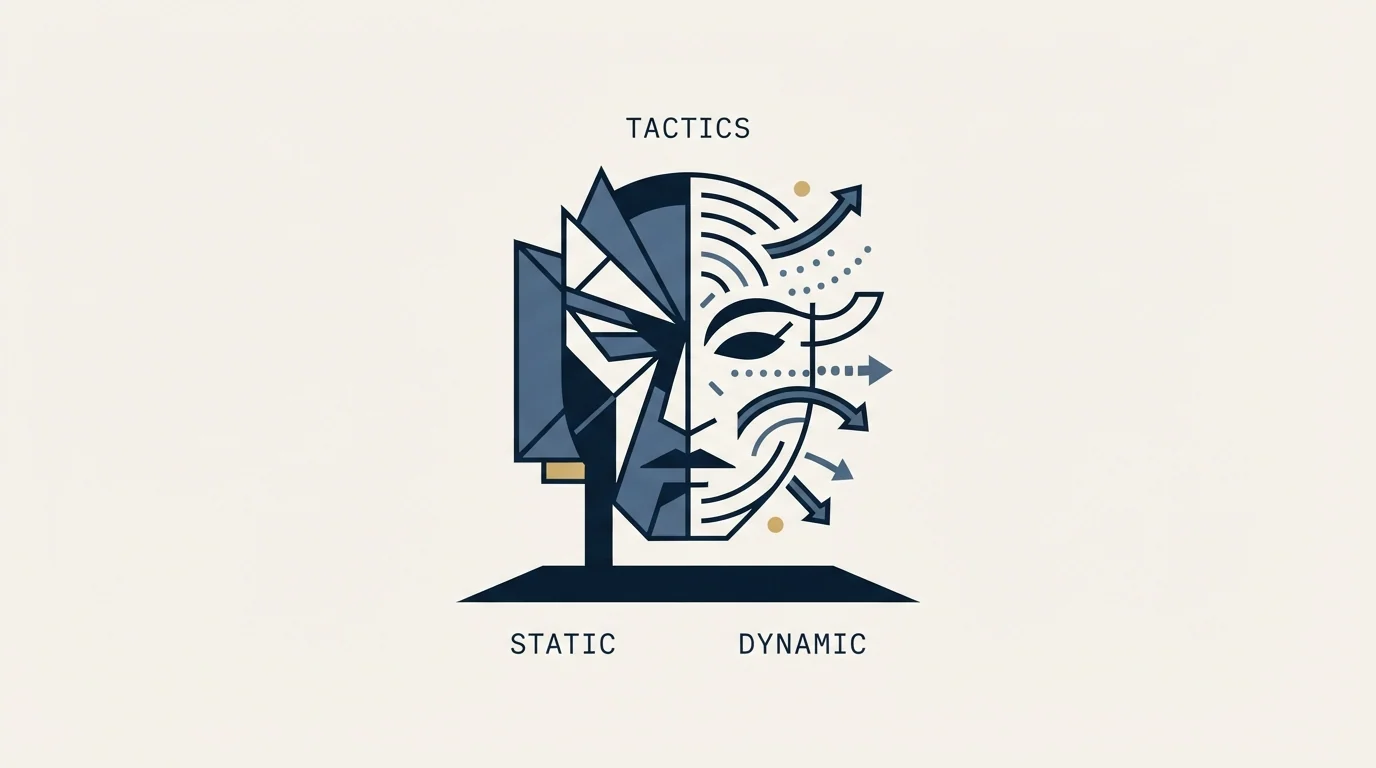
A trade show is usually budgeted as a single line item and it is two entirely different activities with different returns.
The booth is broadcast. It buys presence, it is measured in impressions and conversations you did not plan, and its value is mostly brand. The meetings you arrange before you arrive are addressable, they are the actual pipeline, and they are produced by outbound work in the weeks beforehand rather than by the event itself.
Teams that treat the event as the tactic get badge scans. Teams that treat the event as a reason to reach out get a calendar. The second requires the outbound machinery to exist anyway, which is the quiet argument for building it: several other tactics on the list become effective only when there is an addressable channel underneath them.
- Step 1Count the market
How many companies could genuinely buy this
- Step 2Price a customer
What one is worth over the life of the relationship
- Step 3Check reachability
Are the buyers identifiable and contactable by name
- Step 4Pick addressable first
Small market to phone, large market to email, hard-to-reach to LinkedIn
- Step 5Add broadcast only if funded
Sustained presence over years, or not at all
The tactics that quietly do not work in B2B
Some items appear on every list and survive mainly because the list is copied.
Untargeted content syndication sells you contact records of people who downloaded something. The record is real and the intent usually is not, because the download was the price of a whitepaper rather than a signal of a problem. Buying those records and treating them as warm is the most reliable way to damage a sending domain, since the recipients do not remember the exchange.
Gifting at scale has the same shape. A gift to an account you have researched, from a person who has a reason to be in touch, works. A gift sent to a bought list is an expensive way to be ignored, and the cost per attempt makes the failure conspicuous.
Radio, print and out of home are not wrong so much as mismatched. They are excellent at reaching many people cheaply and B2B rarely needs many people, it needs eleven specific ones at each of four hundred companies.
- Yes: It reaches people who could actually authorise this purchase
- Yes: You can tell which company a response came from
- Yes: The cost per attempt is defensible against what one customer is worth
- Yes: It works without borrowing credibility you have not earned
- No: It is on the list because competitors run it
- No: Its return will be judged inside one quarter despite a longer buying cycle
Where we differ from standard practice
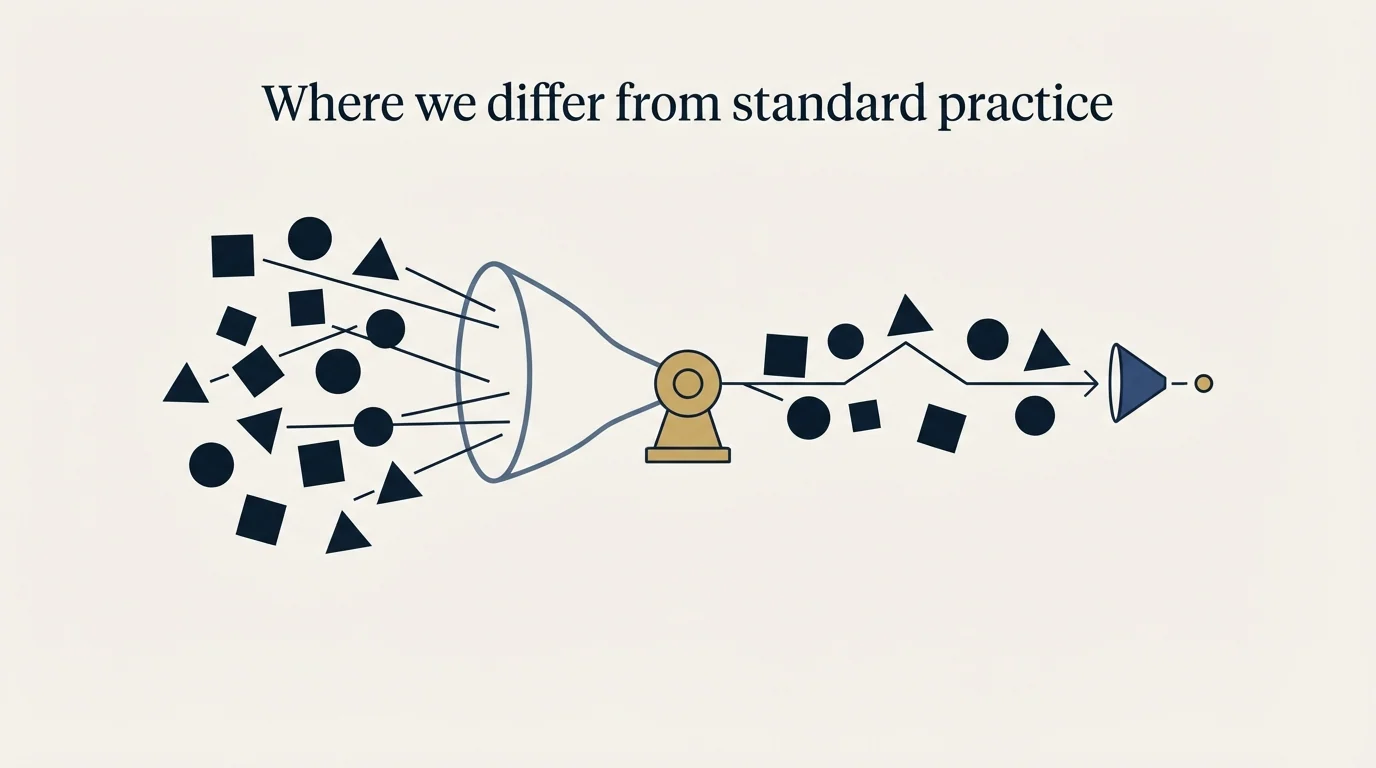
Most tactic lists include persistence as a tactic in its own right, on the theory that repeated contact eventually finds a moment when the timing is right.
We do not run outbound that way. One message per campaign, built on one premise, sent once. If a person did not respond, that is an answer, and approaching them again on the same argument does not make the argument better. A genuinely different premise later is a separate campaign that has to justify its own existence on merit.
The reason is not politeness. Repeated contact against silence is what generates complaints, and complaints are measured as a rate against a sending domain that every other campaign depends on. The tactic that most reliably destroys the effectiveness of every other tactic on the list is the one usually described as diligent.
Timing is a tactic, and it is the one missing from most lists
The lists enumerate channels and stop, as though the only decisions are which medium and how many people. The decision that moves results more than either is when.
A B2B purchase becomes possible in a narrow window that opens for a reason: somebody was hired into a role that owns the problem, a funding round created a budget, a location opened, a system was replaced, a regulation took effect, a contract came up for renewal. Outside that window even an excellent message reaches a person with nowhere to put it.
Watching for those moments turns the same channel into a different tactic. The message is not better written, it arrives at a company where the premise is currently live, and the reply rate difference between the two is larger than the difference between any two channels on the list. The signal sources that expose those moments are mostly ordinary and mostly cheap, and the work is in wiring them to a list rather than in finding exotic data.
Teams that still target on firmographic fit alone will find notes on triggers and signal decay useful for distinguishing real buying moments from category filters wearing a trigger's clothes.
The reason this belongs in a tactics discussion rather than a targeting one is budgetary. Timing costs almost nothing and improves every channel simultaneously, which no additional channel does.
Ordering the mix without spreading yourself flat

The common failure is running five tactics at ten percent intensity each, which produces five results too small to read and no information about any of them.
Lead with one addressable channel chosen from the market's shape, and run it at enough volume that the result is legible. Add the second only when the first is either working and capacity-limited, or genuinely exhausted against the whole market. Broadcast comes last and only with a budget that can sustain it beyond the point where anyone is asking about pipeline.
The infrastructure argument reinforces the order. Email needs domains, warming and monitoring before it carries load; phone needs a list and a person; LinkedIn needs accounts with history. Each has a build time, and building three at once means all three are half-built during the quarter you need one of them to work. Our own view of the order the pieces have to be assembled in is that the ordering matters as much as the contents.
The short version
Sort the tactics by whether they can tell you who answered, and spend the finite budget on the half that can. Within that half, let the size of the market and the value of a customer choose the lead channel rather than letting a list choose it for you: small markets reward the phone, large ones reward email, hard-to-reach buyers reward LinkedIn, and very high value ones justify physical mail.
Treat events as two tactics and fund the addressable half. Decline the tactics that only work by buying attention you did not earn. Run one channel properly before adding a second, and keep persistence out of the mix entirely, because it borrows against the deliverability everything else depends on.
If you want the addressable half running against your market without building it first, we will run a campaign and show you what comes back.
Frequently asked questions.
Frequently asked questions- Which outbound tactic works best for B2B?
- It depends on how many companies could buy and what one is worth. A small addressable market rewards the phone because you need depth rather than scale. A large reachable market rewards email because it is the only channel that scales past a few hundred accounts without adding headcount. Very high customer values justify physical mail to named people.
- Is cold calling still effective?
- It produces the highest quality of information per attempt and the lowest quantity, which makes it genuinely the right primary channel when the total market is small. If there are two hundred companies who could buy, you do not need scale, you need to reach all two hundred properly and learn what they say. That is what the phone is good at.
- Do trade shows generate pipeline?
- The booth generates presence and badge scans. The pipeline comes from meetings arranged in the weeks beforehand, which is outbound work rather than event work. Teams that treat the event as the tactic get scans; teams that treat it as a reason to reach out get a calendar. That requires an addressable channel to exist already.
- How many outbound channels should we run at once?
- One, until it is either working and capacity-limited or genuinely exhausted against the whole market. Five channels at ten percent intensity each produce five results too small to read. Each channel also has a build time, so starting three at once means all three are half-built during the quarter you needed one of them to work.
About the author.

B2B cold email experts helping companies generate qualified leads through done-for-you outreach campaigns.
RevenueFlow Team
Explore more.
Ready to scale your outreach?
We build GTM engines that book real meetings. See the receipts.
Related articles.
Win Rate Benchmarks: Which Figures State a Population
A catalogue of the published average sales win rates, sorted by whether the page names the population behind its own number. Most do not.
Sales Kickoff Agendas: Five Published, Session by Session
Five publishers print a sales kickoff agenda. They agree on four blocks and disagree on session length, rehearsal and where the agenda comes from.
SDR Outsourcing for Logistics Companies: The Brokerage Line
What an outside sales development team may do in a freight company's name, the calling and email rules it inherits, and which arrangement survives a bid-shaped market.
SDR Outsourcing for Business Brokers: The Fee Timing
Whether a success-fee brokerage should rent sales development at all: the fee timing, the texts that limit what an outside person may say about value, and who signs.
Sales Cycle Length Benchmarks: What Each Figure Counts
The published B2B sales cycle benchmarks, sorted by what each page says it counted. The same number means two different things in two of them.
Sales Enablement Charters: What the Published Ones Ask For
Six publishers set out what a sales enablement charter should contain. Five describe a document nobody can check, and one writes a definition with inspection in it.