Signal-Based Outbound: Decay Windows and Shared Feeds
Every subscriber to a feed gets the same signal on the same day. What that leaves you is timing, and timing is the constraint most teams never measure.
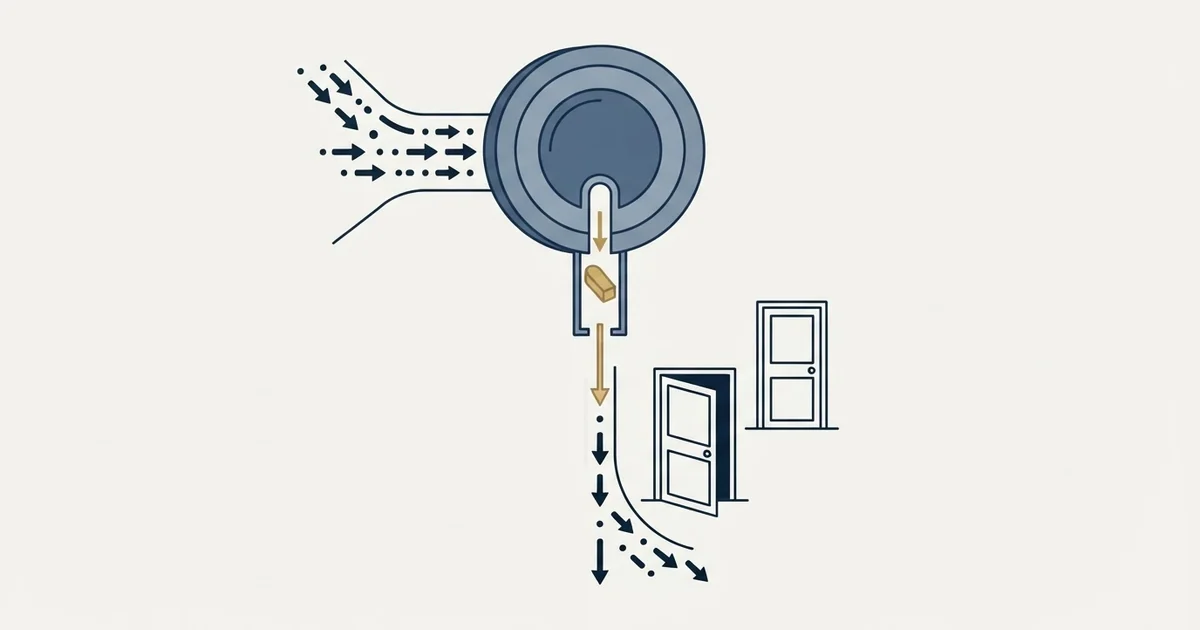
Signal-based outbound reaches accounts on an observable event that changed their buying context, rather than on firmographic fit alone. The useful triggers indicate a situation changed and somebody now has a job to do. Category detections are filters wearing a trigger's clothes, and every signal decays.
Key takeaways
- Sort signals by whether they show a situation changed or merely that a company belongs to a category, because the second kind carries a completed decision and works as a filter rather than a trigger.
- Assign an explicit expiry per signal type and measure your own time from signal to send, since a build cycle longer than the decay window makes the whole motion decorative however good the feed is.
- Commercial feeds are sold to everyone, so the signal buys timing rather than insight, and a message that only works because it names the trigger is the fifth one that prospect received this week.
- Signals arrive lumpy and seasonally, so a signal lane cannot supply a volume floor. Run it alongside a base lane against a defined segment rather than in place of one.
Reviewed and updated September 2, 2026
A company posts a role for a demand generation manager on a Tuesday. By Friday, every outbound team subscribed to a hiring-signal feed has that posting, and a fair number of them will send an email that opens by mentioning it. The signal did its job: it identified a company whose situation just changed. What it did not do is give any of those senders an advantage over the others, because they all received the same notification from the same source on the same day.
That gap between what a signal identifies and what it actually buys you is the thing most writing on this topic skips. Signal-based outbound is a real improvement on sending to a static list, and the improvement is narrower and more perishable than the category's marketing suggests.
What a signal is, and the distinction that matters
A signal is an observable event that indicates a change in a company's buying context. Funding rounds, job postings, leadership hires, tooling changes visible in a site's markup, office openings, review-site activity, repeat visits to a pricing page.
The useful split is not by source but by what the event tells you. Some signals indicate that a company's situation changed in a way that creates a job somebody now has to do. Hiring a first demand generation manager means somebody has been handed a target and an empty pipeline. Opening a second location means somebody owns a market they have no presence in. These are reasons for a specific person to want a specific conversation this quarter.
Other signals indicate only that a company exists in a category. A technology detected on a website says what they bought, possibly years ago, and nothing about whether anyone is unhappy with it. That is a segmentation attribute wearing a signal's clothes, and treating it as a trigger produces outreach with the timing of a static list and the smugness of a trigger.
Sorting your feeds by that distinction is more valuable than adding another feed. A hiring signal usually carries a live job; a technology detection usually carries a completed decision. The mechanics of one worked example are in hiring signal.
Signal-based selling is the same motion named from the sales side, and every constraint here applies to it unchanged: the feed is shared, the window is short, and the message still has to stand for a reader who never saw the trigger.
- A role posted that implies an unowned target
- Funding that converts a plan into a budget
- A leadership hire with a mandate
- An office or market opened with no presence yet
- Carries an implied owner and an implied deadline
- A technology present in a site's markup
- A category page visited once
- An industry or headcount band
- Says what was bought, not whether anyone regrets it
- Perfectly good filter, poor trigger
Every signal has a decay window, and most are shorter than a build
A signal is a claim about the present tense. Its value falls from the moment it is published, and it falls at a rate specific to the signal type rather than at some general rate you can set once.
A job posting is live while the role is open. Reaching the hiring manager in the first fortnight lands while the problem is unsolved and the budget is unspent. Reaching them eleven weeks later lands after somebody has been hired, or after the search was abandoned, and in both cases the opening sentence advertises that your information is stale. A funding announcement stays useful longer, because deploying capital takes quarters rather than weeks. A page visit is worth something for days.
The operational problem is that the time to actually build and launch a campaign is not zero, and for many teams it is comparable to the decay window of the signals they are chasing. A list that took three weeks to assemble, enrich and get approved is a list of things that were true three weeks ago. This is the constraint that decides whether signal-based outbound works at all, and it is a process constraint rather than a data one. Buying a faster feed does not fix it.
Two things follow. Assign an explicit expiry to each signal type and drop rows that exceed it rather than sending to them late. And measure your own time from signal to send, because that number, compared against the expiry you just assigned, tells you which feeds you can honestly act on and which you should stop paying for.
Shortening that interval depends on systems above the record, and what a hosted deployment decides downstream covers the assumptions a sending platform makes about the CRM underneath it.
- Signal age: noneThe event is published
A role goes live. Every subscriber to the feed receives it in the same window.
- Signal age: under a fortnightThe problem is unsolved
Nobody has been hired, the work is unowned, and a message is about something live.
- Signal age: about a monthMomentum toward a decision
Candidates are in process. A message can still be relevant, and it is no longer early.
- Signal age: beyond thatStale, and visibly so
The role is filled or abandoned. Mentioning it now advertises that the sender is not current.
The feed is shared, so timing is the edge and relevance is the floor
What decays is not only the individual signal: the play itself has a shelf life, because a trigger that works is visible to everyone reading the same feed, and the sentence that opened well in the first month is the sentence every competitor is opening with by the third.
That is the practical answer to how a sales team should act on engagement signals: the signal decides who and when, and the message still has to stand on its own for a reader who never saw the trigger.

Almost every commercial signal source is sold to anyone who will pay. If your trigger is a public funding announcement or a public job posting, your competitors have it too, and the crowded inbox that follows a funding round is a well-known phenomenon among people who have just raised.
This has a specific consequence for how the message should be written. Naming the signal in the first line is the obvious move and it is also the move everyone else made. The recipient of five emails that all open by congratulating them on the raise learns nothing about which sender understood anything.
The signal is better used as the reason you are writing rather than as the content of what you write. It earns the send; the message still has to earn the reply on its own merits, which means saying something specific about the situation the signal implies rather than reciting the signal itself. A message that would make sense to the recipient even if they had never seen the trigger is a message that survives being the fifth one.
There is also a line worth not crossing. Signals derived from a company's public actions read as attentiveness. Signals derived from an individual's behaviour on your own property, quoted back to them, read as surveillance. The first is fine and the second costs you the reply and sometimes more, so the safe default is to let behavioural signals drive selection and timing without appearing in the copy at all.
Signal volume is not a pipeline plan
Static list building gives you a number in advance. Sourcing produces a pool, and you know how many people you can send to before you commit to anything.
Signals do not behave that way. They arrive lumpy, seasonally, and in quantities determined by what happened in your market that month rather than by what you need. A quarter with few funding announcements in your segment is a quarter with a thin signal-driven list, and no amount of planning changes it. Teams that replace their list motion with a signal motion discover this in the first slow month.
The workable arrangement is to run both. A signal lane handles whatever the feeds produce and is sized to whatever that turns out to be. A base lane runs against a defined segment and provides the volume floor. The signal lane earns its place through relevance and the base lane through predictability, and neither is asked to do the other's job. That relationship between market timing and steady demand generation is the subject of demand creation, capture and conversion, and the broader shift in how teams organise around it is covered in old GTM against new GTM.
One message per campaign is a harder rule here, not a softer one

We run one message per campaign for cold outbound. No thread replies, no bumps.
Signal-based outbound puts more pressure on that position than list-based outbound does, and the pressure is worth naming because it is where teams talk themselves out of it. A signal feels like a live thread. Somebody posted a role, and following up feels like diligence rather than nagging. The temptation to send a second message referencing the same trigger is strong precisely because the trigger felt so relevant.
The reasoning does not change with the trigger. Every touch after the first goes exclusively to people who saw a message and chose not to answer, which is the population most likely to complain, and the reputation cost of those complaints is paid by the sending domain across every campaign running on it rather than by the campaign that earned them. A signal makes the first message better. It does not make the second message land on a different population.
The same holds on LinkedIn, more strictly. A second LinkedIn message arrives in the same thread, directly beneath the one they ignored, so it reads as a bump whatever the campaign structure says. We do not run LinkedIn no-reply retargets for that reason. What replaces a follow-up in both channels is a new campaign on a genuinely different angle, judged on its own premise, with repliers, bounces and unsubscribes permanently excluded and nobody enrolled in two active campaigns at once. Where a cadence is genuinely appropriate, which is warm inbound and existing relationships, the distinctions are set out in sales cadence.
We run email and LinkedIn, not phone, so nothing here assumes a calling motion sitting behind the signal.
- Yes: Each signal type has an explicit expiry, and stale rows are dropped rather than sent
- Yes: You have measured your own time from signal to send
- Yes: The message stands up to a reader who never saw the trigger
- Yes: A base lane supplies the volume floor when signals are thin
- Yes: Qualification criteria are agreed in writing before launch
- No: The signal is quoted back as the opening line of every message
- No: A behavioural signal from your own property appears in the copy
- Depends: A technology detection is being used as a trigger rather than as a filter
Measure the lane against the base lane, not against itself
A signal lane will almost always look good in isolation, because it is a small, hand-picked, highly relevant list and small relevant lists reply better than large ones. That is not evidence the signal is doing anything, since a comparably small hand-picked segment with no signal at all would also outperform the average.
The comparison that answers the question is the signal lane against a base lane drawn from the same segment over the same period. If the two perform alike, the signal is buying selection you could have had from a tighter definition, and the feed subscription is paying for something your ideal customer profile already gives you. Agree what counts as a qualified outcome in writing before the lane launches, because a lane assessed against criteria invented after the results are in will be assessed as a success.
On connecting the feeds themselves, intent signal APIs for outbound covers the connection methods, and the B2B intent data guide covers what the intent category does and does not observe.
The short version
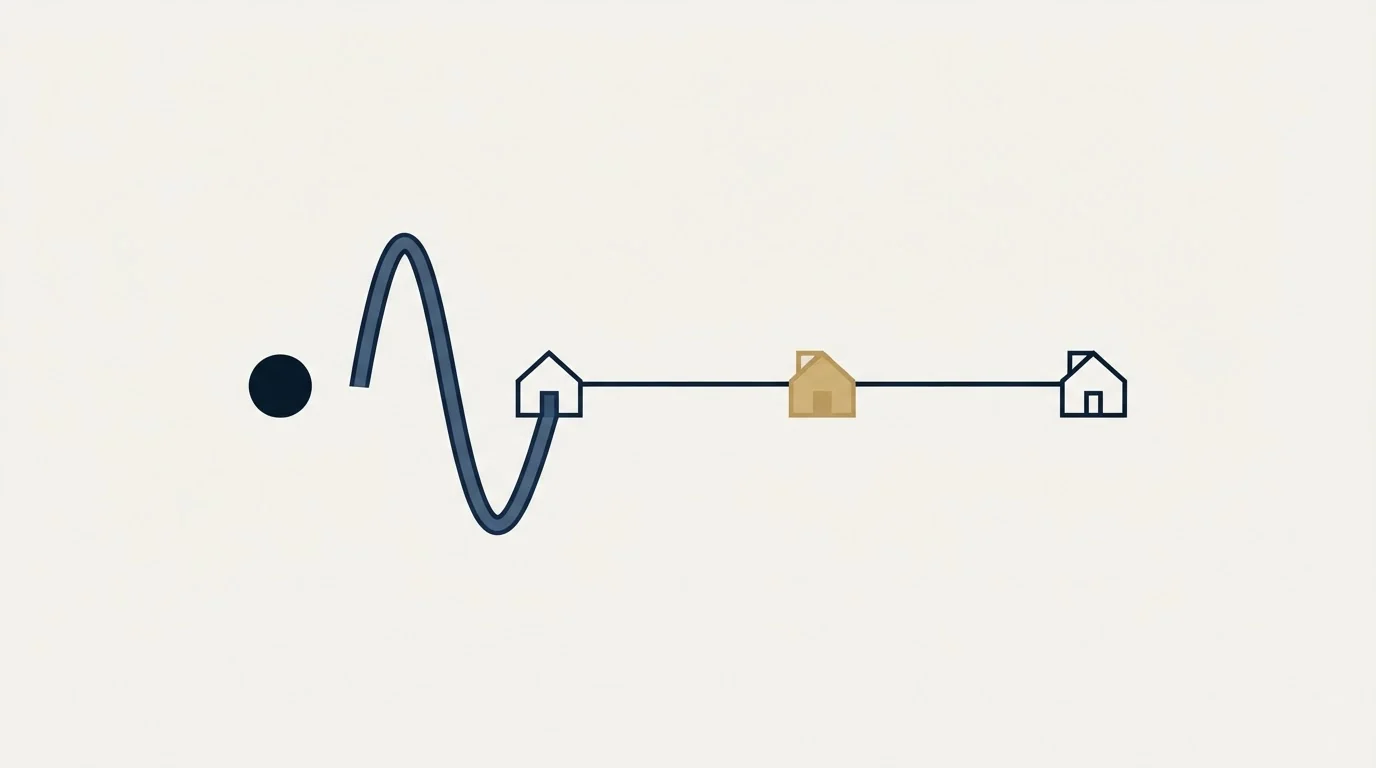
Sort signals by whether they mean a company's situation changed or merely that it belongs to a category, and use the second kind as a filter rather than a trigger. Give every signal type an explicit expiry and measure your own time from signal to send, because a build cycle longer than the decay window makes the whole motion decorative. Assume every competitor has the same feed, so let the signal earn the send while the message earns the reply. Keep a base lane running for the months when signals are thin, and keep one message per campaign, because a good trigger improves the first message and changes nothing about who receives the second.
If you would rather see this built against your own market, you can see what a campaign would look like.
Frequently asked questions.
Frequently asked questions- What counts as a buying signal?
- An observable event indicating a company's context changed: a role posted, funding raised, a leadership hire, an office opened, repeated visits to a pricing page. The test worth applying is whether the event implies somebody now owns a job they did not own last month. If it only tells you what a company bought previously, it is a segmentation attribute rather than a trigger.
- How quickly do you have to act on a signal?
- It depends entirely on the signal type, which is why each needs its own expiry. A job posting is live while the role is open, so a message weeks later lands after somebody was hired and advertises stale information. Funding stays useful longer because deploying capital takes quarters. A page visit is worth something for days rather than weeks.
- Should the email mention the signal?
- Use it as the reason you are writing rather than as the content. Everyone subscribed to the same feed opens by naming the same trigger, so the recipient learns nothing about which sender understood their situation. A message that would make sense to somebody who never saw the trigger is the one that survives being fifth in the inbox.
- Does signal-based outbound justify follow-ups?
- No. We run one message per campaign with no thread replies and no bumps, and a signal increases the temptation rather than the case. Every touch after the first reaches only people who saw a message and declined to answer, and the reputation cost lands on the sending domain across every campaign on it. A good trigger improves the first message and changes nothing about the second.
About the author.

B2B cold email experts helping companies generate qualified leads through done-for-you outreach campaigns.
RevenueFlow Team
Explore more.
Ready to scale your outreach?
We build GTM engines that book real meetings. See the receipts.
Related articles.
Appointment Setting for Business Brokers: The Seller Meeting
What a bought meeting with a business owner has to be for a brokerage: the three-part qualification, the confidentiality rules, the licence line and the owner's reasons.
SDR Outsourcing for Logistics Companies: The Brokerage Line
What an outside sales development team may do in a freight company's name, the calling and email rules it inherits, and which arrangement survives a bid-shaped market.
SDR Outsourcing for Business Brokers: The Fee Timing
Whether a success-fee brokerage should rent sales development at all: the fee timing, the texts that limit what an outside person may say about value, and who signs.
LinkedIn Outreach for Banks: A Regulated Message
How a bank's relationship managers use LinkedIn to reach business owners: what the FFIEC guidance, FINRA's notices and LinkedIn's own rules require, and where to stop.
Cold Calling for PPC Agencies: What You Can See First
A paid media prospect is partly readable before the call and has already been told by the platform what to do when a stranger rings about its ads.
LinkedIn Lead Generation for Financial Services Firms
A LinkedIn message from a regulated firm is a communication the rulebook already defines, and the definition turns on how many people receive it within thirty days.