Outsourced Sales Support: Buying Back the Delegable Half
A smaller purchase than outsourcing the selling, easier to reverse, and worth weighing before adding a rep. What delegates, and what quietly does not.
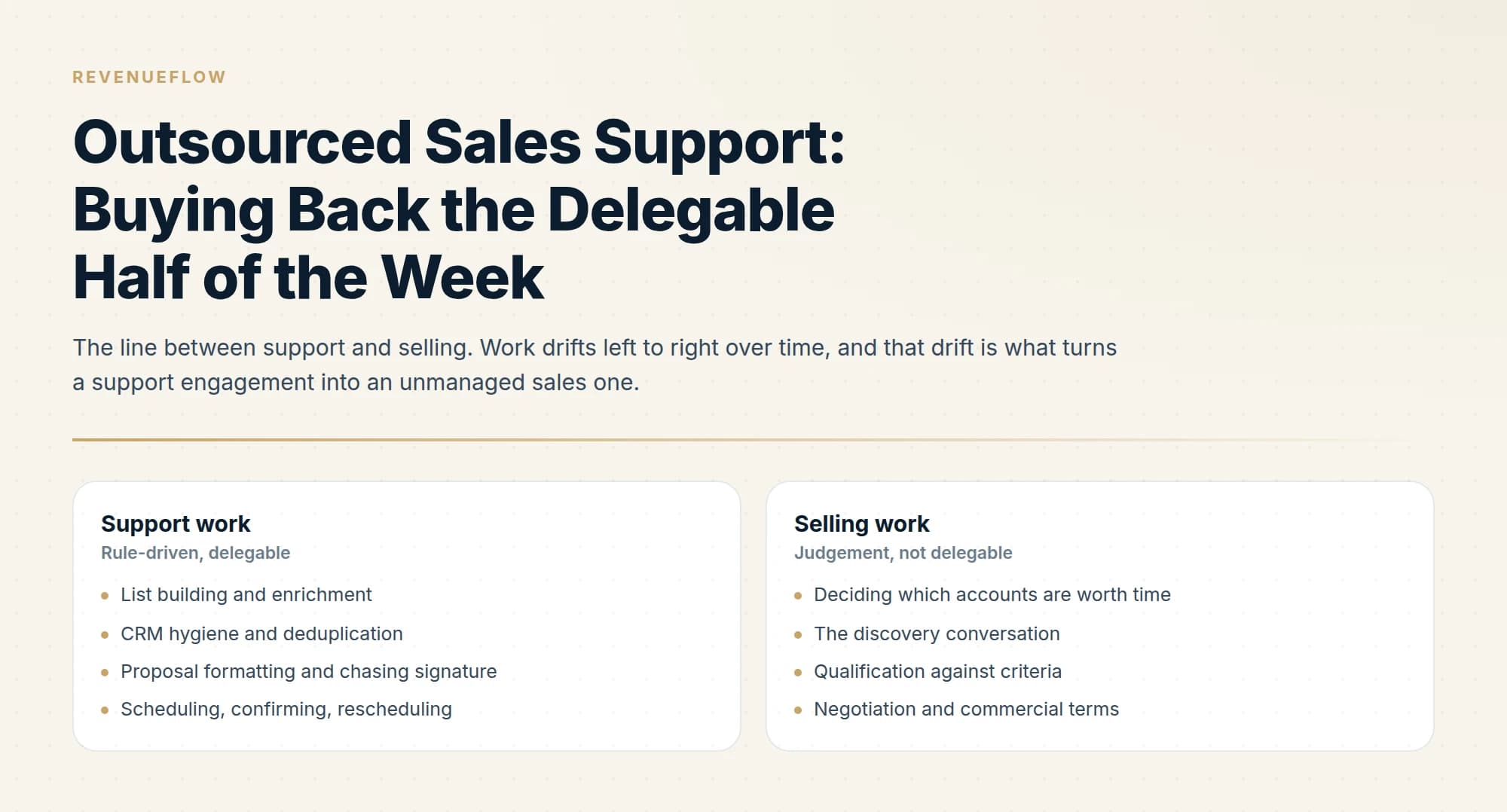
Outsourced sales support covers everything that has to happen for selling to occur without being the conversation itself: data and list work, CRM hygiene, proposal production, scheduling and reporting. It improves the capacity you already have, and it creates no pipeline where none exists.
Key takeaways
- The characteristic that predicts safe delegation is whether the task has a checkable right answer somebody outside your company can verify.
- Qualification-adjacent tasks such as screening enquiries, routing leads and triaging replies look procedural and carry real judgement, which is where support engagements most often go wrong.
- Support work fails quietly, so define done with a good and a bad example, sample ten records weekly, and watch bounce rate as the honest signal of list quality.
- System access granted broadly at the start of an engagement is rarely narrowed later, so scope it per object and use named individual accounts.
Reviewed and updated September 1, 2026
Ask a sales team where their week goes and the answer is rarely selling. It is CRM updates, list building, chasing data, formatting proposals, rescheduling calls and hunting for the version of the deck with the right logo on it.
Outsourced sales support buys that time back. It is a smaller purchase than outsourcing the selling, it is easier to reverse, and it is the one most teams should consider before adding another rep.
What counts as support
Everything that has to happen for selling to occur, that is not the conversation itself.
Data and list work. Building target lists, enriching records, verifying contact details, deduplicating, maintaining suppression lists. High volume, rule-driven, and enormously time-consuming when a rep does it between calls.
The Salesforce sales funnel guide explains why CRM hygiene work matters most when Field History Tracking must be switched on before it can ever be recovered retrospectively.
CRM hygiene. Logging activity, cleaning duplicate accounts, keeping stages accurate, fixing the orphaned contacts that make account-level reporting meaningless.
Proposal and document production. Turning an agreed scope into a formatted document, keeping templates current, chasing signatures.
Scheduling and coordination. Booking, confirming and rescheduling meetings, managing the calendar friction that eats a surprising share of a rep's day.
Reporting. Pulling the weekly numbers so the manager can spend the time coaching instead of assembling a spreadsheet.
What is not support: the discovery call, the qualification decision, the negotiation, and the relationship. The moment a support function starts making judgement calls about fit, you have quietly bought a cheap SDR instead, and the two need different management.
- List building and enrichment
- CRM hygiene and deduplication
- Proposal formatting and chasing signature
- Scheduling, confirming, rescheduling
- Weekly reporting assembly
- Deciding which accounts are worth time
- The discovery conversation
- Qualification against criteria
- Negotiation and commercial terms
- The relationship itself
Measure the problem before buying the solution
The case for support rests on a number almost nobody has: what share of your reps' time actually goes to selling.
Get it crudely and quickly. Ask each rep to categorise their calendar and a day's tasks for one week into selling and not-selling. It is imprecise and it does not need to be precise, because the finding is usually stark enough to act on without a decimal place.
Then do the arithmetic that decides it. If a rep spends a meaningful share of the week on delegable work, and support hours cost materially less per hour than the rep does, buying support is cheaper than buying more selling capacity and it improves the capacity you already have. The comparison is against the fully loaded cost of the rep, not their salary, and the method for building that figure from your own numbers is in outsourced SDR versus in-house.
- Step 1Categorise a week
Every rep splits their tasks into selling and not-selling for five working days.
- Step 2Find the delegable share
Of the not-selling time, how much is rule-driven work that does not need product judgement.
- Step 3Price both sides
Support cost per hour against the rep's fully loaded cost per hour, not their salary.
- Step 4Check the constraint is really time
If reps have selling time and no pipeline, support fixes nothing. The problem is upstream.
Step four is the one that saves money. A rep with plenty of available hours and no meetings does not have a support problem, and buying admin help will not create pipeline.
What delegates well, and what does not
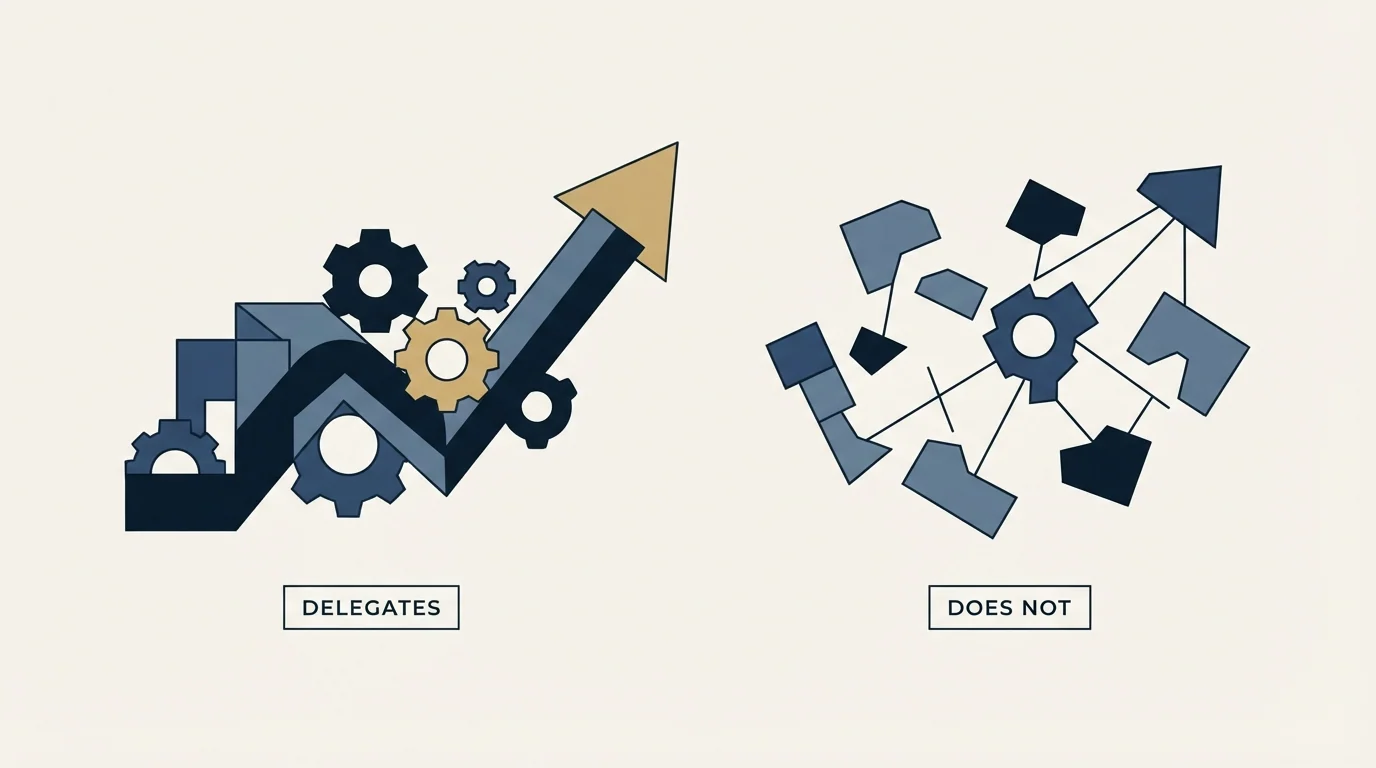
The characteristic that predicts success is whether the task has a checkable right answer.
Delegates well: enrichment against defined criteria, deduplication, formatting to a template, scheduling within stated rules, list building from a written ICP definition. Someone outside your company can do these correctly because correctness is inspectable.
Delegates badly: anything requiring a judgement about whether a company is worth pursuing, anything requiring product knowledge to answer, and anything where the cost of a wrong answer is a damaged relationship.
The dangerous middle: qualification-adjacent tasks. Screening inbound enquiries, deciding which leads to route where, triaging replies. These look procedural and carry real judgement, and they are where support engagements most often go wrong, because the error is invisible until a good lead has been binned.
If you delegate anything in the middle category, write the rules down as explicit decision criteria with examples, and audit a sample weekly. Rules with worked examples transfer; a general instruction to use good judgement does not.
The quality control that makes it work
Support work fails quietly. Nobody notices a list built slightly wrong for weeks, and by then it has propagated into campaigns and reports.
Three habits prevent that.
Define done for each task type. What a completed list looks like, which fields must be populated, what counts as a verified contact. Written, with an example of a good output and a bad one.
Sample weekly, at a fixed rate. Ten rows or ten records, read properly rather than skimmed. This takes minutes and catches drift before it compounds.
Instrument the downstream effect. Bounce rate is the honest measure of list-building quality; a rise means the enrichment or verification step slipped, whatever the delivery reports say.
- Yes: You have measured how reps' time actually splits
- Yes: The delegated tasks have checkable right answers
- Yes: Done is defined in writing, with a good and a bad example
- Yes: A weekly sample check is scheduled and owned
- No: Judgement calls about fit are included in scope
- No: Your reps have time but no pipeline, which support will not fix
- Depends: Whether CRM access can be scoped rather than granted wholesale
Access, which is the practical hurdle

Support work needs system access, and this is where engagements stall.
Scope it deliberately. A support provider doing list building needs the enrichment tools and a place to deliver output; they do not need full CRM admin. Someone doing CRM hygiene needs write access to specific objects, not to your pipeline reports and forecast.
Two rules keep this manageable. Named individual accounts rather than a shared login, so activity is attributable and revocation is clean. And read-only wherever the task allows, with write access granted per object rather than globally.
The reason to be careful is not distrust; it is that your CRM contains your customer relationships and your commercial history, and access granted broadly at the start of an engagement is rarely narrowed later.
Onshore, offshore and the timezone question
Support work is where offshore delivery makes the most sense, because the tasks are asynchronous and the output is inspectable.
List building, enrichment, CRM hygiene and document formatting do not require real-time interaction with your buyers, and correctness can be checked from the artefact. That is the opposite of a phone-led sales role, where accent, idiom and time zone are part of the experience the customer has.
Document formatting and other artefact-based tasks resemble what AI sales script generators produce: a solid draft that still needs a person to judge tone, claims and cuts.
The timezone difference is frequently an advantage rather than a cost. Work handed over at the end of your day is complete when you start the next, provided the handover is written rather than conversational. That requires discipline in how tasks are specified, which is the same discipline that makes any support engagement work.
Where it goes wrong is the tasks that turn out to need a quick clarification. A rule-driven task with an ambiguous edge case will either sit blocked for a day or be resolved with a guess, and both are worse than the five-minute conversation that a colleague down the hall would have had. The fix is to make the escalation path explicit: what to do when a row does not fit the rules, and who answers, with an expected response time.
Two practical habits make asynchronous support work. Specify tasks with examples rather than descriptions, since an example of a correct output resolves more ambiguity than a paragraph of instruction. And ask for questions in a batch at a fixed point each day rather than as they arise, so the clarification load is predictable on both sides.
Where this sits among the alternatives
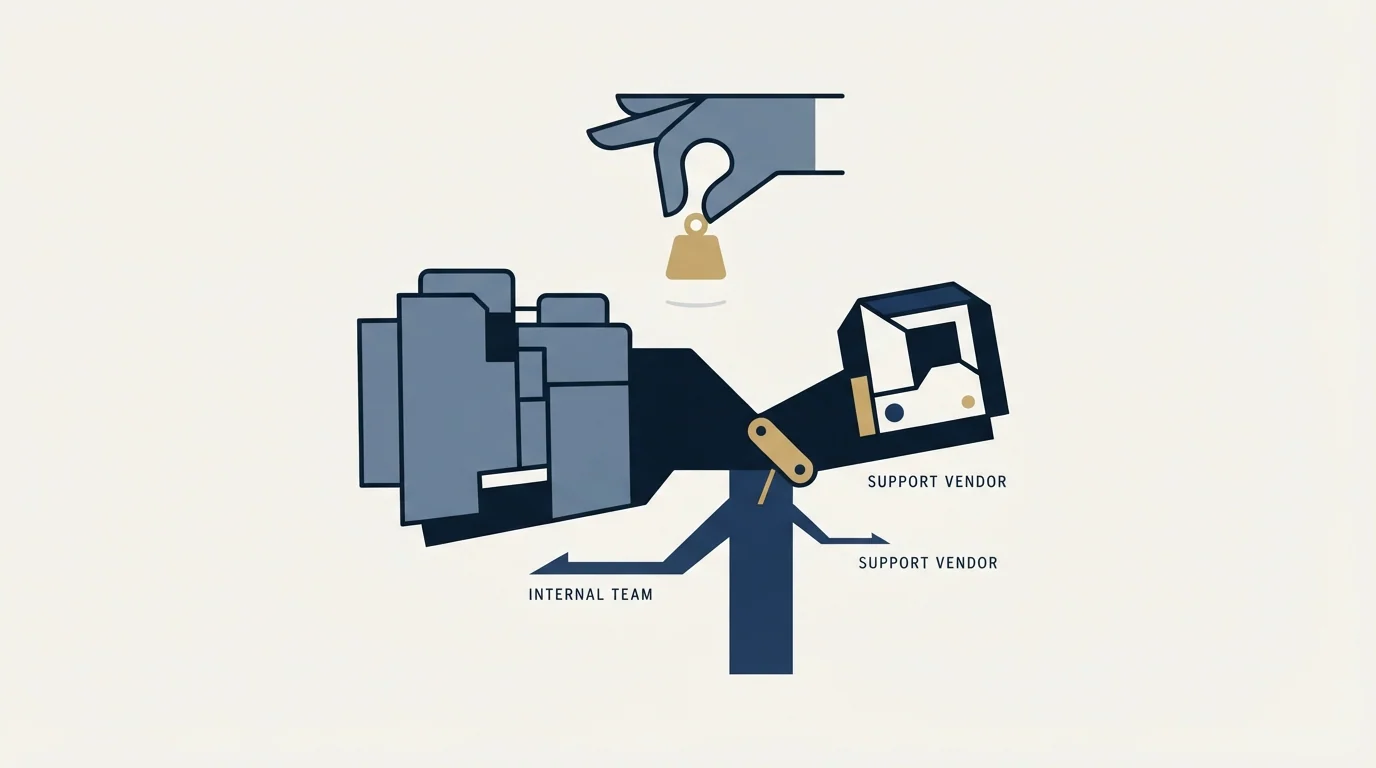
Support is one of five distinct things sold as outsourced sales, and it is regularly bought when a different one was needed. The category map is in outsourced sales companies.
The specific confusion worth naming: buying support when the real gap is that nobody is prospecting. Support makes existing reps more productive. It does not create conversations, and a team with clean data and no meetings still has no pipeline. If conversations are what is missing, that is outbound sales outsourcing or an SDR company.
There is a sequencing argument for doing support first regardless. It is cheaper, it is reversible, and it produces a clean answer to a question you need anyway: if you give your existing reps back a meaningful share of their week and pipeline still does not move, then capacity was never the constraint and adding more selling headcount would have failed too. That is an inexpensive way to find out something expensive, and a better test than debating it in a planning meeting where everyone is reasoning from assumptions about how the week is spent.
The short version
Outsourced sales support buys back the delegable share of a rep's week: data, CRM hygiene, documents, scheduling and reporting. Measure how time actually splits before buying, and check the constraint is really time rather than an absence of pipeline. Delegate tasks with checkable right answers, keep qualification judgement in house, and write explicit rules with worked examples for anything in between. Define done, sample weekly, and watch bounce rate as the honest signal of list quality. Scope system access narrowly at the start, because it never gets narrowed later.
If the gap turns out to be conversations rather than admin time, we book attended qualified meetings against criteria agreed in writing, and you can see what a campaign would look like for your market.
Frequently asked questions.
Frequently asked questions- What counts as outsourced sales support?
- Data and list work such as building, enriching, verifying, deduplicating and maintaining suppression lists. CRM hygiene, including logging, cleaning duplicates and keeping stages accurate. Proposal and document production. Scheduling and coordination. And reporting assembly so the manager can coach rather than build a spreadsheet. The discovery call, the qualification decision and the relationship are not support.
- How do you know whether support is the right purchase?
- Have each rep categorise their calendar and tasks into selling and not-selling for one week. It is imprecise and the finding is usually stark enough to act on. Then compare support cost per hour against the rep's fully loaded cost per hour. And check the constraint is really time, because a rep with free hours and no meetings has an upstream problem.
- What delegates badly?
- Anything requiring a judgement about whether a company is worth pursuing, anything needing product knowledge to answer, and anything where a wrong answer costs a relationship. The dangerous middle is qualification-adjacent work. If you delegate any of it, write the rules as explicit decision criteria with worked examples and audit a sample weekly, because a general instruction to use good judgement does not transfer.
- Does offshore delivery suit support work?
- It suits it better than any other sales work, because the tasks are asynchronous and correctness can be checked from the artefact. The timezone gap becomes an advantage when handovers are written rather than conversational. The failure point is an ambiguous edge case, which either blocks for a day or gets guessed, so make the escalation path and its response time explicit.
About the author.

B2B cold email experts helping companies generate qualified leads through done-for-you outreach campaigns.
RevenueFlow Team
Explore more.
Ready to scale your outreach?
We build GTM engines that book real meetings. See the receipts.
Related articles.
Sales Enablement Charters: What the Published Ones Ask For
Six publishers set out what a sales enablement charter should contain. Five describe a document nobody can check, and one writes a definition with inspection in it.
B2B Lead Lists for Aviation Companies: Build or Buy
Aviation is one of the few industries whose accounts are published by its regulator, which changes what is worth buying and what is worth downloading yourself.
Cold Calling for Food and Beverage Companies: Three Doors
Cold calling for a food or beverage company: who picks up at a chain, a distributor and an independent grocer, where each publishes its door, and when the phone is wrong.
Win Rate Benchmarks: Which Figures State a Population
A catalogue of the published average sales win rates, sorted by whether the page names the population behind its own number. Most do not.
LinkedIn Outreach for Banks: A Regulated Message
How a bank's relationship managers use LinkedIn to reach business owners: what the FFIEC guidance, FINRA's notices and LinkedIn's own rules require, and where to stop.
Cold Calling for PPC Agencies: What You Can See First
A paid media prospect is partly readable before the call and has already been told by the platform what to do when a stranger rings about its ads.