Sales Collateral: The Asset Has to Work Without You
Collateral is what a buyer reads when the seller is not there. Sorting a library by the question each piece answers, and the forwarding test.
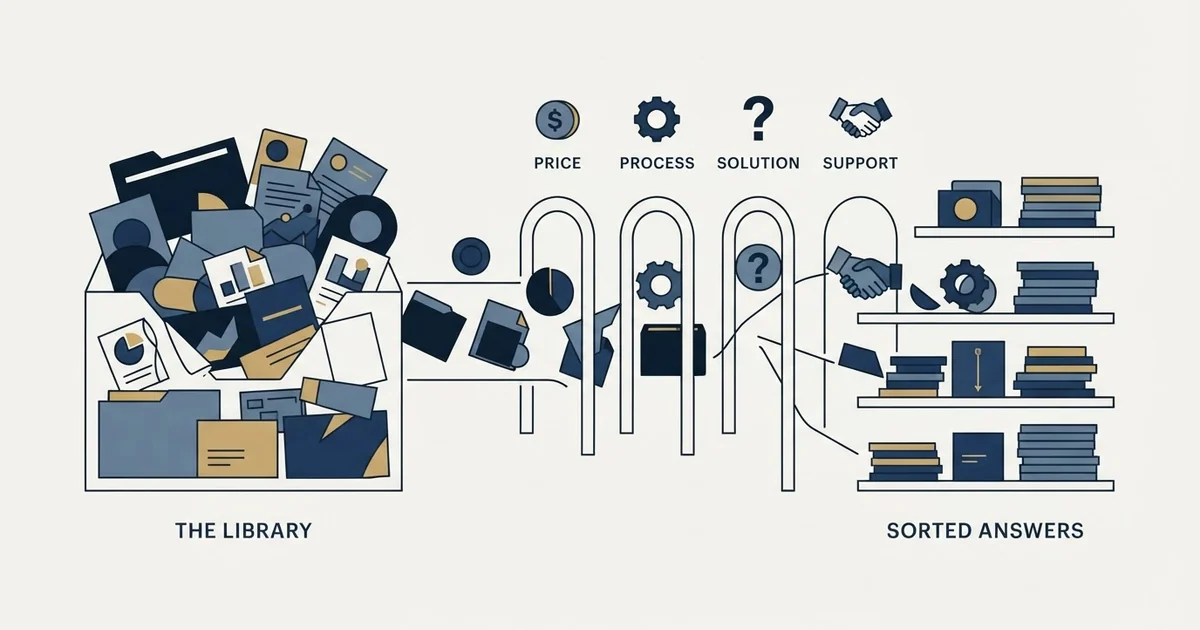
Sales collateral is the material a buyer reads when the seller is not present, so every piece has to survive being forwarded to somebody who heard none of the story. Separate it from internal material such as battlecards, sort the library by the buyer question each asset answers, and give every piece an owner and a date.
Key takeaways
- Buyer-facing collateral and internal material such as battlecards have opposite rules about bluntness, and merging them produces assets that either attack an incumbent or say nothing.
- Sorting a library by the buyer question each piece answers usually exposes two gaps: nothing that answers whether it works in the buyer's environment, and no page written for the internal champion.
- Every buyer-facing asset should pass the forwarding test, which is whether a reader can say what it is and who it is for within one screen and with no narrator.
- Collateral improves conversations that already exist and creates none of them, so a full library beside an empty calendar is an answer to a different problem.
Reviewed and updated September 2, 2026
Sales Collateral: The Asset Has to Work Without You
A seller finishes a strong call, sends the deck that was on screen, and hears nothing for three weeks. The deck was fine. It was also written to be narrated, and the person who eventually opened it was a finance director who joined the evaluation late, met nobody, and had eleven slides of feature grid from which to justify a spending decision.
Sales collateral is the material a buyer reads when the seller is not there. That definition sounds narrow and it is the useful one, because it names the condition every piece has to survive: being forwarded, opened cold, and read by somebody who was never in the conversation that produced it.
A library built for the call is built as though that never happens.
What counts as collateral, and what is quietly something else
Two kinds of material get filed under one word, and they have opposite requirements.
Buyer-facing collateral is written to be read by the buyer and by whoever the buyer shows it to. Case material, one-pagers, proposals, technical answers, pricing explanations, security summaries. It travels, so it carries its own context or it fails.
Internal material is written to be read by the seller. Battlecards, discovery question sets, talk tracks, qualification criteria. It never leaves the building, so it can be blunt, can name competitors directly, and can assume everything the seller already knows. A competitive battlecard is the clearest case: it exists to be read thirty seconds before a call and would be actively damaging in a buyer's inbox.
Merging the two produces the failure mode everybody recognises. Internal bluntness leaks into buyer-facing assets and reads as attacking somebody's incumbent supplier, or buyer-facing caution creeps into the internal card until the seller has nothing usable to hold. Keeping them in separate places, with the audience named at the top of every file, is the cheapest fix available in this whole category.
- Read by people who were never on a call
- Carries its own context on the first screen
- Every claim has to survive being forwarded to a sceptic
- Names no competitor and characterises none
- Fails as: a narrated deck sent as a document
- Read by a seller, usually minutes before a conversation
- Assumes everything the seller already knows
- Blunt by design, because nobody outside will read it
- Names competitors and says what they do well
- Fails as: a document a seller forwards by accident
Sort the library by the question, not by the format
Collateral inventories are almost always organised by format. Case studies here, one-pagers there, videos in a folder nobody opens. Format is the least informative thing about an asset, because two case studies can answer completely different questions and a one-pager and a video can answer the same one.
The organising principle that survives contact is the buyer question each piece answers.
What is this, in one screen. The asset a buyer forwards to a colleague with no context at all. It has to establish the category, the shape of the problem and who it is for, before anybody scrolls.
Is it for somebody like us. The job case material actually does. A named company of recognisable size and shape doing recognisable work is the whole payload, and the detail that matters is whether the reader can see themselves in it rather than how impressive the outcome was.
Will it work in our environment. Integration lists, security summaries, data-handling answers, technical constraints. This is the asset most often missing, and its absence is what turns a promising evaluation into six weeks of email.
What is involved, and what does it cost us. Not only price. Implementation shape, who has to be involved internally, what the first ninety days look like. A worked proposal is the mature form of this one, and it is written for exactly the reader this page is about.
How does this get defended internally. The asset written for the champion to present, rather than for the buyer to read.
Sorting an existing library this way is a short exercise, and the result is usually lopsided. The first question tends to be over-served, the third is frequently unanswered, and the fifth often has nothing against it at all.
The forwarding test

Every buyer-facing piece is going to be forwarded to somebody who has heard none of the story. That is not a risk to manage. It is the normal path a B2B decision takes, because the person who evaluates and the people who approve are rarely the same people.
So the test for any asset is simple to apply and unforgiving. Open it as though it arrived in an email from a colleague with the single word "thoughts?" above it. Within one screen, can the reader say what it is, who it is for and what they are being asked to think about.
- Yes: The first screen says what this is and who it is for
- Yes: It makes one claim rather than seven
- Yes: Every number in it names the source it came from
- Yes: It reads without a narrator, because it will not have one
- Yes: It ends with a specific next step rather than a logo
- No: It requires the reader to already know what the category is
- No: It characterises a named competitor
- Depends: It was built for a slide and exported to a document
The third line is the one that decides credibility with a reader who is sceptical by role. An unattributed figure reads as marketing, and a reader who discounts one number tends to discount everything beside it. Attributing a number to the page it came from costs one clause, and it is what lets the number survive a second reading inside the account rather than being skipped.
Who owns a piece, and what happens when nobody does
Collateral has one failure mode that is structural rather than a lapse in judgement, and it is worth stating plainly: nothing announces when a piece stops being true.
An asset gets commissioned because somebody felt a gap, produced against that feeling, published, and then never retired. The product changes, the positioning moves, the pricing model gets restructured, and the document sits there being confidently wrong. Meanwhile the library grows, search across it degrades, and sellers stop looking and rebuild what they need from memory, which is precisely the outcome the library existed to prevent.
Two habits handle most of it and neither needs a platform. Put a named owner and a date on every asset, visible to anybody who opens it. And retire on a schedule rather than on discovery: an asset nobody has used in two quarters is either obsolete or undiscoverable, and both cases want the same action.
The governance side of this question, including the measurement problem underneath it, is worked through in the four jobs hiding inside sales enablement. The point that matters here is narrower. A library optimised for coverage and a library optimised for retrieval look completely different, and most are built for coverage because coverage is what gets reviewed in a quarterly plan.
There is a cheap diagnostic for which kind you have. Take five questions buyers actually asked last month, hand them to somebody who joined recently, and time how long it takes to produce an answer they would be willing to send. Anything much beyond two minutes each, or an answer assembled from memory rather than from the library, means the material exists and is unreachable, which is functionally the same as not existing.
The piece almost nobody builds
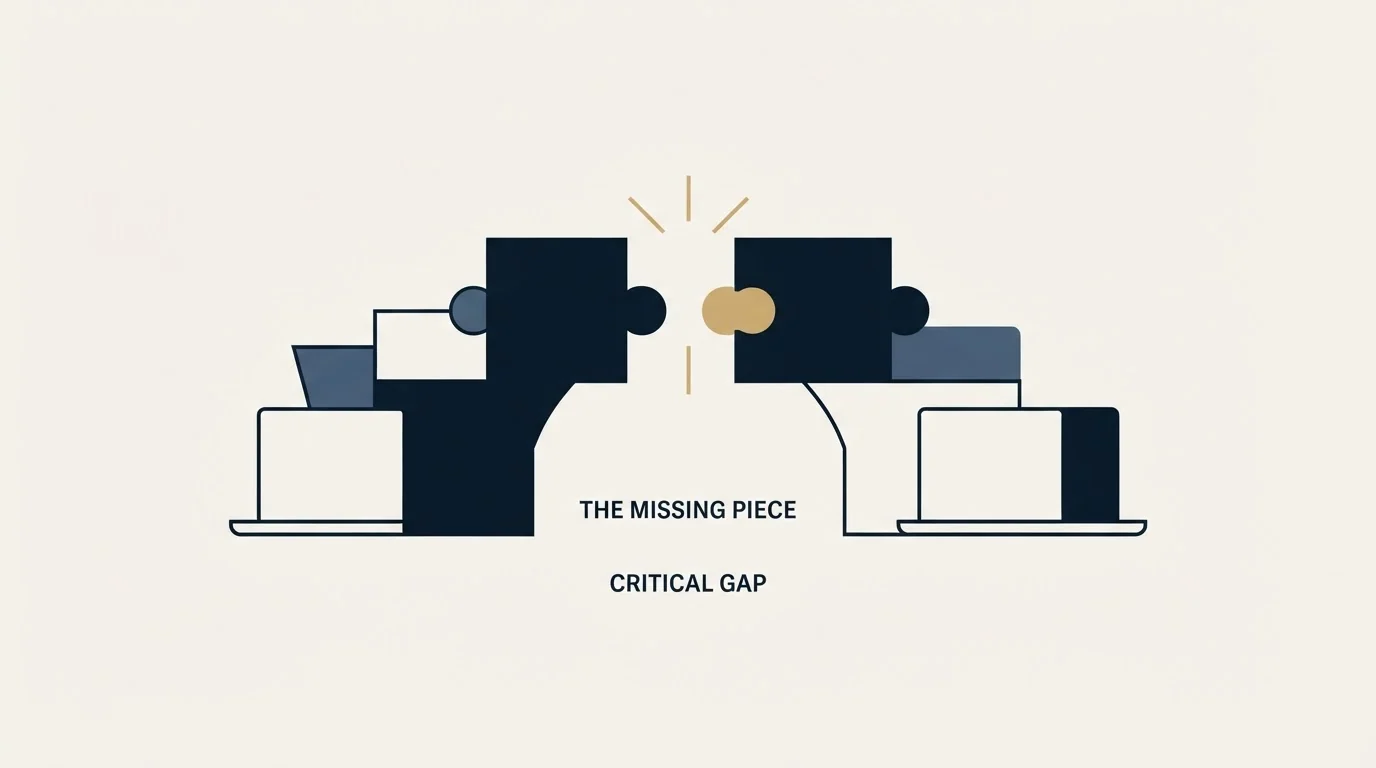
The asset with the highest return in most B2B deals is the one written for the champion to use without you.
Somebody inside the account has decided you are the right answer. They now have to say so to a group that includes at least one person whose job is to say no, and they have to say it in their own words, in a meeting you will not attend, using whatever you gave them.
What they usually have is a product deck. What they need is a page that states the problem in the organisation's own language, the cost of leaving it alone, the shape of the proposed change, the two obvious objections with an honest answer to each, and what happens in the first month. One page, no logo grid, written to be pasted into an internal document rather than admired.
Drafting that page is one of the jobs models are now pointed at, and the five jobs a sales model does separates drafting from scoring and forecasting.
Building that asset requires knowing which objections the champion will face, which means the objection library and the collateral library are the same research done twice. Which entries in an objection library earn their place covers the sorting, and the entries that survive it are the ones worth writing into the champion page.
Collateral in outbound, and where it does not belong
Collateral has almost no role in a first message to somebody who has never heard of you, and attaching it is a habit worth naming.
A first email asks a stranger for attention they have no reason to give. Attaching a brochure asks for a reading commitment on top of that, from a person who has not yet decided the sender is worth a reply, and file attachments from unknown senders are exactly the mail people do not open. Our own campaigns send one message per prospect, built on one premise, with nothing scheduled behind it, and the message carries a specific reason for the contact rather than a document.
Where collateral earns its place is after a reply, when somebody has told you what they care about and there is a real question to answer. At that point the sorting above pays: a person asking whether it works in their environment gets the technical answer rather than the case study, and sending the wrong one reads as not having listened.
The deeper point is about which constraint you are working on. Collateral improves what happens to conversations that already exist. It creates none of them. A team with an immaculate library and an empty calendar has an excellent version of a problem it does not have, and that distinction is the one to settle before commissioning anything. Where the shortage is conversations rather than their quality, the outbound motion is the instrument for it, and what a first campaign produces is the honest way to find out.
What to measure instead of downloads
Downloads and views measure whether an asset was accessible from a link somebody sent. They say nothing about whether it did any work.
Three readings are more honest and all three are obtainable without instrumentation.
Time to answer. How long it takes a seller to get a reliable answer to a buyer question they cannot answer themselves. This tracks retrieval directly, and it is almost never measured.
What sellers actually attach. Pull the last fifty sends and count which assets appear. The distribution is usually far narrower than the library, and the pieces that never appear are the ones to retire or rewrite.
Counting sends starts from a stated question rather than a dashboard, and the question that comes before the dashboard shows how little a sample this size can settle.
Whether it got forwarded. Ask, on the next call, who else has seen it. An asset that reaches the wider group is doing the job this page describes, and one that stops with the champion is either wrong for that reader or too hard to pass on.
The short version
Sales collateral is what the buyer reads when the seller is not there, and that condition sets every requirement. Separate buyer-facing material from internal material, and name the audience at the top of each file, because the two have opposite rules about bluntness.
Sort the library by the buyer question each piece answers rather than by format, and expect the exercise to expose two gaps: the environment question and the internal-champion page. Put an owner and a date on everything, retire on a schedule, and build for retrieval rather than coverage. Test each asset by opening it as though a colleague forwarded it with one word above it.
Keep it out of first contact, use it after a reply, and check the constraint before commissioning anything. If the shortage is conversations rather than the material to support them, that is a different problem, and it is the half we run: see what a first campaign produces.
Frequently asked questions.
Frequently asked questions- What counts as sales collateral?
- Anything a buyer reads when the seller is not in the room. Case material, one-pagers, proposals, technical and security answers, pricing explanations and the page a champion uses internally. Material written for the seller rather than the buyer, such as battlecards, discovery question sets and talk tracks, is internal enablement material and follows opposite rules, because it is allowed to be blunt and is never forwarded.
- How should a collateral library be organised?
- By the buyer question each piece answers rather than by format. The questions that recur are what this is, whether it is for somebody like us, whether it works in our environment, what is involved and what it costs, and how a champion defends it internally. Format tells you almost nothing, because two case studies can answer entirely different questions and a page and a video can answer the same one.
- Should you attach collateral to a cold email?
- No. A first message already asks a stranger for attention they have no reason to give, and an attachment asks for a reading commitment on top of it from somebody who has not decided the sender is worth a reply. Files from unknown senders are exactly the mail people leave unopened. Collateral earns its place after a reply, when there is a specific question to answer.
- How do you tell whether sales collateral is working?
- Not by downloads, which measure whether a link was clickable. Three readings are more honest. How long a new seller takes to produce a reliable answer to a real buyer question. Which assets actually appear in the last fifty things sellers sent, since that distribution is usually far narrower than the library. And whether a piece got forwarded beyond the person you gave it to.
About the author.

B2B cold email experts helping companies generate qualified leads through done-for-you outreach campaigns.
RevenueFlow Team
Explore more.
Ready to scale your outreach?
We build GTM engines that book real meetings. See the receipts.
Related articles.
Sales Enablement Charters: What the Published Ones Ask For
Six publishers set out what a sales enablement charter should contain. Five describe a document nobody can check, and one writes a definition with inspection in it.
Sales Kickoff Agendas: Five Published, Session by Session
Five publishers print a sales kickoff agenda. They agree on four blocks and disagree on session length, rehearsal and where the agenda comes from.
Win Rate Benchmarks: Which Figures State a Population
A catalogue of the published average sales win rates, sorted by whether the page names the population behind its own number. Most do not.
Sales Cycle Length Benchmarks: What Each Figure Counts
The published B2B sales cycle benchmarks, sorted by what each page says it counted. The same number means two different things in two of them.
Sales Comp Plan Design: What the Publishers Prescribe
Four publishers set out how to design a sales compensation plan. Here are their procedures, their components, and which of their ratios carry a population.
Sales Prospecting for SEO Agencies: Four Public Signals
How an SEO agency builds its own prospect list from signals Google documents: the index check, position, core update dates and site moves, under the warning owners read.