Sales Pipeline and Sales Funnel: Two Denominators
A funnel counts people through stages and reports rates. A pipeline counts open deals and reports money. The denominator is what makes them non-interchangeable.
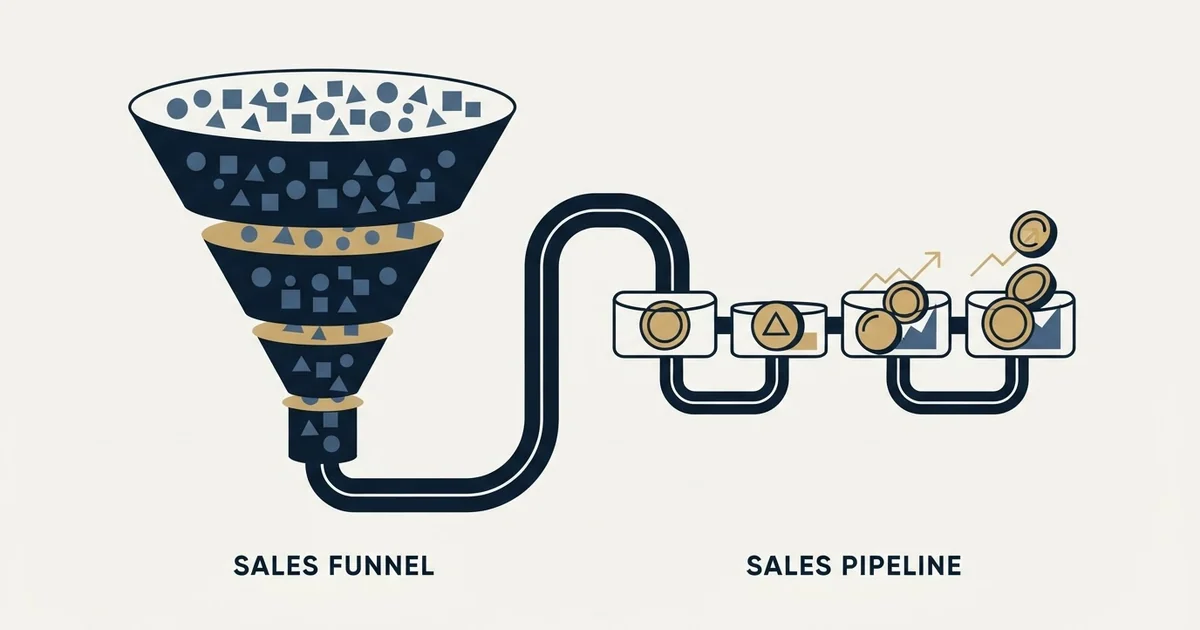
A sales funnel counts people moving through stages of buying behaviour and reports conversion rates over a population. A sales pipeline counts open deals with an owner, a value and a close date, and reports money over a set somebody chose to create records for. They meet at one join: the moment a conversation is accepted as an opportunity.
Key takeaways
- A funnel rate has a population underneath it; a pipeline figure is a sum of what somebody chose to open a record for, which is why pipeline value is not comparable across teams or definitions.
- The two can move in opposite directions while both are correct, because a smaller intake converting better is an ordinary state.
- They join at the acceptance step, which is a written definition rather than an event, and moving it changes the funnel rate and the pipeline value in opposite directions at once.
- Naming CRM stages after funnel stages produces stages that advance on seller activity, because awareness and consideration cannot be verified from the record.
Reviewed and updated October 1, 2026
A marketing lead reports that funnel conversion is up four points. A sales lead reports that the pipeline is thinner than last quarter. Both are reading their own dashboard correctly, both numbers are right, and the two statements are not in contradiction because they are not about the same thing. Nobody in the room says so, and the next forty minutes are spent arguing about whose data is wrong.
A funnel and a pipeline model the same commercial reality from opposite ends. The funnel counts people moving through stages of their own buying behaviour. The pipeline counts deals a seller is working, with an owner and a value and a date. An argument about which number is real is usually an argument about which of those two objects each person is holding, and it stays unresolvable while that is unsaid.
What each one is a model of
A funnel is a population narrowing. It starts with everybody who has encountered you and reports what proportion survives each stage: aware, engaged, identified, qualified, closed. Its native unit is a rate, its shape is the taper that gives it the name, and its owner is usually marketing, because the stages above the first conversation are the ones marketing produces.
A pipeline is a set of open deals. It starts when a specific opportunity is created against a specific account and reports what is currently in flight: this deal, at this value, at this stage, closing on this date, owned by this person. Its native unit is money, its shape is a list, and its owner is sales.
The difference that generates every downstream confusion is what happens to something that leaves. A person who drops out of a funnel stage simply stops being counted in the next one, and the funnel is content to describe them only as attrition. A deal that leaves a pipeline is closed as won or lost, by a person, with a reason, and it stays on the record.
- Counts people, in a population that narrows
- Native unit is a conversion rate
- Stages describe what the buyer has done
- Usually owned by marketing above the first meeting
- Something that leaves is attrition, unexplained
- Counts open opportunities, each with an owner
- Native unit is money, with a date attached
- Stages describe where a specific deal has reached
- Owned by sales, and typed in by the seller
- Something that leaves is closed, with a reason
The denominator is the difference
The cleanest way to hold the distinction is to ask what each number is divided by, because that is where they diverge and it is what makes them non-interchangeable.
A funnel rate has a population underneath it. Four hundred people reached the middle stage and eleven emerged, so the rate is a property of everybody who entered, including the people who were never going to buy anything. That is exactly what makes it useful: it measures the whole intake, so it can tell you whether the intake is any good.
A pipeline figure has no such denominator. It is a sum of what somebody chose to create a record for. Two teams with identical results will report different pipeline values if one of them opens an opportunity at the first meeting and the other waits for a confirmed budget conversation, and neither is wrong. This is why pipeline value is not comparable between companies, between teams, or across a definition change, and why pipeline coverage has to name the target it was divided by before it means anything.
That difference has a direct consequence for forecasting. A funnel rate is a base rate and improves as the population grows. A pipeline number is a claim, typed in by the person whose performance it describes, and it does not improve with volume at all.
Where the two objects meet
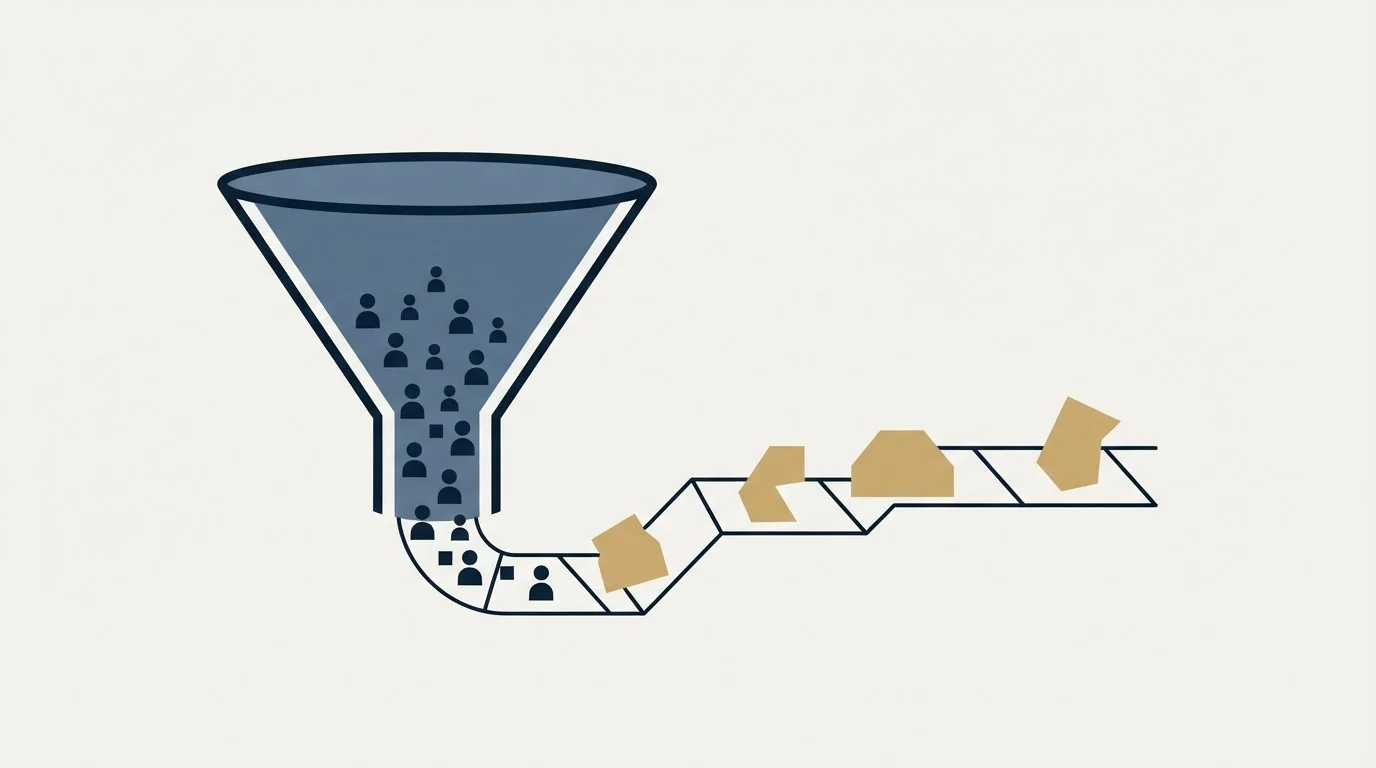
They meet at exactly one place, and being precise about it removes most of the reporting confusion in a company.
The join is the moment a person becomes a deal. Somebody agrees to a business conversation, a seller accepts them against criteria, and an opportunity record is created. Above that line the funnel is the honest model, because you are describing a population you did not select individually. Below it the pipeline is the honest model, because each row is a thing somebody is doing work on.
Where the product supplies the signal instead, that join moves to a usage threshold, and deciding which accounts earn a seller becomes the design problem.
Two properties of that join are worth stating.
It is a definition, not an event. Nothing in the world announces it. Somebody decides that a conversation has become an opportunity, and where they draw the line moves every number on both sides at once. The version of this argument that matters when two teams are negotiating it is in the sales qualified opportunity, and the earlier handover one rung up is in MQL versus SQL.
Moving it moves both models in opposite directions. Loosen the entry test and the funnel's conversion to opportunity improves while the pipeline fills with deals that will not close. Tighten it and the funnel rate falls while the pipeline gets more accurate. A team that changes the bar and reports only one of those two effects has produced a misleading quarter without anybody misrepresenting anything.
The entry test itself is usually borrowed from a named framework, and the five questions underneath BANT and MEDDIC shows which checks each one leaves out.
- Step 1Population
Everybody contacted or reached. Counted in people, reported as rates, and owned above the line.
- Step 2Conversation
A reply, a meeting agreed, a meeting held. The last event the funnel can see clearly.
- Step 3Acceptance
Somebody decides this is an opportunity, against a written test. This is the join, and it is a decision rather than an event.
- Step 4Deal
An owner, a value, a stage, a date. Counted in money, reported as a list, and worked one at a time.
The four errors that follow from merging them
Reporting a funnel rate as pipeline health. Conversion improving while pipeline value falls is an ordinary and coherent state: a smaller intake converting better. Read as one number it looks like a contradiction, and the usual response is to widen the top, which fixes the number that was not broken.
Forecasting from a funnel rate. A historical conversion rate applied to this quarter's intake produces a revenue projection with no deals in it. It is a capacity model wearing a forecast's clothes, and it is genuinely useful for a new segment where no pipeline exists yet. Applied to a mature motion it ignores the information that the pipeline is actually carrying, which is what specific deals are doing. The families of forecasting method and what each one trusts are set out in sales forecasting methods.
Building CRM stages out of funnel labels. Awareness and consideration are states of a person's understanding and nobody can check them from the record. A pipeline stage needs an exit criterion an uninvolved person could verify, which means it has to name something the buyer did. Importing funnel vocabulary into the opportunity object produces stages that advance on seller activity, and the argument for that boundary is in pipeline stages that earn their place.
A CRM funnel is that same import under a friendlier name, so a team asked to build one has to decide first whether it wants funnel reporting over a population or pipeline stages a stranger could audit.
Treating pipeline value as a measure of demand. Pipeline is what somebody chose to open a record for. Demand is what exists in the market. A team that stops cleaning its pipeline reports rising demand, and a team that starts cleaning reports a collapse, in both cases without anything changing outside the building.
Which one to read for which question
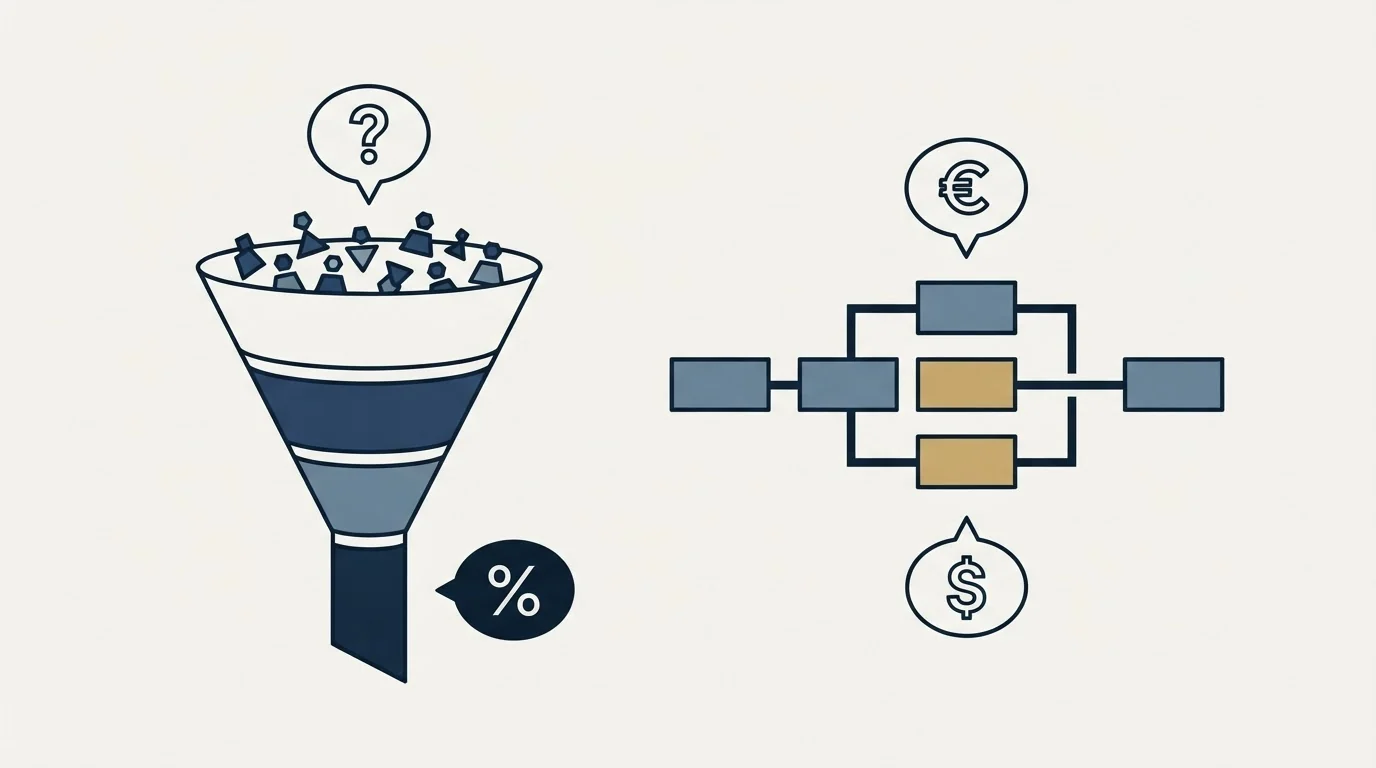
Both are worth keeping, and the useful discipline is knowing which question each one answers.
Ask the funnel whether the intake is working. Stage-to-stage rates, tracked separately rather than as one top-to-bottom figure, tell you which seam is leaking and therefore where a quarter of effort should go. Counting the people who left each stage, rather than only the survivors, is what makes those rates readable, and the same habit is what stops a rate computed over survivors from flattering you. The stage model and its own weak transition are covered in the inbound marketing sales funnel.
Ask the pipeline whether the period is reachable and where deals are stuck. Age in current stage, movement in and out of each stage over a period, and created date against close date answer more than count and value ever will. The six metrics that carry the load, and the companion each one needs to be readable, are in six pipeline metrics.
A third model gets pulled into this argument and is worth ruling out: the customer journey. That describes what the buyer experiences, in their sequence, including the parts you cannot see. It is not a third accounting of the same thing, and the distinction is worked through in sales funnel versus customer journey.
- Yes: The join is written down: what makes a conversation an opportunity, and who decides
- Yes: Funnel stages name what the buyer did, in units of people
- Yes: Pipeline stages carry exit criteria somebody uninvolved could check
- Yes: Every reported rate names the population it was computed over
- Yes: Definition changes to the join are dated and shown on both charts
- No: One dashboard reports a conversion rate and a pipeline value as the same story
- No: CRM stages are named after funnel stages like awareness and consideration
Where outbound sits in both
Outbound has a funnel and a pipeline, and it is unusually clean on the first because the population is chosen rather than inherited.
The funnel above the join is fully countable: accounts targeted, accounts with a reachable buyer, accounts contacted, accounts that replied, meetings held. Every one of those is a number you own, and reply rate split by segment is the leading indicator worth reading weekly because it moves within days and points at the list or the message rather than at effort.
Below the join the pipeline behaves like any other, with one property worth knowing. Outbound-sourced deals arrive with the fit half settled and the timing half open, because the seller chose the company and did not choose the moment. That produces a pipeline that moves steadily rather than in spikes, which forecasts better and fills more slowly. Writing the stages either side as a template, with the sizing arithmetic shown next to each one, is the cheapest way to keep the two halves separable on one page.
One constraint we run is a policy rather than a preference, and it shapes the funnel half specifically. One message per campaign, sent once, with no bumps and no thread replies. One message per contact also means one clean attribution per contact, so the question of which message produced which reply never requires untangling a thread.
The short version
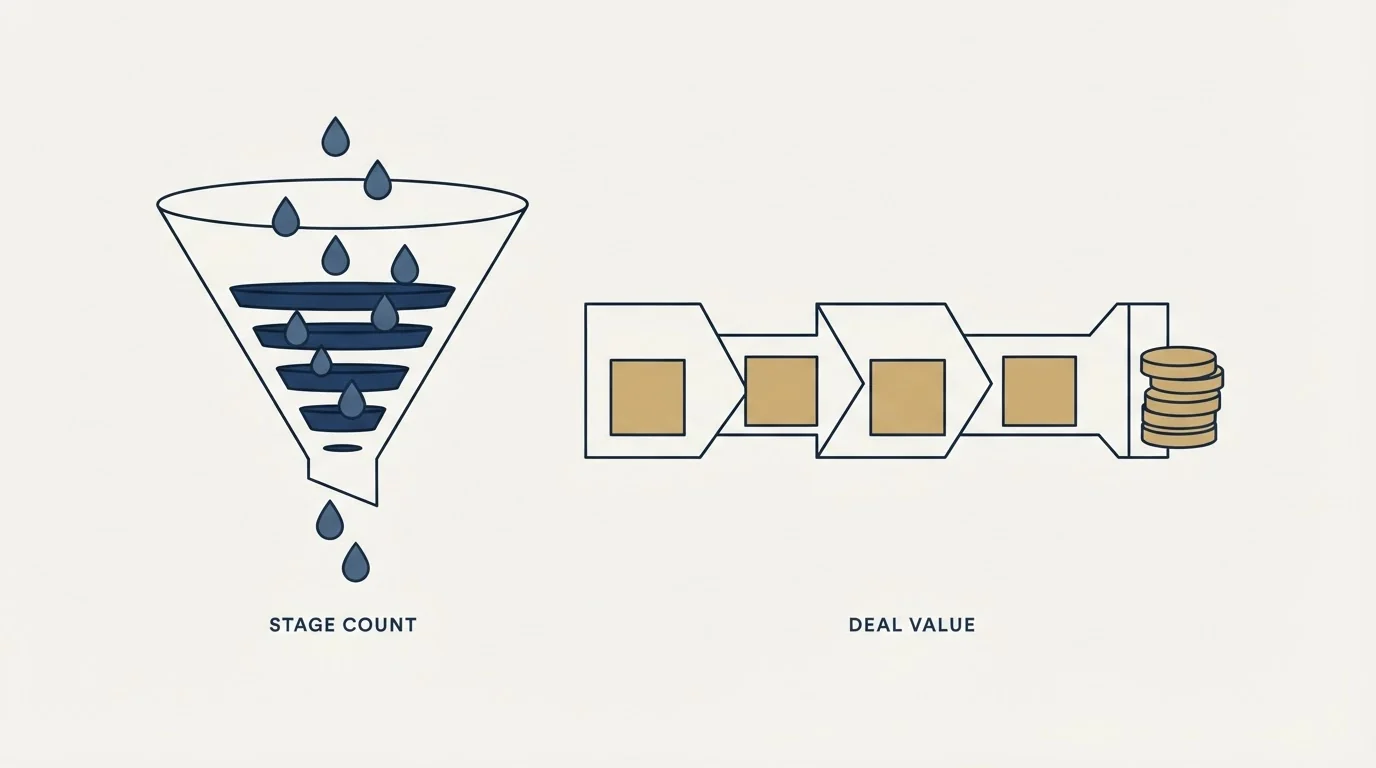
A funnel counts people through stages of buying behaviour and reports rates over a population. A pipeline counts open deals with owners, values and dates and reports money over a set somebody chose to create. The denominator is the difference, and it is why the two numbers can move in opposite directions while both are correct.
They meet at one join, which is the moment a conversation is accepted as an opportunity. That join is a written definition rather than an event, and moving it changes the funnel rate and the pipeline value in opposite directions at once.
Read the funnel to find which seam is leaking and the pipeline to find which deals are stuck. Do not forecast from a funnel rate on a mature motion, do not name CRM stages after funnel stages, and do not read pipeline value as a measure of demand.
If the funnel half is where your gap sits, the constraint is who gets contacted rather than how many. See what a first campaign produces against your own segment.
Frequently asked questions.
Frequently asked questions- What is the difference between a sales pipeline and a sales funnel?
- A funnel models the buyer's population narrowing through stages and is measured in conversion rates. A pipeline models the seller's open deals and is measured in money, with an owner and a close date on each row. The clearest test is what happens to something that leaves: a funnel records attrition, and a pipeline records a close, by a person, with a reason.
- Can you forecast revenue from a funnel conversion rate?
- Only in a narrow case. Applying a historical conversion rate to this quarter's intake produces a capacity model, which is genuinely the right instrument for a new segment or a new team where no pipeline exists yet. On a mature motion it ignores what the pipeline is actually carrying, which is what specific named deals are doing right now.
- Where exactly do the funnel and the pipeline meet?
- At the point somebody decides a conversation has become an opportunity and creates a record for it. Above that line the funnel is the honest model, because the population was not selected individually. Below it the pipeline is, because each row is work somebody is doing. Nothing in the world announces that transition, so it is a definition a team has to write down.
- Why does pipeline value rise when nobody is selling more?
- Usually because nothing removes a dead deal automatically. Close dates get pushed rather than deals being closed out, since closing one as lost is a visible act and pushing a date is not. Over two quarters that accumulates, so a team that stops cleaning reports rising pipeline and a team that starts cleaning reports a collapse, with nothing changing outside the building.
About the author.

B2B cold email experts helping companies generate qualified leads through done-for-you outreach campaigns.
RevenueFlow Team
Explore more.
Ready to scale your outreach?
We build GTM engines that book real meetings. See the receipts.
Related articles.
SDR Outsourcing for Business Brokers: The Fee Timing
Whether a success-fee brokerage should rent sales development at all: the fee timing, the texts that limit what an outside person may say about value, and who signs.
SDR Outsourcing for Financial Services: The Third Party
What a bank, broker-dealer, adviser or agency's regulators say about an outside team that speaks for it, the licensed line, and which arrangement survives due diligence.
SDR Outsourcing for Logistics Companies: The Brokerage Line
What an outside sales development team may do in a freight company's name, the calling and email rules it inherits, and which arrangement survives a bid-shaped market.
Appointment Setting for Business Brokers: The Seller Meeting
What a bought meeting with a business owner has to be for a brokerage: the three-part qualification, the confidentiality rules, the licence line and the owner's reasons.
Win Rate Benchmarks: Which Figures State a Population
A catalogue of the published average sales win rates, sorted by whether the page names the population behind its own number. Most do not.
Sales Prospecting for Health Systems: The Public Record
Where health systems are written down in public: the Medicare cost report, the facility list a non-profit system files, and the two gates that follow qualification.