Unbounce: Traffic Ceiling and the Plan Without A/B Tests
A/B testing starts one tier above the plan most teams price on, and Starter is capped at 500 visitors a month. The published ladder, read properly.
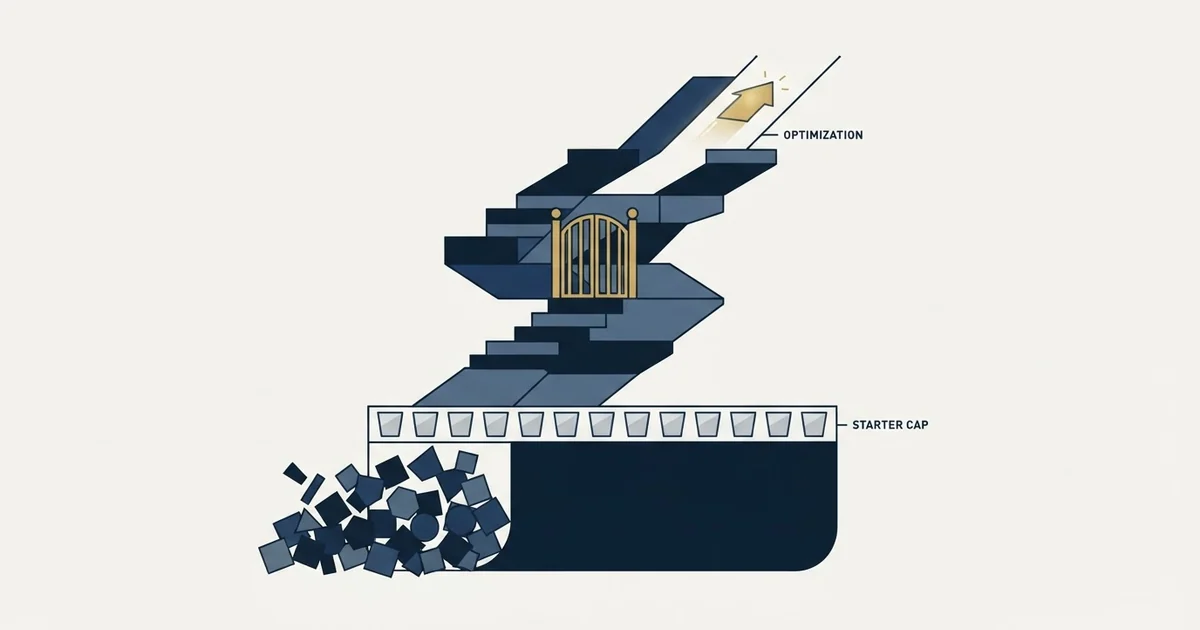
Unbounce publishes four self-serve tiers. Starter runs $22 annually or $29 monthly with a 500 visitor ceiling, Build $74 or $99 with 20k traffic and no A/B testing, Experiment $112 or $149 which is the first tier that can test, and Optimize $187 or $249 adding automated traffic routing.
Key takeaways
- A/B testing appears on Unbounce's Experiment tier, so the Build plan at $99 month to month cannot run a test.
- Starter is capped at 500 monthly visitors and five pages, which is a real ceiling rather than a typographical one.
- Unbounce meters deduplicated monthly visitors per tier while conversions are unlimited on every plan.
- Automated traffic routing needs a supply of visitors to learn from, so a page fed by outbound rarely reaches a conclusion.
Reviewed and updated September 2, 2026
Unbounce: The Traffic Ceiling and the Plan That Cannot A/B Test
A demand generation manager prices Unbounce for a campaign landing page, sees $99 a month on the plan comparison, and budgets for it. The page goes up. Three weeks later somebody asks for a headline test, and the answer is that A/B testing lives on Unbounce's next tier up, at $149 a month billed monthly. The budget was approved against a plan that cannot do the thing the tool was bought for.
That is not a hidden fee. Unbounce publishes the whole ladder on its pricing page, down to the "Billed annually (Save 25%)" line under each lower figure. It is a reading error, and it happens because the plan names describe ambitions rather than capabilities, and because the number most people carry away is the second cheapest one.
Here is what each tier actually includes, what the meter counts, and the specific question a B2B team running outbound should ask before any of it matters.
The published ladder, in both billing states
Unbounce's pricing page renders two prices per tier and labels the difference plainly, with "Billed annually (Save 25%)" under the lower figure. Both numbers are live in the document, so quoting one without the other is how a comparison goes wrong.
| Unbounce plan | Annual, per month | Month to month | Traffic ceiling | Users | Root domains |
|---|---|---|---|---|---|
| Starter, per the pricing page | $22 USD | $29 USD | up to 500 | 1 | 1 |
| Build, per the pricing page | $74 USD | $99 USD | up to 20k | 1 | 1 |
| Experiment, per the pricing page | $112 USD | $149 USD | up to 30k | 3 | 2 |
| Optimize, per the pricing page | $187 USD | $249 USD | up to 50k | 5 | 3 |
| Concierge, per the pricing page | Contact sales | Contact sales | starting at 100,000 | 15 | 5 |
| Agency, per the pricing page | Contact sales | Contact sales | starting at 50,000 | starting at 5 | 10 |
Under a heading reading "All plans include:" the page lists "Unlimited conversions", "Unlimited subdomains", "100+ templates", "Free hosting" and "Customer support". The trial is 14 days and the page opens with "Start free, no credit card required".
Two figures in that table deserve a second look before anything else.
Starter is capped at 500 visitors, and that is the whole plan
The Starter tier lists five pages and a traffic volume of up to 500. Not five hundred thousand. Five hundred visitors in a month, one user, one root domain, a drag and drop builder, lead generation forms and hosting.
For a business running paid search that ceiling is met in a morning. For a B2B team whose landing page is fed by outbound, it is closer to plausible than it looks, and that is worth sitting with rather than dismissing, because it changes which tier the conversation should start at.
The capability boundary sits between Build and Experiment
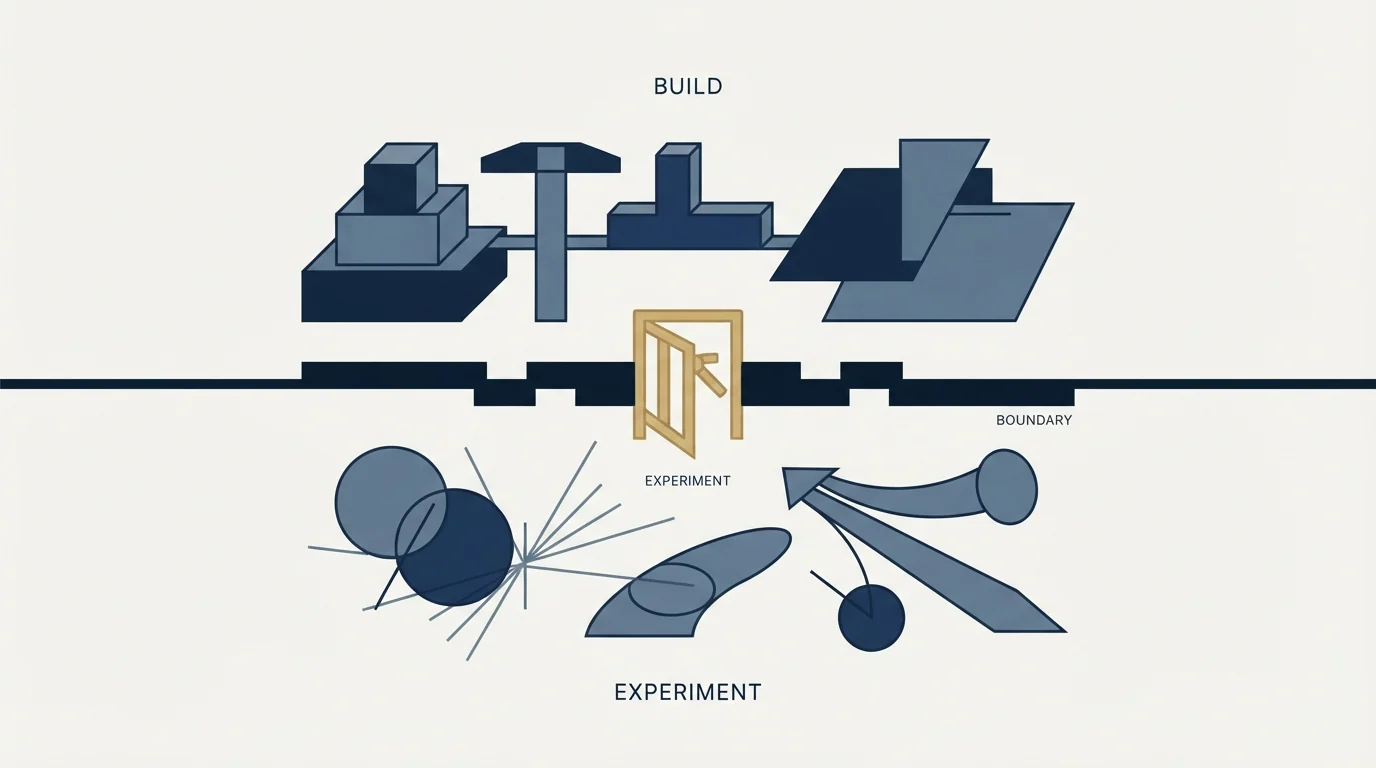
Build, which the pricing page lists at $74 or $99, lifts the ceiling to "Traffic volume: up to 20k" and adds popups and sticky bars, multi step forms, AI copywriting, custom code and styling, and the integration library. What it does not add is testing.
Unlimited A/B testing appears on Experiment, alongside unlimited variants, manual traffic allocation, confidence intervals, dynamic text replacement, and conversion insights and reporting. Optimize then adds AI traffic optimization, page and popup scheduling, advanced triggers, industry benchmarking and audience insights.
So the ladder is not a volume ladder with the same product at each rung. It is three products.
- Create unlimited landing pages
- Popups and sticky bars
- Multi step forms
- AI copywriting
- No A/B testing at this tier
- Unlimited A/B testing
- Unlimited variants
- Manual traffic allocation
- Confidence intervals
- Dynamic text replacement
- AI traffic optimization
- Page and popup scheduling
- Advanced triggers
- Industry benchmarking
- Audience insights
The practical consequence is that a team who wants to test should price Experiment and ignore Build, and a team who only wants to publish pages fast should price Build and ignore the testing conversation entirely. The expensive mistake is buying Build with the intention of testing later, because the later upgrade moves the published month to month rate from $99 to $149 rather than a small step.
Before paying for the testing tier, the traffic a landing page test actually needs works out how many visitors detecting a small improvement takes.
The meter is visitors, and Unbounce defines both ends
The pricing page defines its own units, which is more than many vendors do. A conversion is logged when someone completes the assigned conversion goal on a landing page, popup or sticky bar, and the page names clicking a call to action button or submitting a form as the common goals. A visitor is a person who views your landing page, popup or sticky bar at least once in a given month, deduplicated with cookies so a returning visitor counts once toward the limit.
That deduplication matters more than it sounds. A page fed by a campaign that sends people back repeatedly bills as fewer visitors than the session count implies, which is the direction you want.
On exceeding the ceiling, the page answers that "your pages will keep running as expected, and any overage fees will be charged as a one-time amount based on your extra usage", with email and in app warnings beforehand. A hard stop would be worse. A silent variable charge is the thing to watch on a page attached to a spend you do not fully control.
Where this fits a team whose traffic comes from outbound
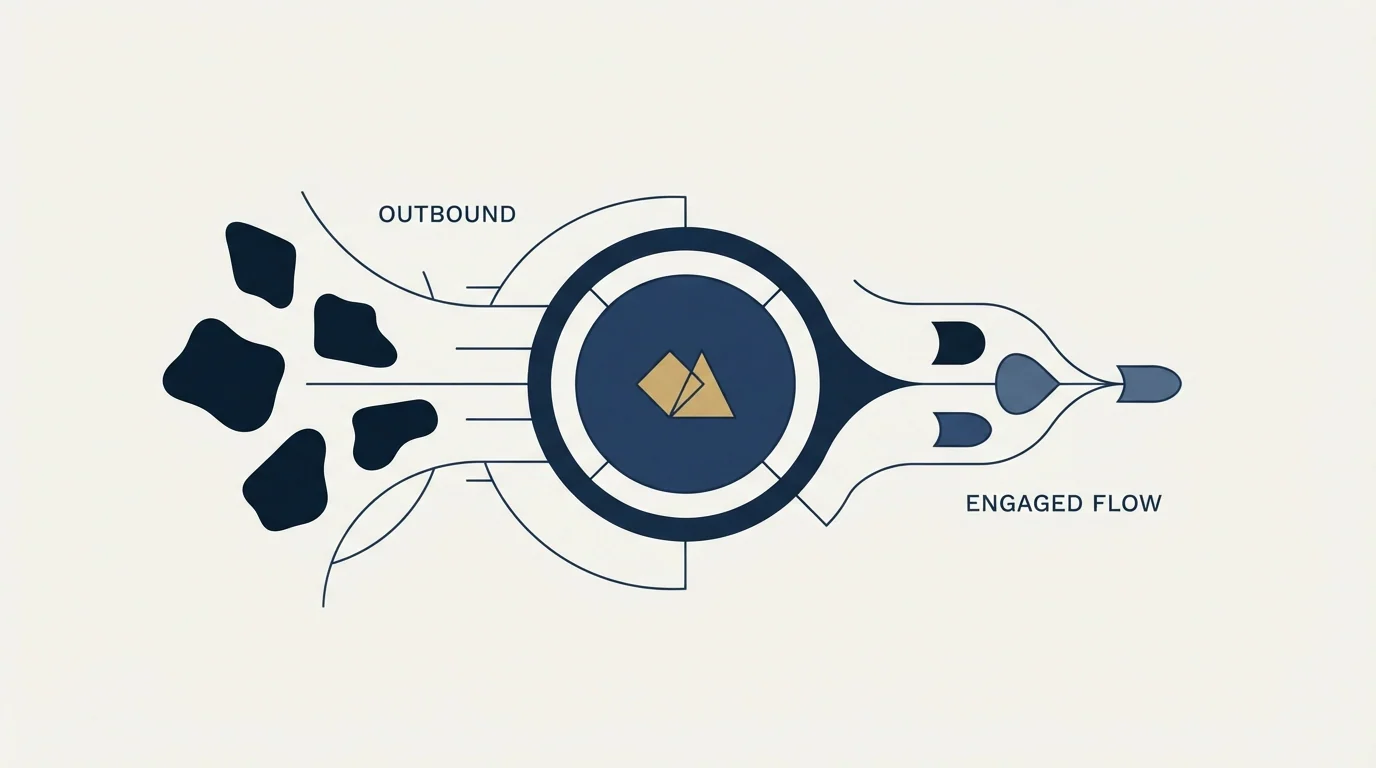
Most published advice about landing page builders assumes paid traffic, because that is where the category grew up. Dynamic text replacement exists to match a page headline to the ad keyword that produced the click. Smart Traffic, the AI routing feature, works by learning which variant converts which visitor, which is a machine learning problem that needs a supply of visitors to learn from.
An outbound programme produces a different shape of traffic. It is smaller, it arrives from a message rather than a query, and every visitor already knows what they were promised because we told them. That changes three things.
The volume is usually too thin for the automated features to earn their tier, and the published rates people benchmark against were measured somewhere else entirely, which average landing page conversion rate takes apart. A routing model splitting a few hundred monthly visitors across variants is not going to reach a conclusion inside a quarter, and the honest read on any conversion percentage taken from that population is covered in conversion rate: a rate computed over a few dozen records is dominated by chance, and eleven of forty says more than twenty eight percent does.
The message match problem is already solved upstream. Dynamic text replacement fixes a mismatch between an ad and a page. When the traffic comes from a message you sent, the fix is a page that continues that message, which costs nothing and needs no feature.
And the binding constraint is usually not the page. Landing page lead generation makes the argument at length: a landing page converts demand that already exists and has no mechanism for creating any, so a thin flow of visitors is a supply problem that no builder tier addresses.
- Yes: You know how many people will reach the page each month
- Yes: You can name the test you would run first, and the metric it moves
- Yes: Your web team cannot ship a page inside your campaign timeline
- Depends: You need pages on a domain your CMS does not serve
- No: You are buying Build now and planning to test later
- No: The page is the constraint rather than the traffic reaching it
What you are actually renting
Strip the tiers back and Unbounce sells three things a marketing team frequently cannot get from its own website: pages that ship without a developer, pages that live outside the site's navigation and templates, and an experiment framework with the statistics attached.
The first is the most common real reason to buy, and it is a legitimate one. A campaign that needs a page this week and cannot get one from a queue that runs in fortnights is a scheduling problem, and renting a builder solves it at a price that is small next to a delayed campaign.
The second is the reason a dedicated landing page beats a site page for campaign traffic, and the mechanism is boring: a standalone page strips the navigation that a site page exists to provide. Where a site leaks the visitors it already has, and what to do about that, is a different problem covered in lead generation website.
The third is the one to interrogate hardest, because an experiment framework is only as useful as the sample feeding it. The sample size question is the same one that governs email testing, and the arithmetic transfers directly from cold email A/B testing benchmarks: a test needs enough observations to separate a real effect from noise, and running one without them produces a confident answer that is wrong roughly as often as it is right.
Reading the alternatives honestly

A full rate card is unusual in this category. Several neighbouring products meter by usage tier or sit behind a form, which makes a like for like comparison harder than the category's marketing suggests. The wider layer map, and which bottleneck each layer of tooling can actually reach, is set out in sales process optimization tools.
One neighbouring builder does publish its ladder, and two meters counting visits and AI credits let a plan run short on either one.
The comparison that usually settles it is not between builders. It is between renting a builder and asking your own team for a page template you can fill in. If the answer is that the template would take a quarter to get scheduled, rent the builder. If your site already has a page shape that works and the queue is short, the subscription is buying you a convenience you already have.
- Five pages
- One user, one root domain
- Drag and drop builder
- No popups or sticky bars
- Traffic volume up to 20k
- Popups and sticky bars
- Multi step forms
- No A/B testing at this tier
- The first tier that can run a test
- Unlimited variants
- Confidence intervals
- Dynamic text replacement
The short version
Price Unbounce on the capability you need rather than on the tier name. Testing starts at Experiment, so a team that intends to test should never buy Build. Starter's 500 visitor ceiling is a real ceiling and not a typo. The meter counts deduplicated monthly visitors against a per tier traffic volume, conversions are unlimited on every plan, and going over the ceiling produces a one time overage charge rather than a stopped page.
Then ask the question the tiers cannot answer. If a few hundred people a month reach the page, the automated optimisation features have nothing to learn from and the testing framework has no sample, which puts the constraint upstream of the tool. When the supply of qualified conversations is the thing that is short, see what a first campaign produces against your own market.
Unbounce pricing and plan contents verified against Unbounce's pricing page as of August 2026 and re-read on 2 September 2026. Verify current terms with the vendor before relying on them.
Frequently asked questions.
Frequently asked questions- How much does Unbounce cost per month?
- Unbounce's pricing page lists Starter at $22 USD a month billed annually or $29 month to month, Build at $74 or $99, Experiment at $112 or $149, and Optimize at $187 or $249. Concierge and Agency plans are quoted by sales. The lower figure in each pair carries a save 25 percent annual billing label.
- Which Unbounce plan includes A/B testing?
- Experiment is the first tier listing unlimited A/B testing, along with unlimited variants, manual traffic allocation and confidence intervals. Build, the tier below it, adds popups, sticky bars and multi step forms but no testing. Budgeting Build with the intention of testing later means a 51 percent step up on the month to month rate.
- What counts as a visitor on an Unbounce plan?
- Unbounce defines a visitor as a person who views your landing page, popup or sticky bar at least once in a given month, deduplicated with cookies so a returning person counts once toward the limit. A conversion is logged when someone completes the assigned goal, commonly a call to action click or a form submission.
- What happens if you exceed the traffic limit?
- Unbounce's pricing page states that pages keep running as expected and overage fees are charged as a one time amount based on the extra usage, with email and in app warnings before the ceiling is reached. That is gentler than a hard stop and it does mean a variable charge attached to traffic you may not fully control.
About the author.

B2B cold email experts helping companies generate qualified leads through done-for-you outreach campaigns.
RevenueFlow Team
Explore more.
Ready to scale your outreach?
We build GTM engines that book real meetings. See the receipts.
Related articles.
SDR Outsourcing for Logistics Companies: The Brokerage Line
What an outside sales development team may do in a freight company's name, the calling and email rules it inherits, and which arrangement survives a bid-shaped market.
SDR Outsourcing for Business Brokers: The Fee Timing
Whether a success-fee brokerage should rent sales development at all: the fee timing, the texts that limit what an outside person may say about value, and who signs.
Appointment Setting for Business Brokers: The Seller Meeting
What a bought meeting with a business owner has to be for a brokerage: the three-part qualification, the confidentiality rules, the licence line and the owner's reasons.
3x3 Research: Three Facts in Three Minutes Before Outreach
3x3 research as Funnel Clarity publishes it: three unique facts in three minutes that the prospect would be surprised you know, the variants, and where it fits.
SDR Outsourcing for Ecommerce Software Companies
Whether bought meetings can work for a company selling software to merchants: the app store as distribution, the billing model, the data rule and the agency.
Sales Prospecting for Consulting Firms: Find the Event
Prospecting for a consulting firm: where triggers are published by practice, who inside the firm reads them, why alumni and referrals come first, when to skip it.