Tire Kicker: The Prospect Who Passes Every Qualification
A prospect who fits perfectly, engages more than your real buyers, and never buys. Why the fit gate cannot catch them, and the question on the first call that can.
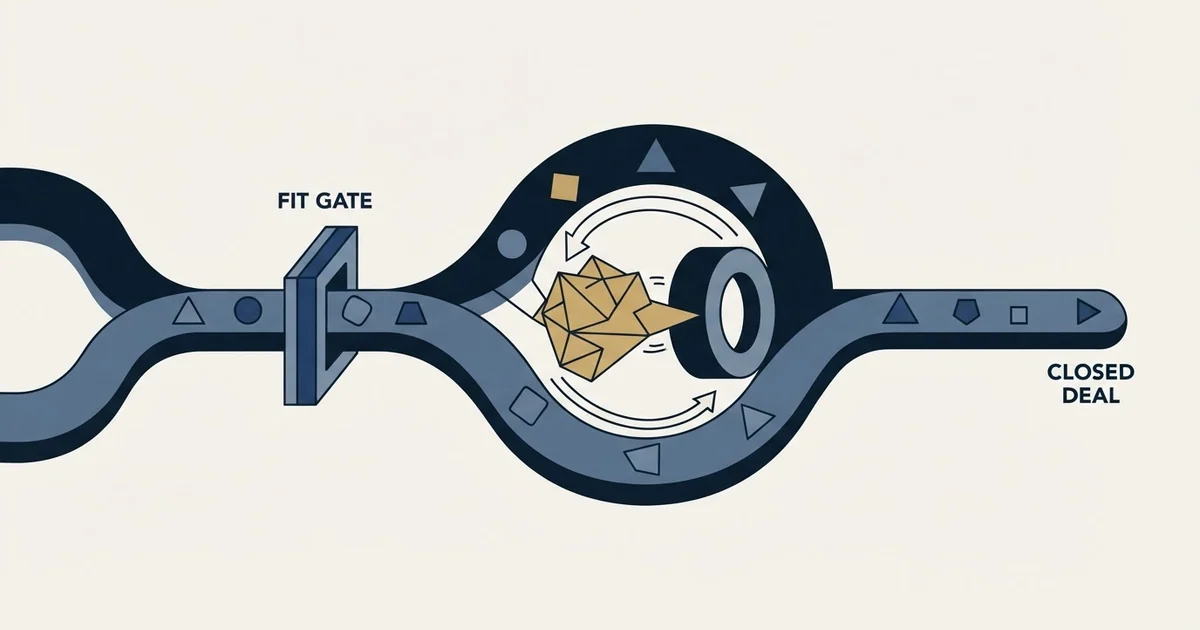
A tire kicker is a prospect who appears interested, asks many questions and never buys. The useful distinction is that they pass your fit criteria, so no targeting filter removes them. What they lack is any consequence of doing nothing, which is the one condition engagement scoring cannot see and a first-call question can.
Key takeaways
- A tire kicker is not a bad-fit lead. A bad fit fails the written criteria and is filtered out before contact; a tire kicker passes every check and is removed by nothing upstream of a conversation.
- Cambridge's business dictionary defines the term as someone who appears to be interested in buying something and asks a lot of questions but does not buy anything, which names the symptom rather than the cause.
- Engagement scoring makes it worse rather than better. A person with no deadline can afford to be enthusiastic for months, so opens, attendance and demo requests all rise and the record turns green.
- The separating question is what happens if they do nothing, asked on the first call. A real buyer answers with a date or an event; a tire kicker answers in generalities, and the generality is the answer.
Reviewed and updated September 2, 2026
A prospect books a call, arrives early, asks six intelligent questions about the integration path, requests a trial, extends it once, invites a colleague to the second call, and asks for a written summary to take to their team. Eleven weeks later they stop replying. Every fit criterion was met. Every engagement signal fired. The company was exactly the shape the target list was built for, and the deal was never going to happen.
That prospect is what the trade calls a tire kicker, and the reason the phrase survives is that no qualification framework catches them cleanly. Cambridge's business dictionary defines the term as "someone who appears to be interested in buying something and asks a lot of questions but does not buy anything", which is precise about the symptom and silent about the cause. Pipedrive's guide puts the same thing more bluntly, describing a tire kicker as "a lead who's never going to buy what you're selling", and traces the phrase to "those people who visit car dealerships frequently in search of a new car, kick tires on a few vehicles to indicate their interest, and then leave again without ever buying a car".
The label collapses three different populations: the early buyer whose purchase is real but six or twelve months out, the wrong-fit buyer nobody has plainly turned away, and the genuine time-waster gathering competitive intelligence or benchmarking a renewal they have no plan to leave. Only the third is a problem, and the first two are worth keeping.
The distinction that makes the term useful
Most published advice treats tire kicker as a synonym for bad lead, and that reading makes the concept worthless, because a bad lead is already solved. A company outside your size band, in a market you cannot serve, with nobody in a relevant role, is removed by a filter before anyone speaks to them. That is a targeting problem with a targeting fix, and it belongs in the ideal customer profile rather than in a sales conversation.
A tire kicker is the harder case sitting one step further along. They pass the fit gate. On the vocabulary in the prospect definition, they are a genuine prospect: an account checked against your criteria and found to plausibly fit. What they lack is not fit. It is a reason to change anything.
- Wrong size, market, or role
- Fails the written fit criteria
- Removed by a filter before contact
- The fix is the list, not the call
- Costs a send, not a quarter
- Right company, right role, real interest
- Engages enthusiastically and repeatedly
- No event forcing a decision this year
- The fix is a question, asked early
- Costs weeks of a rep's calendar
- Right company, right role, real interest
- Engagement is uneven and sometimes cold
- A dated internal event is driving it
- The fix is patience and a second contact
- Closes late rather than never
The middle and right columns are the pair that matters, because they are indistinguishable from activity data. Both open everything. Both attend. The difference is whether anything in their world changes if they do nothing, and no engagement metric can see that.
The point of contact definition explains that being the named communication route says nothing about whether that person can approve or fund anything.
Why enthusiasm is the wrong signal
Sellers are trained to read interest as progress, and for the third column it is. For the second it is the opposite: enthusiasm is cheap precisely because nothing is at stake. A person with no deadline and no budget can afford to be delightful about your product for months, and frequently is, because the conversation is genuinely interesting to them and costs them nothing.
This is why the standard lead score makes the problem worse rather than better. Scoring rewards opens, clicks, page visits and meeting attendance, all of which a tire kicker produces in abundance. The score rises, the record turns green, and the rep is directed toward the account by the system that was supposed to protect their time. The same mechanism is why the MQL and SQL boundary argues for treating fit as a gate rather than as points to be accumulated, and the tire kicker is the case that most rewards it.
There is a second reason enthusiasm misleads. Some of these conversations are genuinely valuable to the person having them, and not because they intend to buy. They are researching a category before a budget request next year. They are building an internal case against an incumbent. They are new in the role and learning the market. None of that is bad faith, and treating it as such produces sellers who are rude to people who will buy in eighteen months.
The four things that produce one
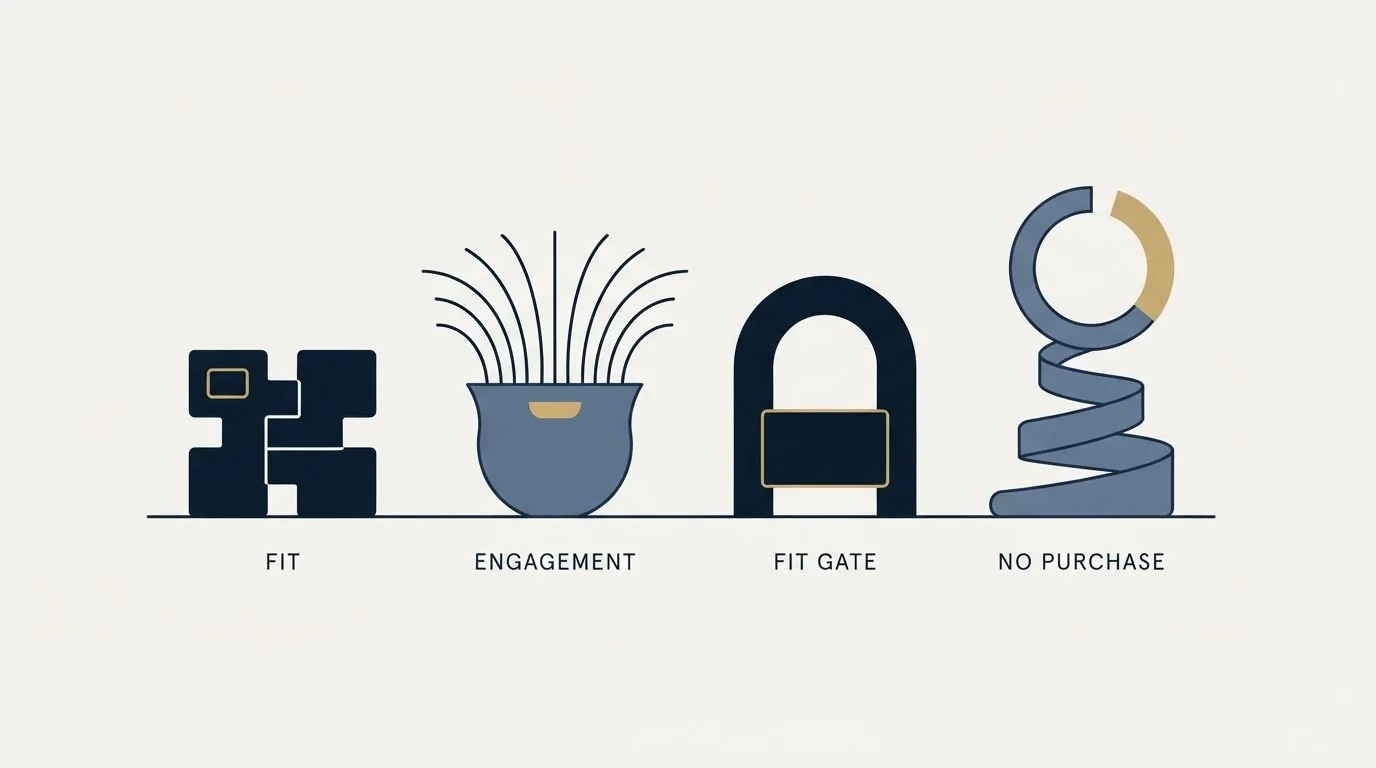
Naming the mechanism is more useful than naming the person, because three of the four are recoverable and one is not.
No consequence of inaction. Nothing gets worse for this company if the problem stays unsolved. This is the true tire kicker and it is the unrecoverable case. Everything else on their list has a date attached and yours does not.
The same gap is what Economic Impact is written to expose, since Need, Economic Impact, Access to Authority and Timeline each correct a question the older frameworks ask badly.
No money, and no route to money. Distinct from a budget objection, which is a negotiation. This is a company where the spend does not exist in any envelope anyone in the conversation can reach.
No authority and no path to it. An interested person who cannot convene the people who decide. Recoverable, and the recovery is a second contact rather than more persuasion, which is the subject of multi-threading a deal.
Curiosity that was never a purchase. Category research, competitive homework, or a person learning their new job. Legitimate, and cheap to serve once, expensive to serve for a quarter.
- Yes: They named something that gets worse if this is not solved this year
- Yes: They can describe how a purchase like this normally gets approved here
- Yes: A second person from their side has been in a conversation
- Yes: They have said what they would need to see, specifically
- Depends: There is a date in their world that is not one you supplied
- No: Every question so far has been about the product rather than about their situation
- No: The only next step ever proposed is another conversation
The last two lines are the reliable tells. A buyer asks about their own situation and about what would have to be true internally. A tire kicker asks about the product, because the product is the interesting part and their situation is not in play. And a deal whose every next step is another meeting has no mechanism in it: real evaluations produce artefacts, access, and dates.
The question that separates them, and when to ask it
One question carries this, and it is not a qualification interrogation. Ask what happens if they do nothing.
A buyer with a real problem answers immediately and concretely, because they have already had the argument internally: a contract renews in March, a system is being retired, a headcount plan assumes something that is not true yet. A tire kicker answers in generalities about wanting to improve things, and the generality is the answer. This is the same instrument SPIN's implication question exists to produce, arriving from the other direction: instead of building the cost of the problem, you are checking whether the buyer has already built it.
How that cost is built into a number the buyer owns, and where pushing it harder backfires, is on the cost of inaction.
Ask it on the first call, not the fourth. Asking early costs nothing and occasionally converts, because a buyer who has not thought about consequence sometimes thinks about it out loud and finds one. Asking late has already spent the thing you were protecting.
A meeting requested with no defined use case behind it is the recognisable early form of this: the interest is real and the consequence of inaction has never been named, which is why the question belongs on the first call rather than the fourth.
The second instrument is asymmetric effort. Propose a next step that requires something small from them: a colleague on the next call, a document, access to a system, a stated internal date. A real evaluation absorbs that easily. A tire kicker deflects it warmly and proposes another call instead, and the deflection is the data.
Disqualifying without being wrong about it
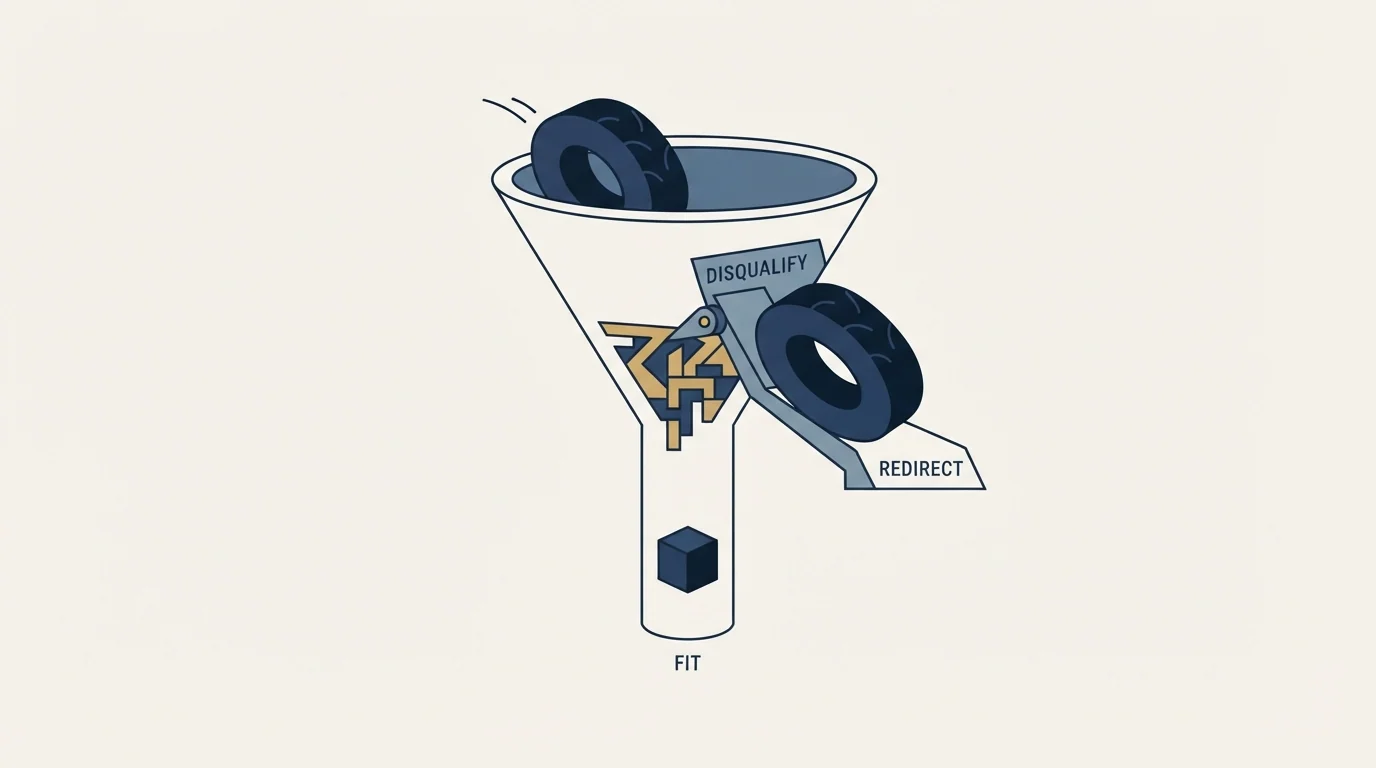
Disqualification is where this goes wrong in the other direction, because a seller under pressure will start calling every slow deal a tire kicker and clear the pipeline of things that were going to close.
Three rules keep it honest.
Disqualify against a written reason, not a feeling. The same discipline the rejection reason codes apply to inbound leads: no consequence named, no route to budget, no access to a decision. A reason of "not serious" is not information and cannot be reviewed later.
Disqualify the deal, not the relationship. The curiosity case above is often a buyer eighteen months early. Closing the opportunity and leaving the person a useful answer costs one email and preserves the account. Marking them dead and being cold about it does not.
Count what disqualification does to the forecast. If removing tire kickers shrinks the pipeline below coverage, the problem was never the tire kickers. It was that pipeline coverage was being met with records that were never going to convert, which is a targeting and volume question rather than a qualification one.
- Step 1Filter on fit
Size, market, role and disqualifiers, applied to the list before contact. This removes bad fit and cannot remove a tire kicker.
- Step 2Ask about consequence
On the first call. What gets worse if this stays as it is. The answer is concrete or it is not.
- Step 3Ask for something small
A second person, a date, a document. Real evaluations absorb this; a tire kicker proposes another call.
- Step 4Write the reason down
Disqualify against a named criterion, close the opportunity, keep the relationship.
Where this sits in outbound specifically
On a cold list the economics are different from inbound, and mostly in our favour. Nobody in an outbound conversation raised their hand, so there is no engagement score inflating a bad record, and the qualifying question arrives early by necessity rather than by discipline.
The part that matters for us is which meetings count. We run one message per campaign, with no bumps and no thread replies, and the criteria that make a meeting qualified are agreed with the client in writing before anything sends. Those criteria describe the company and the person: the right kind of business, somebody with responsibility for the relevant area, a real conversation that both sides attended. Budget, timing and authority are deliberately not billing conditions, which means a prospect who turns out to have no budget this year still counts as a qualified meeting.
That is a considered position rather than an oversight, and it is worth stating plainly because it looks like the opposite of everything above. Timing is the single least predictable thing about a company from outside it, and a definition that pays only for prospects who happen to be in-market this quarter makes the supplier guess at internal budget cycles they cannot see. The honest split is that we are responsible for putting the right person in the room, and what happens to timing after that is the seller's job and the buyer's calendar. What the criteria do exclude is the case that actually wastes everyone's time, which is the wrong company or the wrong person, and that gets excluded at the list stage where it belongs.
The short version
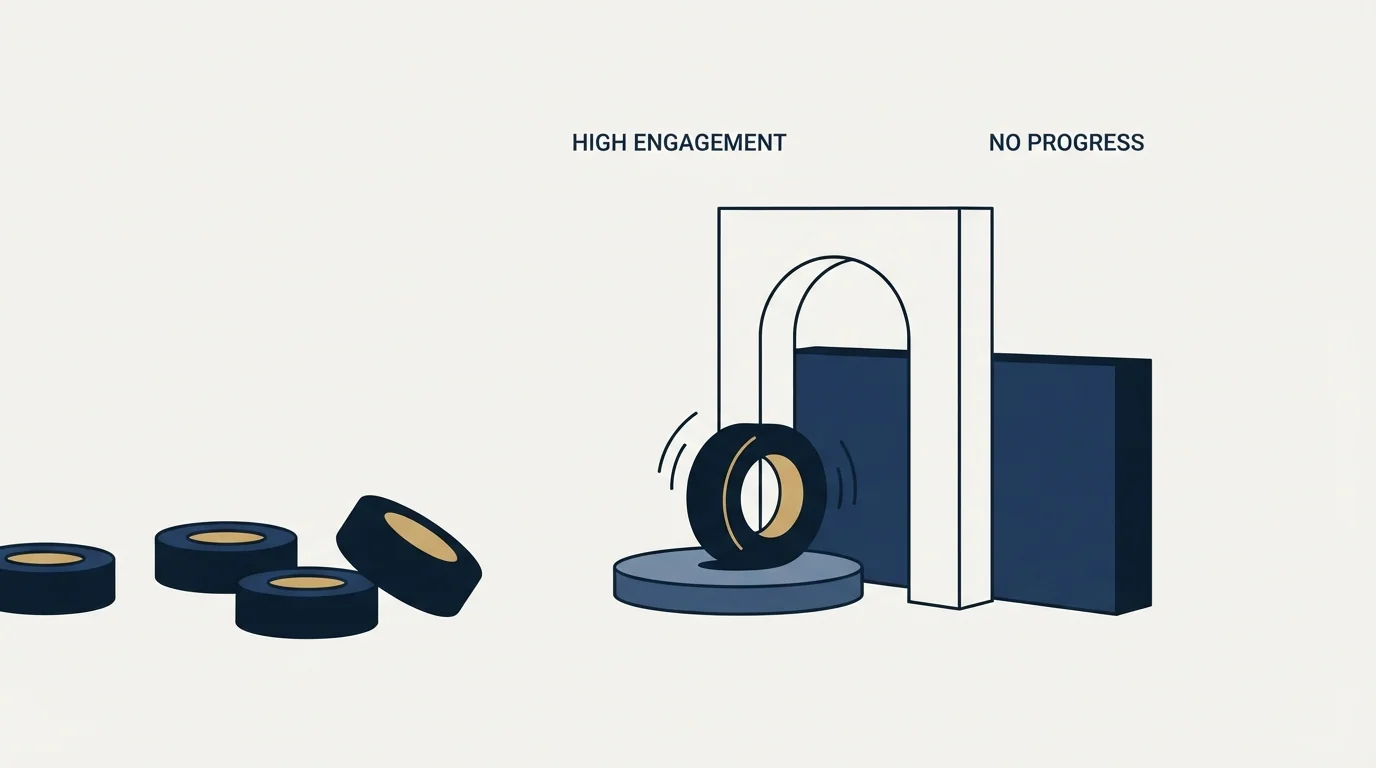
A tire kicker is not a bad lead. A bad lead fails your fit criteria and gets filtered out before anyone speaks to them. A tire kicker passes every check, engages more than your real buyers do, and has nothing in their world that gets worse if they do nothing, which is the one condition no scoring model and no firmographic filter can see.
Ask what happens if they do nothing, and ask it on the first call. Propose a next step that costs them something small. Read the two tells: questions that are all about the product rather than their situation, and a sequence of next steps that are all further conversations. Then disqualify against a written reason, close the deal rather than the relationship, and check what the removal does to your coverage ratio before blaming the prospects for it.
If the underlying problem is that too few of the right companies are in front of you to be selective, that is a list and volume question rather than a qualification one, and you can see what a campaign into your market would look like.
Definitions verified against Cambridge Dictionary's tire kicker entry and Pipedrive's tire kickers guide, both as fetched on 28 August 2026. Publishers revise these pages; confirm the current text before relying on them.
Frequently asked questions.
Frequently asked questions- What does tire kicker mean in sales?
- Someone who behaves like a buyer without being one. Cambridge's business dictionary defines a tire kicker as someone who appears to be interested in buying something and asks a lot of questions but does not buy anything. Pipedrive's guide traces the phrase to people who visited car dealerships, kicked tires to indicate interest, and left without buying a car.
- How is a tire kicker different from an unqualified lead?
- An unqualified lead fails your fit criteria: wrong size, wrong market, wrong role. That is a targeting problem and a filter removes it before anyone speaks to them. A tire kicker passes every one of those checks and is a genuine prospect on paper. The missing ingredient is a consequence of inaction, which no firmographic filter can detect.
- How do you spot a tire kicker early?
- Two tells are reliable. Their questions are about your product rather than about their own situation, because the product is the interesting part and nothing in their world is in play. And every next step they propose is another conversation, where a real evaluation produces artefacts, access to people, and internal dates instead.
- Should you disqualify a tire kicker?
- Disqualify the deal and keep the relationship. Close the opportunity against a written reason that maps to a criterion, such as no consequence named or no route to budget, rather than a feeling that they are not serious. Many are buyers who are simply early, and a useful final answer costs one email and preserves the account.
About the author.

B2B cold email experts helping companies generate qualified leads through done-for-you outreach campaigns.
RevenueFlow Team
Explore more.
Ready to scale your outreach?
We build GTM engines that book real meetings. See the receipts.
Related articles.
Win Rate Benchmarks: Which Figures State a Population
A catalogue of the published average sales win rates, sorted by whether the page names the population behind its own number. Most do not.
Sales Enablement Charters: What the Published Ones Ask For
Six publishers set out what a sales enablement charter should contain. Five describe a document nobody can check, and one writes a definition with inspection in it.
Sales Kickoff Agendas: Five Published, Session by Session
Five publishers print a sales kickoff agenda. They agree on four blocks and disagree on session length, rehearsal and where the agenda comes from.
Sales Cycle Length Benchmarks: What Each Figure Counts
The published B2B sales cycle benchmarks, sorted by what each page says it counted. The same number means two different things in two of them.
BANT vs MEDDPICC: Four Letters Onto Eight, From the Sources
BANT against MEDDPICC from the two artefacts behind them: IBM's own form and the MEDDPICC publisher's own mapping of four letters onto eight, and the deal each fits.
Sales Comp Plan Design: What the Publishers Prescribe
Four publishers set out how to design a sales compensation plan. Here are their procedures, their components, and which of their ratios carry a population.